Black History Month ‘opens doors,’ KC artists say. But they must stay open
Despite the cold temperatures, Black History month’s First Friday weekend saw art lovers come out to support Black artists across the metro. From the Crossroads Arts District to the 18th and Vine Jazz District, artists described packed rooms, discussions and first-time gallery visitors arriving not out of obligation, but interest.
The concentration of exhibitions coincides with Black History Month, a period that historically brings heightened attention to Black artists. But many of the artists featured this year say the visibility raises a familiar question: What happens after February ends?
A surge of Black art
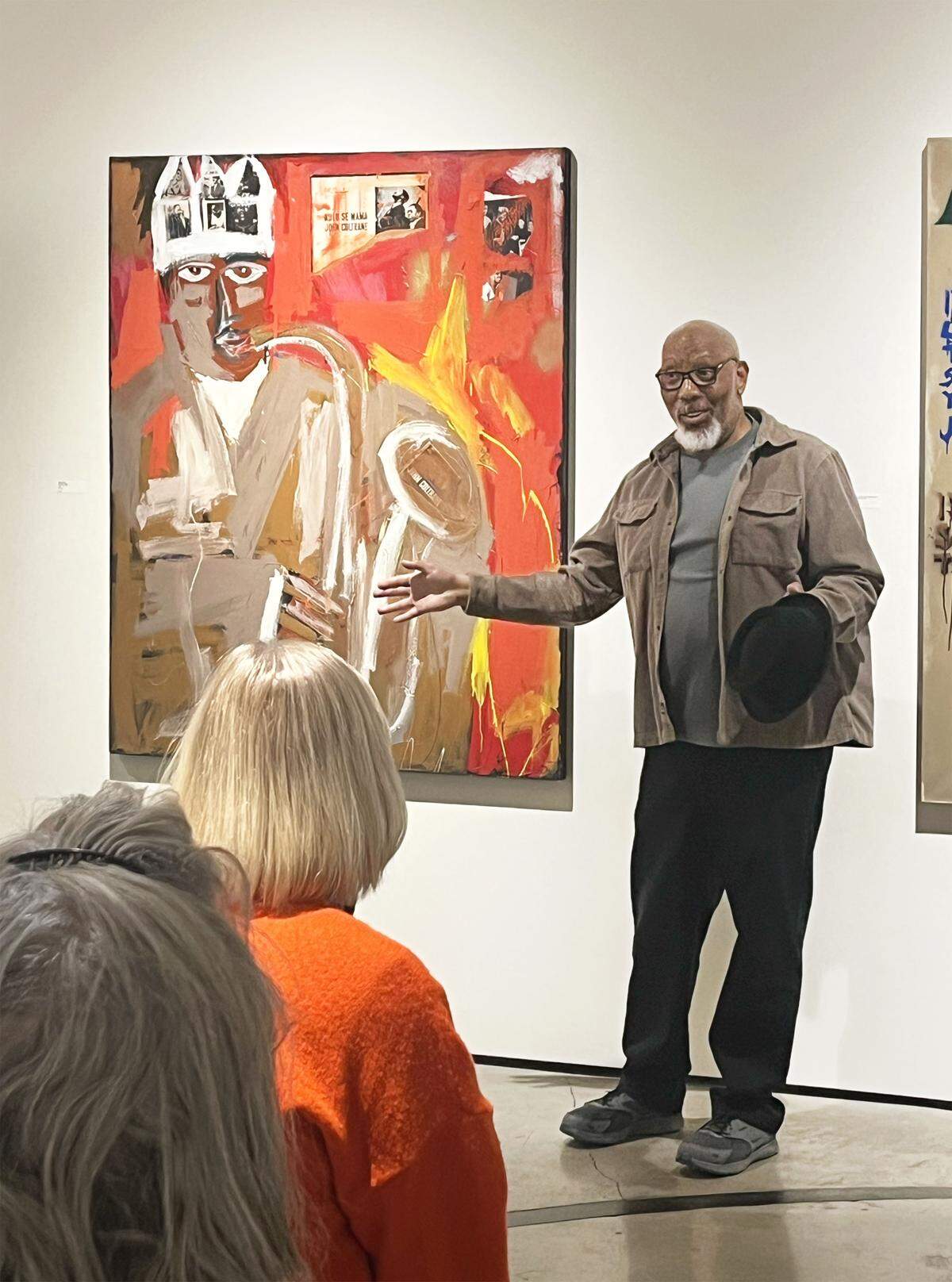
“This is a chance to be seen,” said Harold Smith, whose solo exhibition “We Shall Not Be Moved” opened at Sherry Leedy Contemporary Art. “It’s rare that Black artists are exhibited in the Crossroads. Probably even more rare that a Black artist from Kansas City is exhibited in one of the more established galleries.”
Smith, 63, said the Crossroads carries symbolic weight because of its history as a hub for established galleries and art audiences. While he has participated in group shows there before, this marks his first solo exhibition in the district.
“I take it as an opportunity,” Smith said. “Hopefully it opens doors. Hopefully it won’t be the last time.”
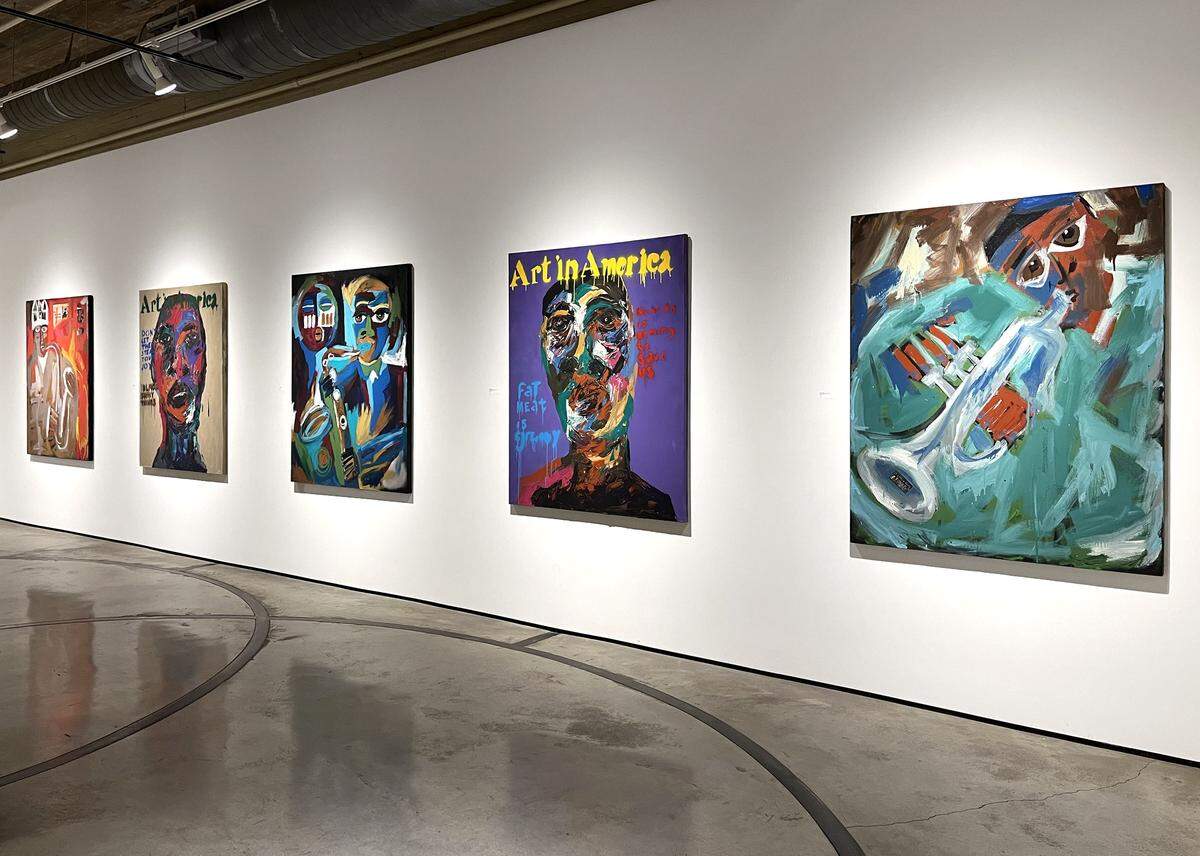
Smith’s exhibition draws from decades of work reflecting what he described as his lived Black experience. The show includes paintings inspired by classic Black films, jazz musicians, neighborhood figures and stray dogs from the Kansas City, Kansas, streets where he grew up and still lives.
“The premise is that we shall not be moved,” Smith said. “Not physically moved, but we’re not going to be silenced. We refuse to be erased. We refuse to present a version of Blackness that’s digestible for people who don’t want to confront history.”
Routes into Crossroads
A few blocks away, another Black artist was also opening work in the Crossroads, though by a different path.
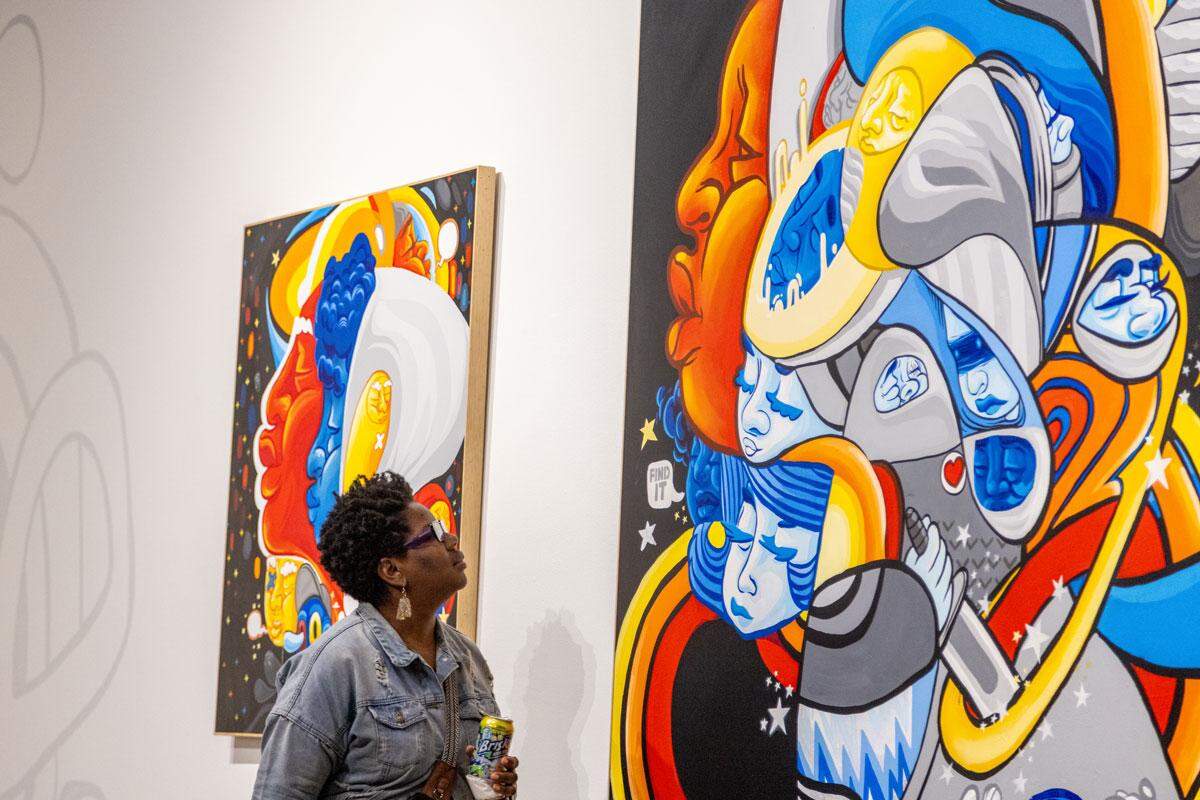
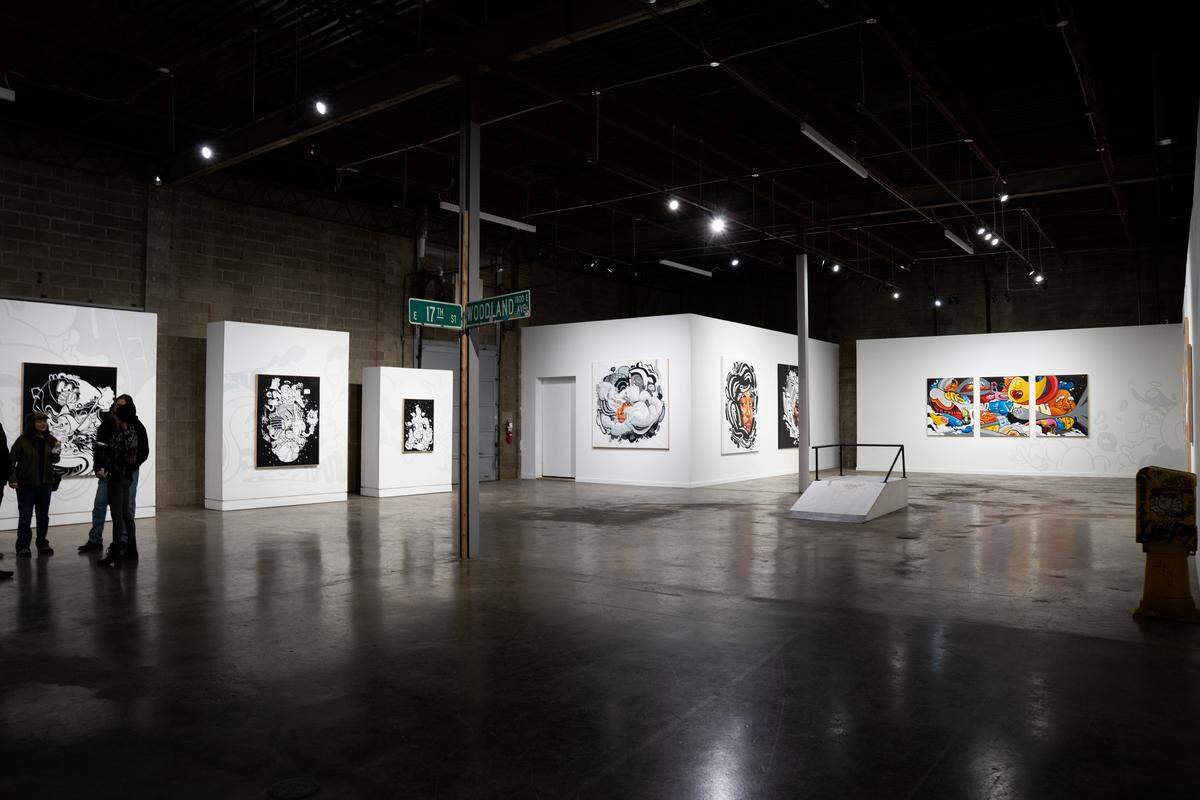
J.T. Daniels presented an exhibition at Studios Inc Gallery, the result of a three-year artist residency. The exhibition, marketed as a solo show with a photography collaboration, brought together large-scale paintings, installations and a skateboarding component.
“This was three years in the making,” Daniels said. “Most of the time, shows aren’t offered to me. I apply. I pitch. I wait.”
Daniels said the exhibition combines several bodies of work created during the residency, including large canvases, black-and-white illustration-based pieces, primary-color paintings and an installation featuring skateboard ramps. The ramps were used to produce a skate video with local skaters, with a performance planned later in the month.
“For me, it was about vulnerability,” Daniels said. “This is the first time I made personal work that was just about who I am, the building blocks of identity.”
Daniels, who grew up in Wyandotte County and now lives in Kansas City’s Historic Northeast, said his work often reflects overlapping narratives and shared urban space.
“When I paint murals, it’s groupings of different people just existing together,” he said. “Bus stops are full. Barbershops are full. Everything’s compressed. That’s what I reflect.”
Despite being featured during Black History Month, Daniels said he typically avoids February-specific opportunities.
“I prefer not to do shows during Black History Month because Black history is every day,” he said. “I’m just as Black in March through January.”
Still, he acknowledged the significance of the moment.
“These are big maneuvers,” Daniels said, referencing Smith’s exhibition at Sherry Leedy. “Those are galleries you don’t pass up. That’s not a small feat.”
Crowds signaled demand
Beyond the Crossroads, a different kind of Black art gathering unfolded at Zhou B Art Center KC, where “Reclaiming the Canvas” brought together more than 50 local Black artists across disciplines. The exhibition included visual art alongside poetry, music, dance and panel discussions.
Among the featured artists was Daisha Maria-Breona, who exhibited a single painting titled “Celebración.”
“It’s an older woman smoking a cigar,” Maria-Breona said. “The cigar is celebration. She’s reflecting on her journey, her trials and she’s owning it and enjoying that reflection.”
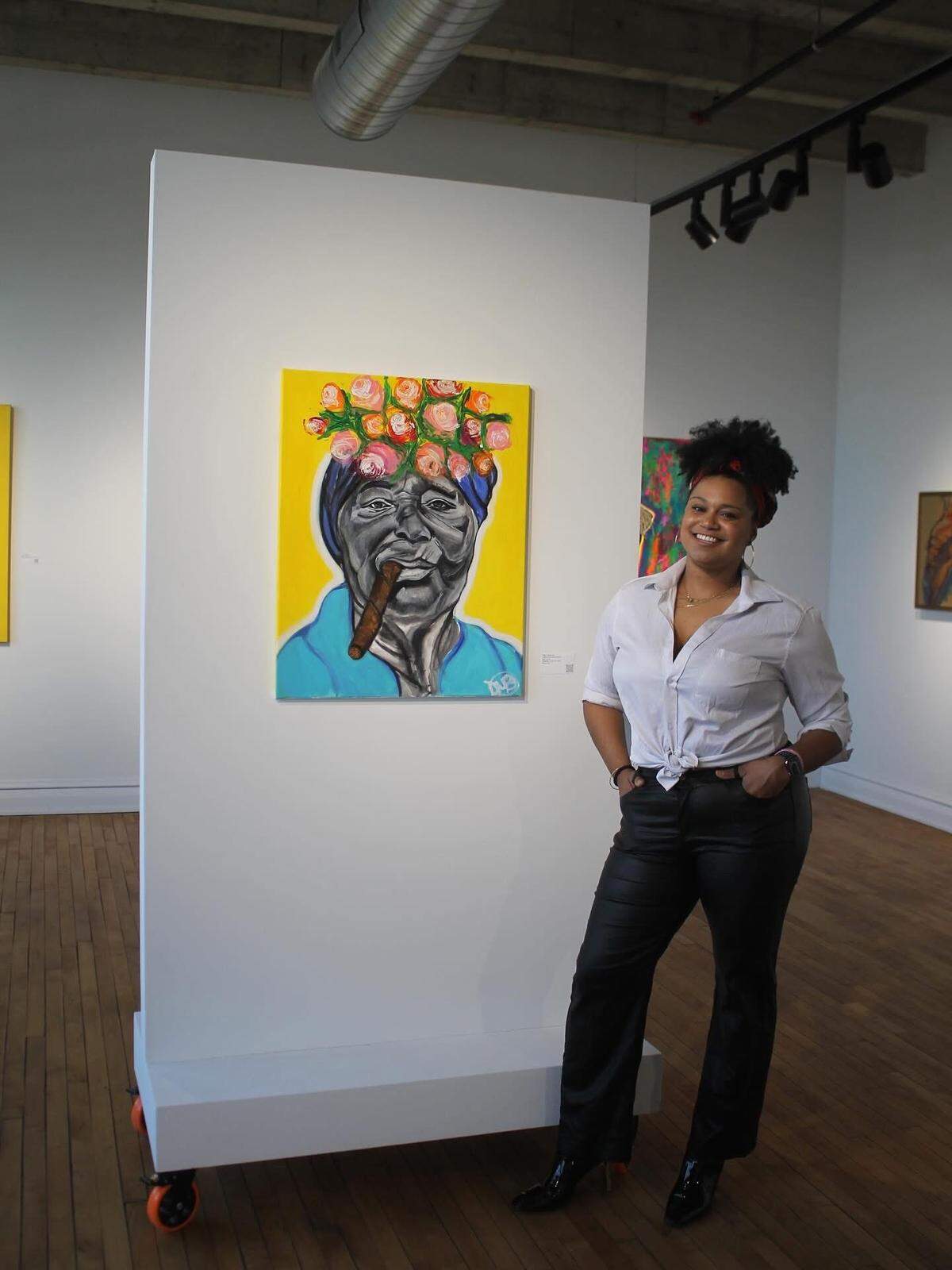
Maria-Breona said the image draws from Afro-diasporic traditions and uses metaphor to engage with Black history.
“You can tell from the wrinkles and the lines that she’s been through some things,” she said. “In the Black community, we’ve been through some things. We’ve had moments to celebrate, but we still have a journey to go.”
For Maria-Breona, being included in the exhibition marked a significant milestone.
“I’ve been wanting to get into the building for a while,” she said. “It’s the premier exhibition space for Black art. We need spaces like that so our art can be taken seriously.”
She said the strong turnout at the opening reinforced the need for such spaces.
“That almost made us cry,” Maria-Breona said. “It showed there’s a need, a desire. It showed people want this.”
After February, what remains?
Across interviews, artists pointed to attendance as evidence of demand. Daniels estimated between 260 and 300 people attended his opening, including children, longtime skateboarders and visitors who had never been to a gallery before.
“I wanted people from the neighborhood to feel like this space is for you too,” Daniels said. “Not just a pinky-up establishment.”
Smith said similar dynamics were visible at his opening, noting that crowds were spread across multiple exhibitions citywide.
“It’s like a full-course meal of Black artistic culture being served this month,” Smith said.
While February provides heightened visibility, artists were candid about the challenges of sustaining that momentum year-round. Smith pointed to economic barriers, limited disposable income among buyers and the difficulty of maintaining gallery spaces.
“Only a small percentage of people buy original art,” he said. “Black art is a hard sale. That’s just the reality.”
Daniels described the long timelines involved in securing institutional shows.
“This show only happened because it was part of a residency,” he said. “Other shows take two or three years from application to opening.”
Maria-Breona said Black History Month can be leveraged, but it should not be the end point.
“We promote it as much as possible now so people get a taste of what’s to come,” she said. “The hope is that engagement continues after February.”
Artists also discussed alternatives outside traditional galleries. Smith emphasized the importance of community-owned and accessible spaces.
“We have to use the spaces we already have,” Smith said. “Church fellowship halls, barbershops, beauty salons. Art is best understood in the environment that created it.”
Daniels echoed that approach, describing pop-up exhibitions in unused storefronts and neighborhood-based shows.
“If there’s no seat at the table, you build your own table,” he said.
Despite differing approaches, the artists shared a common assessment: February demonstrates what is possible when access aligns with audience interest.
“This confirms I’m on the right path,” Maria-Breona said. “It energizes me to create more.”
When Black History Month draws to a close, artists say the question facing Kansas City’s art institutions is not whether audiences exist, but whether the doors will remain open once February ends.
For Smith, the month represents both opportunity and responsibility.
“It’s good to be seen,” he said. “But the work doesn’t stop because the calendar changes.”
This story was originally published February 11, 2026 at 12:13 PM.