‘I would not feel safe’: Wife of slain KC dad testifies in Jeffrey King hearing
AI-generated summary reviewed by our newsroom.
- Wife said Jeffrey King’s release would leave her and the neighborhood unsafe.
- Jeffrey King faces 1st‑degree murder; lawyers asked to cut bail to $500,000.
- Judge delayed decision; bond hearing continues Feb. 19 at 3 p.m.
Although a trial date has yet to be set, Kirsten Wells — the wife of Christopher Cole Wells, 41, a father of four who was gunned down in the street by his neighbor on Jan. 12 — took to the witness stand in Clay County Circuit Court late Tuesday afternoon to make a case for why the man who killed her husband should not be given a reduced bond, potentially allowing him to be freed.
“I know I would not feel safe. I know my whole neighborhood would not feel safe if he was released,” Wells said in response to questions by Clay County assistant prosecutor Robert Sanders.
Wells’ testimony marked her first public comments since the death of her husband, who was shot multiple times and killed on Jan. 12 by their neighbor, Jeffrey Traviss King, 42, who was arrested that morning and charged with one count of 1st degree murder and one count of armed criminal action.
In her testimony, Wells revealed previously unconfirmed details of the morning, including the fact that, following an encounter with King, she initially called the Kansas City police to respond because King had already been ordered by the Kansas City Municipal Court to have “no contact” with the Wellses due to misdemeanor property damage.
“I called 911 that morning,” Wells testified, “and said I would need somebody to come, because I felt very unsafe at that second. And then I called my husband. And he said he was coming home (from work) to make sure; he didn’t want me to have to talk to the cops without him.”
Wells was shot in the middle of Northeast 78th Street, in the Clay County part of Kansas City, at 7:34 a.m. Police arrived soon after.
Attacked, ambushed
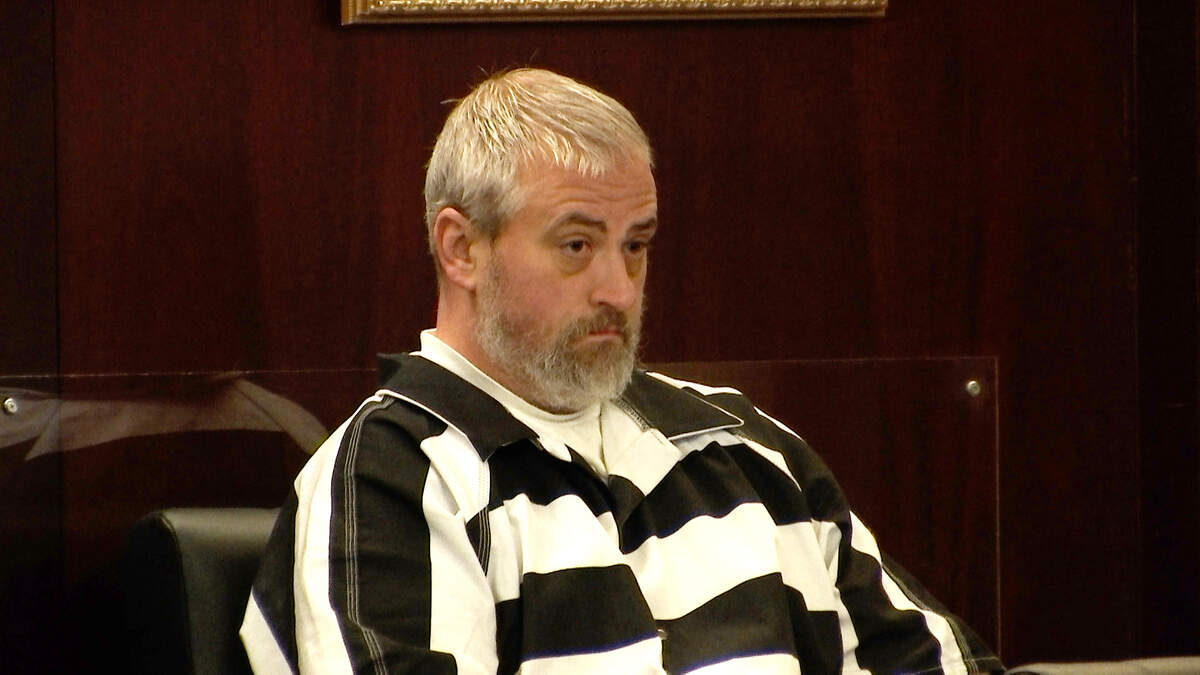
King, seated at the defense table in black-and-white prison garb and orange crocs, has pleaded not guilty. He is being held in Clay County custody in lieu of payment of a bond currently set at $5 million cash.
King’s defense attorneys, Nicholas Bates and Mathew Merryman, on Sunday filed a motion to have the bail reduced to $500,000, payable with a 10%, or $50,000, bond, an amount that would allow King to be released prior to trial.
The attorneys have argued that King was not the initial aggressor in the fatal shooting, but instead he was the one who was “attacked” and “ambushed” at his home by Wells shortly after King returned from dropping off his children at school. The attorneys have previously suggested that they may seek a “stand your ground” defense on their client’s behalf.
“According to the State’s Probable Cause Statement, Christopher Wells was sitting on the curb outside of Jeffrey King’s residence waiting in ambush for Mr. King to arrive home,” the attorneys say in their motion, adding later, “In the State of Missouri, a person may use physical force upon another person when he reasonably believes such force to be necessary to defend himself from what he reasonably believes to be the use of unlawful force by such other person and a person may use deadly force upon another person when he reasonably believes that such deadly force is necessary to protect himself against death, serious physical injury, or any forcible felony.”
Neighbors, however, view King as both instigator and aggressor. Since the shooting they have insisted that they have been living in fear of King’s return to the neighborhood, and the retaliation he might seek.
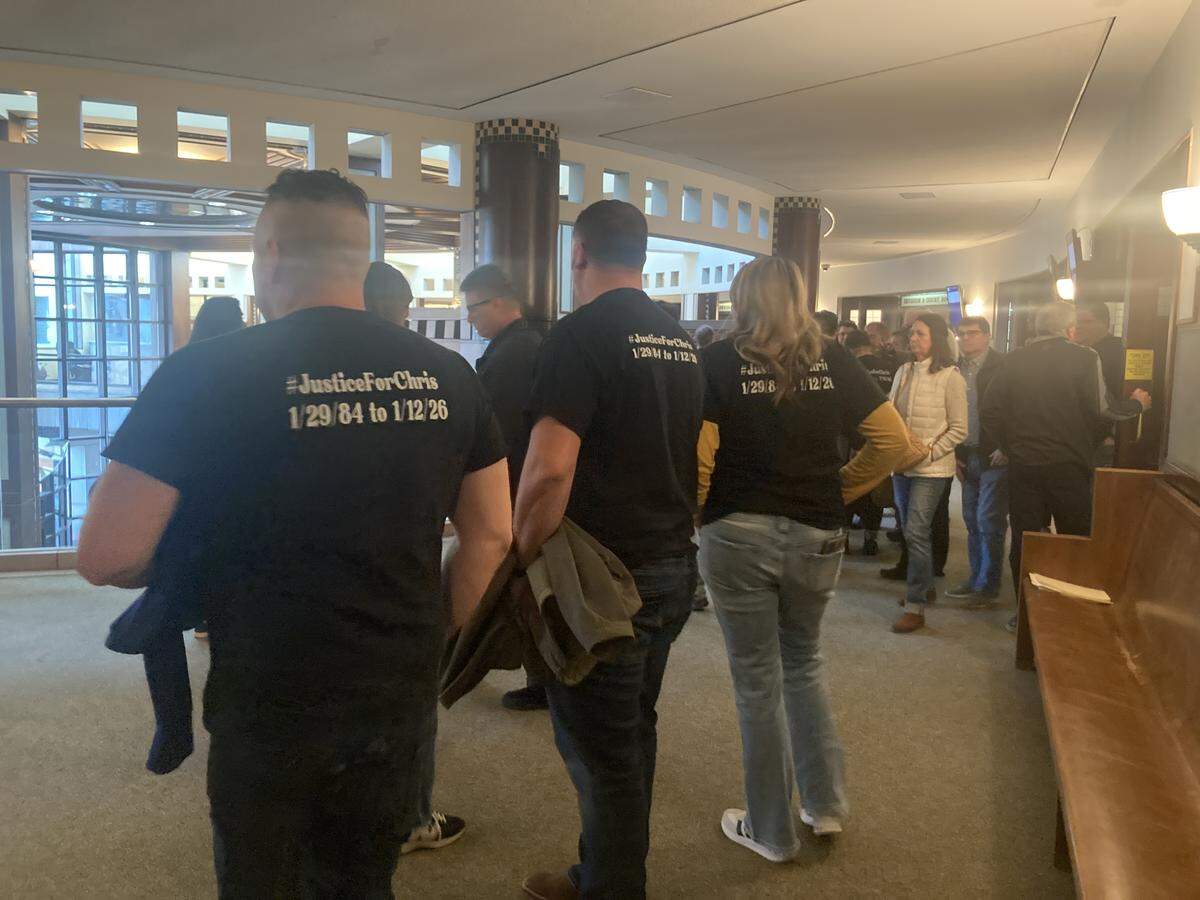
On Tuesday, at 4 p.m., the small Division 1 courtroom of Circuit Court Judge Shane T. Alexander was packed with some 50 friends and family of Christopher Wells, with at least 20 dressed in black T-shirts bearing the words “#JusticeForChris” in white letters, along the date of his birth and death, “1/29/84 to 1/12/26.”
‘Vendetta against our life’
Neighbors told The Star that, for eight years, King has waged what they view to have been an escalating war of torment and retaliation against his neighbors in the Maple Woods Estates neighborhood, a normally well-groomed subdivision of $300,000 to $400,000 homes.
His campaign, they say, began in about 2018 with a disagreement with one neighbor on the homeowners association board. That, they contend, then spread to multiple neighbors living along Northeast 78th Street and nearby. To purposefully annoy neighbors, they said, King blasted floodlight and music at neighbors’ homes. He heaped and stored a pontoon boat, a motorcycle, cord wood, an old R.V., a burned out mattress, a deer stand and other belongings in his driveway and across his front lawn.
In 2024, they said, he began to strategically park cars along Northeast 78th Street, in parallel, across from one another in a manner that purposefully created a narrow path, or choke point. Although parked legally, the cars made it difficult for school buses, plow trucks or ambulances to get through.
It was at that point, Wells testified, that King and the Wellses became enemies.
“We never had a problem with that man,” Kirsten Wells testified, “until probably last year when he caused my kids’ bus to be delayed several times in the morning. My husband was very upset about that. So we asked him to move his vehicles, and he didn’t comply with that.
“That started this whole vendetta against our life.”
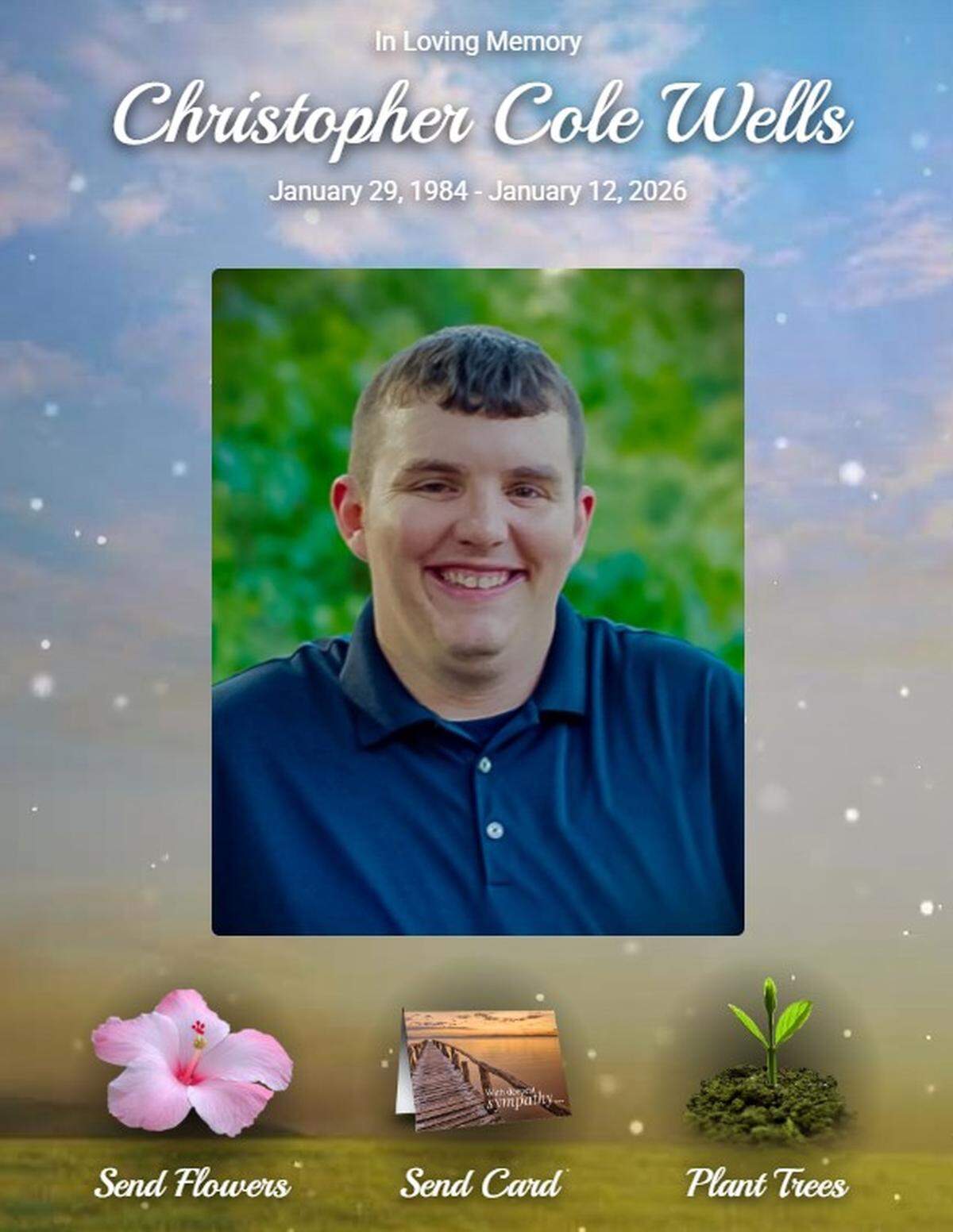
Christopher Wells would become instrumental in a neighborhood movement to convince Kansas City to erect no parking signs along one side of the Northeast 78th Street, preventing Wells from creating the choke point.
In response, neighbors said, King would frequently swear at Kirsten Wells as well as others using vulgar epithets.
“He (King) would stand in his yard, and he would yell down toward the school bus stop with elementary school kids there,” a neighbor said. “He’d yell at Kirsten — pardon my French — he’d say, ‘“F*** you.’ He’d call her a c***. He’d say, ‘You’re worthless. You’re trash.’”
When the “No Parking” signs went up last year, they said, King responded by acquiring eight junk cars which he moved about the block, purposefully parking them in front of neighbors’ mailboxes.
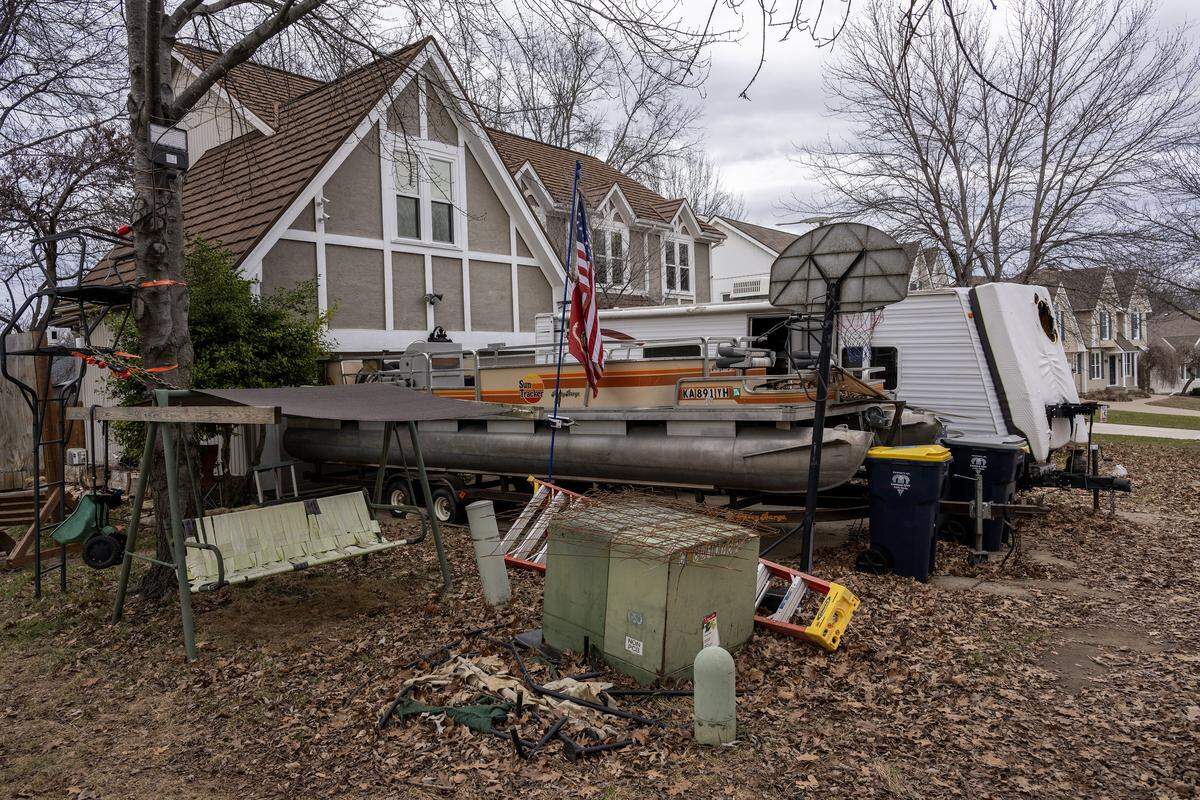
Escalation to killing
Although neighbors said they complained over many years, filing multiple 311 complaints, and calling police, King persisted, confounding neighbors. Although King’s behavior was antagonizing, they said, King generally acted within the law or on the edge of it.
In August 2025, however, King broke the law. He was convicted of property damage after security cameras on the Wellses’ property captured video of King entering their yard and using a hammer to strike a side mirror on Christopher Wells’ truck.
Convicted in November of property damage, King was sentenced to 30 days in jail, but it was suspended. He was given two years probation under specific conditions. The first was that he have no contact with Kirsten Wells. He was to stay away from the Wellses’ house. He was to complete 10 hours of community service. King also was ordered to pay $303.20 in restitution to the Wellses within six months.
One month later, in December, King vexed the neighborhood again, slinging large banners over a burned-out mattress on the back of his R.V. One, printed with the face of convicted sex offender Jeffrey Epstein, included the message, “This Flag Did Not Hang Itself,” a reference to Epstein’s suicide by hanging.
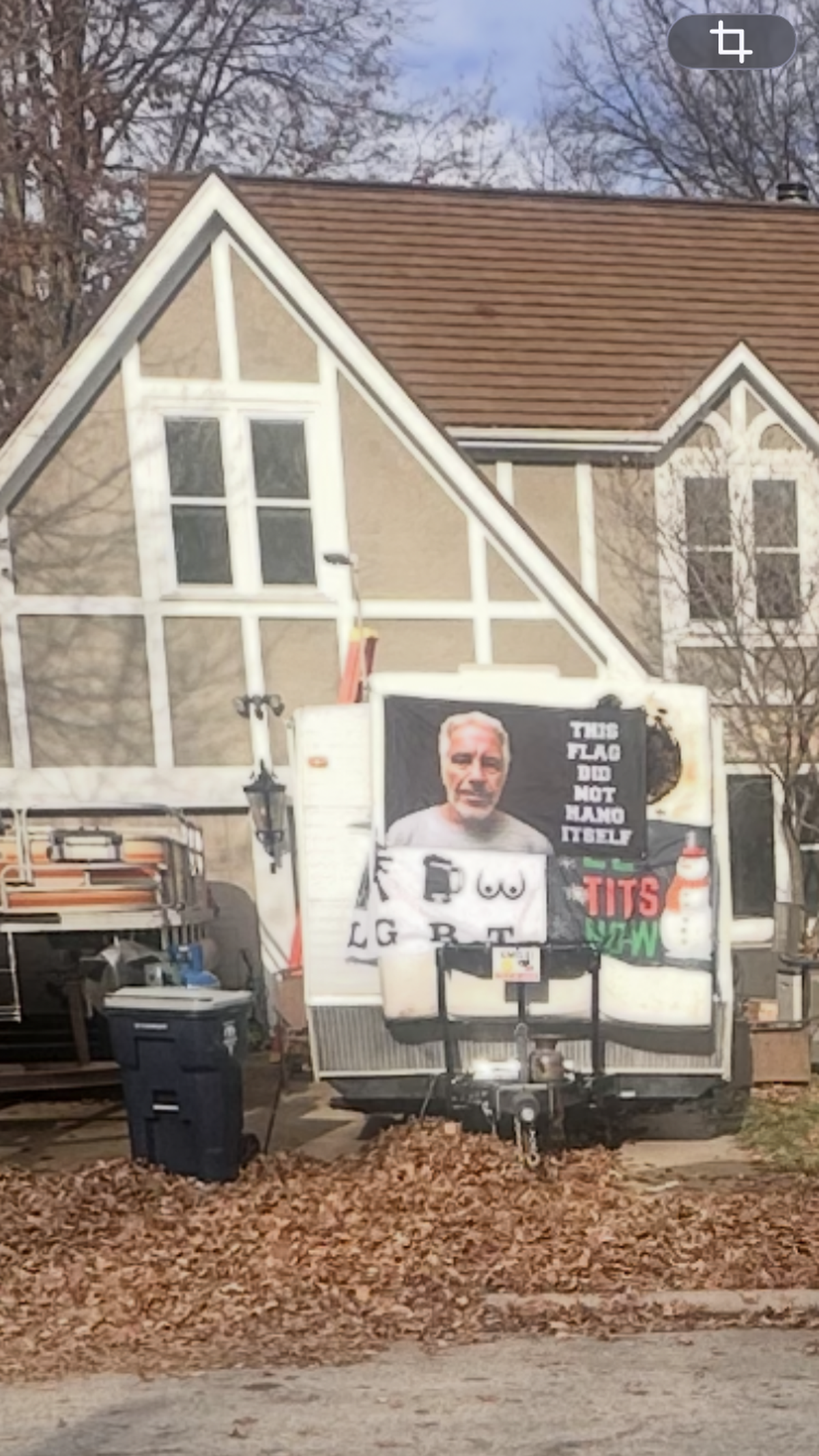
Another, with a snowman, included the message “LeTITSnow” with the four central letters written in bold red. A third included images of a gun, a beer and a topless woman. When authorities asked King to remove the topless banner as vulgar, King taped over the chest with stars made of tape or Magic Marker.
“He took pleasure in it — tormenting, taunting, I would say,” one neighbor said.
The shooting occurred, a police probable cause statement said, after Kirsten Wells was walking her dog and, on her path up the street, saw that the engine of one of King’s vehicle was running near his yard. Not wanting to encounter him, she turned toward her house. King allegedly followed her with a blanket in his hands and tossed it onto the Wellses’ lawn.
Mindful of the “no contact” order, Wells testified that she called 911. She then called her husband, who returned home from where he worked at Bayer Crop Science in Kansas City.
Wells had made it known that he was not one to put up with bullies, said neighbors. They said that Wells, on the morning he was killed, approached King in defense of his wife.
In arguing to maintain a $5 million bond, Sanders, the assistant prosecutor, called Kansas City homicide Det. Jonathan Cook, who testified that eight shell casings had been found at the scene, eight shots had been heard on residential security footage.
Wells was found with five bullet wounds in his front and eight in his back, suggesting that some rounds created exit wounds.
Cook also testified that 16 9mm handguns were later found and recovered from King’s house. The house, he said, also contained approximately 100 other firearms, scopes and hundreds of rounds of ammunition.
“Enough to carry out a mass shooting?” Sanders asked the officer.
The question prompted an objection from the defense attorney, who said the question was speculative and had no bearing on the bond hearing.
Initial aggressor
In their motion for reduced bond, King’s attorneys invoked the 8th Amendment to the U.S. Constitution and the Missouri Constitution, both of which bar excessive bail.
He also cited Missouri Supreme Court rule 33.01, which maintains that excessive bails are impermissible, and must consider the defendant’s ability to pay.
It holds that courts should release defendants unless doing so puts victims or the community at risk, or unless the defendant is a flight risk, or if they are likely to commit another crime. Courts are also obligated to consider the least-restrictive condition prior to trial, such as electronic monitoring.
Other factors to be considered include the nature of the offense, the weight of evidence against the defendant, family ties, employment, character and mental condition, length of residence in the community, any prior record of convictions or failures to appear.
King’s attorneys argued in their motion that, until the current case, King had never been accused, charged or convicted of a crime of violence. He argued that King was not the initial aggressor in this case.
In court on Tuesday, Bates questioned Cook, the police detective, and submitted a resident’s video security footage as evidence. The video showed the moments just prior to, during and after the shooting.
The video showed Christopher Wells waiting on the curb outside of King’s house before he pulled up in his vehicle. It also showed Wells approaching King and punching him in the face only moments after he exited his vehicle.
“Based on that, would you agree that Mr. Wells was the initial aggressor?” Bates asked the officer.
“I don’t know how to answer that,” the detective responded. “I can say that I do see Mr. Wells throw a punch first.”
But on redirect examination, Sanders, the assistant prosecutor, also focused on Wells’ behavior following the fight.
“Did he withdraw from the conflict?” he asked the detective.
“Yes,” the detective answered.
“Can you see him backing up? Where were his hands when he’s backing up?”
“They appear to be raised,” the detective said.
“Does he have a weapon?”
“Not that I can see,” Cook said.
“Did you find a weapon at or near his body after his death?” Sanders asked.
“No,” Cook said.
“When do the shots come out?” Sanders asked.
“As Mr. Wells is backing away,” Cook testified. “You hear three shots in immediate succession. There’s a brief pause. You hear five more shots.”
King’s defense attorneys, however, further argued that King has strong family ties and has lived in the community much of his adult life. He has no passport, they said, so he will not flee. While his home contains many firearms, he is legally allowed to do so. In January 2025, King filed papers with the office of the Missouri Secretary of State to begin his own firearms and firearm classes business, Fidelis Firearms KC.
The attorneys also said that, as former U.S. Marine, living on disability from his service, King does not have the means to pay the current $5 million cash bail.
They argued in their motion that other non-monetary bail conditions should help guarantee his release. They include GPS monitoring, random drug monitoring, no alcohol, no drugs, the inability to leave his residence except for court appearances, or to meet with his attorneys, or bond supervisor. He also would not be allowed to be within 1,000 feet of the Wellses.
In his closing, assistant prosecutor Sanders said the notion that King might not leave the country, passport or no, was “ludicrous.”
“He is now facing the ultimate punishment under the Missouri law,” Sanders said. “We believe he has a huge incentive. He says he doesn’t have a passport, so he couldn’t legally flee the country. Well, he can illegally flee the country.”
He continued. “This is a neighborhood. These people are in fear of Mr. King. They fear his constant belligerence, his continued escalation of every perceived hostility. . .These people have lived in fear long enough. They shouldn’t have to live in fear a day longer.
“Mr. King should be right where he put himself. We believe a $5 million bond is appropriate.”
The judge delayed his decision to go over the video. The bond hearing will continue on Thursday, Feb. 19, at 3 p.m.
This story was originally published February 11, 2026 at 3:19 PM.