Plagued by drugs & crime, a blighted KC neighborhood is being reborn: ‘It’s surreal’
AI-generated summary reviewed by our newsroom.
- Nonprofits, city agencies and donors coordinated Lykins neighborhood rebuilding.
- Agreements let urban homesteaders rehab homes, with some small loans offered.
- Sunderland Foundation donated about $1.5M to expand Lykins revitalization.
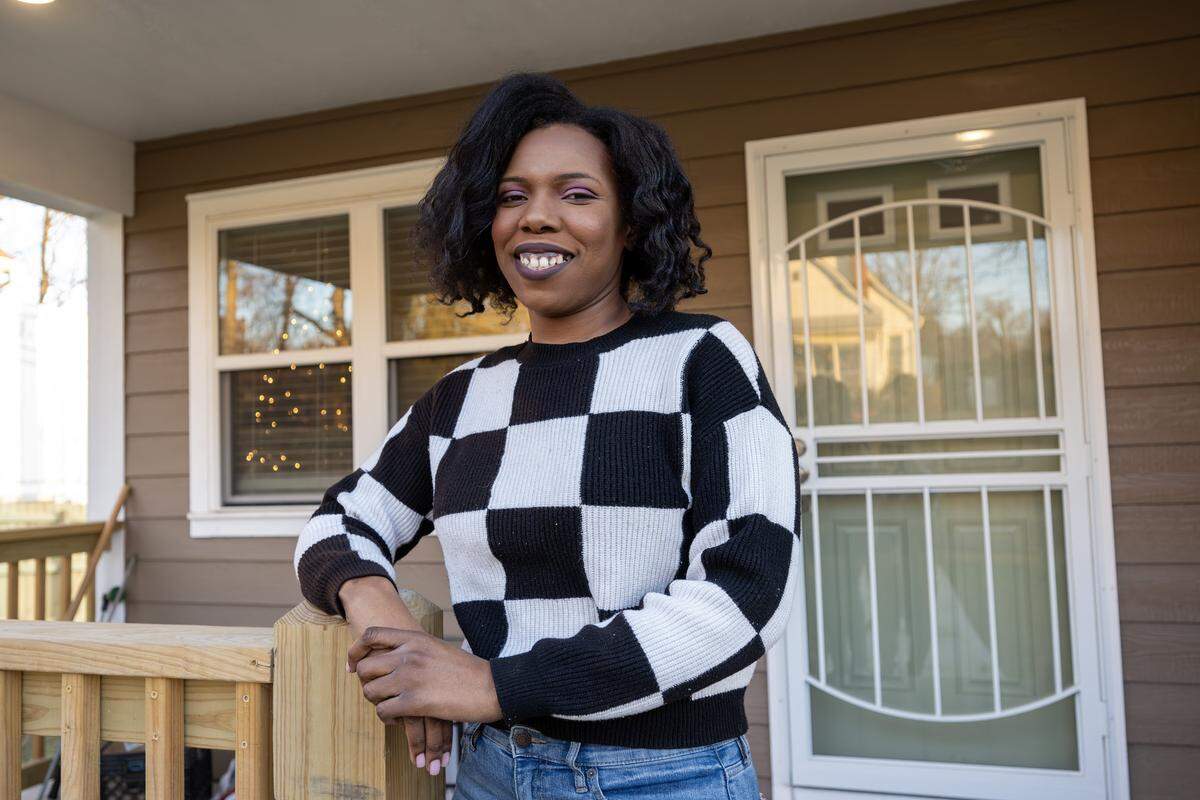
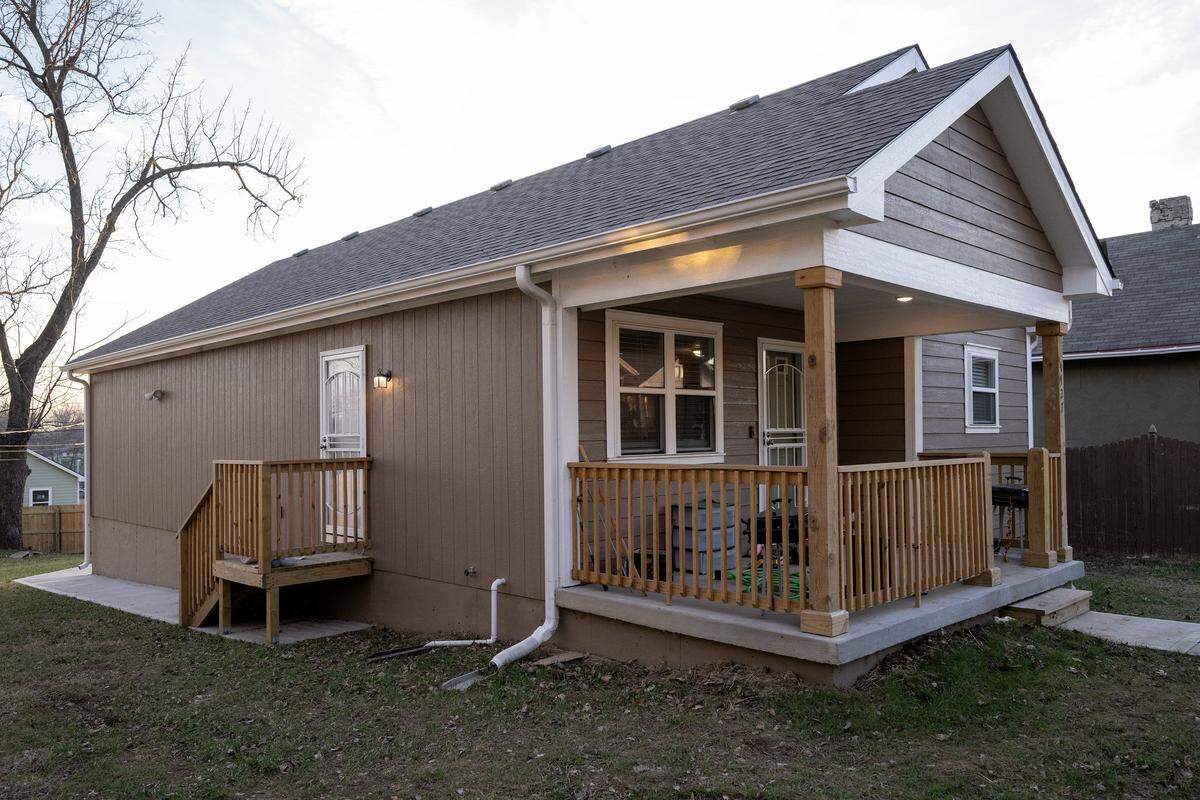
Only days before Christmas and LaToya Jordan is ecstatic. Three months ago, the 35-year-old working mother with five children — four girls and a son — received what she considers a transformational blessing: a house of her own.
It is one that is so special, a newly built bungalow with five bedrooms split between its first floor and finished basement, that on the day in September that her daughters entered the house in what for years had been for Kansas City’s blighted, northeast Lykins neighborhood, they literally did cartwheels across the floor.
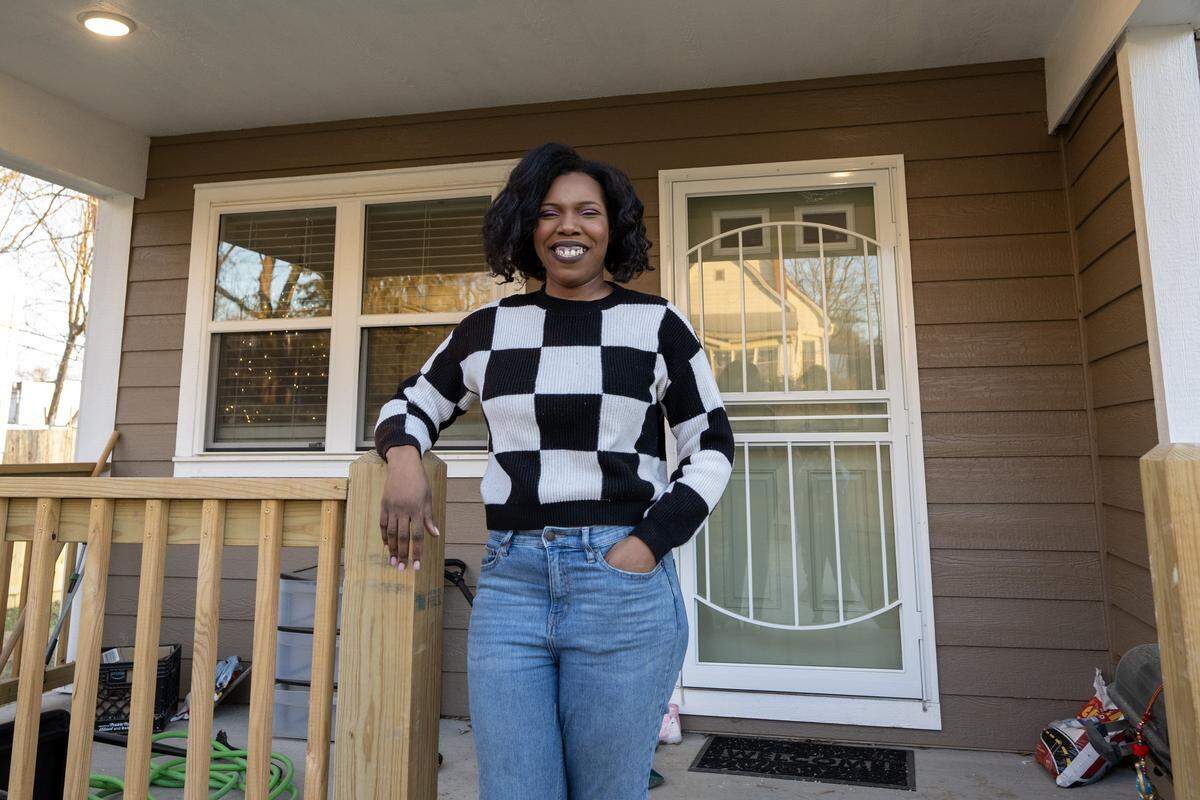
“It’s surreal,” Jordan said, seated in her living room with her Christmas tree with white lights sparkling in the corner. “Like some days, I still wake up, like ‘Oh, my gosh. I own this place.’ Like, I’m the homeowner. It makes me so prideful. . . . It’s the nicest home in my family.”
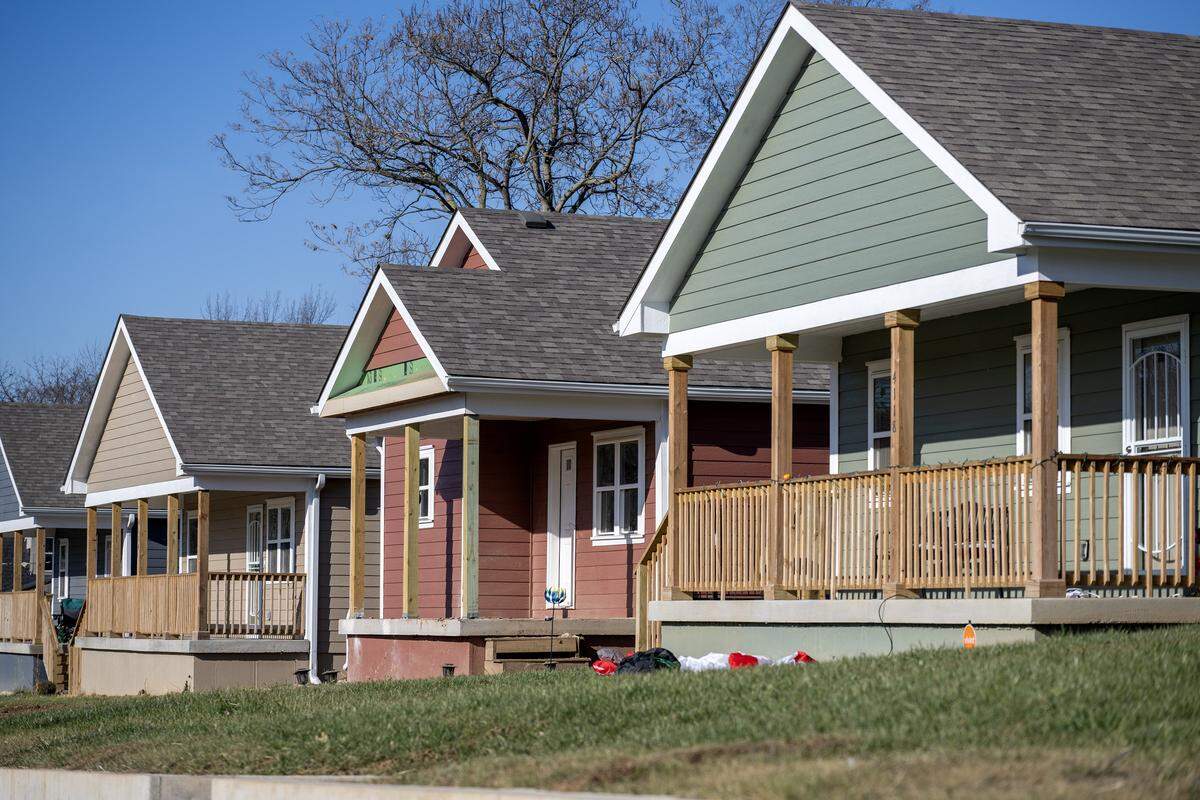
Making her and many neighbors equally happy is how, over the last eight years, Lykins itself — primarily through the efforts of the nonprofit Neighborhood Legal Support of Kansas City, in league with Habitat for Humanity of Kansas City, its neighborhood association, and other groups — has made Lykins a model for successful neighborhood revitalization.
The Lykins neighborhood
“I mean the whole area was nothing but squatters and prostitution,” said Robert Ontman, a 40-year Lykins resident and chair of the Lykins Neighborhood Association’s housing and development committee.

Bounded north to south by Independence Avenue and Truman Road, with Hardesty Avenue to the east and Benton Boulevard to the west, Lykins, Ontman said, is a neighborhood that long teemed with homeless encampments, crime, sex trafficking and drug use, particularly around the community’s Lykins Square Park, at East Seventh Street and Myrtle Avenue.
“Lykins Square Park was really primarily a crime scene,” said attorney Gregg Lombardi, who in 2017 became the founder, executive director and driving force behind the nonprofit Neighborhood Legal Support of Kansas City and its effort to turn Lykins from blighted to better.
“The deal with urban parks like that,” Lombardi continued, “especially when there are no major streets nearby, is it’s a great business location for drug dealers, because there’s nobody watching. If something happens, you can run. You don’t have to take care of the property at all. You can trash it.
“What happened is, with lots of drug dealing, people didn’t want to live around the park. Houses would go vacant. There’s no better business place for a drug dealer than a vacant house. Then some of them get burned down by drug dealers. The park gets worse and worse.”
Lombardi estimates that in 2018, when his group, dubbed the Lykins Focus Community Development Project, began its work in earnest, there were some 40 parcels that surrounded the park.
Only 15 homes remained. Only six were occupied.
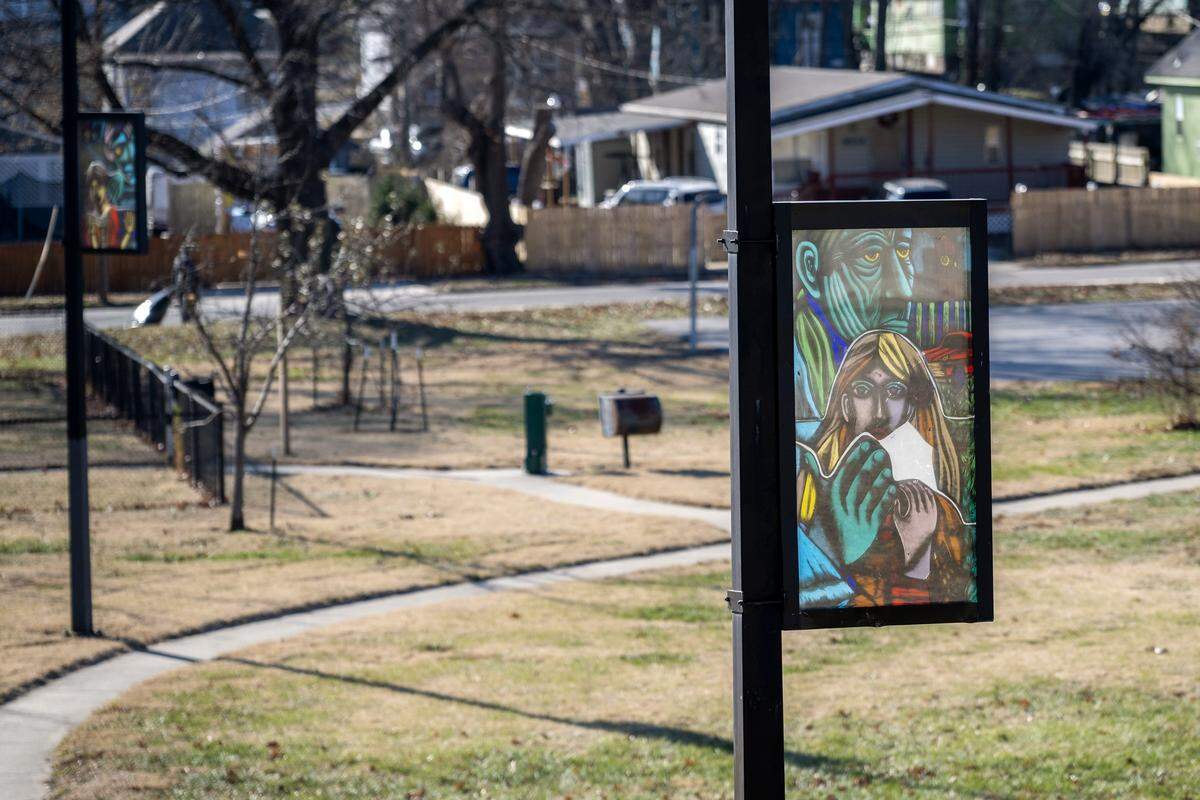
But now, the park is clean, with a basketball court, water spray park and a permanent art installation: artist Hasna Sal’s “Into the Light,” with lighted Venetian-style glass panels, erected in 2020, that memorializes the victims of human trafficking.
“Now we have kids practicing soccer on a regular basis in the park, families walking their dogs,” Ontman said. “You saw, you know, the neighborhood almost like coming out of hiding.”
Habitat for Humanity
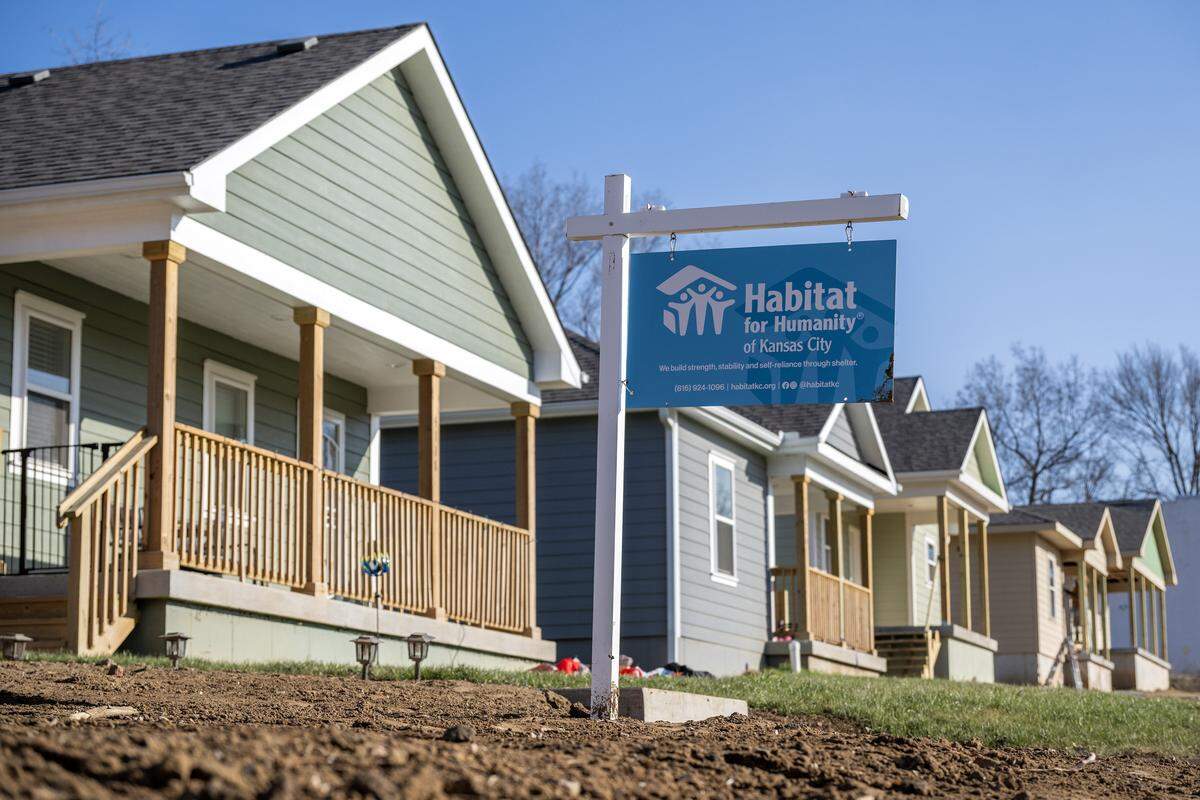
The house that Jordan lives in, in which she has a 30-year mortgage at 0% interest — “Less than when I was paying rent,” Jordan said — is located one block from the park, and was built for about $225,000 by Habitat for Humanity, which also serves as her lender.
“We haven’t had a foreclosure in almost 10 years,” said Linsday Hicks, Habitat’s president and CEO in Kansas City.
Habitat sells the homes to the new owners for less than the price of construction.
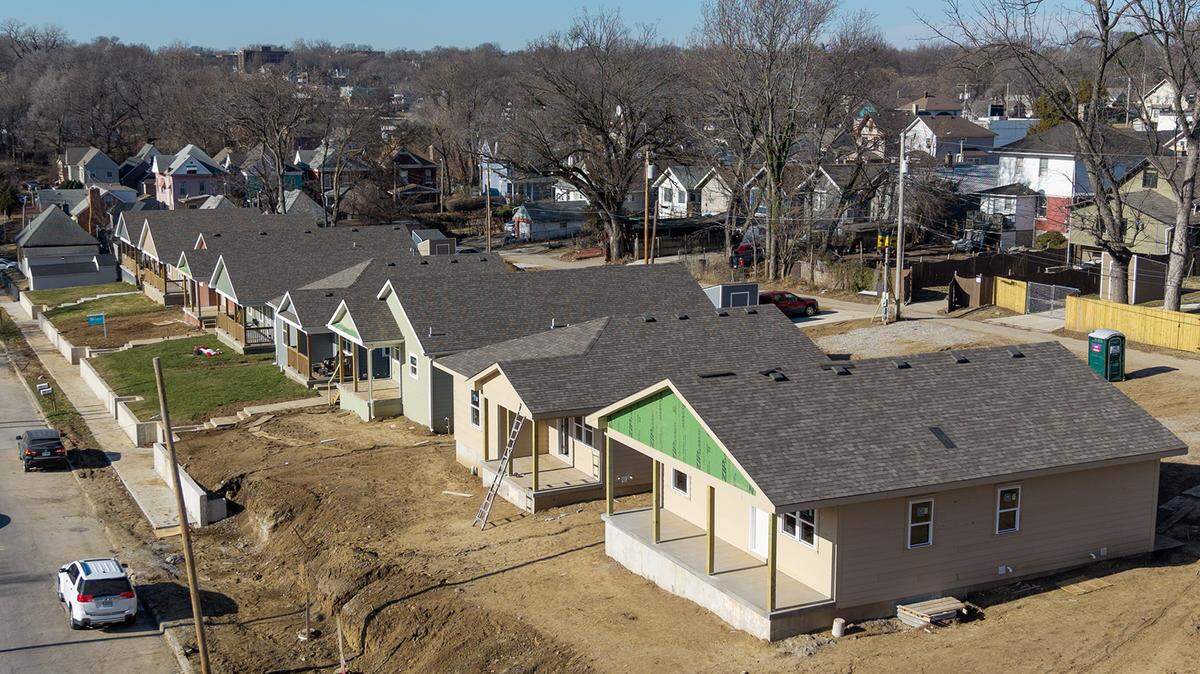
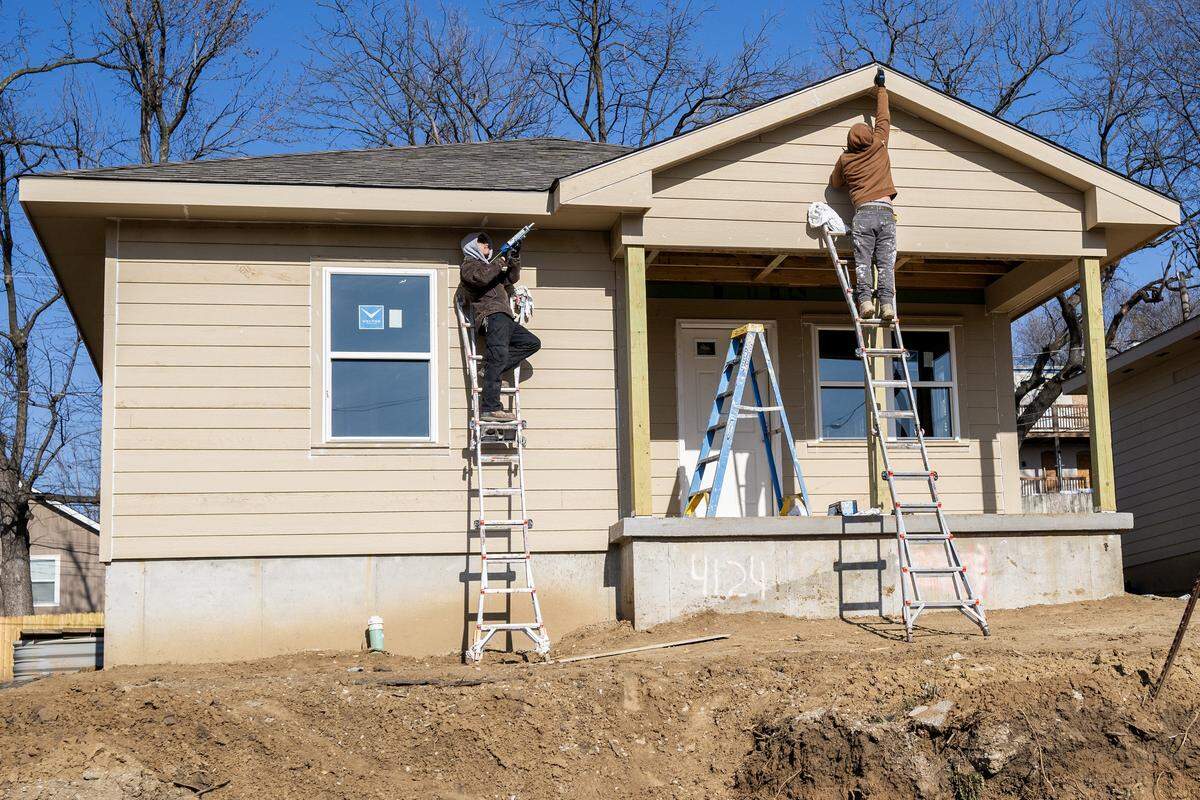
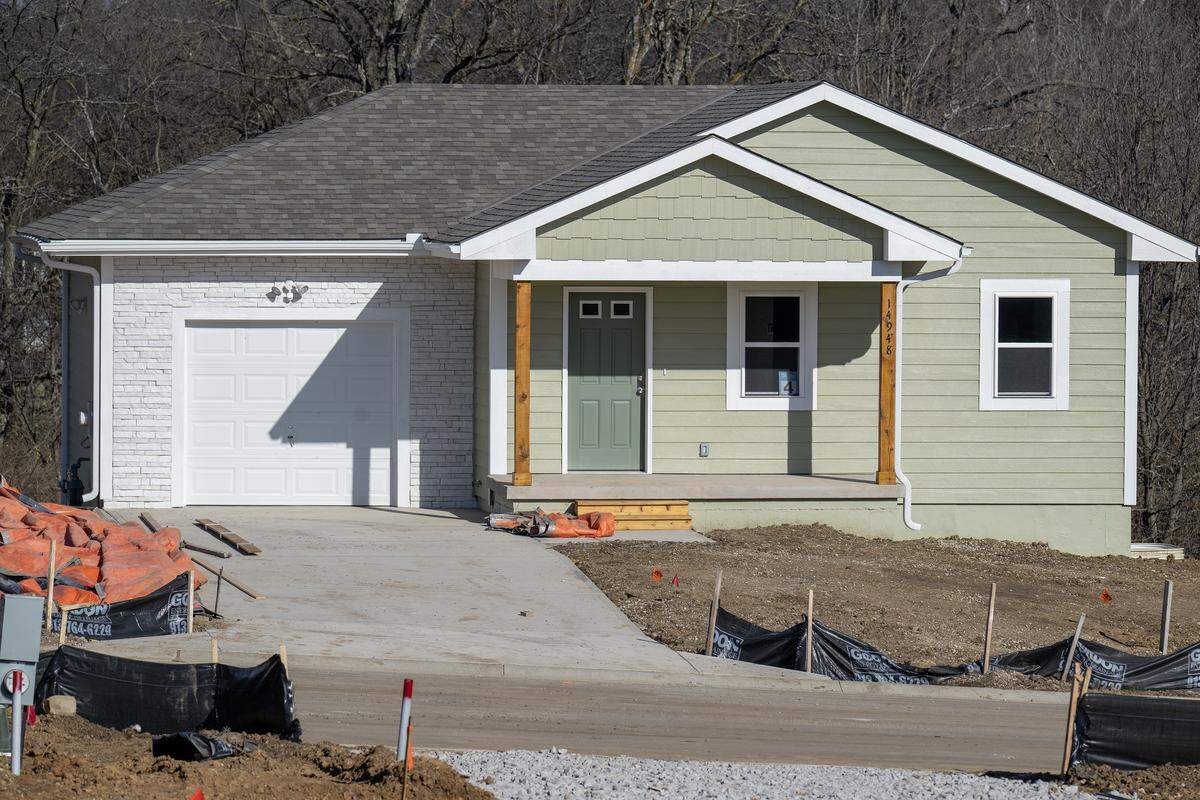
In the last 15 months, the organization, which also helps neighbors with critical home repairs, has built a string of eight bungalows varying from three bedrooms to five bedrooms along East Seventh Street on the park’s north border on an empty site that was the home of the Lykins School before it was demolished in 1973.
All that remained were crumbling stairs embedded in the ground leading to scrub grass.
With a $500,000 commitment that Habitat received this month from Kansas City’s Country Club Christian Church on Ward Parkway, they are looking to erect two additional homes.
“We’ll have 10 in total right here overlooking the park,” Hicks said.
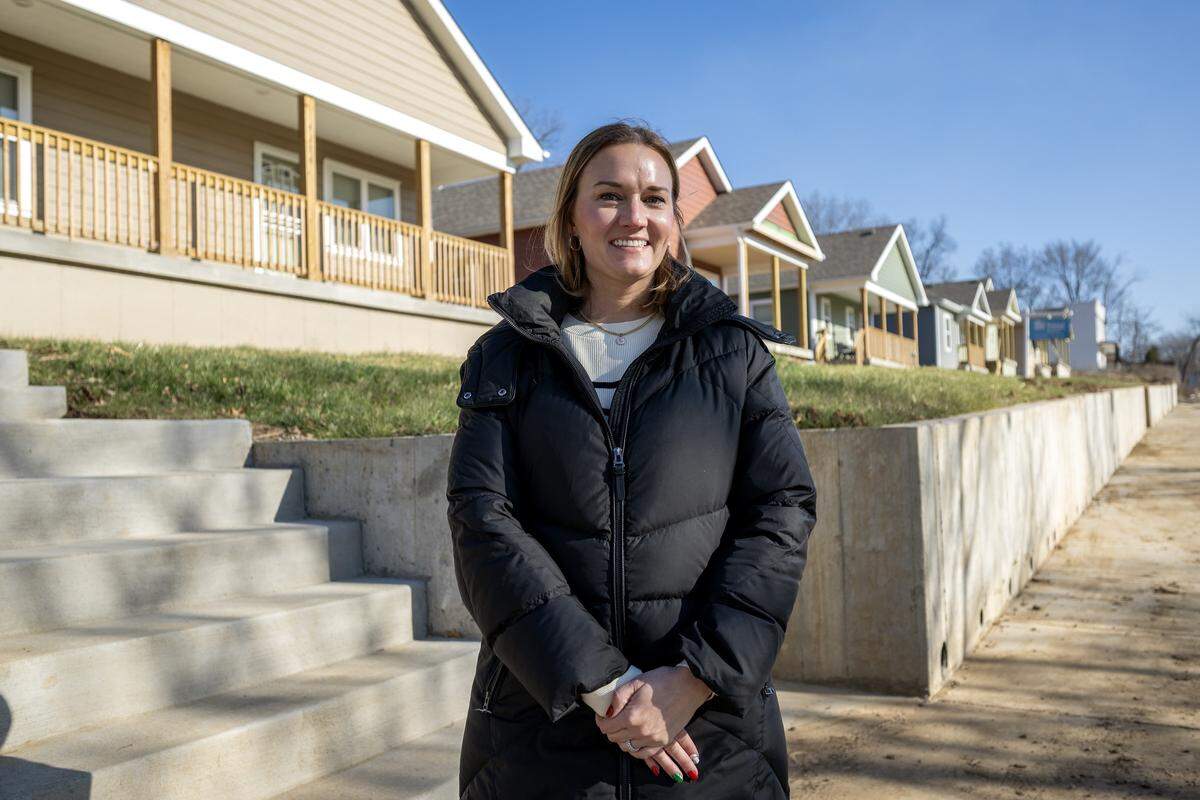
What Habitat is doing in Lykins is in keeping with a strategy they adopted over the last decade.
Building across the Kansas City area
In previous years, Hicks said, Habitat focused on building infill houses on empty lots dotting neighborhoods. The organization has built about 1,200 in the metropolitan area since 1979. Now they are acquiring larger swaths of land to build not just one house here and there, or a handful a year. Instead, they are building multiple homes at once in single areas.
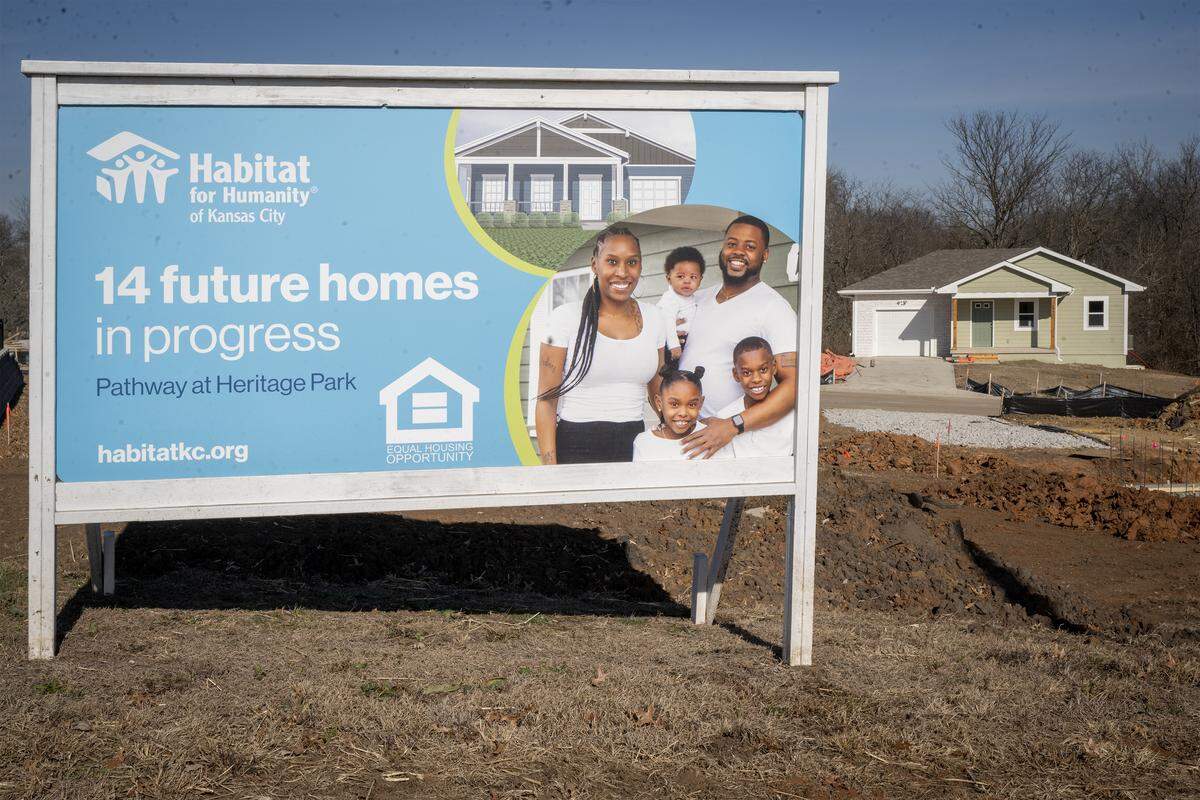
“We can create much more transformational change within neighborhoods,” Hicks said. “For us to be able to develop at larger sale, we have to have better use of land. It’s much more cost-effective. But, too, you can see residents really become families with each other, too. That sense of community: It just helps to develop and build that out even more.”
Besides building multiple homes in Lykins, Habitat just finished a concentration of 20 homes in Kansas City Wendell Phillips neighborhood, a part of Kansas City that includes 18th and Vine District’s American Jazz Museum and Negro Leagues Baseball Museum.
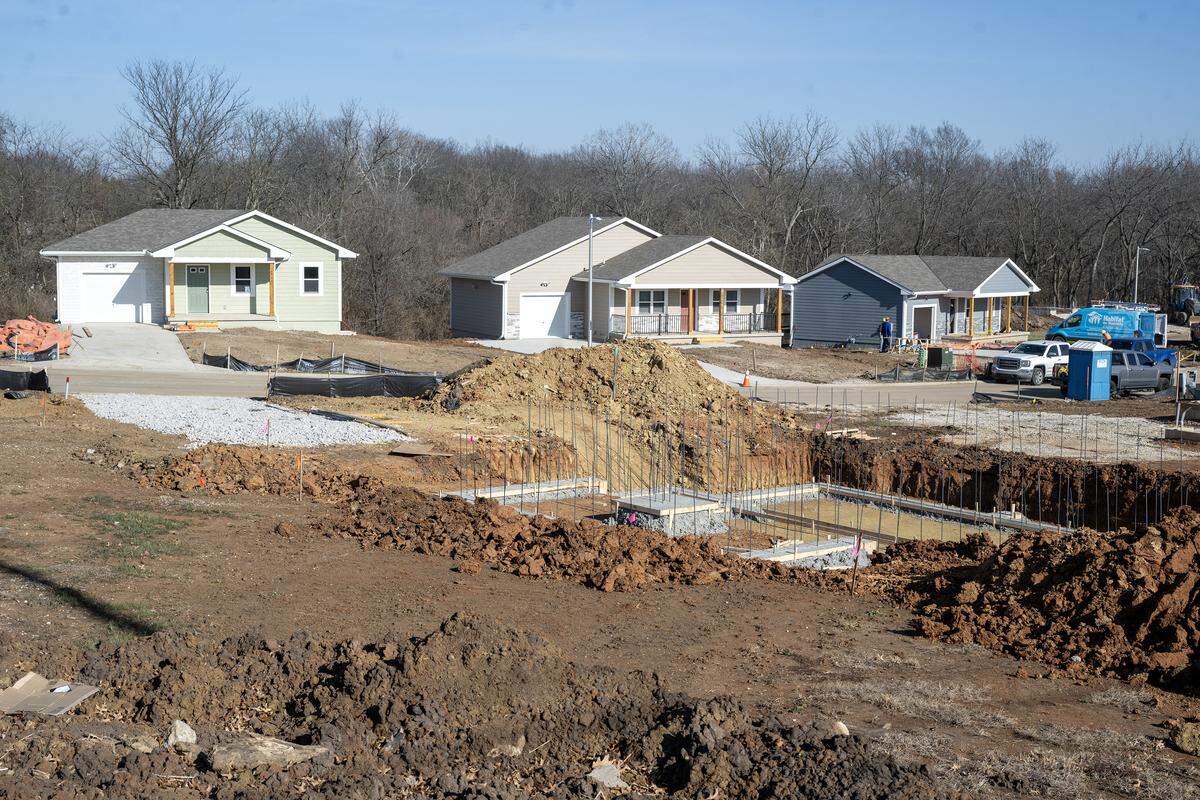
Johnson County has a dearth of affordable housing. In Olathe, the organization is in the midst of building a neighborhood of 14 homes at 159th Street and Black Bob Road. In Lenexa, they are currently seeking city approval to build a neighborhood of 50 homes at 87th Street and Clare Road, which Hicks anticipates will get pushback from wealthier neighbors.
‘Sigh of relief’
Barbara Warren moved into her new Lykins home, with her two children and dog, Royalty, on December 10.
“Us having a home that is ours means so such to us in terms of stability,” Warren said, “knowing that I don’t have to shop on the house market to find some place to rent.”
Jordan, her new neighbor, has said the same.
“To be a homeowner is something, I mean, you really can’t explain,” Jordan said. “It’s just when you want to stop being so controlled in your everyday life. Literally. Your rent goes up every single year. The homeowner at any point could be like, ‘You know what? You’re out of here. I’m going to get someone else in.’ Or, ‘I want to sell the house.’ There’s just no certainty.”
Both Warren and Jordan said they were aware of Lykins’ reputation for drugs, prostitution and homelessness and the crime that accompanies it. Data supplied this week by the Kansas City Police Department show that in one metric, armed street robberies, the number over the last year has dropped by a third, from 31 in 2024, to 20 in 2025. Other measure of crime in Lykins, however, have remained mostly similar from this year to last: four murders in 2024 and four in 2025, four rapes in 2024 down to one this year, one residential robbery last year up to six this year.
The block of new houses is making the owners feel safer.
“I was kind of really even scared to come here once I saw the address,” Jordan said. “I looked at Google photos. The photos, they’re all from years ago. It didn’t show the park. It didn’t show the improvements.”
When she arrived, she was pleased.
“It was a great sigh of relief to know, like, ‘OK, this is actually a place where my family can grow,” she said. “The park is a great representation of that. You always see families down there, or teens there. Instead of walking the street, you see teens over at the park.”
But she is also a realist. Decreased crime doesn’t mean no crime. Soon after purchasing her home, she erected a six-foot privacy fence.
Warren said, “I’ll be honest with you. I heard bad things about the neighborhood. But I know things can change. I feel the way Habitat has laid out everything, I think the neighborhood is going to be a thriving neighborhood. I see that they have (neighborhood) meetings. I’m definitely going to go to those. I think it’s going to be good.”
Missouri Abandoned Housing Act
The changes in the Lykins neighborhood, including Habitat’s effort, flow from the ongoing work of Lombardi’s Neighborhood Legal Support of Kansas City. An attorney, Lombardi is the former executive director of Legal Aid of Western Missouri.
But in 2016, he stepped down. “I was burned out,” he said.
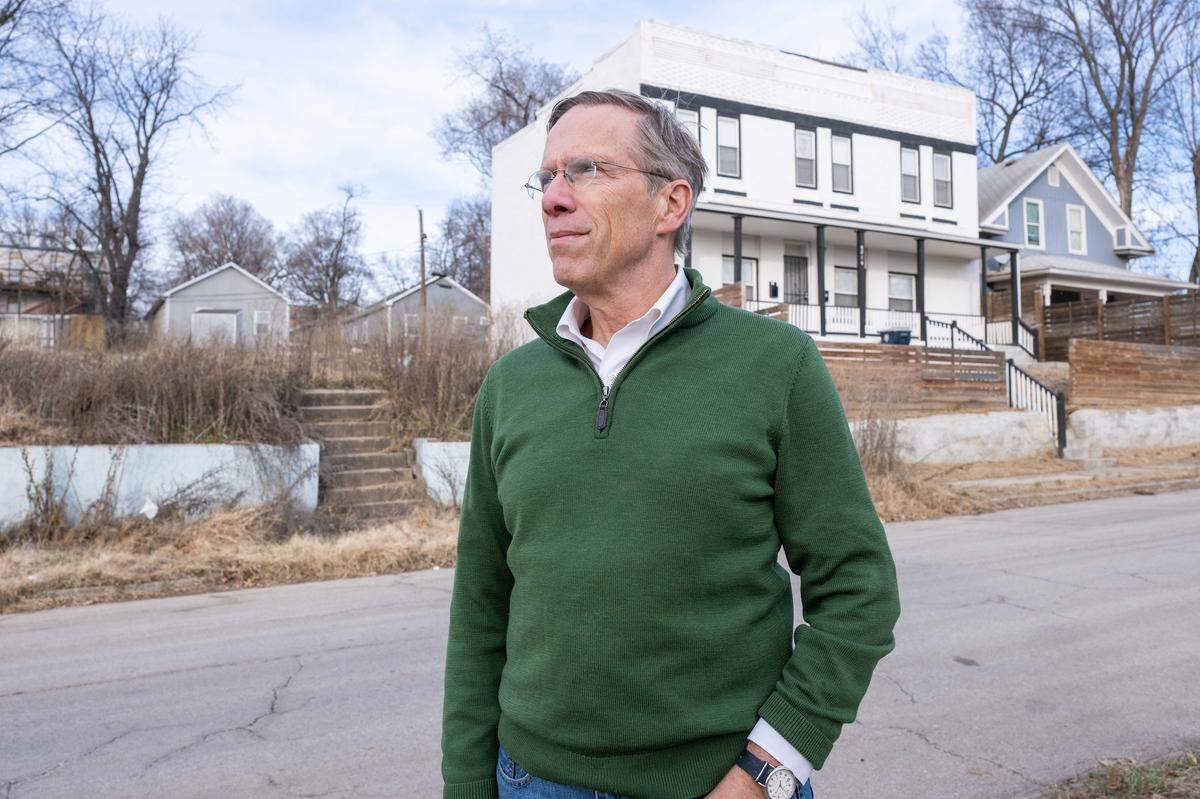
While Legal Aid had been doing what he called “excellent work” on combating blight and abandoned houses, the organization was handling cases across the city. Lombardi started his group a year later, getting it running by 2018.
“Really, to make the greatest impact, I thought the best way was to really focus the work in a small area,” Lombardi said. “That was the concept. We would focus on nine blocks to start with.”
They chose Lykins, and the houses around the Lykins Square Park, for numerous reasons. The neighborhood was close to downtown and along a bus line that new residents might use to get to jobs. The neighborhood was diverse and seemed to value that diversity.
“It values its blue collar background,” Lombardi said. “It’s not a neighborhood that is eager to gentrify.”
It also had, and still possesses, an active and strong neighborhood association that cared about improving the area.
Lombardi said he knew he had the tool they would use to make change. In the 1990s, Legal Aid’s former head of economic development, attorney Michael Duffy, had helped draft laws that have become known as the Missouri Abandoned Housing Act.
In short, the law allows for a nonprofit organization to petition the courts to essentially take over and rehab a property if that property has sat vacant for more than six months, has had serious code violations and its owner is also delinquent on paying the property’s taxes.
Under those circumstances, the property’s owners have a couple of options. They can devise, execute and pay for their renovation plan. Or, if a nonprofit is allowed to renovate the property, the owner can retain the property’s title by paying for those renovations once they’re done.
But should the owner choose not to pay for his own renovations or the nonprofit’s renovations (which is often the case) the courts can deem the property to have been abandoned. At that point, the court can transfer the title to the nonprofit, after which, the nonprofit can transfer the title of that renovated home to a new owner.
In this way, abandoned and often dilapidated homes are saved and renovated rather than being left to further deteriorate or be torn down. In the 32 years since the law was enacted, Lombardi said, it has been used throughout the Kansas City area to save and rehab roughly 1,000 homes.
Next, to Kansas
Lombardi took the tool and concentrated it on Lykins.
“The goal was focused community development instead of a shotgun approach,” he said. “There’s also a pretty well-researched correlation between blight and violent crime. When you take blighted properties and you turn then into good, quality homes, violent crime goes down.”
Lombardi said that since 2018, his group has used the law to file Abandoned Housing Act and other civil litigation against roughly 100 properties in the neighborhood.
“I think there are roughly 60 to 65 units of housing,” he said, ”that, as of now, are occupied, good quality units of housing as a result of litigation. . .
“Kind of the neat part is that rehabbers can make money rehabbing the houses. All we had to do was acquire them. Then we kind of sent out word to the rehabbers who worked in the area, and to not-for-profits that did rehab work. We got a pool of about 16 rehabbers and builders who, anytime we have a blighted house, we sent out word, and one, two or three of them would step up and say, ‘I want to take on this house.’”
Lombardi said that he worked closely with the Lykins Neighborhood Association, which would screen and decide, based on applications, who would be chosen to rehab the litigated properties.
“The neighborhood association would look at the investment the rehabbers was going to put in, look at their track record, their timetable for doing it,” he said, “and whether they were going to turn it into an occupied property or rental property. They would also bring the rehabber in to interview them.”
A rehabber, he said, would then enter into a contract with the neighborhood association to do the project. Once the project is done, and once the litigation is over, the property right is transferred to the rehabber, who can then sell the property.
Besides professional rehabbers, the neighborhood is also entering into agreements with individuals who act as “urban homesteaders.” They take on the house and property, rehabbing it themselves, with the understanding that they will redo the house and live in it for at least five to 10 years after the rehab is completed.
Lombardi’s group has, in some cases, even provided individuals small loans of about $15,000 to help with the work.
“There are two advantages,” Lombardi said. “One is that it assures that somebody who’s really in need, gets the property. And, two, it means that the house doesn’t get flipped for market price and stays affordable.”
None of what is happening in Lykins occurs without help. Lombardi estimates that the neighborhood collaborates with some 40 different entities to make positive change in the neighborhood, ranging from city agencies such as the police the planning department, dangerous buildings, codes, city inspectors and the Parks Department to philanthropic organizations.
He estimates that Sunderland Foundation, over the last eight years, has donated some $1.5 million into their work. What began as a project around Lykins Square Park has expanded to the entire Lykins neighborhood and beyond, into the neighboring Independence Plaza neighborhood, also in the northeast of part of Kansas City, and to Fork Creek, east of U.S 71.
“And we’re about to move to Kansas,” Lombardi said. “We’ve started a pilot project in Leavenworth, and we’re looking at other Kansas communities, as well.”
This story was originally published December 22, 2025 at 5:00 AM.