Educator’s books for neurodiverse kids were inspired by her son, when he was 4.
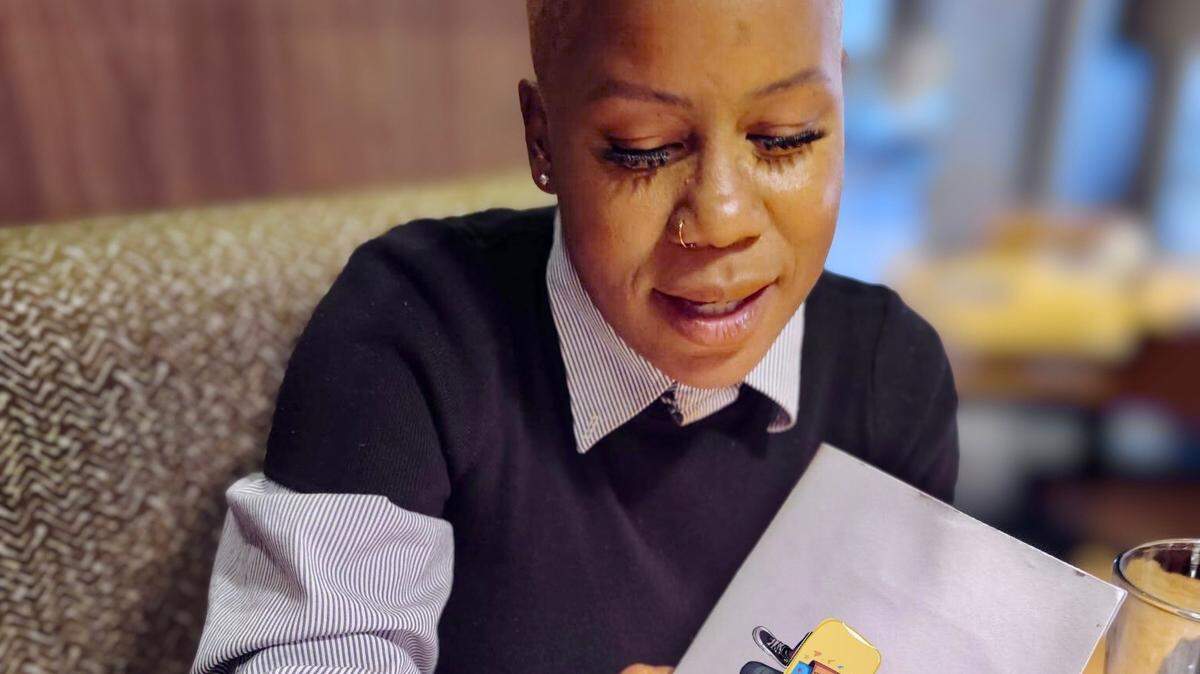
Ivory Duncan has spent nearly two decades of her life in education and the classroom. The Kansas City native and education consultant spent the early years of her career teaching in Chicago high schools and later serving as an assistant principal.
It was her journey as a mother however that reshaped her work and how she saw the classroom. When her son was diagnosed with autism, at age four, Duncan quickly learned that being an educator and being the parent of a neurodiverse child are two very different experiences.
Out of that gap between mother and educator came a new calling. Duncan now advocates for neurodiverse students in the classroom and writes children’s books that reflect the daily realities of families like her own. Her work focuses on helping parents communicate with their children, build literacy and feel less alone, while pushing schools to move beyond one-size-fits-all teaching.
Recently, Duncan sat down with The Star’s culture and identity reporter, J.M. Banks, to talk about her journey into education, being the mother of a neurodiverse child and making sure every child’s potential is recognized.
Banks: Could you start by sharing a bit about your journey into education and tell us what first drew you to working with children?
Duncan: So I have been in education for about 17 years now, and I started my career in Chicago, Illinois, primarily working in high schools. I was a history teacher, then I became an assistant principal. I lived in Chicago for over 15 years. I just moved back to Kansas City three years ago. But actually, my interest, specifically in working with children and writing children’s books, was inspired by my parenthood journey and my son.
I learned that he was on the autism spectrum when he was four.
In learning that he was on the autism spectrum and being an educator, I learned very quickly that those are two very different things. And I embarked on the journey of how to support him.
And I was like, I’m not the only one having this journey. At this point, it’s probably one in 33 children who are on the autism spectrum. I started to write books to help other parents to communicate with their children and help build literacy and speech and language. And so that’s the small version of how I got into this work.
Can you define in your own terms what neurodiverse means to you?
Essentially, it means that the brain functions in a myriad of ways, and there’s not one way in which the brain learns. And so it’s sort of like multiple intelligences. But essentially, everybody has their different strengths and different weaknesses.
Can you walk me through what was going through your head as a parent as they were telling you that your son was neurodiverse?
I don’t know in what medium this is going to go out, but if any parents or anyone hear this, four is actually a late diagnosis.
I say that to say also that I had a little bit of an instinct. My gut was telling me. As parents, typically you have something in your gut.
My son, at one, was babbling but not saying many words. At two, again, not saying much. He would probably say “dada” or “mama,” but still not much. And I kind of felt like he should be saying more at that point, so I spoke to our pediatrician about it and she was like, well, you know, he’s the only child, and so maybe if you get him into a daycare or a home daycare and have him around other peers, his speech will increase.
She never said anything about getting him an assessment or to see if there were some other factors.
So I got him into a home childcare space so that he could get some socialization, and he was there for about maybe six months. It was the teacher who was the one that told me he doesn’t really socialize with the kids. So then that was my second ping.
Then he started to have some social behaviors like standing on the desk and being rebellious. So she was like, I think you should probably go get him tested. She was the first one who told me.
So I got on the wait list and while he was on the waiting list, we also got him into speech therapy. Even the speech therapist said, “I don’t see any signs of autism. I just think you all need to discipline him more.”
I’m naming that also because these are the things that sometimes, when you are a Black parent with a Black child who shows up in the world differently, people think that it’s their behavior. You need to spank them more. You need to be more disciplined. They don’t always say that about white children. I don’t know how else to say it. I’m just being straightforward, so I hope I don’t offend anybody.
So when she said that to me, I was like, I don’t know how I feel about that, but I just sort of ignored it and went about my way.
After we were able to get our appointment — on the wait list for over a year to get an assessment for autism — essentially, the doctor took us through a series of tests. We sat on the floor, did some playing, did some activities to engage with Caleel. The assessment was like 40 minutes. She left and came back in like 10 minutes and was like, your son is autistic.
When we were going through the assessment and he wasn’t responding in the way she expected, because she had some particular tests that she was doing with him, I was like, okay, I think I’m pretty sure too now. But I had to hear it verbally. When she said it, I’ll be honest and fully transparent, I did start to cry a bit because my first initial feeling was fear, because I didn’t know what it meant.
I have been an educator for a long time. I taught high school kids who were autistic, so I saw it from the teenage perspective. I hadn’t seen it from a baby, one- or two-year-old. So I was a little afraid because I was like, I don’t know what this means.
I immediately just started to embark on a journey of what to do next. So yeah, I was first afraid, but then immediately I felt I am a little bit privileged in the sense that, as an educator, I felt slightly more confident about him being okay than maybe another parent who was really like, I don’t know what to do.
How has your experience as a mother to a neurodiverse child shaped the way you show up as an educator?
It informs everything I do as an educator. I’ve always met students where they are, but I think that even more now I find that to be important. I also think about it from the context of their parents.
When I was an educator I didn’t really understand the parent experience until I became a parent. And so I always honored the child’s lived experience, but now I’m also interested in how children are being supported by their parents, because school is important, but really home is the primary educator.

What does embracing neurodiversity mean to you in practical, everyday terms?
It means shifting our mindsets to see that everyone has a brilliance. It may look different, it may show up different, but everyone has something to contribute to society. So, for example, if you have a speech delay, perhaps you are much better at tactile skills in terms of building things and putting things together. Or you may be really great at speech and you may not be really good at your critical thinking skills. So essentially, seeing everybody as adding value to society regardless of their abilities.
What are some of the biggest misconceptions about neurodiverse students that you try to challenge with your work?
I think oftentimes if you don’t see a person show up neurotypical, meaning being able to converse with you fully or being able to articulate their needs fully, people assume they are incapable of learning or that they are not intelligent. So essentially just being able to see the strength in every human being and not writing people off based on what we’ve been conditioned to see intelligence look like.
What do you wish more educators understood about the emotional experience of being a neurodiverse child in a traditional classroom?
I think the best way I help people understand is that we all have our five senses, some that are more sensitive than others. So for even a neurotypical person, you may feel overwhelmed in environments, or you may feel stressed, or frustrated in particular spaces where you don’t feel seen, heard, or understood. The same applies to a child who is neurodiverse, only they are not able to communicate it.
So it’s really important for us to put ourselves in the shoes of neurodiverse children in the sense of being overwhelmed or sensitive to things that typically would feel normal to a neurotypical person.
What are a few small practical changes teachers can make that would immediately help neurodiverse students feel more supported?
I do a lot of professional development around accommodations, and essentially that means being willing and ready to make adjustments in the moment.
Growing up in a very traditional education system where teachers chose how to teach and children were expected to adjust to that learning style. And so an example of that is a teacher who more so prefers instruction, meaning I stand in front of the classroom and I’m talking at you and I expect you to listen and respond. There are some young people, especially in this generation, who don’t respond well to mostly instruction only. They would probably need more visuals, or they would probably need time to themselves to read about it first. So being able to make accommodations.
And with that, if you see certain behaviors pop up, I would say in the simplest form, if you see unsavory behaviors, don’t assume a child is being defiant. Instead, first assume that maybe a need is not being met and ask them, what do you need, instead of assuming that they are being defiant for the sake of being defiant.
How do you navigate the balance between structure and flexibility in a neurodiverse classroom?
So always have the running schedule. A visual schedule in your classroom is essential. And depending on the type of school setting it is, every child deserves their own working schedule on what works for them, but leaving room for that.
If we know that every hour there is a space for a particular instruction to happen, but a meltdown happens or a child is having a bad day and they’re not able to engage in a particular hour of instruction, it’s important for our school settings to move to a space where, okay, maybe you just need to go put your head down on the bean bag for this hour, and you’re not going to engage in this math instruction, though the schedule allows for that.
So it truly is, yes, having that instruction, but being amenable if something unpredictable happens, because it will, to adjust in the moment and not forcing that structure.
It starts with showing kids that this is the expectation. And when they know that that’s the expectation, but you allow room for them to navigate it, they are more willing to adapt to the structure when you allow room for flexibility.
What do you see as the biggest gaps in support for neurodiverse kids and their families here in the community?
I want to say lack of resources and knowledge, but really it comes down to a lack of investment, primarily funding. Our school systems have funding that is limited in where it can go. Students who receive special education are often the last to get what they need unless you have a parent who is going to advocate.
But I also want to name that a lot of parents feel intimidated with going into schools and speaking to the staff about what their child is experiencing or what their child needs, because parents also have their own trauma with their own schooling experience.
Where do you think the stigma of having a child that is neurodiverse comes from, especially within the Black community?
I guess in the simplest form, when you already have a few other barriers against you, when you are a person of color, when you are a young male in the school system, there are already so many labels that are automatically assumed of you, and that comes from a history of systemic racism in America. So we’re already trying to combat that.
And so then, as a parent, when you learn that your child learns differently, you are scared and you think that they’re going to then be treated differently. But also to that point, we’ve seen it, we’ve seen that in practice growing up as young people in school systems.
We have a very traditional one-size-fits-all way of teaching children in American school systems. And so those who don’t learn the same, they are then labeled. But then they are also treated horribly and then they become sort of a self-fulfilled prophecy where they begin to act out what people assume of them.
So at its core, it really comes from a place of fear. But second to that, when you already are treated as a marginalized group, it’s almost like we can’t afford to have another thing.
I have colleagues who are white whose children also have learning differences. And quite frankly, it is normalized a little bit more. They just simply look for the resources and the support and go on the journey. Not to say they don’t have their own barriers as well.
But it’s not about the labels for me, which is why it’s so important that I always say my son has autism. I want him to be able to, as he grows, advocate for himself and say, if he doesn’t understand something or someone perceives him a different way, to be able to say, I have autism. I don’t know what you mean by that. Can you explain it?
Because it’s only a disability if there are barriers in place that still impact your ability to thrive. There are doctors and lawyers and people who are at high levels in their careers who are on the autism spectrum or have some sort of neurodiversity.
At what point did you get into writing the children’s books, and what made you decide to use that as a medium to further your work in the field?
Absolutely. So the books are like a two-pronged purpose.
I mentioned to you before that I went to Northeast High School. I was at Northeast High School in the early 2000s. We didn’t have accreditation. And so you can only imagine that the education we experienced was less than satisfactory. But I was really lucky that I was still able to go off to college and make a life for myself. And the only reason why is because I was an avid reader.
So when I learned I was going to become a mom, I bought so many children’s books for my son. I read research around if you read early on, then their language will increase, their literacy, their critical thinking skills. So I bought so many books, and books of children who look like him. And then when I found out he was autistic, I’m like, I think this story should be told.
I couldn’t find any books that were children-friendly and spoke to the lived experience of a child who was autistic. So I’m just going to write it myself. Truly, I’m just one of those people: if it’s not available, then I’ll just create it.
But the other piece is for parents. The books I write are very quick five-minute reads because our children’s attention spans are very short, but it’s a way for parents to be able to bond with their kids in a quick way and to feel seen and heard, because parenting children who are autistic is oftentimes isolating. They don’t so often socialize with other kids, or you’re like, okay, you don’t want to play with other kids, I guess we’ll just be at home with each other.
It’s another way for parents to also feel connected to their children.
When a child or parent picks up one of your books, what do you hope they feel or recognize through those pages?
I want them to feel seen. That’s number one, and that’s the feedback we get all the time. The thing I’m most proud of with the books is that the illustrations are reflective of real families. My son has locs, and so the young boy in the book has locs. The mother is a mother who has a body type of an everyday mom, and her hairstyle reflects Black culture. And so they feel seen. I get a lot of that, and I want that to be primary.
The second is, again, when you read this quick story, it normalizes a child who has speech difficulty. It normalizes a child who is a picky eater and doesn’t want to eat. It normalizes a child who has an extreme special interest in farm animals. These are things that sometimes, as a parent, if you’re raising a child who is autistic who has these idiosyncrasies, you can’t always talk about with everyone because they’re like, especially in Black culture, “Why isn’t he eating his food?” And you have to be like, they’re picky, they don’t want to eat that.
Writing a book gives everyday people quick insight into something and it normalizes it. So that’s the second piece I wanted to offer.
How do you weave educational goals into your stories without the books feeling like a lesson or a lecture?
At the end of every book, there are quick bullet point notes for parents on how to talk to other children, neurotypical children, about autism in a child-friendly way, because I want these books to not just be for families who are raising neurodiverse children. I want it to be for everybody. So there are quick tips in the back for that.
The other thing that I have are flashcards that have adjectives and adverbs and verbs from the book that families can use to again increase the literacy piece. So this is representation and it is storytelling for literacy. Early literacy for K–3 kids is at an all-time low in our country. And so this also enhances literacy as well. If you buy the book, you can also buy the flashcards that come along with it to enhance your child’s verbal skills, especially for our kids who have speech delays. So that is key.
What do you think needs to change at the system level in regards to either policy, training or funding to truly support neurodiverse students?
I don’t know if you have been keeping your ear out with what’s happening in the political landscape, but unfortunately this administration has spoken about autism specifically. When I say neurodiversity, it’s an umbrella term. I didn’t mention that earlier, and it actually encompasses autism, ADHD, dyslexia and a myriad of other things.
When we’re talking specifically about autism, this current administration has not spoken very empathetically about it. And there was this fear for me around, if we have these people in power talking about autism in such a negative way, how is that going to impact families?
But then on the other side, which I’m really incredibly proud of, is that I’ve noticed a lot of families speak up and advocate. Not even just families, but school systems and organizations who lead this work, they’re speaking out about it. And most people are like, no, our children are brilliant. The narrative that is being sold around the diagnosis is not true.
So I definitely will say that, of course, we always need more funding. We always need more resources, particularly when we think about therapies and when we think about the healthcare system. When I moved back to Kansas City, there were not a lot of people of color who were speech therapists or occupational therapists, which are key therapies that children need who are autistic. And I do believe that representation is important when children see themselves.
When I was in Chicago, my son’s speech therapist was a Black male and his occupational therapist was an Asian woman. I wanted that diversity. When I came back home, I did not see that in the healthcare ecosystem in Kansas City. Again, great practitioners that I’ve been able to engage with for my son, but they didn’t look like our family.
So I would definitely say I would love to see more people of color be interested in this work, because the rates of autism are increasing and particularly young people of color are being impacted. Seeing more professionals of color in this space would be awesome. But again, it goes back to the systems and the funding. So all of those things you named, but definitely representation is key.
What advice would you give to parents who are just discovering that their children are neurodiverse and may feel unsure or overwhelmed with this new information?
First, breathe. And I always tell parents that you did nothing wrong, because that’s the lingering feeling, that I did something wrong maybe during my pregnancy or before or after. I don’t think that is a healthy narrative to hold on to, because you will not be able to support your child if you feel like you did something wrong.
Second, I definitely encourage some coaching and/or community to lean into, because it’s already an isolating experience as a parent. But if you don’t talk to other people about it, you’re going to feel like you’re the only one experiencing it and it gets lonely.
I got an opportunity to work with a coach and she was just checking in on how I was doing. Of course, she would give me tools and skills on how to work with my son in the beginning stages, but also checking in on me was incredibly helpful, which is how I also got on the journey of becoming a certified coach and helping other parents, because the coach I had, she was a practitioner, and she knew about autism.
Are there going to be any new books or programs or initiatives that you are excited about?
There are two things that are coming down the pipeline here in Kansas City. The first one, which is still a concept but we’re rolling it out in January. Another autism parent, autism mom, and I are business partners and we do events in the city occasionally. We are going to do a camp this summer for 10 children who are on the autism spectrum, specifically level two.
To give you context on that, there are three levels of autism. One is pretty severe, where they need substantial support 100% of the time. Level three is where you probably would not know that that person was autistic. Maybe they have some social quirks, but for the most part you wouldn’t be able to tell. And level two is where there are some social quirks and there may be some speech delays, and they need some support, but not substantial.
With that being said, our children, my business partner and I, sit around the level two area, and we find that there’s not a lot of summer programs for our kids.
So we decided we were going to do a pilot camp this summer. It’s called Camp Mosaic.
Then the second thing I’m doing is a parent cohort in the spring for 10 parents, where I teach them skills on how to work with their child, but also create community for them.
For more stories about culture and identity, sign up for our free On The Vine newsletter at http://KansasCity.com/newsletters.