Jackson County tells business building owners to guess when paying their taxes
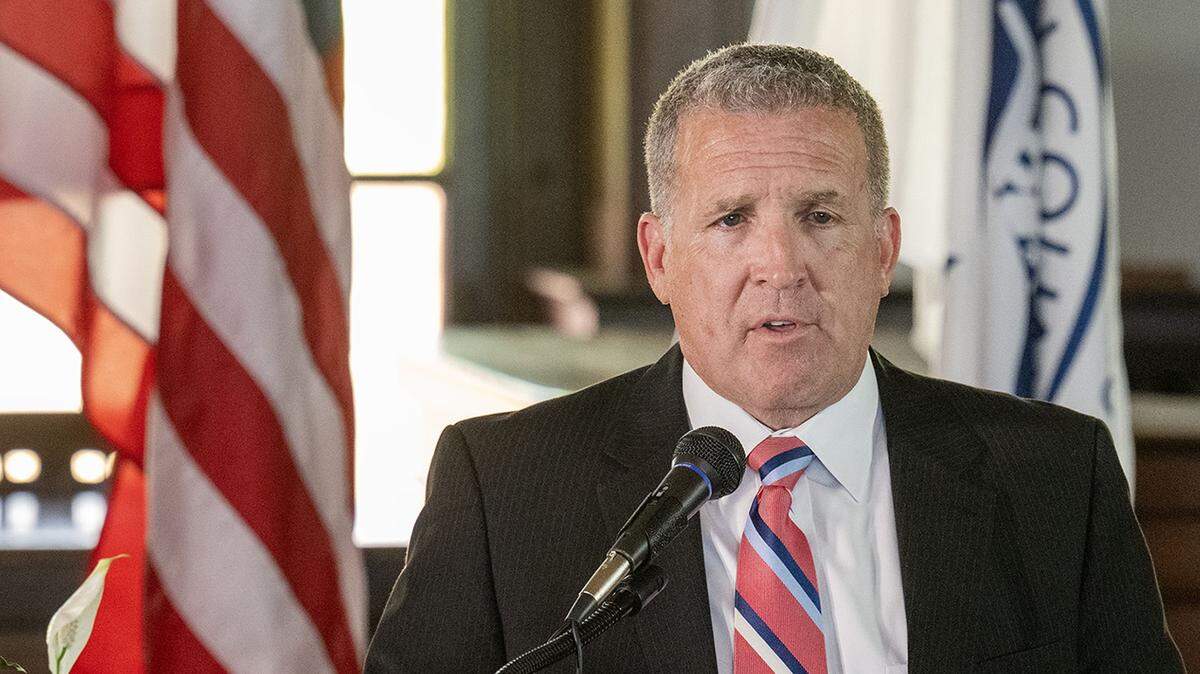
As the end of year due date for Jackson County tax payments approaches, Interim County Executive Phil LeVota is instructing some commercial building owners to disregard their bills and instead make an educated guess about how much they think they should pay.
LeVota, who will serve as county executive through the end of 2026 and has pledged not to run for the permanent seat, has made property tax reform the centerpiece of his brief tenure. He announced last month that along with issuing tax credits to thousands of residential property owners over the next few years, the county would manually reassess the value of commercial properties worth under $5 million whose values increased by more than 15% in 2025.
Those who own commercial property in Jackson County either have received or will receive a tax bill in the mail, but they’re also set to receive another statement by mail identifying their newly updated assessed value for 2025, LeVota said at a Monday meeting of the Jackson County Legislature.
The already issued tax bills do not account for the potential reductions to assessment values , LeVota said, so commercial building owners will have to independently guess how much they owe in taxes based on the revised value. Owners can expect to receive the second statement from the county identifying a new value before tax bills are due.
“We want you to estimate what that tax bill is and pay that by December 31,” LeVota said at a Monday county legislature meeting.
Forming a guess
LeVota said last week that the county had identified 6,200 commercial property owners whose values will be adjusted and who should therefore plan to guess their own bill in this manner.
Commercial property owners guessing their new tax bills will likely be paying less than their initial billed amount.
LeVota said that property owners will not be penalized for guessing too low. If their new tax payment is insufficient, the county’s collection department will contact owners in early 2026 to request additional payment, he said.
However, he also said that residents who are fully delinquent on their tax bills this year – who do not send in any money at all – can potentially expect to face new consequences, referring to “possible legislation dealing with fines and penalties.”
If commercial property owners overpay when guessing on their new tax bill, LeVota said, they will receive a direct cash reimbursement in the new year.
Legislator Sean Smith noted that “recalculating their own tax bills could be a little scary for [residents],” but LeVota said he feels the move will make residents feel like they have a greater stake within the county’s nebulous tax policy arena.
“I wanted the property owner to do that on their own,” LeVota said.
LeVota’s tax policy
The new instructions around commercial tax payment come on the heels of LeVota’s recently finalized plan to issue tax credits to homeowners whose residential property values increased by more than 15% in the 2023 assessment cycle.
Last week, LeVota clarified that the residential credits will be applied to 142,000 residential
property owners over the course of three years of future tax bills, even if these residents previously got their 2023 assessments adjusted by appealing to the county Board of Equalization.
“Under the [county] charter, I have the ability to correct errors,” LeVota said. “...I do not believe I have any taxpayers that are going to argue with the move.”
The county has sent about half of its 2025 tax bills as of Monday, Smith and LeVota said. In posts shared online, Smith previously attributed the delay to issues with the printer’s production schedule, as well as weather delays.
However, LeVota emphasized that December 31 is a firm deadline for some form of tax payment. He advised residents to visit the county collections department in person if their bills do not arrive by mail on time.
“It’s noisy out there, people calling and begging for their bills,” LeVota said. “There’s only so much we can do.”
Long-term impacts
Instructing residents to guess or underpay their initial 2025 tax bills will have an immediate impact on taxing jurisdictions including schools and fire districts, which have already set their tax levy rates for 2025 and rely on property tax revenue for a significant portion of their annual budgets. LeVota said last week that he had met with more than 20 school district leaders, with mixed reactions to the new tax policies.
In addition, LeVota said, since collections staff will be manually reviewing the commercial tax bill payments that residents calculate themselves, the county expects an indefinite delay on the release of actual tax payments to the schools and bodies that use them.
“Some say it will have a detrimental effect,” LeVota said. “Some say it’s ok. Some say it won’t affect them at all because they have raised their levies.”
The county is asking residents who are unsure about how to handle their tax bills to call or email an assessment hotline, which launched this week and is staffed by both collections and assessment staff. The Taxpayer Assistance Hotline can be reached at 816-881-4455, or by email at taxquestions@jacksongov.org.