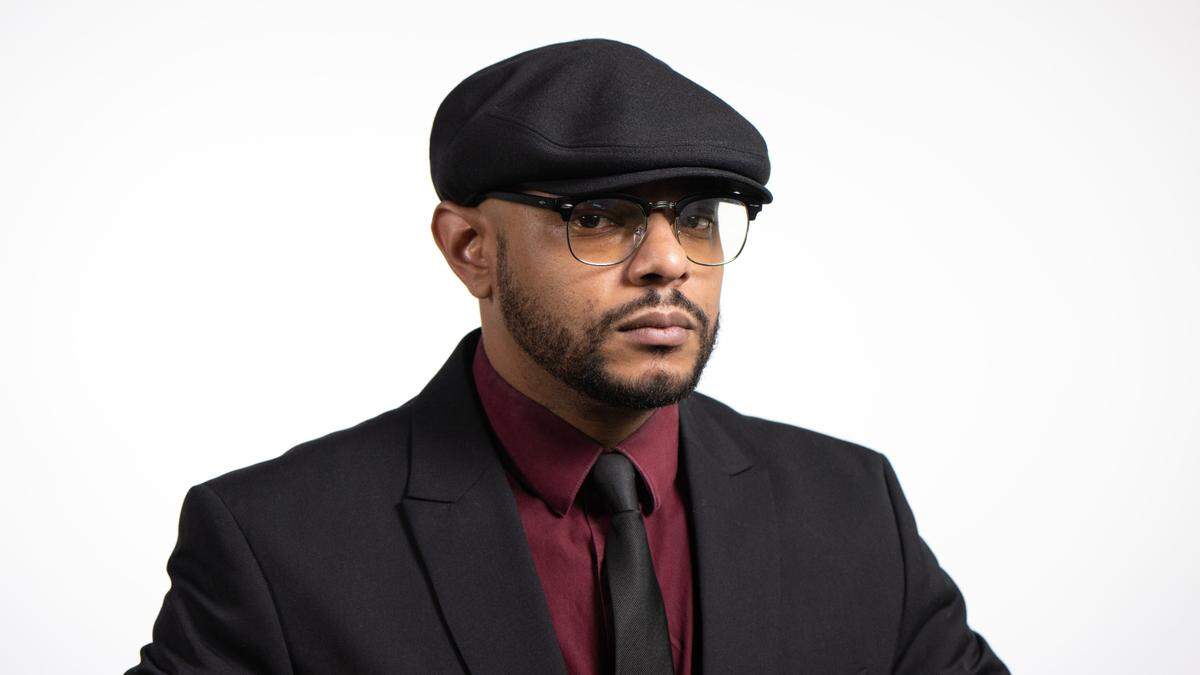
KC designer’s Afrocentric fashion, liked by NYC buyers, shows alongside fine art
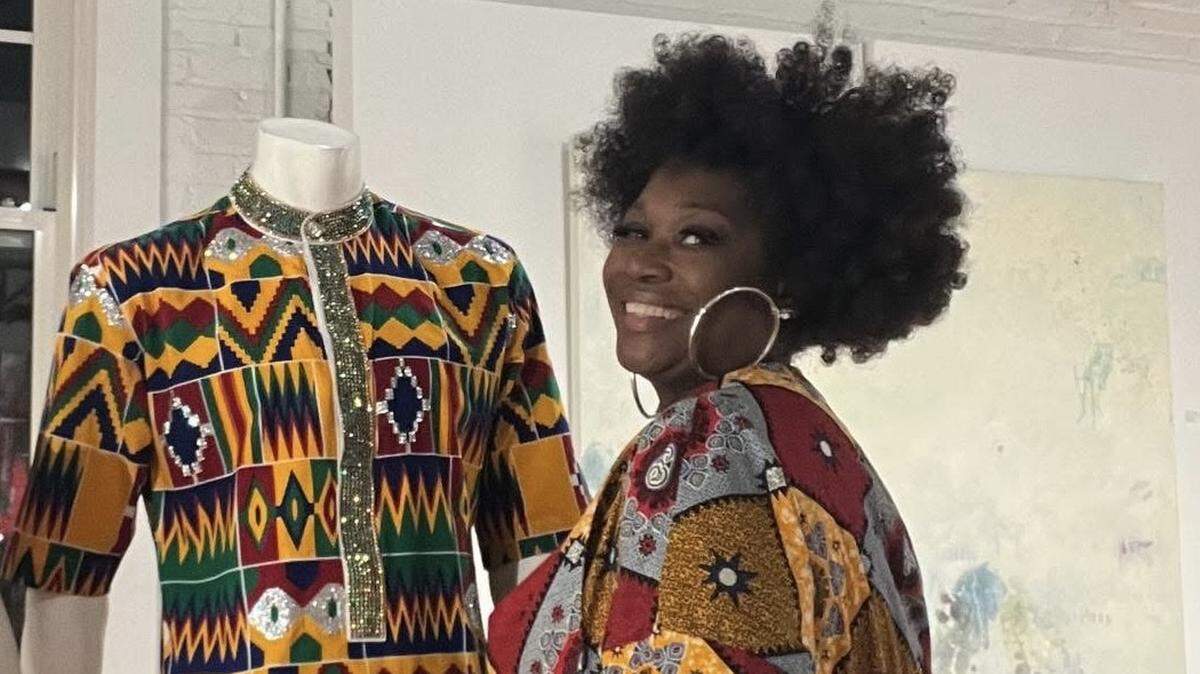
At the Zhou B Art Center in Kansas City’s historic 18th & Vine district, designer Kenya Martin has built a creative space where bold color, African-inspired textiles and handmade craftsmanship come together.
The Mississippi-born artist, who launched her brand K-Made It after years of government layoffs pushed her toward reinvention, is now the only fashion designer among the resident artists in the building. Her work centers Afrocentric design, confidence and cultural storytelling while offering opportunities for models who aren’t always chosen for traditional runway shows.
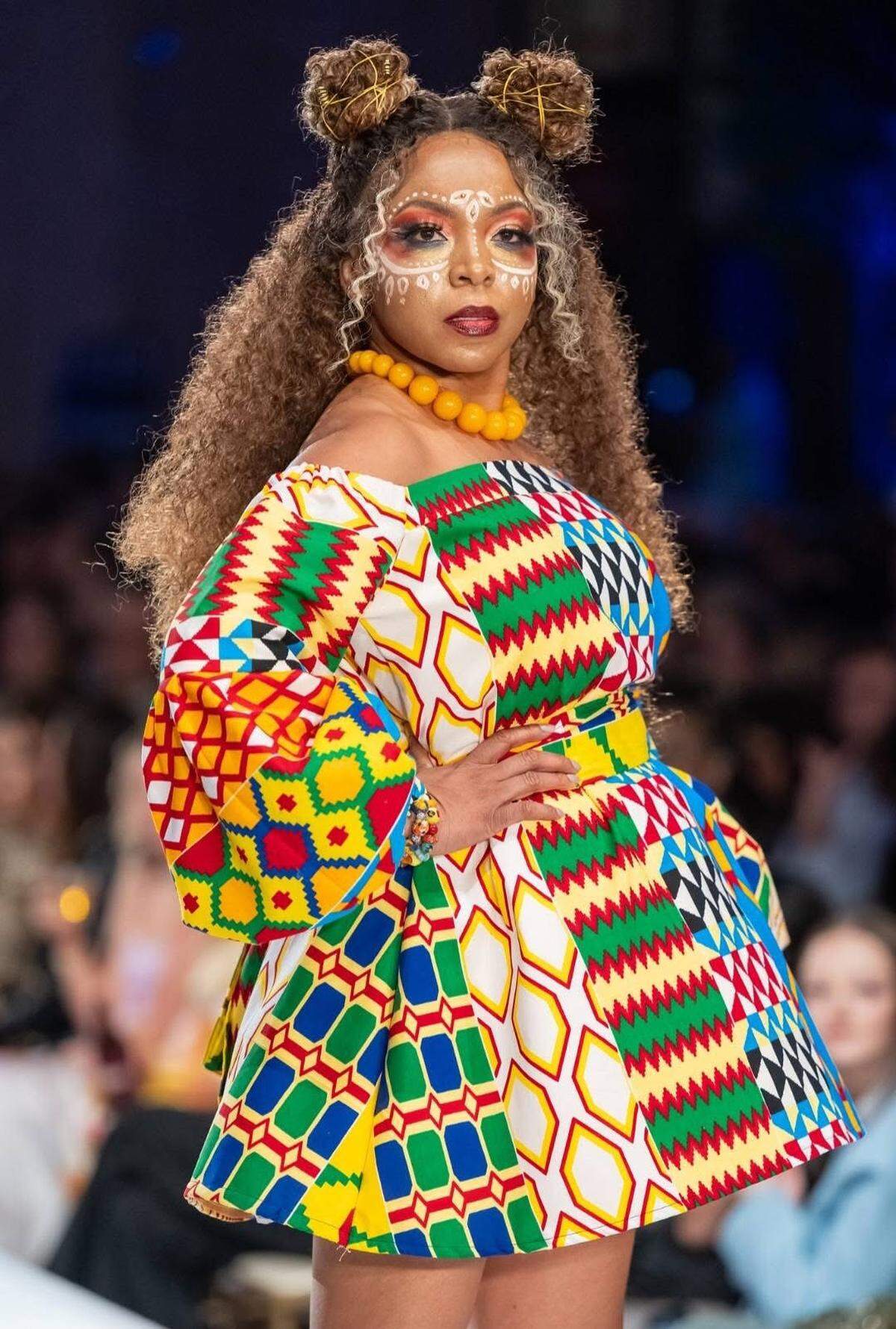
Martin’s pieces, many made with kente cloth, Ghanaian prints and Nigerian textiles, stand out for their bright patterns, intricate layering and one-of-a-kind construction.
Beyond her growing reputation in local fashion, Martin has shown her work in New York, secured an invitation to Sweden for 2026 and won Best Boutique this year at the Kansas City People’s Choice Awards. Through K-Made It, she hopes to build a global presence while uplifting Kansas City artists, models and communities along the way.
Recently Martin sat down with The Star’s culture and identity reporter J.M. Banks to talk about finding her passion for art, representing design in the KC art scene and creating cultural connections through fashion.
How did your upbringing influence your path toward becoming an artist?
I was born and raised in Mississippi. I moved to St. Louis in 1990 and then I moved to Kansas City in 2003. I started modeling in 1991 and I decided to go ahead and create my business, K-Made It. So that’s why I started K-Made It, focusing on learning how to sew, being a creative and I went from there.
I also thought about some challenges that I had when I was a model. Because I am bowlegged, I didn’t always get selected to model on the runway. So I came up with a plan. If I decided to transition from a model to a fashion designer, then I could help the up-and-coming models who don’t always get chosen. I decided to help in that aspect as well, becoming an artist to prepare for retirement, and to help artists and do things in the community.
Also, there are not a lot of businesses out here that represent Africa. There are not many places where we can purchase Afrocentric designs. So that is the main reason why I decided to become an artist. It was a multitude of things.
Are you a full-time artist or do you have a career outside of art?
I was trying to do both. I established (launched) my business (K-Made It) in 2023 because of the government layoffs. So here we go again. I got laid off my job September 26, a few days before the government shutdown. So I was let go permanently. Right now I do not have a job. So I’m trying to focus on my business.
What is the story you’re trying to tell through your clothing and art?
The story I’m trying to tell with my brand is that if there is anything you’re trying to do in life, you should go ahead and do it and not give up. I have had many challenges and setbacks in my life. That’s why I say my name is Kenya Martin and if K-Made It, so can you. That is one of my mottos. It doesn’t matter what age you are, you can always start. I did not start sewing until 2021. I graduated from the apprenticeship program in 2023 at the Sewing Lab and took Pamela Lucas’s classes. It is never too late to learn. That is what I try to inspire people with. My brand name tells that story.
How would you describe your artistic style to someone who’s never seen your work?
I would describe it as bold and colorful. Very Afrocentric. Representing the culture, representing Africa. Then I also like to inspire and enhance people with confidence. Like I said in the beginning, a lot of the models don’t always get selected to walk in certain fashion shows. So my brand also inspires people to build confidence and feel good about themselves. When you see the bold colors, like orange is one of my favorite colors in my designs and I have done a few designs that have orange and the green, all the beautiful bold essential colors.
Can you describe some of the pieces that you have on display at the Zhou B Art Center?
Right now, I do have two pieces that are being represented at an art exhibit. It is representing a male and a female Afrocentric design and the fabric is more of a kente-style fabric for both. At the bottom of both the male and female pieces, I did a little paint on it and we blinged it out a little bit. We brought out both the kente corset and the men’s tunic as well.Those are displayed at the Zhou B Art Center until the end of January.
I also did another piece. I painted a nine or ten layered skirt with all different types of fabric. It’s layered and has pretty much orange in every piece of the fabric. It is at one of the community centers. I collaborated with Woke3. He is a well-known artist. I collaborated with a well-known model, and I created the design. Woke3 painted it. That painting is at one of the community centers through the Water People Project, and from my understanding, it will be displayed there for life.
Are there very many other clothing designers there at the Zhou B Art Center?
As of right now, I am the only artist there that is a fashion designer. That makes me feel amazing and let me tell you the reason why I feel amazing. They are all different types of artists and I’m blessed to be the artist who creates and sews the designs.
During First Fridays, everybody loved coming to my studio. You may not know this, but they voted for me to win Best Boutique for the Kansas City People’s Choice Awards. They actually voted for me in two categories: Best Designer and Best Boutique for the Kansas City People’s Choice Awards.
I thought I was going to win Best Fashion Designer, but I didn’t win that one. I actually won Best Boutique. That made me feel really good that people love coming into my studio, saying how much I represent Africa and how they love my setup. So I’m very happy about that.
Are there particular themes or styles that you would like to experiment with in your work?
I want to get into making more solid colors, because I don’t want to just do the Afrocentric style. I want to be an artist who is able to do different types of designs. When I did Bra Couture, I did it two years in a row. One of those designs was more of a high couture design and it was a solid color. The second one was more of a bohemian type of fabric.
It was out of my comfort zone, but when they pick the models for you, you create based on what the model likes. I made it happen. When they auctioned it, I was the top designer whose item, the corset, went for the highest amount. I believe it was over $75,000 that someone bid on it.
So I’m feeling pretty good about some of my designs. That’s why I want to start creating more high couture designs. I only started sewing in 2021, so it’s a work in progress. I also want to start learning more about tailored men’s designs because they require more detail. I want to work on that as well. I don’t want to be labeled as only an Afrocentric designer. I want to be able to create all different kinds of designs.
.jpeg "att.tfBqnjw2xbQ3_sEWmwS7nHaiFdXzaE-e8DEXq6hLHm4 (1).jpeg")
How do you incorporate specific cultural motifs and textiles or historical references into your designs?
I base it off what I like. A lot of my fabric comes from someone in Ghana who sends me fabric. When I went to New York and showcased to buyers, they said they liked how I mix different types of prints because I use Ghana fabric and Nigerian fabric.
I like using a lot of tribal prints. Right now, I’m trying to get educated on learning all the different symbols and colors that represent Africa so I don’t offend anyone. So far they said I have not offended anybody, and I want to keep it that way.
I am continuing to educate myself. I also know that kente fabric is one of my favorites, and I’m learning more about it.
How do you balance tradition with contemporary fashion trends?
I balance it by making some solid colors. For example, sometimes the pants can be a solid color while the top is an African print fabric. That is how I’m doing it now. But I plan to make a whole solid-color collection so it will be more contemporary.
A lot of people have requested all-white designs. I have not made any all-white pieces yet, but by getting that feedback, I’m going to start doing that. People can then pick and choose if they want Afrocentric, solid colors, or all white. That is another thing I’m working on.
Can you go through your design process, what that looks like from concept to completion?
I get a lot of inspiration from watching videos. I like watching music videos. For example, Burna Boy (Grammy-award winning, Nigerian singer, songwriter and producer). I like to watch certain videos to see what people are wearing and what trends are happening. If something catches my eye, I write it down or save the video. Then I go back to it and create.
If I can recreate something in my own way, I sketch it, find a pattern, then find the colors I want. Then I start ordering everything I need, cut it, sew it, and go from there to make my collection for fashion shows.
I have been doing a lot of sewing to get myself out there because it is hard to get your business known. I have done probably over 30 fashion shows. My goal for 2026 is not to do many fashion shows because I think I have done enough for people to know who I am.
Now I’m working on figuring out a way to make a profit and get people to start buying.
Do you feel fashion is represented well in art spaces, or do you feel you are carving out new ground?
No, I think there should be more. For me, and I’m not sure about other fashion designers, the fashion is not represented enough. People will pay money for a painting, but they won’t pay the money for a custom fashion piece. I just did a vending event last weekend. I took boutique items and my custom pieces. People bought the boutique items but not one custom piece.
I explained the reason why prices are higher. The fabric is expensive. I let them touch it and feel the quality. If it takes me five hours to make a bomber jacket, and I pay myself $25 an hour, that’s $125. That doesn’t include the fabric, the zipper, interfacing, or thread. I cannot sell it for $125 because I’m not making money. People don’t always understand the cost behind custom work.
So I’m trying to figure it out and hopefully get buyers to start purchasing.
What do you think is the biggest challenge you’ve encountered while building your brand here in the metro?
Trying to get grants to support my business. Trying to get help with certain things. If you are a one-man show, you can’t do everything. It’s hard to pay someone to help and to get financing. That is why I had a nine-to-five job. Now I don’t have one, so it’s even harder because I have to pay my studio bills and home bills. If I don’t have money coming in, that can be very challenging.
Sometimes it is hard to get help. I don’t know if people are afraid to help because of competition or something else. I haven’t figured that out yet. But there are some people who do help me. KC G.I.F.T. is one of the organizations that supported my brand from the first time I asked for help.
How do you hope people feel when they wear one of your designs?
Oh, they are going to feel confident. The fabric is good quality. I do not buy cheap fabric. People love the bold colors and the designs. The people who purchased my items always say they love them. Some pieces are one-of-a-kind.
When I did the fashion show in New York in September, I showcased to buyers. After that, I was invited to go to Sweden to showcase my collection in 2026. So I feel there will be a lot of positive things coming. I want to be organized and ready. I want to have manufacturers make my designs so I only have to create them once and then have mass production. That is the goal right now.
Is there any particular fashion show or event that means the most to you?
After I got told three no’s in a row and then got my first yes from KC Fashion Week, I was blown away. KC Fashion Week is one of the top shows in the area. I had about 12 or 14 models, and most of them were walking in KC Fashion Week for the first time. That is one of my goals: to get new models into these shows.
I showcased my first collection on a Wednesday night, which is usually the night for students or new designers. I was in school, so it was an honor.
African Fashion Week Omaha was also a blessing. I was more creative because I knew there would be a lot of Africans in the audience. They loved my collection.
Then I did the 18th and Vine Arts Festival. I showcased every year since they started. I have been the headliner twice. At KC Fashion Week, I closed the show on Thursday and Friday nights. I closed out March of this year. At 18th and Vine, I opened the show at least once. Being a headliner tells me I am making progress and people like me as a designer.
Where do you see your art and designs headed in the future? How do you plan to grow and expand the brand?
My goal is to be international. That is why I took my designs to New York to showcase to buyers. I was invited to Sweden for 2026. I also want to be in Made in KC stores and in major stores like Dillard’s or Macy’s. We don’t see many Afrocentric designs in those stores. That is one of my goals.
I also want to travel to other countries and take some of the local models with me. I want to be known worldwide.
For more stories about culture and identity, sign up for our free On The Vine newsletter at http://KansasCity.com/newsletters.
This story was originally published December 6, 2025 at 6:00 AM.