Rare butterfly found in Kansas City: A ghost or genetic anomaly?
A member of the Missouri Department of Conservation spotted an animal in Kansas City that’s usually seen 4,000 miles away. .
The department said in a social media post that assistant natural history biologist Amanda Gehin found a white monarch butterfly, a variation of the famous insect that is most often seen in Hawaii. The post said a whitebanded crab spider had been seen hunting a monarch butterfly in the same spot.
“Could it be the spirit of the fallen Monarch flying back for a visit? Or just nature showing us how full of surprises it can be?” the Missouri Department of Conservation said on Facebook. “Either way, a beautiful, and spooky, nature sighting!”
Gehin said she found butterfly Oct. 3 at an official monarch waystation near her home in Kansas City with the help of Monarch Watch, a tracking website and app run by the University of Kansas.
“I came across the white monarch when I was spreading native milkweed seeds in the monarch waystation in my yard,” Gehin said. “I did a double take when I noticed the incredible creature nectaring on New England aster a native late-season bloomer. I have been wondering if it would have been more likely to be struck by lightning.”
As for how the animal made its way to Kansas City, it’s likely on its way from its home in the contiguous U.S. to Mexico for the migration period. Gehin’s hopeful it’ll meet up with other monarchs to cluster together on fir trees.
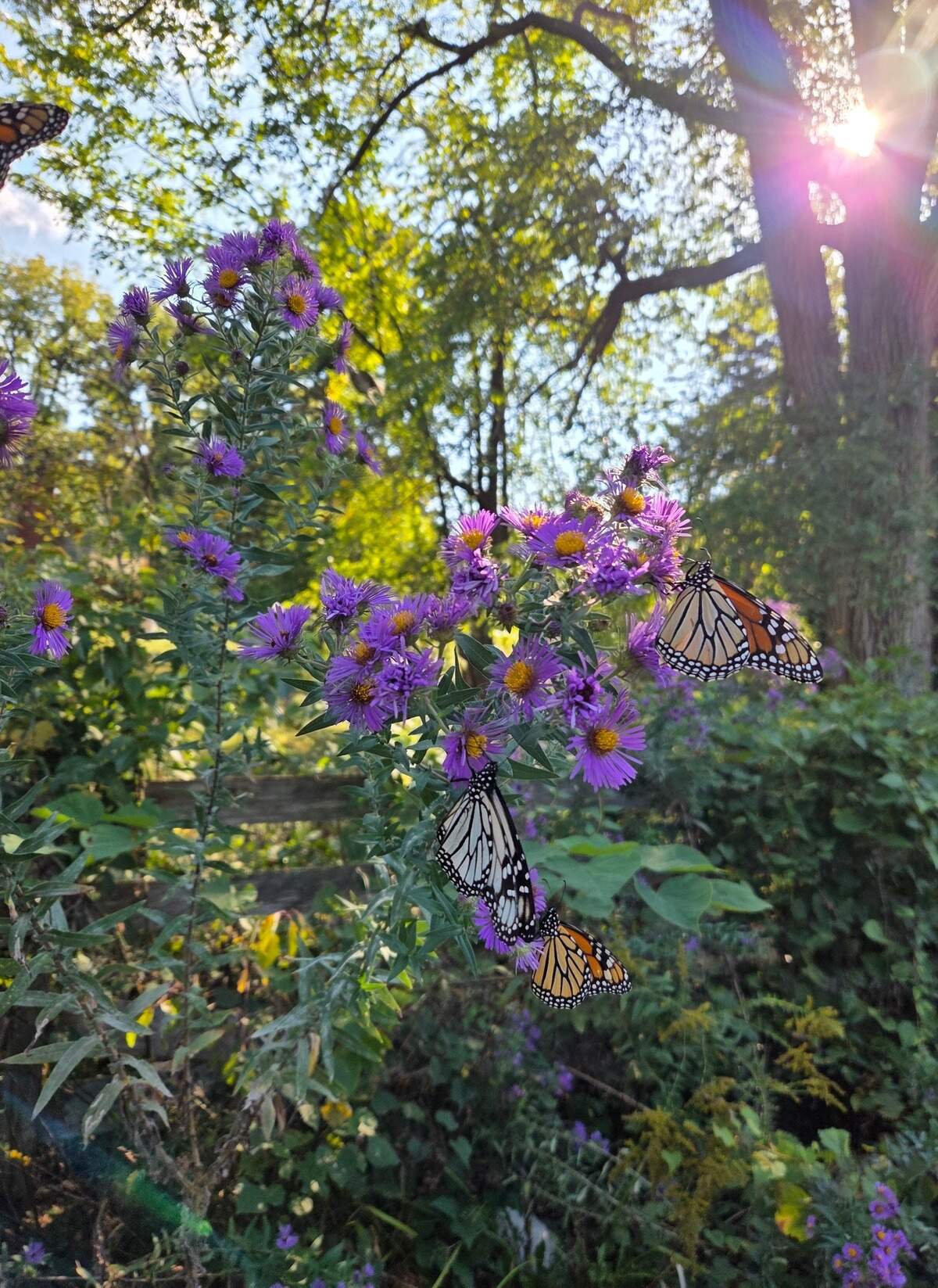
While the white pattern is more common in Hawaii, it could happen with any monarch butterfly if two copies of the autosomal recessive alleles gene are present in the butterfly. Gehin said that the butterfly she saw could have those genes.
She reached out to Orley “Chip” Taylor, the founding director of Monarch Watch, after she spotted the butterfly, and he said he only remembered one sighting of a white monarch butterfly so far in 2025. Taylor said that a common feature in the uncommon butterfly is maroon eyes, and that the photos Gehin captured show the butterfly with black eyes, making the appearance an even rarer occurrence.
If anyone is hoping to draw one of these butterflies to their home, Gehin says to plant native plants, like milkweed, in their yards. She says it’ll not only help with bringing nature close to your home, but it’ll also help with the butterfly population.
Why is it rare to see a white Monarch butterfly?
Gehin has some theories on why it’s rare for people to see white monarch butterflies in the wild.
One is that predators of the butterfly might mistake its white color as palatable, since they don’t display the orange warning signal typically found on monarchs. If it’s orange, it’s most likely toxic.
She also said that birds that prey on monarchs in Hawaii might not learn to selectively avoid the orange-colored butterfly and that its white form might be less visible to the birds that do eat butterflies.
“Monarchs are fascinating in so many ways, both culturally and scientifically, and the sighting has offered me a brand-new learning experience,” Gehin said.