From loans to hemp to smoke-shop opioids, KC businessman pushes legal limits
This is Part 2 of a three-part series about the rise of the gas-station opioid 7-OH and its ties to the Kansas City company CBD American Shaman. You can read Part 1 here.
In March 2000, Jackson County drug detectives knocked on the door of a Grandview home and came out with 15 pounds of marijuana — and an informant willing to talk.
That informant told a story of moving 30 pounds of weed every week for three years for a married couple known only as “Vinnie and Mary.” Detectives would soon learn their names: Vince and Mary Sanders.
A few days later, in a Price Chopper parking lot near 103rd Street and State Line Road, the informant met Mary for a controlled buy, according to court documents. The informant handed Mary $5,000, and Mary gave the informant 20 pounds of marijuana. FBI agents and Jackson County detectives executed search warrants on two Sanders homes not long after. They discovered 160 pounds of marijuana stuffed into duffle bags and another 80 empty bags that suggested a high-volume operation.
The drug-dealing business, Sanders told The Star recently, “is not real professional overall. It’s mostly people that think small. So when you have somebody that’s more of a larger, bigger picture guy, that’s a real business person, that understands how to structure things — it just blew up incredibly fast. It just took off.”
Facing prison, Vince and Mary flipped. They gave up their source: a Tucson-based supplier named Roberto, a man with a scar across his top lip who had been fronting them between 120 and 180 pounds of marijuana every four to six weeks for more than 10 years.
Vince then flew to Las Vegas and met Roberto to pay him $195,000 to settle his most recent drug debt and arrange a future deal involving multiple kilos of marijuana.
The sting worked. Roberto — an Arizona-based mechanic, husband, and father of three — was arrested, convicted, and later deported to Mexico after serving six years in federal prison.
It was a different story for Vinnie and Mary. Though the government sought $2.5 million in forfeiture, it left their Brookside and Waldo homes untouched and agreed not to factor in Vince’s prior drug charge, which could have otherwise meant 10 years in prison. Instead, both were sentenced to 32 months; Mary served first, then Vince, so one parent could remain at home with their two children. Vince served about half of his term.
Prosecutors asked the judge to give them reduced sentences due to Vince providing what one law enforcement agent called “the most substantial cooperation” he had witnessed in his entire career.
The leniency Sanders won by trading information reinforced a lesson he was already beginning to grasp: American laws can be flexible and negotiable. Laws are a spectrum, defined by leverage, loopholes and timing. He spent the next two decades building businesses in that spectrum.
As the owner of Kansas City-based CBD American Shaman, Sanders has shown a knack for seizing on substances — CBD, Delta-8, kratom — that exist in legal limbo, selling them as mainstream products while regulators and prosecutors struggle to catch up.
Now, those instincts have taken him to his riskiest play yet.
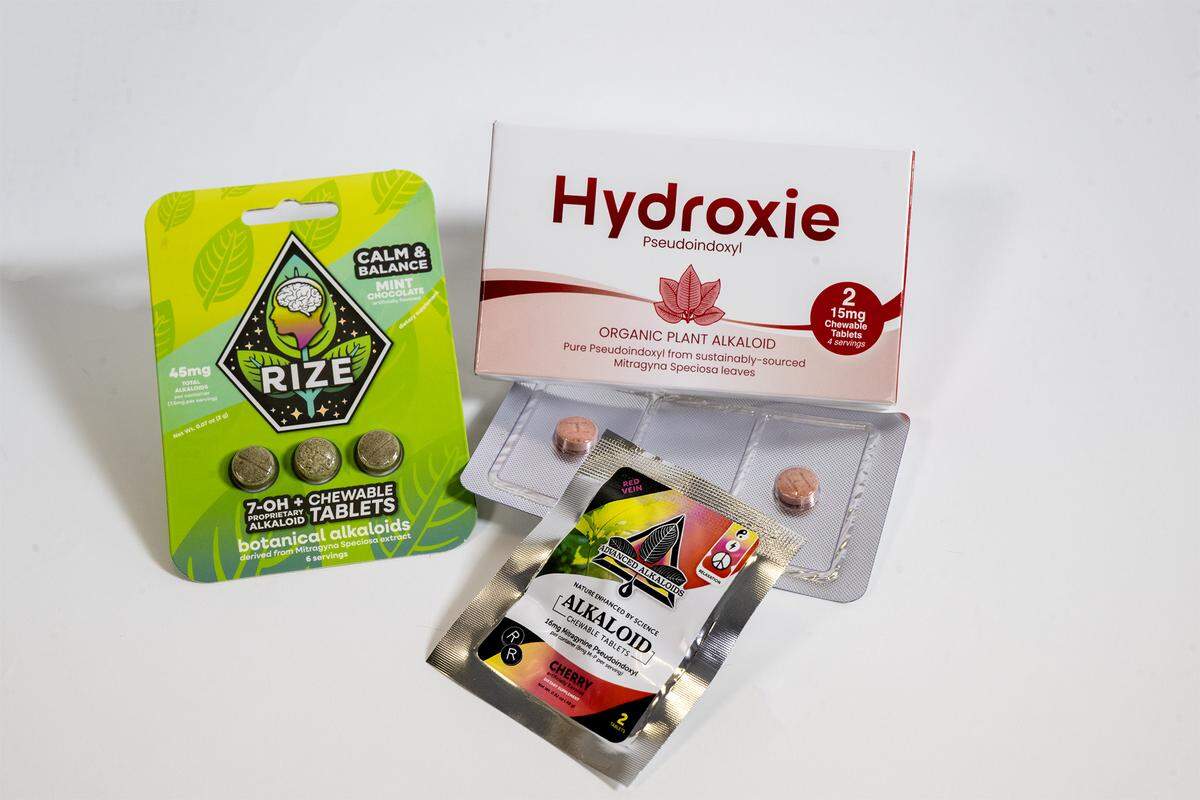
Sanders is the leading figure behind 7-OH, a smoke-shop opioid that has drawn scrutiny from the highest levels of the federal government. He credits the product with saving thousands of lives and says it could spare countless more if widely available, casting it as a safer alternative to fentanyl and heroin. The U.S. Department of Health and Human Services and the Food and Drug Administration disagree. The agencies announced in July their intention to have 7-OH classified as a Schedule I drug.
“7-OH is 13 times more potent than morphine,” said FDA Commissioner Marty Makary at that press conference. “Yet it is sold in vape stores, in smoke shops and convenience stores and gas stations that are popping up all over the United States.”
Undeterred, Sanders has staked his company’s future on producing and distributing 7-OH through his CBD American Shaman network, and manufacturing the product in Kansas City for dozens of other companies across the country. It is a wager that could either extend his run of exploiting gray areas in the law or bring it crashing to an end.
“I’m willing to go back to prison over (7-OH),” Sanders told The Star. “It’s not what I want to do. But I’ll do it. That’s how strongly I feel about this.”
Title loans and teeth whitening
The family business was cars.
Sanders’ grandfather owned Bill Sanders Full Service Car Wash in Waldo for 20 years and was also a two-time president of Indian Hills Country Club, according to his 1984 obituary.
Sanders, born in 1964, took over the car wash when Bill died. He ran it for a few years and then opened a used-car lot called Premier Pre-Owned Auto Sales down the street at 7809 Wornall Road. He also opened a spin-off business financing car sales for customers, with advertising targeting the “bad credit, no credit” crowd.
“And we got a bunch of calls from people saying, ‘Hey, I’ve got a 1982 Monte Carlo that I don’t owe anything on, and I’d like to borrow money against it,’” Sanders said.
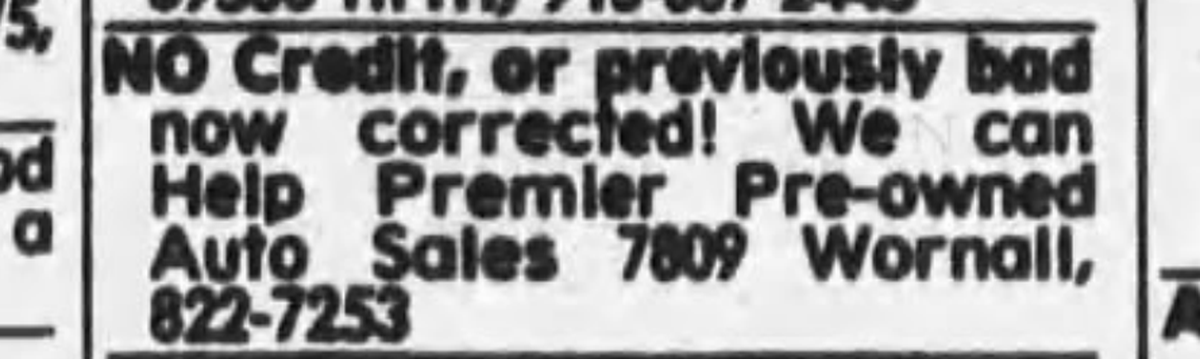
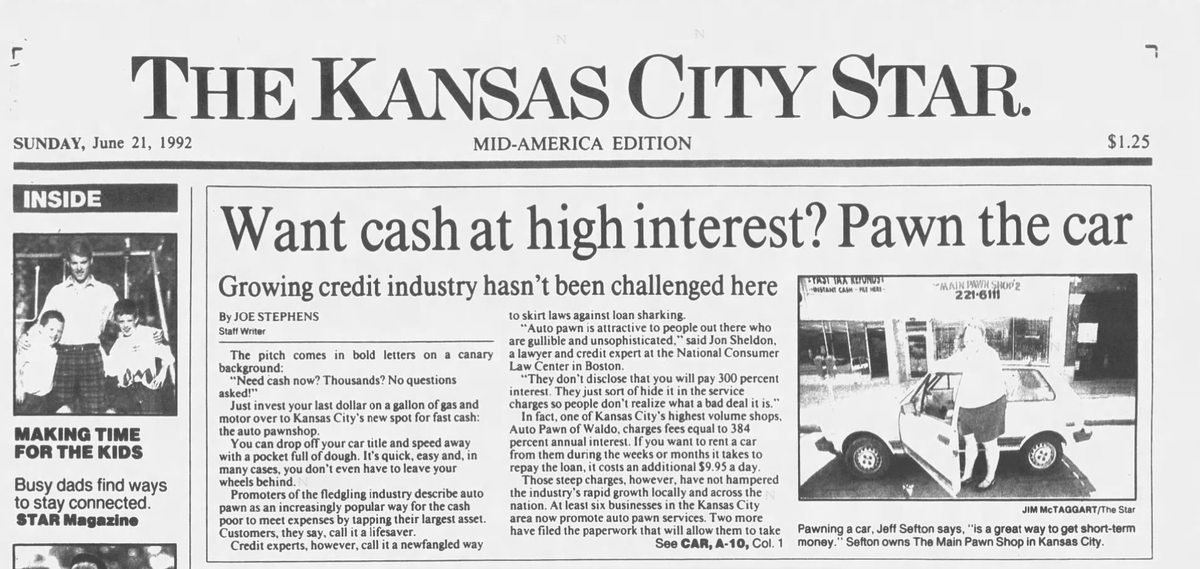
That led Sanders to open Auto Pawn, a business that would today be known as a title loan company. At a time when other states were moving to outlaw the practice and Missouri had yet to act, Sanders built one of Kansas City’s busiest operations, which experts claimed skirted loan-sharking laws by charging fees that a 1992 Kansas City Star article determined to be 384% annual interest.
Sanders was working as a salesman at Jay Wolfe Acura near 103rd Street and State Line Road at the time of his 2000 drug arrest. After his conviction, Sanders’ attorney argued for voiding his prison term, citing among other things the tax revenue lost from having “the #1 Acura salesman in the U.S.” behind bars. The judge was unmoved.
He served about half of the 32 months of his federal prison sentence. In 2005, Sanders returned to the auto business. He opened a used car lot called Kansas Avenue Auto Sales in Kansas City, Kansas, funded by a $150,000 loan from his mother, Sharon Wilkinson, he would later claim in court filings.
“It was another niche,” Sanders said. “I recognized that we had a growing immigrant population in Kansas City that was grossly underserved in the market. For a while, we were selling 100 cars a month.”
In 2008, a customer sued Sanders and his financing partner after she bought a Ford Taurus and never received the title, leaving her unable to legally register the car she was making payments on. When she stopped making those payments, her car was repossessed. She accused Sanders of deceptive practices and fraud and alleged the practice was part of a pattern at Kansas Avenue Auto Sales. A court granted her a $75,000 judgment, though it’s unclear whether she ever collected.
The 2008 financial crisis upended Sanders’ dealership. Credit dried up, and his customer base of low-income Hispanic families were buying fewer cars. He sold Kansas Avenue Auto Sales for $25,000 in 2009, later attesting in court documents that the business lost $500,000 in its final year.
Sanders then embarked on an entirely new business venture: teeth whitening. He partnered with Jimmie Searing on a business called Spotlight Smile after hearing about the concept from Jimmie’s brother, Bobbie.
Jimmie and Bobbie had pleaded guilty in 1989 to federal cocaine distribution charges. Jimmie also worked in the title loan business at the same time Sanders owned Auto Pawn. In 2002, Jimmie returned to federal prison, sentenced to two and a half years for odometer tampering and fraud at two KC area car dealerships.
Sanders says he knew Jimmie Searing initially because Searing owned an arcade in the Waldo area in the early 1980s and later because he bumped into him while the two men were both serving time at Leavenworth.
“We became buddies, and then because he had also been in the car business, when I got out and opened (Kansas Avenue Auto Sales) I would sometimes buy cars from him,” Sanders said. (Jimmie Searing died in 2012.)
Their partnership lasted less than a year, Sanders would later state in court documents. But Sanders stayed on in the teeth-whitening business, working with his mother and splitting his time between an Oak Park Mall kiosk and McAllen, Texas. In divorce filings from around this time, Sanders denied Mary’s allegation that he was spending time in that border town for a different reason: drug trafficking.
“Nothing could be further from the truth,” Sanders wrote in a motion, saying that he chose to open a kiosk in McAllen’s La Plaza Mall because there was “an influx of wealthy Mexicans that come across the border to spend money.”
But back home in the Midwest, the Kansas Dental Board had begun to take a closer look at Sanders’ operation. In 2011, it sued to shut down Spotlight Smile, arguing that teeth whitening met the state’s definition of practicing dentistry, which required a license. Sanders fought back, claiming he wasn’t performing dentistry at all and accusing the board — dominated by licensed dentists — of protecting its own turf to the exclusion of upstart businessmen like himself.
The board dismissed his claims as baseless, and when Sanders’ lawyers withdrew and he failed to appear at a hearing, the case ended quietly. By then, the Oak Park Mall kiosk had already closed.
Vince Sanders’ turn toward hemp
Sanders traces his start in CBD to his mother’s uncle, Denny Van Tuyl, who sought alternative therapies while battling cancer in 2012.
“The doctors told us six months,” Sanders said. “I thought, f--- that. There’s gotta be something out there that could help. I may have to smuggle it in from Switzerland or Mexico, but I’m going to figure this out.”
His research led him to CBD, which he discovered was abundant in wild hemp. “Well, we’re in the Midwest and there’s all kinds of ditch weed around here,” Sanders said. “So I go about acquiring it wherever I could and making crude extracts.”
Sanders would process the plants into a black sludge, mix it with water, and give it to his uncle, who was also receiving traditional cancer treatment. Van Tuyl died, but the experience convinced Sanders of CBD’s potential.
In pursuing CBD as a business, he was once again returning to legally murky terrain. The DEA treated CBD as a controlled substance. But the 2014 Farm Bill had allowed for the cultivation of hemp containing less than 0.3% THC for research purposes, and it didn’t explicitly restrict the cannabinoids, like CBD, that could be extracted from it. This ambiguity let entrepreneurs like Sanders move into the market without immediate legal repercussions.
“There was a lot of hesitation and homework to make sure this is legal, right?” Sanders told KCUR in a 2019 interview. “I talked to a lot of attorneys.”
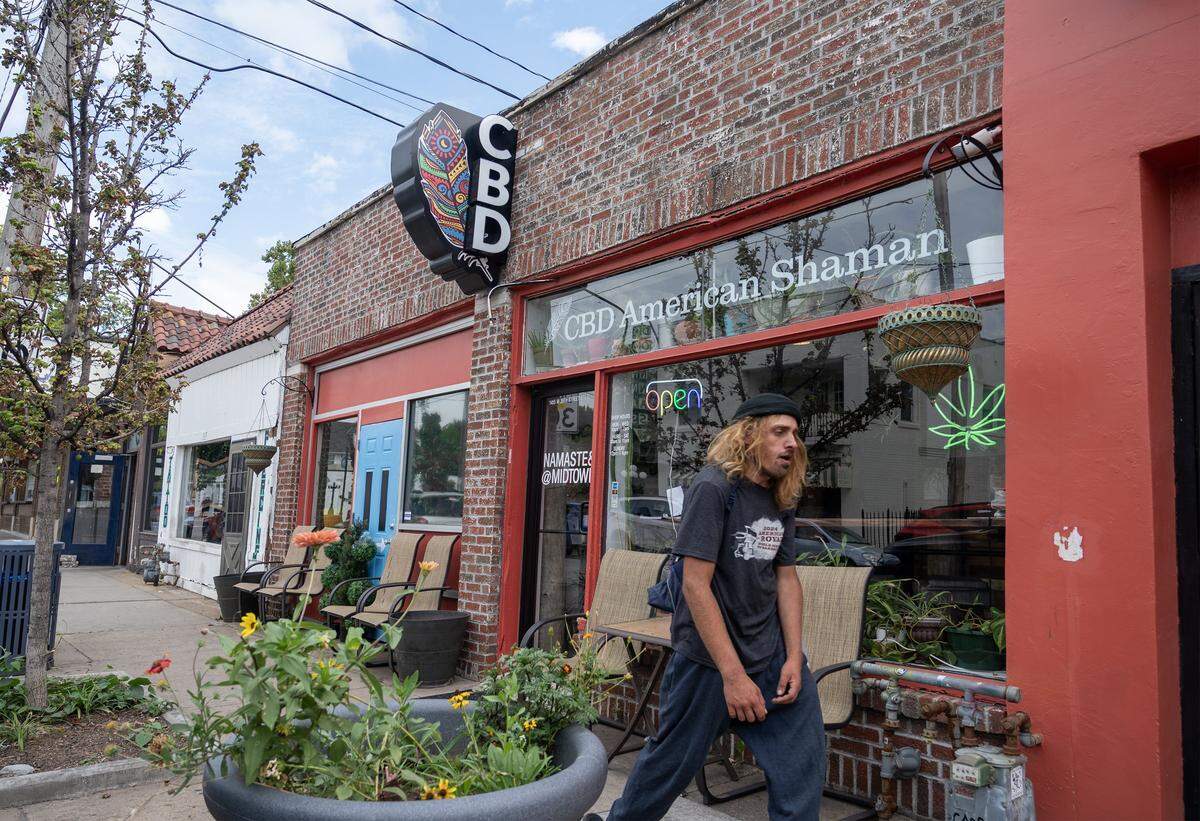
In 2015, Sanders started a company that sold CBD wholesale to smoke shops, chiropractors and health stores under the name CBD American Shaman. The following year, he partnered with Brendan Hodgson to open The CBD Store in the Crossroads at 18th and Oak streets in the Crossroads. It is thought to be among the first CBD retail stores in the country.
The shop drew crowds during First Fridays with an open bar and free CBD samples — a sales tactic Sanders would repeat with other products in the years ahead. Two more KC area locations followed.
Hodgson no longer has any involvement with Sanders or CBD American Shaman. He told The Star he was barred from commenting for this story due to having signed a non-disparagement agreement.
“I was the founder of the company with Vince, and we were partners,” Hodgson said. “That’s about all I can tell you.”
CBD American Shaman muscled its way into new markets when Sanders shifted to a franchise model, selling store rights to operators who agreed to stock exclusively from his manufacturing arm, now known as Shaman Botanicals. Growth accelerated further with an affiliate program that rewarded existing franchisees for recruiting new ones — or even for bringing in smoke shops and other retailers to carry American Shaman products.
Bud Miley, who would later sue Sanders for breach of contract after he was fired from CBD American Shaman in late 2019, was brought in to run the franchise program, called American Shaman Franchise Systems. Miley had retired in 2017 as president of Kirby Co., an Ohio-based vacuum cleaner company. Soon, vacuum salesmen across the country were opening CBD American Shaman shops at dizzying rates.
“Think about it: if you can sell a $2,000 vacuum by knocking on somebody’s front door, you’ve got some real charisma — you can sell pretty much anything,” said Todd Underwood, who was the company’s chief operating officer at the time. “Within two years, we had 500 franchises open.”
By 2020, Sanders was publicly boasting that his company was likely the second largest CBD supplier in the country.
Growing pains at American Shaman
The rapid growth was accompanied by lawsuits over loose compliance and misleading marketing claims.
In 2017, a Burns & McDonnell employee was fired for failing a work drug test after taking CBD oil drops purchased from one of the first American Shaman stores, at 103rd Street and Wornall Road. He sued the company and the store’s owner, Rebecca Perdieu, saying Perdieu and other staff had specifically told him the product contained no THC and was regularly used by Kansas City police officers and firefighters who’d had no issues passing drug tests. The case was settled in 2022 for an undisclosed sum. Perdieu declined to comment.
A truck driver filed a similar suit in 2019, alleging that the CBD capsules he purchased at a Springfield area American Shaman store caused him to fail a drug test and lose his job. The suit notes that the product’s labeling contained no mention of THC. The case was settled in 2023 for an undisclosed sum.
“Those suits were ridiculous,” Sanders said. “When people start to think you’re making money, the lawsuits just pour out of the woodwork. And sometimes it just makes more sense to settle them.”
But at the CBD American Shaman store he ran in Lawrence, Trevor Burdett was also hearing complaints about positive THC test results from customers.
By 2017, Missouri had already begun carving out legal exceptions for low-THC CBD oil. But Kansas had some of the strictest cannabis laws in the country. Technically, it was not legal to sell CBD with even trace amounts of THC in the state, though many operators sold it anyway, betting that the federal Farm Bill, which allowed it, would shield them from prosecution.
Still, this legal gap meant products considered compliant in Missouri could expose Kansas retailers to serious criminal liability.
“It was a huge issue for me, because I’m getting all the CBD I’m selling from Vince, and especially if what I’m selling has more than 0.3% THC, that’d make me a major drug dealer in the eyes of the state of Kansas,” Burdett said. “So when customers started coming to me saying they were failing drug tests because of THC, I kept bringing it up to Vince. But he just kept ignoring me.”
Allen Marriott, who worked as American Shaman’s IT director from 2017 to 2021, said he suspected there was a good reason to be concerned about Sanders’ supply.
“He wasn’t using hemp like he’s supposed to,” Marriott said. “When you make CBD products, you have to start with a hemp plant that’s less than 0.3% THC. Vince was just using bunk Mexican weed from wherever he could get it.” (Sanders denies this, saying he sourced from suppliers in Kentucky and Oregon at this time.)
Convinced he needed greater control of his operation to be compliant with the law, Burdett broke ties with American Shaman and started his own shop, Sacred Leaf. When he went to trademark the name, he discovered that Sanders had already beaten him to it — a retaliatory act Sanders directed toward at least two other operators who split off from the company around this time.
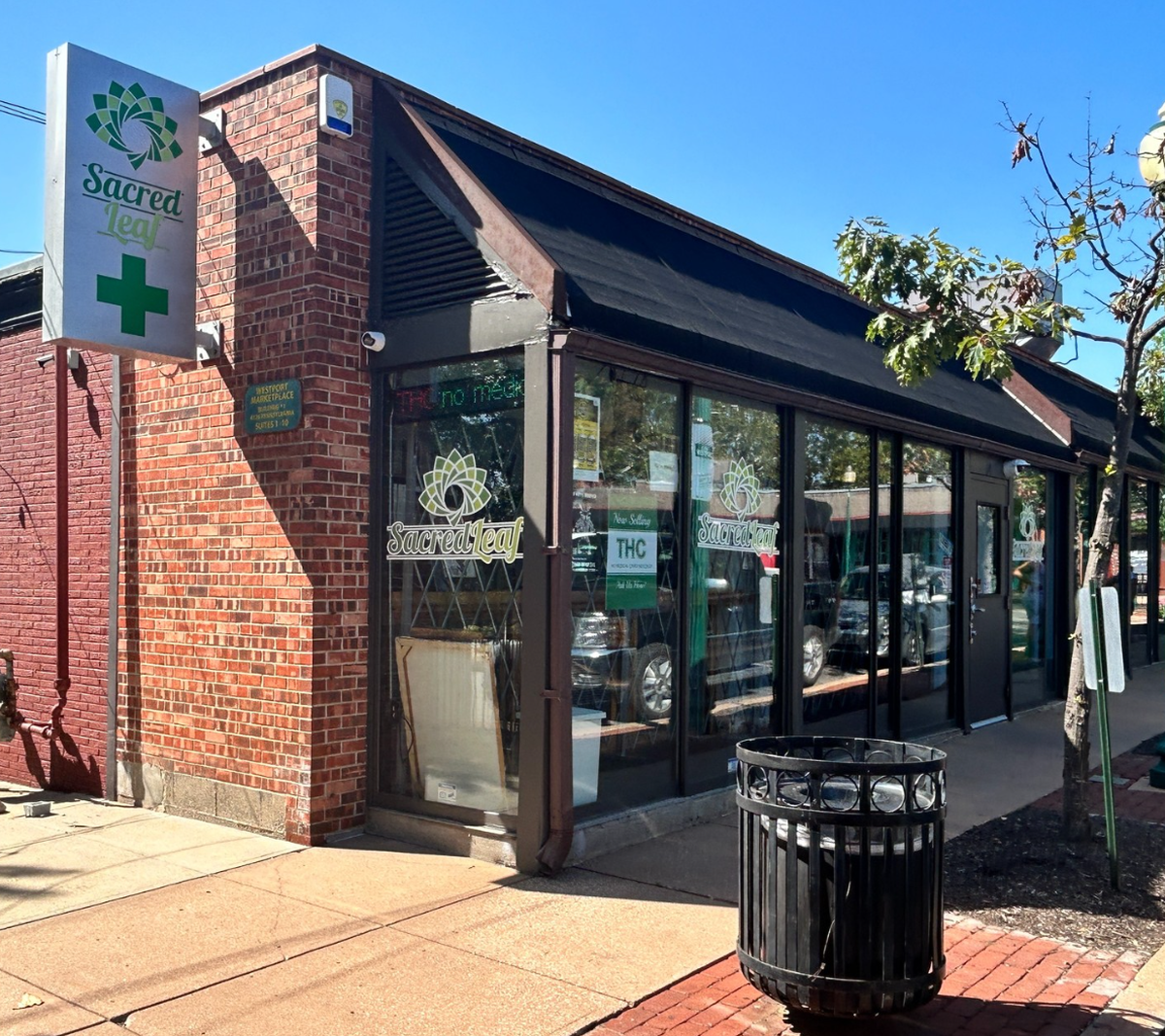
A lawsuit followed. Ultimately, it was settled and Burdett was able to secure Sacred Leaf as a trademark. His Topeka-based company today operates several cannabis shops in the Midwest, including two in the Kansas City area.
“He went on his way, and I went on mine,” Burdett said. “Vince is your best bud when you’re buying product from him, but when you go off on your own, he’s your worst enemy.”
Federal scrutiny
In the early days of the COVID-19 pandemic, CBD American Shaman received friendly press for pivoting its manufacturing facility from CBD oil production to hand sanitizer. The decision, Sanders said in a 2020 interview with The Star, was consistent with the company’s core value of helping those in need.
“I’ve found that those who need the most can afford it the least,” Sanders said. “I’d rather do something for society that is much more important than me.”
Three years later, the EPA fined CBD American Shaman for selling unregistered antimicrobial products during the pandemic. The company agreed to pay a $120,720 penalty and donate $250,000 worth of medical supplies to a Kansas City nonprofit.
Dr. Rahul Kapur also heard from the federal government during the pandemic. In 2020, the Federal Trade Commission issued a warning letter to his company, Revive & Rally Health Lounge, for marketing IV bags filled with vitamin C as a coronavirus prevention product.
The following year, Sanders teamed up with Kapur on an American Shaman-branded wellness clinic that blends services like Botox and microneedling with the company’s CBD products.
That business is now called Leawood Total Wellness. Kapur subleases space for his primary care practice from Sanders there, he said. Kapur is also a board member of the Holistic Alternative Recovery Trust, a Sanders-funded advocacy group that promotes the use of 7-OH.
Or, he was. Contacted by The Star last week, Kapur said he had just sent a resignation letter to the board of HART, effective in 30 days. He said he joined because he had seen patients successfully use kratom to get off opioids and hoped to provide medical expertise to the group by setting up studies related to 7-OH.
In light of the FDA’s announcement about scheduling 7-OH as a controlled substance, though, Kapur said he didn’t have much to offer. “I have a medical practice. I take care of patients. I think there’s a way to (use 7-OH) in a safe manner, but the over-the-counter stuff is out of my control. It looks bad,” Kapur said. “There’s too much politics and other stuff involved now. I don’t have much to offer.”
Another Sanders-affiliated name that has recently received scrutiny from a federal agency is Jamie Woolard, the operations manager for Shaman Botanicals.
Woolard in 2006 was indicted for conspiring with a Kansas City charter school president in a mortgage and investment fraud scheme that used fake loan documents, inflated appraisals and a sham housing project to steal hundreds of thousands of dollars from investors.
He pleaded guilty to 11 counts of mortgage fraud but initially avoided prison time, receiving five years’ probation for his assistance in helping bring down another mortgage fraudster, Raymond Zwego. But Woolard ended up serving two years after violating his probation several times and engaging in another alleged financial scam. The most recent filing in Woolard’s case shows that the government was unable to track him down for a 2019 debtor’s exam — he still owed $660,000 in restitution from the 2006 charges — and then withdrew the request. There is no record of the penalty ever being satisfied. Woolard did not respond to a request for comment.
Sanders had no trouble finding Woolard; he has been working for Sanders’ companies since at least 2018.
As Shaman Botanical’s operations manager, Woolard was the point of contact for the FDA in late 2023 when reports began to flood in from consumers experiencing life-threatening health issues, including at least two deaths, after taking a product called Neptune’s Fix. The product’s primary ingredient was tianeptine, a powerful anti-depressant sometimes referred to as “gas-station heroin.”
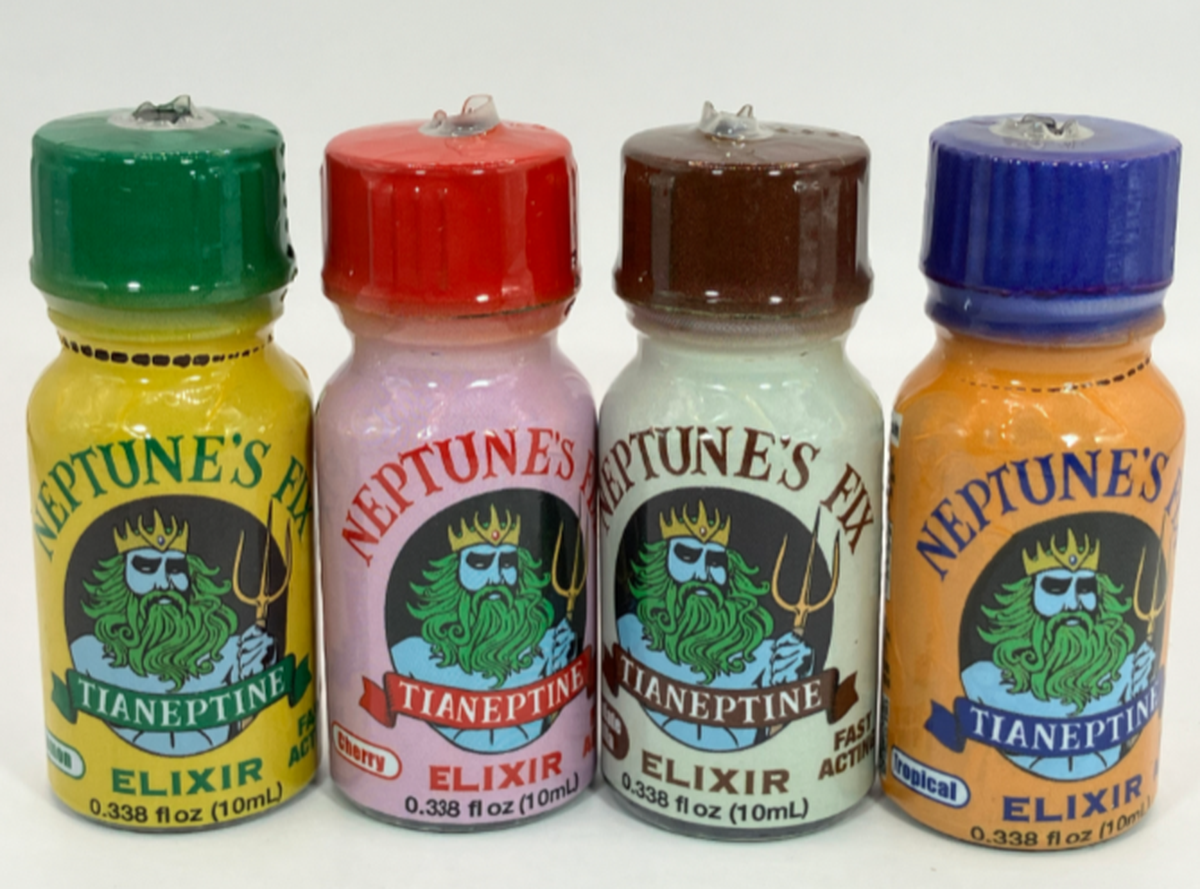
That FDA investigation led back to Kansas City. Though the company behind it, Neptune’s Resources, was incorporated in Wyoming — where businesses can incorporate with little public disclosure — the product was actually being made on the fifth floor of 1324 W. 12th St., a warehouse in the West Bottoms, according to FDA reports.
The man behind Neptune Resources was Chad Hueffmeier, a former executive at CBD American Shaman, and FDA records identified Shaman Botanicals as the distributor of the product.
Sanders denied that his company distributed Neptune’s Fix. He also said that the product Hueffmeier made was safe, but a rogue company on the East Coast had sold a counterfeit version of Neptune’s Fix, which was what had made people sick. Hueffmeier did not respond to a request for comment.
In the end, FDA investigators visited both the 12th Street facility and Shaman’s headquarters in December 2023. Neptune’s Resources recalled 1.2 million bottles of Neptune’s Fix a month later. The company no longer appears to be active.
Shaman Botanicals, by contrast, lost no momentum. Around the time of the recall, the company was beginning to roll out a new compound that Sanders believed had the potential to eclipse his massive cannabis business.
He was right.
Part 3 of this series, which explores the rising concerns and debate over 7-OH, can be read here.
This story was originally published September 17, 2025 at 5:00 AM.