Shuttered for a year, KC’s only LGBTQ+ youth shelter reopens under new name
Kansas City’s only emergency overnight shelter for LGBTQ+ youth has reopened with a new name and a new staff, after shutting their doors last year due to a lack of funding.
A generous gift from a family foundation earlier this year, as well as funding from Kansas City’s low barrier shelter initiative, allowed Teresa’s Place, formerly known as Pride Haven, to resume operations. This summer, they renovated the home and hired new staff, a majority of whom previously lived at Pride Haven.
“It’s really important for us as an organization to employ those with that lived experience; they bring a different connection to the clients that we work with,” said Mary Brewster, assistant director of programs and services at Teresa’s Place, adding that the philosophy was very intentional this time.
“Making sure that our residents see themselves reflected in the staff that are working with them offers hope,” Brewster said.
Since 2020, the shelter in Midtown had been a place where queer, unhoused youth in the metro between ages 18 and 24 could go to sleep, eat and find housing resources . In the 2022 fiscal year, it provided nearly 150 LGBTQ+ youth with housing, according to Pride Haven’s impact report.
Former participants in the program, now employees, have returned with new energy and passion, hoping to ease the transition out of homelessness for queer youth in the area.
Reopening the shelter
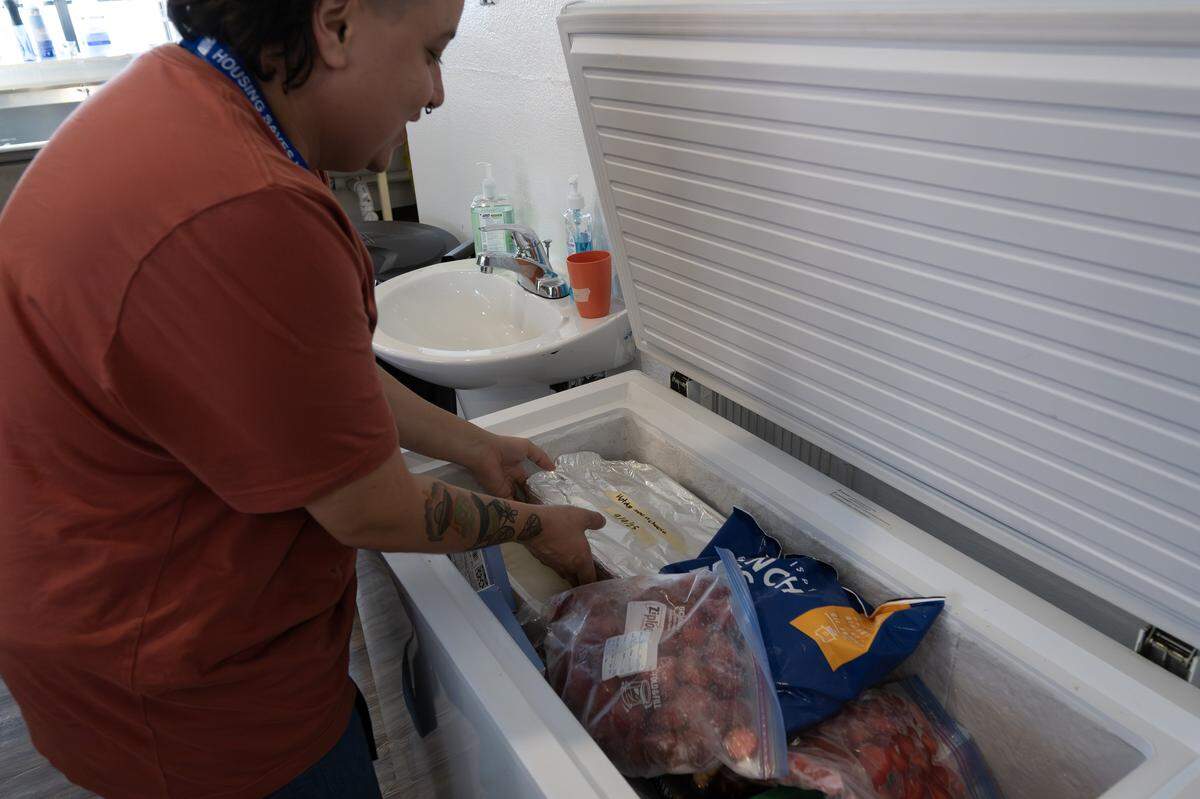
Anali Otazo, program manager at Teresa’s Place, mulled over upping nutritional values of meals during dinner preparations on a recent hot Thursday afternoon. The key, Otazo said, was to load up meat sauces and soups with vegetables.
Comfort dishes requested by residents are regularly tweaked to add more nutrition, according to Brewster. Chickpeas are added to Sloppy Joes, for example, for extra protein, and squash is finely minced and added to funeral potatoes.
“Anali and Natalie, our case manager, have gotten really good at hiding veggies,” she said.
Word of the shelter’s reopening has spread mostly through word of mouth so far, according to Brewster. It took nearly two months this summer to hire staff.
“The people who are working for us sought us out,” Brewster said. “They didn’t just go to Indeed and submit an application, they sent us their resume and said, ‘I want to work here,’ knowing full well, having been former participants, how hard the job was going to be.”
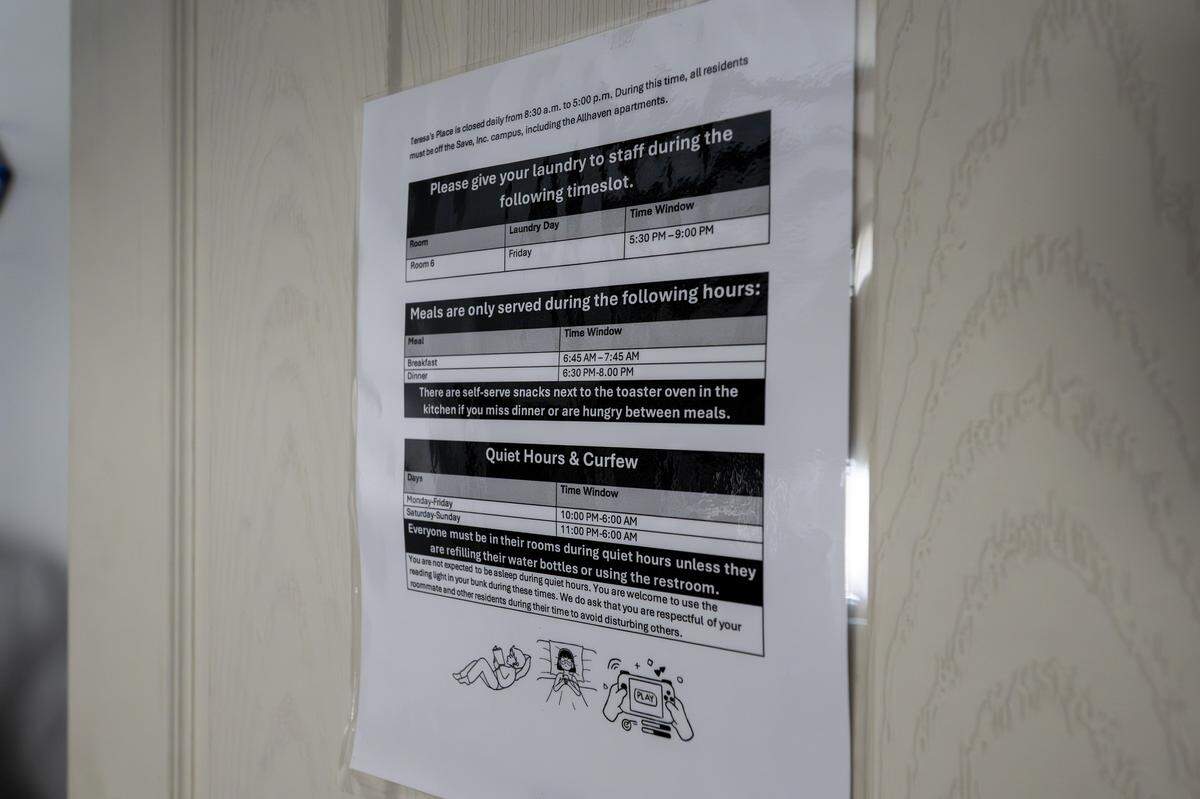
These new employees came with feedback and ideas on how to make things better for those utilizing the program. An important one, Otazo noted, was the need to extend curfew by 30 minutes on weeknights and an hour on weekends due to the bus schedule.
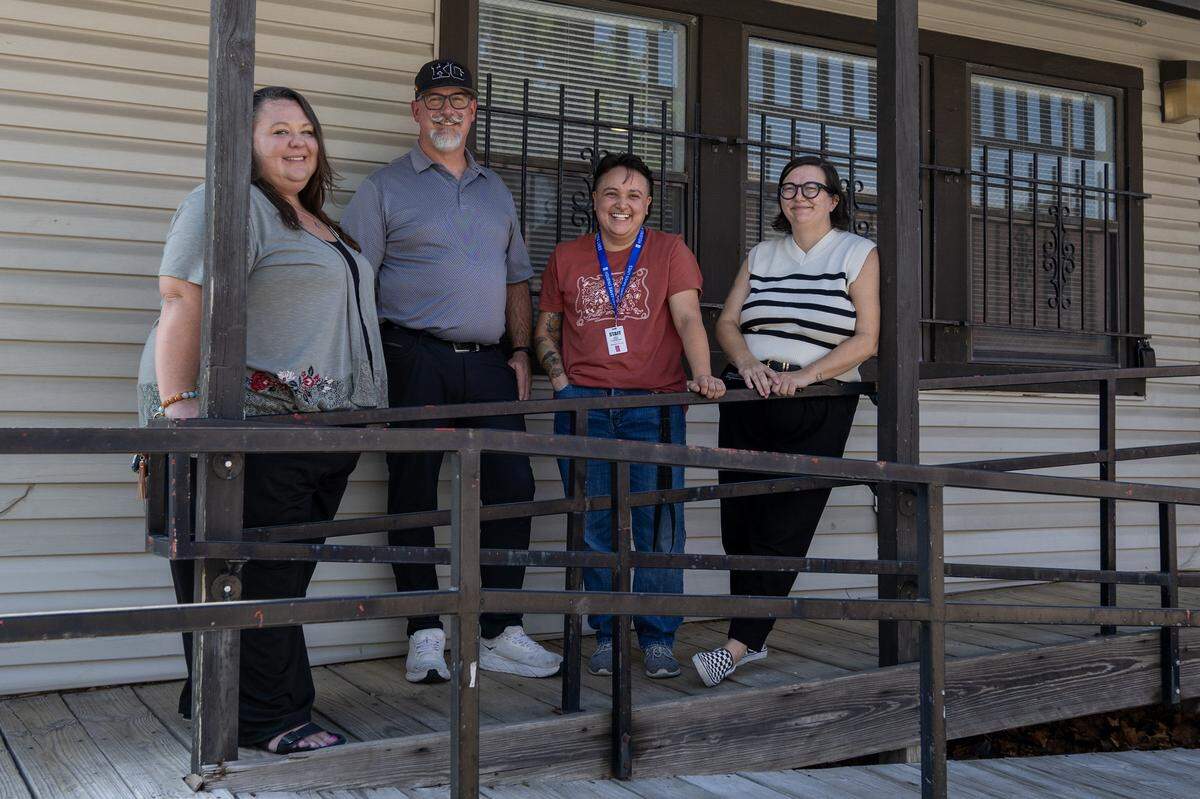
“Those were things that often the residents would not be able to make on time because they didn’t have reliable transportation, and that is not their fault,” Otazo said.
Besides revising menu options and updating program policies, they also spruced up the building. New flooring was placed throughout the first floor and fresh paint throughout to give the space a fresher feel.
Former participants turned staff also flagged the need for more individualized spaces. Now, each of the eight beds have different bedsheets and handmade quilts, as well as custom light switches in every room.
“They’re all hand painted and like epoxy by the staff,” said Otazo, adding the goal was to give each space a personality.
Who is Teresa?
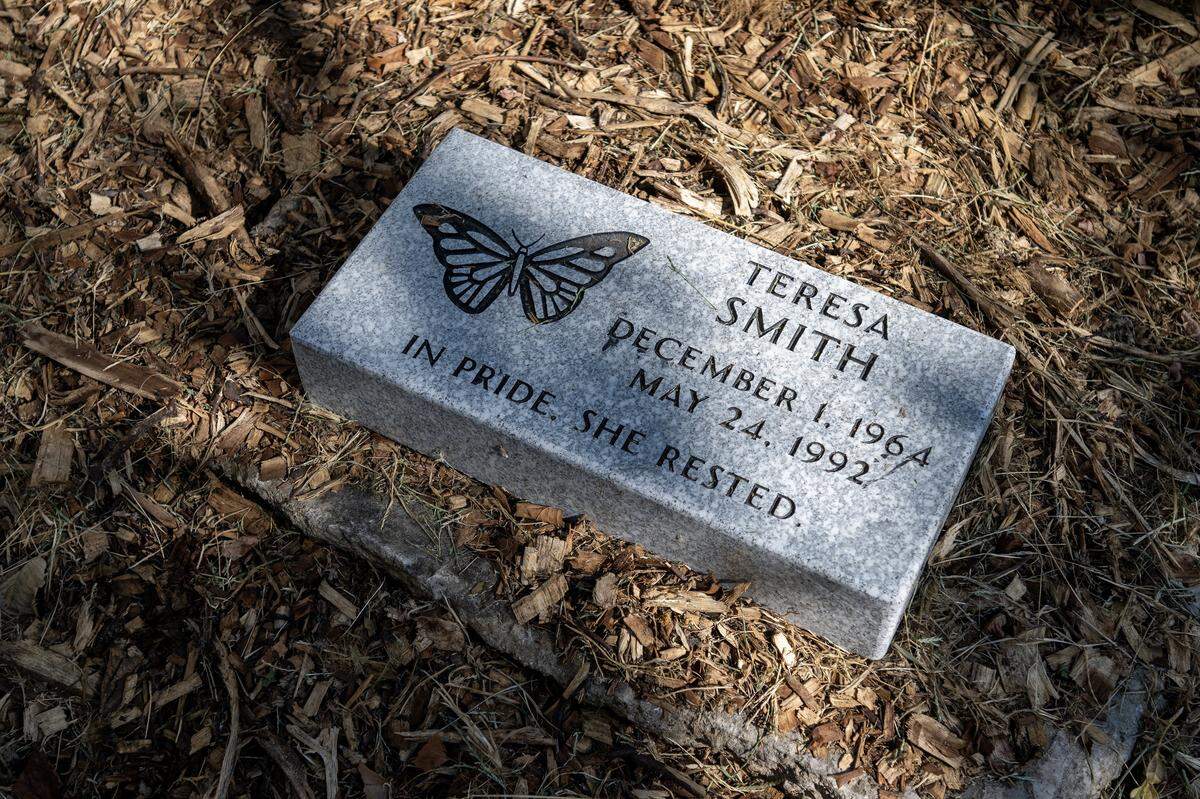
The name Teresa comes from a transgender woman named Teresa Smith, who lived in the home back in the 1990s when it was used by Save Inc., a local nonprofit, as a dedicated space for people with HIV and AIDs to die with dignity.
While living out her last days there, Smith herself became a caretaker in the home, so naming the new shelter after her felt right to Save Inc.; especially since so many of those who used Pride Haven were non-binary or transgender as well.
“It was a really meaningful connection to the community to show that like Save Inc. isn’t a fair weather friend,” Brewster said. “We’ve been serving this community since the very beginning as an AIDs service organization.”
Teresa Smith’s headstone had been on the property longer than they could remember, but with her dead name, or her birth-given name that she later changed as part of her transition. This past summer, Save Inc. got her a new headstone and plan to create a butterfly garden around her.
“This is in honor of that community that we’ve served for so long and that we’ve always been a place that you have dignity through housing,” Brewster said.
Staying at Teresa’s Place
There are several ways to be admitted into Teresa’s Place; an online form can be filled out, youth can be referred by outreach solutions teams with the city and some youth stop by the house during their open hours in the afternoon to see if there is a bed open, according to Otazo.
“A lot of it is our clients have referred people they know in the community that are experiencing an episode of homelessness and has gone that way, “ Brewster said.
Once in the program, people are given a bed, two hot meals a day and a caseworker to help place them in permanent housing, with 90 days being the goal. Within that time, caseworkers have benchmarks to help keep residents on track.
“We kind of want to give some motivation for them to start working towards their goals,” said Cara Ramsey, director of program services at Save Inc. “Shelter is not a place for a young person to live long term.”
Residents don’t get kicked out on the 90th day if there is no place to go, or if they are in the process of moving into a new place. The 90 day timeline isn’t realistic in every case, but it’s always the goal, she said.
“We want them to have the dignity of having permanent stable housing that they can call their own, and we do what we can on our end to push them in that direction, help them make those choices,” Ramsey said.
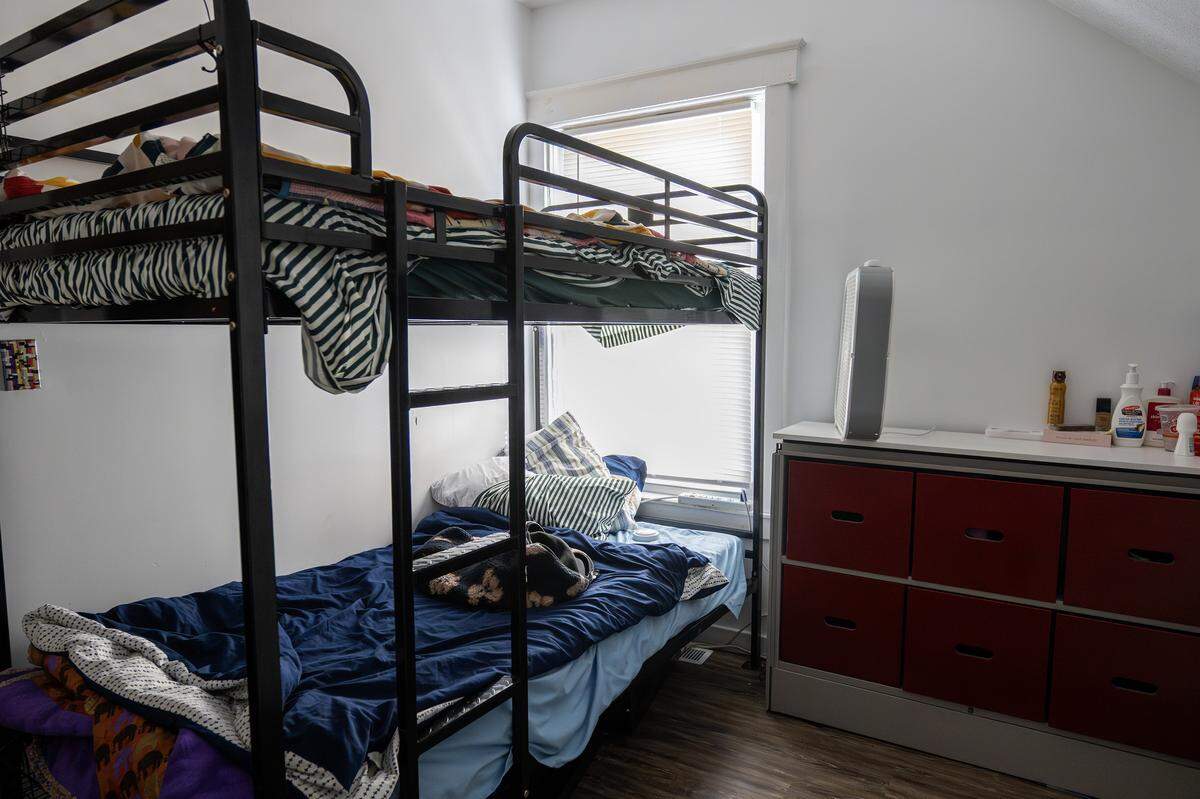
Teresa’s Place currently has eight beds, with the hope of expanding to ten by the end of September.
Residents admitted to the shelter range between 18 and 24 , with the current average age being 19. So far, several of the current residents have been young mothers on their journey to reconnect with their families, as well as people on the autism spectrum, according to Otazo.
“ ...a lot of (case management work) right now is working on their personal documentation,” Otazo said. “But over the future, when we have youth of different needs, we’re gonna scale to like employment services and stuff.”
Currently, Teresa’s Place outsources to organizations like Connections for Success when it comes to connecting participants with employment, while they focus on finding permanent housing solutions.
Funding for the program
The Department of Housing and Urban Development is not funding this program, unlike with Pride Haven. Instead, the shelter is relying on a contract they have with the city as being part of the low barrier shelter effort.
“Getting in that group and starting to be able to bill for beds to help the city’s effort to get to functional zero is a big lift that we’ve never had before,” said Patrick McLaughlin, CEO of Save Inc.
The organization is getting $50 per bed each night from the city whether the bed is filled or not. In exchange, they agree to take in an unhoused youth found by city outreach workers if they have a free bed.
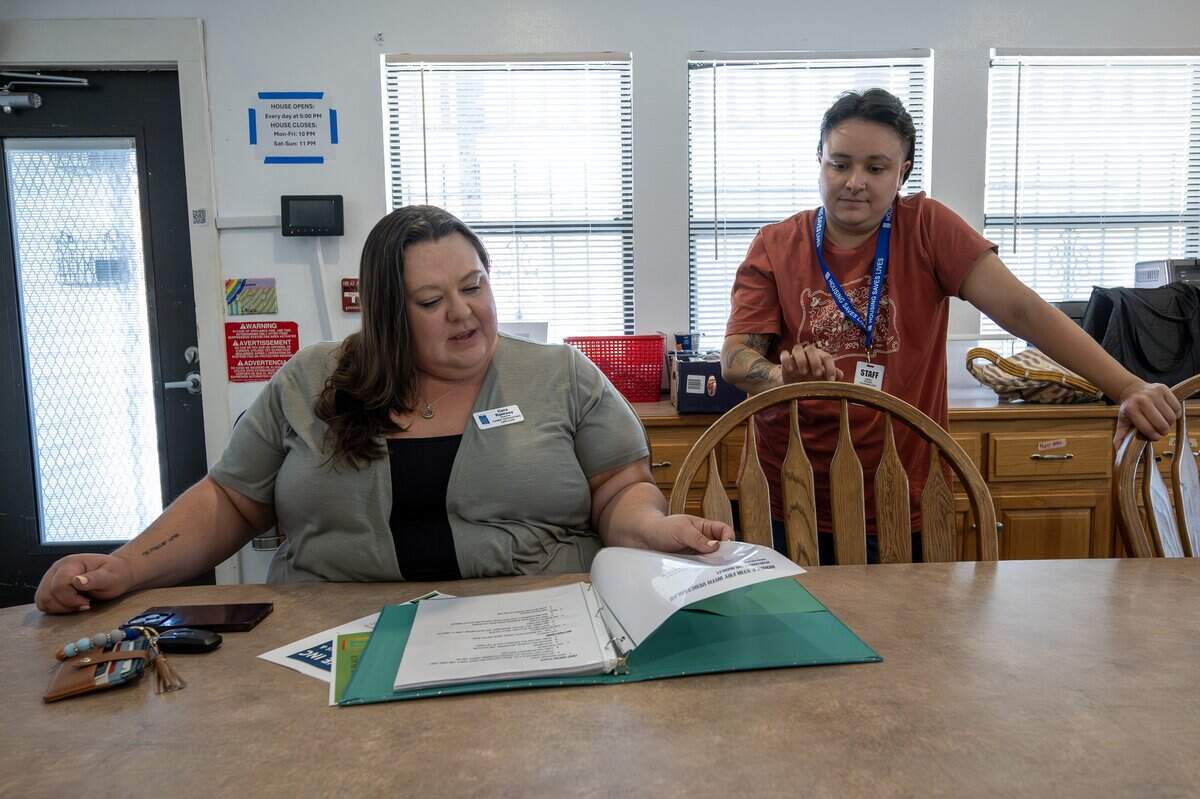
They also receive $150 a week to spend on food, though they make 20 meals a day when at full capacity. Otazo said they spend most of that money on protein and receive fresh vegetables and other donations from local organizations.
“I was a case manager before addressing food insecurity in a different way, so I kind of just went to the pantries and I was like, ‘would you donate boxes to us,’ And they were like, ‘yeah register how many people you have,’” Otazo said. “They can give you eight boxes a week.”
Otazo and Natalie pick up the donated food Friday afternoons and then return to process and meal prep. There’s a deep freezer in the kitchen where all the prepared food goes to stretch out for the rest of the week.
Getting involved
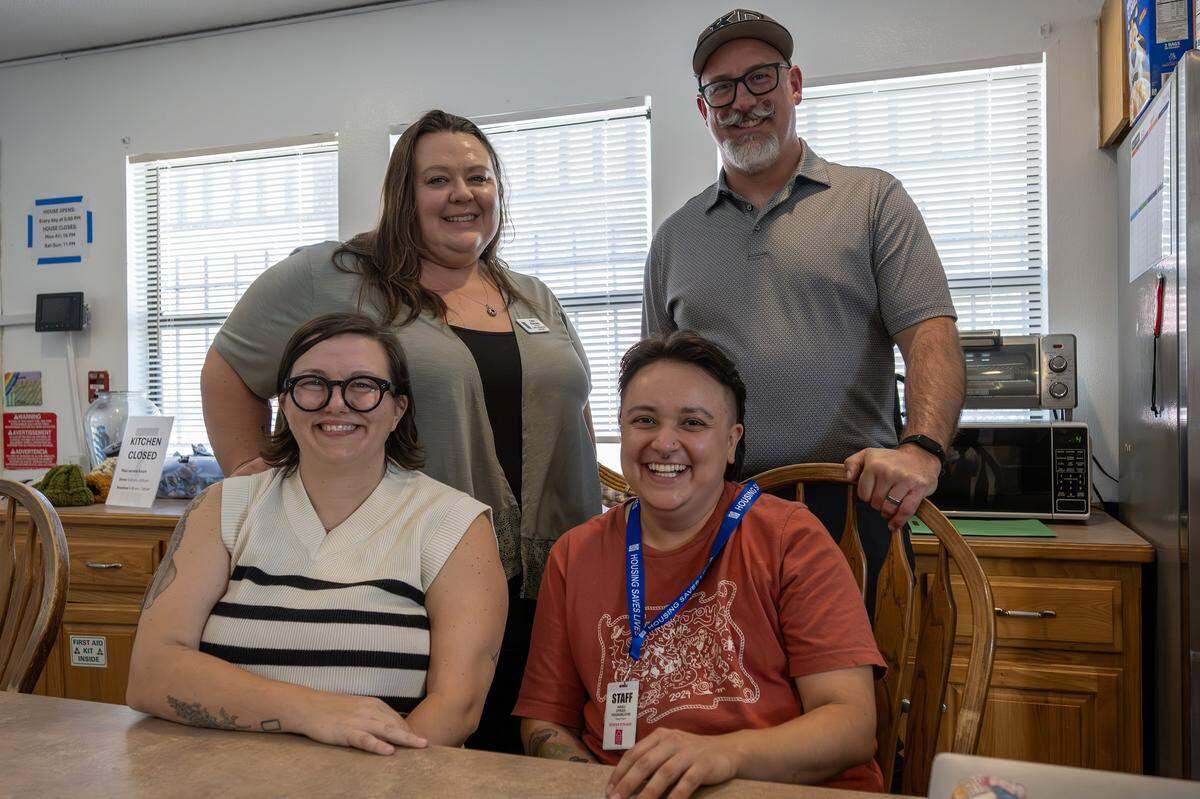
Volunteers can sign up to donate food, meals, snacks or to come cook for the youth. A former board member comes every Thursday to make dinner, according to Otazo.
“We try to meet where we can with kindness whilst also trying to make a sustainable program that if we are serving you properly, this program will flourish,” Otazo said. “That’s the goal.”
Teresa’s Place is open every day from 5 p.m. to 9 a.m. Resources on how to donate, volunteer, or fill out an intake form can be found here.
This story was originally published September 18, 2025 at 6:00 AM.