
Missouri called Platte County out for underassessing homes. How low are values?
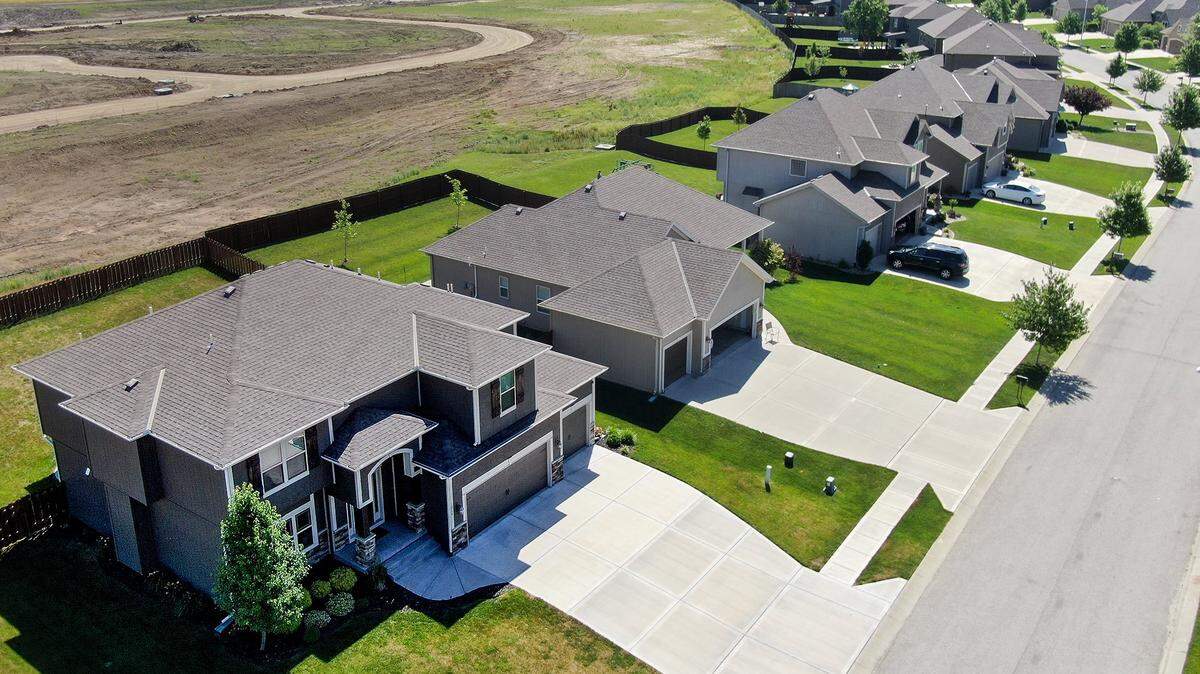
Platte County, the second wealthiest county in Missouri, boasts many nice homes — the median home value being over $369,000. But recently, the state has let the county know that on average, assessed property values aren’t reflecting market prices of homes, raising questions around fairness and taxes.
Residential property values are used to determine how much homeowners owe in property taxes each year. The state has guidelines on how assessments must be levied to ensure homes can be taxed on a value nearly equal to what they can sell for.
Being taxed on an equivalent value to market price makes it possible for taxing districts that provide public services, like school districts, to plan their budgets, which are funded largely through property taxes. As Park Hill School District spokesperson Kelly Wachel put it, school districts “are affected by the downstream implications” of property valuations.
“I definitely want to stress the importance of properly assessing properties in our community because that value is how we calculate our budgets, forecast our budgets and then help pay for the bulk of the quality schools in our community,” Wachel said.
Earlier this month, the Missouri State Tax Commission stepped in to require the county to increase assessed property values for all homes. The deal, brokered after a standoff between state and county officials resulting from a disagreement over whether to raise assessments this year, means homeowners will see a nearly 7% increase above their 2024 property valuation.
But the resolution wasn’t reached in a vacuum — it’s underscored by the county’s recent history of lowballing property valuations as sale prices soar.
Rising market values
According to county data, average home sale prices have increased dramatically in recent years as more and more people move to Platte County — from over $315,000 in 2019 to over $441,000 in 2023, a nearly 40% overall increase in the average home sale price.
Data from the popular online real estate marketplace Zillow, which tracks an estimated market value of homes in a specific area, also shows a dramatic market value increase of Platte County homes in recent years. Zillow’s calculation, called the Zillow Home Value Index, aims to reflect a “typical” home in the middle of the Platte County housing market, excluding outliers at the highest and lowest ends.
The typical home value in Platte County increased more from August 2020 to July 2025 than it did in the eight years between May 2012 to July 2020, according to Zillow’s data.
Larry Jones, who works for the State Tax Commission and deals with Platte County’s property valuations, said the housing market “skyrocketed” during the COVID-19 pandemic. He and others in the industry weren’t sure if the market would later cool off, but Jones said it’s been long enough since the pandemic that now they know the housing demand has stuck around.
“It is quite evident that the market is still going up and that the current value is the new normal,” Jones said.
In Platte County, population growth also contributes to the increasing demand for real estate. The county saw the biggest population increase among Missouri counties in the KC metro from 2020 to 2024.
Change in assessments vs. change in market value
However, home valuations from Platte County’s assessor’s office have not kept up with the rising market value of homes, data from the state and county show, making it more difficult to accurately tax the growing population.
The Star obtained documents that show the aggregate year-over-year percent change in Platte County’s total residential property valuations from 2019 to 2025. When the percent change is calculated, new construction is kept out of the equation, allowing the valuation of the same amount of property to be compared year to year.
Missouri counties only reassess properties every two years, so homeowners see more dramatic changes to their valuations in odd-numbered years and more minimal changes in even years, which only account for new construction.
But, if you average out the percent change in valuations over the last six years, homes saw an overall increase of about 5% in assessed value each year.
To analyze the increase in Platte County homes’ market values, The Star used Zillow’s typical home value for July of each year and calculated the percent change from year to year starting in 2019.
The typical market value of a Platte County home increased about 6% per year on average from 2019 to 2025. Individual year-over-year market values varied greatly, ranging from an over 16% increase one year to an under 1% increase another.
County assessments fall outside state-mandated range
Missouri requires counties to assess homes within 90-110% of their market value. This gives counties needed flexibility when making valuations — as the housing market is ever changing — and allows for properties to be taxed at a similar value to what they sell for.
Every two years, the State Tax Commission analyzes housing market data and compares it to assessed residential valuations in each county, using what’s called a weighted median ratio, to determine whether counties are complying with the guidelines.
The state’s studies show that Platte County fell within the low end of this threshold in 2019 and 2021. The 2019 study shows that the county assessed homes at nearly 92% of their market value that year, and the 2021 study points to homes valued at about 91% of their market value.
The 2023 study — completed and shared with Platte County in February of this year— shows that the county assessed homes at just over 81% of their market values in 2023. The state then told Platte County that it’s required to raise property valuations to keep within the mandated range.
Doing the math
To visualize how overall residential property valuations haven’t kept up with increasing housing prices in Platte County, The Star compared estimated changes to the assessed value and market value of a hypothetical sample home in the county from 2019 to 2025. The analysis used the percent changes of total home valuations and typical market value.
Let’s say a home in Platte County sold for $100,000 in 2019. (Buyers in the metro would be hard pressed to find a house that cheap in recent years, but the number is just for simplicity’s sake.)
Based on the state’s 2019 study, the county would likely have valued this hypothetical home around 92% of its market value. This puts the home’s assessed value at $92,000.
The Star calculated what would be the market value and assessed value of the home from 2020 to 2025 by using the year-over-year percent change in both aggregate Platte County assessments and Zillow’s typical market values.
This hypothetical house ends up with an estimated market value of $143,001 in 2025, and an estimated assessed value of only $124,352. That means a valuation of about 87% of market value.
The state uses county data on home sale prices, not Zillow data, to complete its studies comparing market value to assessed value, which explains differences in The Star’s calculations when compared to the state’s.
Still, the numbers are close. The State Tax Commission’s 2023 study shows property values at 81% of market values, while The Star’s calculations show 2023 property values around 84% of market values.
What if 2025 valuations stayed the same?
Earlier this month, David Cox, Platte County’s assessor, wrote in a letter published online that he kept this year’s residential property valuations the same as they were in 2024. Cox said he “reassessed property values in 2025 and chose to leave values unchanged.”
If the state didn’t step in and Cox implemented his 0% increase plan, the hypothetical home from the previous graph would be assessed at $116,396 this year, but its market value would still be worth around $143,001. This would give the house an assessment of about 81% of its market value, continuing the issue of too-low valuations.
Cox did not respond to The Star’s interview request.
The State Tax Commission, however, said the proposed residential valuations it received from the county earlier this summer showed an aggregate decrease in property values of about 7%, not a 0% change. The decrease in property values is what the agency said prompted it to step in and set the nearly 7% increase for all 2024 residential property valuations.
Still, neither state nor county officials can explain the abnormal decrease.
On Sept. 1, Marcus Farr will begin his tenure as Platte County’s assessor, replacing Cox after he decided not to run for reelection last year. Farr said in a statement Thursday that his assessments must “follow” the market.
“While market forces ultimately determine property values, it is our duty to measure and reflect those trends accurately and consistently,” the statement read.