Lenexa police called ICE while investigating councilwoman. Lawyers have questions
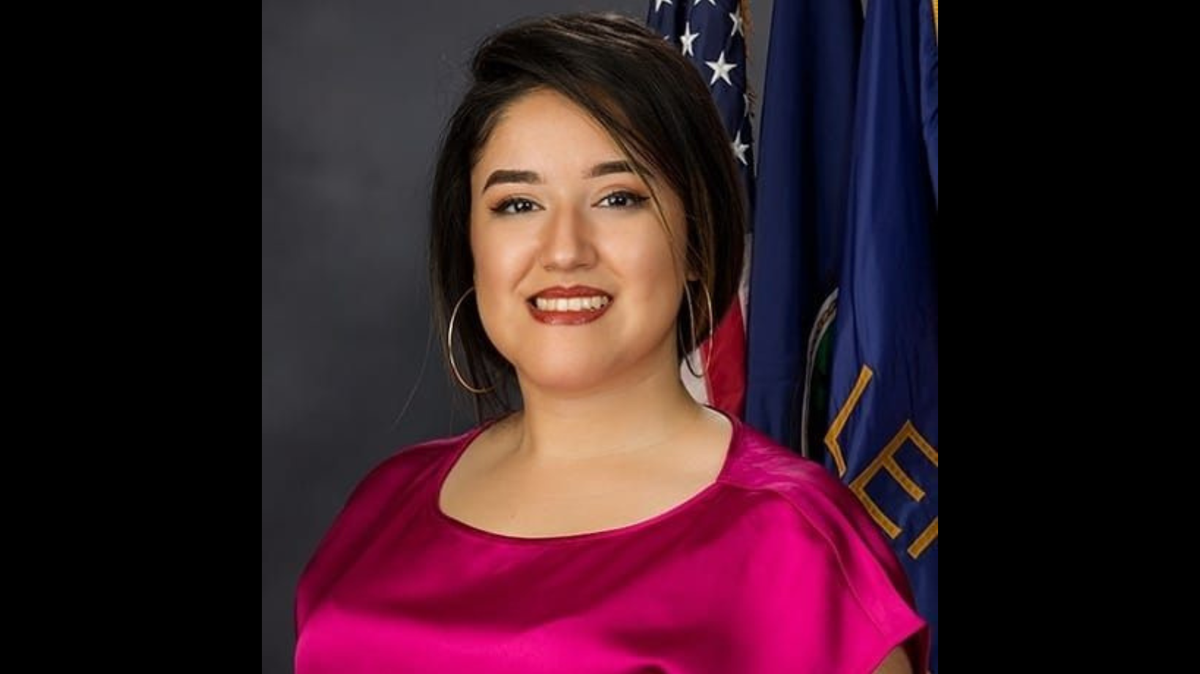
As more details come to light around the Lenexa Police Department’s investigation of a city councilmember’s immigration status, local attorneys and advocates question if the councilmember’s constitutional rights were violated and if local law enforcement should have ever acted on the issue in the first place.
Earlier this month, Lenexa City Councilmember Melanie Arroyo disclosed during a public meeting that local police requested she provide proof of U.S. citizenship after someone called the Kansas Bureau of Investigation, claiming that Arroyo isn’t a legal resident and isn’t eligible to serve in local office by law.
Arroyo became a citizen in 2018 and was elected in 2021.
During her testimony at the Aug. 5 City Council meeting, Arroyo said the process caused “mental and emotional harm.”
Police records recently obtained by The Star reveal information about the department’s investigation that the police chief and city spokespeople had previously left out of their tellings of the events to the public — including engagement with federal immigration authorities — as well as steps it did not take, like vetting the complaint or consulting local election officials.
Advocates suggest that Arroyo’s constitutional rights to speech and privacy could have been violated, and that the investigation goes beyond the police department’s scope of authority.
An area attorney and the American Civil Liberties Union of Kansas told The Star that Lenexa’s investigation sends an intimidating message to residents at a time when fear of immigration enforcement and related discrimination is high.
“I think this is a dangerous thing for them to be involved in,” said Rekha Sharma-Crawford, a local immigration attorney. “If your community doesn’t believe that they can go to you and that you will … get involved in this kind of witch hunt, who’s going to trust you?”
Arroyo said during her public testimony that at no point during the investigation was there any acknowledgement of its “invasive nature” nor was there consideration for verifying this case in a way that didn’t cause her discomfort.
“The reason why this felt uncomfortable was because I was being asked to show my papers,” she said during the meeting. “And many people with an immigrant background would know that this carries a lot of political and historical weight.”
Lenexa Police Department spokesperson Danny Chavez said in a written statement that the department conducted a thorough review “taking every measure to ensure the matter was handled with diligence, care, and respect for individual privacy.”
“Councilmember Arroyo voluntarily provided documentation confirming her eligibility, and the matter was subsequently closed,” Chavez said. “This matter has been reviewed, resolved, and is closed; coupled with the fact that we have released all relevant information, we have no further comment.”
What sparked the investigation?
The department’s investigation into Arroyo opened shortly before agents from Homeland Security Investigations (HSI) — a unit of U.S. Immigration and Customs Enforcement (ICE) — raided and arrested at least four individuals from the El Toro Loco Mexican Bar and Grill on Woodland Drive.
Last month, a Lenexa resident left a voicemail for the Kansas Bureau of Investigation, asking the agency to look into Arroyo’s citizenship based on testimony she made to the Kansas Legislature in February and in an Op-Ed she wrote to The Star, speaking in favor of a law in place that allows Kansas students to receive in-state tuition even if they aren’t citizens or permanent residents.
A week later, KBI passed the message to the Lenexa Police Department, advising the department to handle it “however you deem appropriate.” Then the state agency deleted the voicemail.
In her testimony to the state Legislature, Arroyo shared that the law helped her go to school in Kansas to later become an art therapist.
The complaint, made by a Lenexa accountant who is a registered Republican, claimed that Arroyo never “acknowledged naturalization” in her testimony and requested that the matter be investigated, since Lenexa’s city ordinances require all council members to be qualified electors — which in turn requires them to be U.S.citizens.
Sharma-Crawford said she thinks the department should have exercised more discretion before opening up an investigation based on the voicemail alone.
“You are now investigating someone for exercising their First Amendment rights, and you are targeting them based on their nationality,” Sharma-Crawford said. “They should have said, ‘This isn’t anything we should be involved in. We have no reason to believe that this individual did anything wrong and we’re not going to participate.’”
According to the department’s policy manual, the police department’s role before launching an investigation is to first determine whether a crime has been committed by taking an initial statement from witnesses and examining the evidence.
If an officer believes a crime has been committed, they can move forward by taking appropriate action and complete and submit reports and documentation.
Chavez said the department opened up the investigation “because the City’s ordinances alone establish the qualifications of Councilmember.” He said department staff “determined that the matter should be investigated in order to verify that Councilmember Arroyo did in fact meet said qualifications.”
The Lenexa Police Department did not answer questions about how it vetted the complaint, if it has any guidelines for when to open an investigation based on a resident complaint or if it was investigating any specific criminal charges.
“They neither were actively investigating a crime because there wasn’t one, and they clearly didn’t protect their community because they allowed for this kind of attack and harassment to occur,” Sharma-Crawford said. “What stops me from picking up the phone and saying, ‘Hey, these four council people are also not born here.’”
“While the City did not assume there was a concern with Council Member Arroyo’s naturalization, staff felt they had no choice but to investigate the matter because it is the City’s obligation to ensure compliance with the City’s ordinances,” a Lenexa spokesperson told The Star in a previous statement.
“We only investigated this matter because of our city code requirement that a council member be a citizen. We do not otherwise investigate immigration status of Lenexa residents.”
Contacting the feds
The first step that Lenexa police took when investigating Arroyo was to contact federal immigration authorities, according to the police report.
The investigative report shows that Detective Bill McCombs first contacted Hayden McGrath, a special agent with Homeland Security Investigations (HSI) — a unit of U.S. Immigration and Customs Enforcement (ICE) — to verify Arroyo’s citizenship status.
He asked if HSI could assist in verifying her citizenship status and sent along Arroyo’s social security number and date of birth.
According to the Lenexa Police Department’s policy manual, officers are allowed to send to or request information from federal immigration authorities, maintain the information in department records, and exchange information with any other federal, state or local government entity.
At no point during the public testimony in early August did the city or the police department mention that they contacted federal immigration authorities regarding Arroyo.
A city spokesperson told The Star that Chief Layman also contacted Arroyo directly shortly after the complaint had been filed “as a courtesy” to explain what happened and that the department would take on the investigation.
McCombs provided the information to HSI shortly before Vanessa Riebli, Arroyo’s attorney, contacted him to say that she would provide the requested information — which included Arroyo’s certificate of naturalization, signed by U.S. Citizenship and Immigration Services.
Riebli did not respond to multiple inquiries for comment.
While law enforcement agencies can opt into a program that allows them to participate in some ICE enforcement activity, known as 287(G), no Johnson County agencies are currently participating in that program.
The program operates under three models: To remove undocumented individuals with criminal or pending criminal charges, to enforce limited immigration authority during routine police duties, and to execute administrative warrants in their jail system.
The program doesn’t include investigating the immigration status of individuals.
Less intrusive means
According to the investigative report, the department never approached the Johnson County Elections Office for Arroyo’s voter registration or filing records when she decided to run for office.
Lenexa candidates need to be eligible and registered to vote, which by definition also means they need to be U.S. citizens. Voter registration rolls are public records.
The Johnson County Elections Office has the authority to verify candidate information, including U.S. citizenship status, to make sure candidates who run pass certain thresholds in the filing process.
When filing to run for election in Kansas, a candidate’s residency may be questioned through the objection process, according to Kansas statute. If the county or state election officer finds the filing valid, another person may file an objection.
Unless there’s evidence that the person is not qualified or eligible to vote, the county election office must register each candidate, according to Kansas statute.
Micah Kubic, the executive director of the American Civil Liberties Union of Kansas, said in a statement that agencies involved have a huge amount of discretion and methods to investigate reports made by the public, including many tools that are less intrusive.
“At various points in this process, decisionmakers had the ability to ensure that the process was not weaponized and not an instrument of harassment or intimidation,” Kubic said. “Those decisionmakers did not take those steps and did not adjust their actions accordingly. Now more than ever, local officials must recognize the call from Councilwoman Arroyo to ‘meet the moment’.”