Why KBI deleted voicemail that prompted probe into Lenexa official’s citizenship
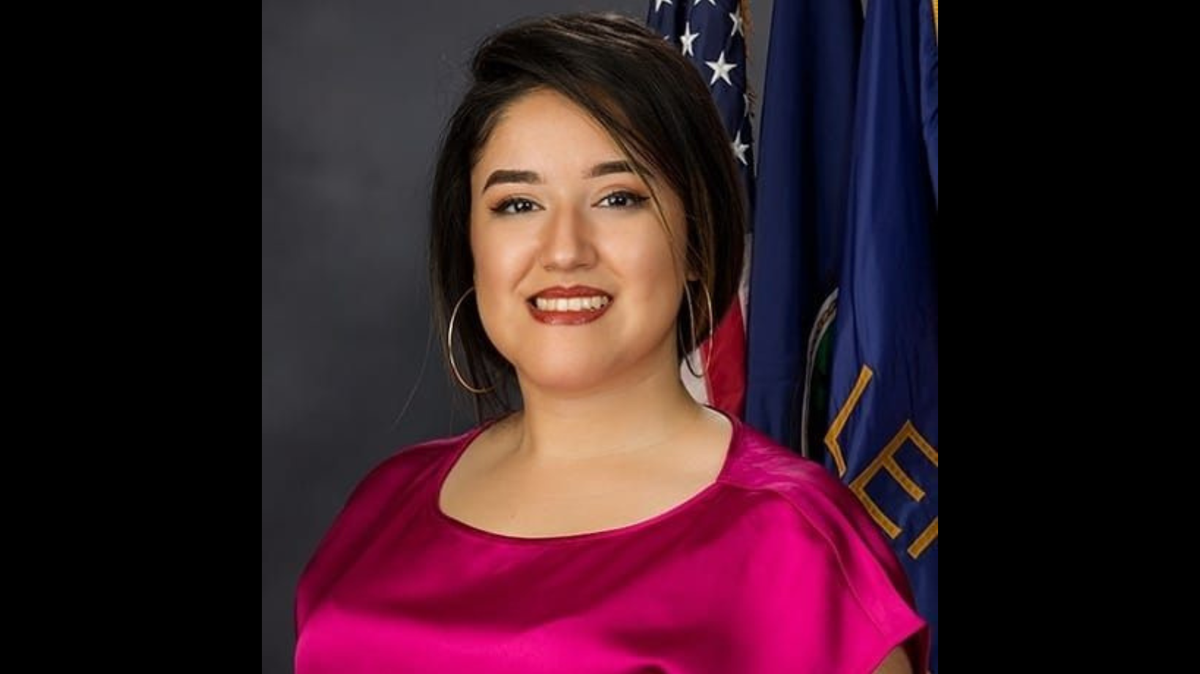
Days after a Johnson County official spoke publicly of the “emotional and mental harm” she experienced from an investigation into her citizenship status prompted by an unsubstantiated tip, more details emerged about the events that transpired, including that an official record of the voicemail that sparked the probe does not exist.
Lenexa City Councilmember Melanie Arroyo, who was elected in 2021, said during Tuesday’s City Council meeting that the Lenexa Police Department requested she provide them with documents proving her U.S. citizenship after someone called the Kansas Bureau of Investigation (KBI) claiming that Arroyo isn’t a legal resident and isn’t eligible to serve in local office by law.
To run for office in Lenexa, candidates need to be eligible and registered to vote, which by definition also means they need to be U.S. citizens. Voter registration rolls are public records.
A spokesperson from the KBI said the agency has deleted the voicemail that launched the probe into Arroyo’s immigration status, adding that any related documents would not need to be disclosed under the Kansas Open Records Act (KORA) because they are considered part of a criminal investigation under that law.
“Once the substance of that message was forwarded on to the Lenexa Police Department we deleted the recording as it was no longer relevant to our agency,” a representative from the KBI told The Star in a statement.
The complaint
Lenexa Public Information Officer Denise Rendina told The Star in an email that the KBI sent the inquiry over to the police department in July.
Rendina said the message came from an alleged Johnson County resident after Arroyo made public testimony to the Kansas Legislature “about the fact that at some point she overstayed her visa to the United States and became undocumented.”
Arroyo had given that testimony months earlier, in February.
Rendina provided the text of the message that the KBI sent to Lenexa. The person’s name and contact information wasn’t included. The message from the state law enforcement agency read:
“(A resident) called with a question regarding the citizenship of a member of the Lenexa City Council. He stated that in February of 2025 Melanie Arroyo (possibly Melanie Arroyo-Lopez), a representative for Ward 3, gave testimony wanting to give illegals more benefits.
“During this testimony she acknowledged that she came to this country illegally as a child, but never acknowledged naturalization. He stated that this testimony was posted to the internet. He stated that to be a qualified elector, they had to be registered to vote and be born here or naturalized. He wanted to report this information for investigation.”
The resident referred to Lenexa’s city ordinance that requires all council members to be “qualified electors,” which, in turn, requires that they are U.S. citizens.
Lenexa investigation
Upon receiving the message from the KBI, Rendina said that, “Police Chief (Dawn) Layman reached out to Council Member Arroyo as a courtesy.”
Rendina said the police chief “explained that the complaint had been received, that the City would be investigating and what to expect during the brief investigation.”
A Lenexa detective then contacted Arroyo, Rendina said, and “staff was able to determine that she is in fact legally qualified to hold the position.”
Arroyo said she needed to hire an immigration attorney to help navigate the situation. She said she and her attorney met with Lenexa officers in person to present her documents.
“The reason why this felt uncomfortable was because I was being asked to show my papers,” Arroyo said. “And many people with an immigrant background would know that this carries a lot of political and historical weight.”
Rendina did not answer multiple questions from The Star about if police or city staff reviewed publicly available records including voter registration indicating that Arroyo is a qualified elector before requesting the councilmember speak with a detective and provide her personal documents.
“In order to keep the inquiry private and confidential, we reached out directly to Council Member Arroyo, who stated she would provide the necessary information,” Rendina said.
“While the City did not assume there was a concern with Council Member Arroyo’s naturalization, staff felt they had no choice but to investigate the matter because it is the City’s obligation to ensure compliance with the City’s ordinances.”
Lenexa officials then followed up with the person who called to report Arroyo after confirming that she is in fact a U.S. citizen, she said.
Why is there no voicemail?
In response to The Star’s request for a copy of the audio file of the voicemail complaint, a representative from the KBI confirmed that the agency received a voicemail but deleted it once it had forwarded “the substance of that message” on to the Lenexa Police Department.
When asked why the agency destroyed what it had previously described as an investigation record that per its policy seemingly should have been preserved for 70 years, the KBI’s spokesperson Melissa Underwood drew a distinction between definitions in the agency’s internal policies and definitions in the state’s open records law.
She suggested that the voicemail falls into a gray area where it is defined as a “criminal investigation record” under the KORA, which allows the KBI to deny its public disclosure, but it is not considered a “special agent investigation file” per the KBI’s internal definition, which allows the agency to destroy it.
Underwood told The Star in an email that no KBI special agents initiated or opened an investigation based on the voicemail.
“So it wouldn’t be classified as (an) investigative file,” she said.
Underwood said the voicemail was classified internally as “Correspondence – routine,” which includes incoming and outgoing letters, emails, text or instant messages, voicemails, or other types of communication.
Under this classification, KBI retains them until the business is completed and then destroys them.
But while not considered investigative records internally, the voicemail and any related documents would be considered investigative records under the KORA, Underwood said.
“The KORA definition of criminal investigation records is broader than the retention schedule,” she said. “Since it applies to records that are compiled in the process of detecting, not just investigating, violations of the law.”
This story was originally published August 9, 2025 at 6:24 AM.