
Have you seen the new red markings on Kansas City streets? Here’s what they mean
There’s seeing red, meaning you’re irate. Then there’s seeing red, which in Kansas City these days, means you’re likely on Main Street.
It’s the extension of the streetcar line, set to open on October 24, and all around are fresh, red street markings (sort of Chiefs red, in fact) that have turned the asphalt, particularly from Midtown to the Country Club Plaza, into a striped candy cane lane.
Red panels. Red bars. Red dashes next to white dashes. Solid red lines next to solid white lines.
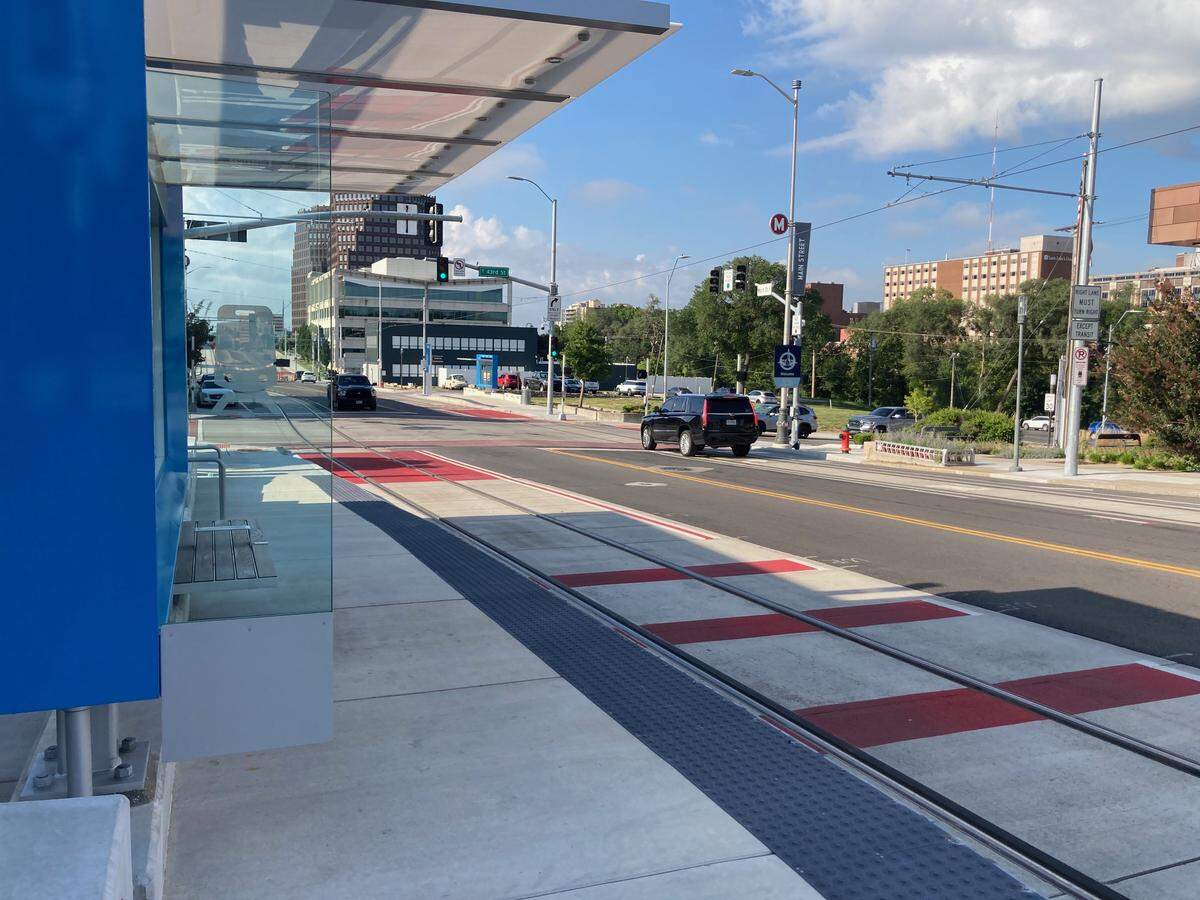
Huh? Can you pass? Can you even drive there? Can you get fined if you cross that thin red line?
(Answer: You bet, $50 minimum, per city ordinance.)
As the opening of the extension approaches — extending the 2.2-mile line that runs from the River Market to Union Station by another 3.5 miles to the University of Missouri-Kansas City — the KC Streetcar Authority and the city of Kansas City have been looking to educate motorists with a “See Red?” campaign that includes an instructive 2-minute video aimed to turn confusion into calm.
‘Red solid bars means no cars’
Here are the basic road rules.
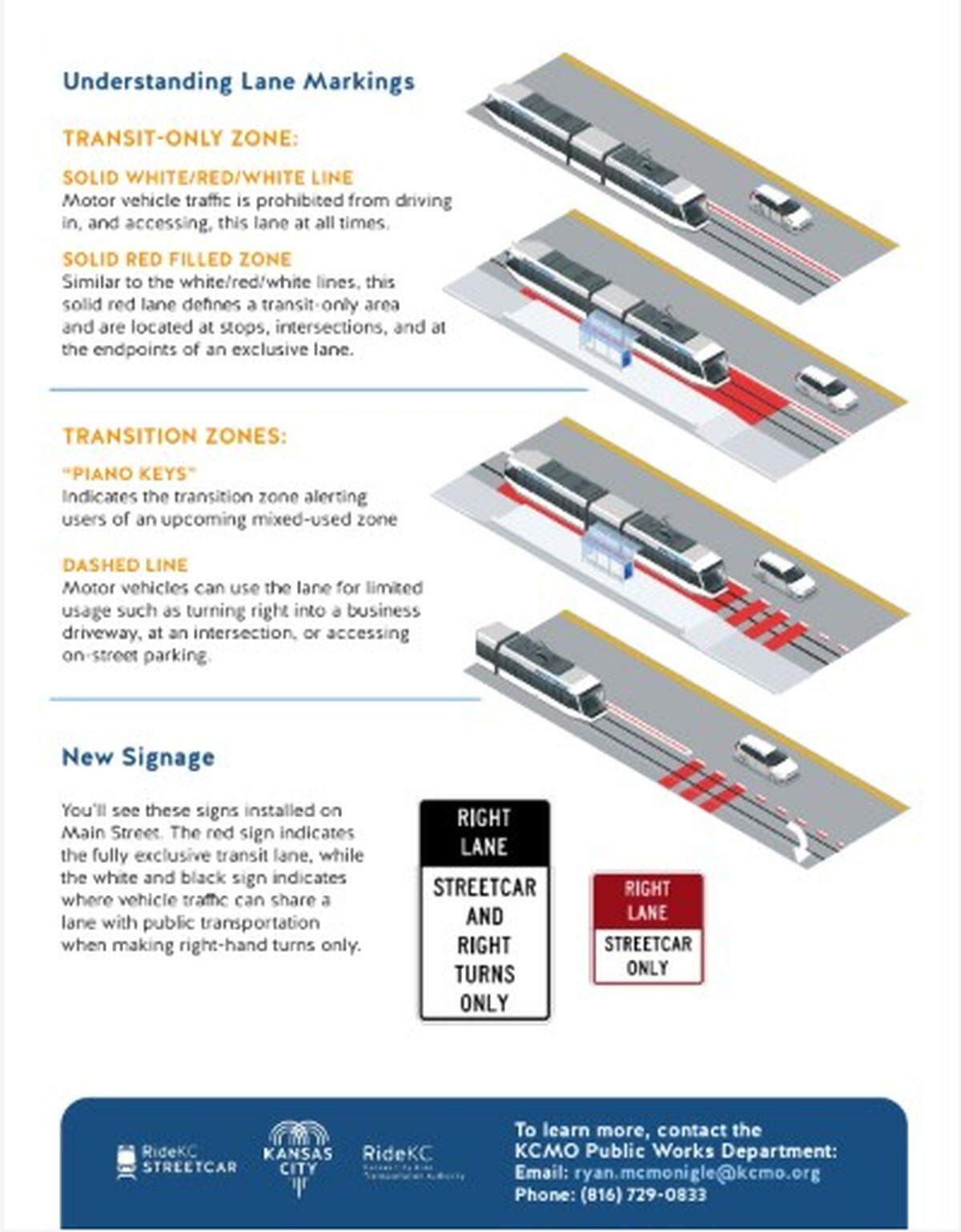
Solid red zones or panels: These are “transit only” zones. It means that only the streetcar or city buses are allowed to be there. You can’t drive over them, or park in them. If you are driving behind a streetcar, you should not follow them into a “transit only” zone. KC Streetcar has adopted a saying, “Red solid bars means no cars.”
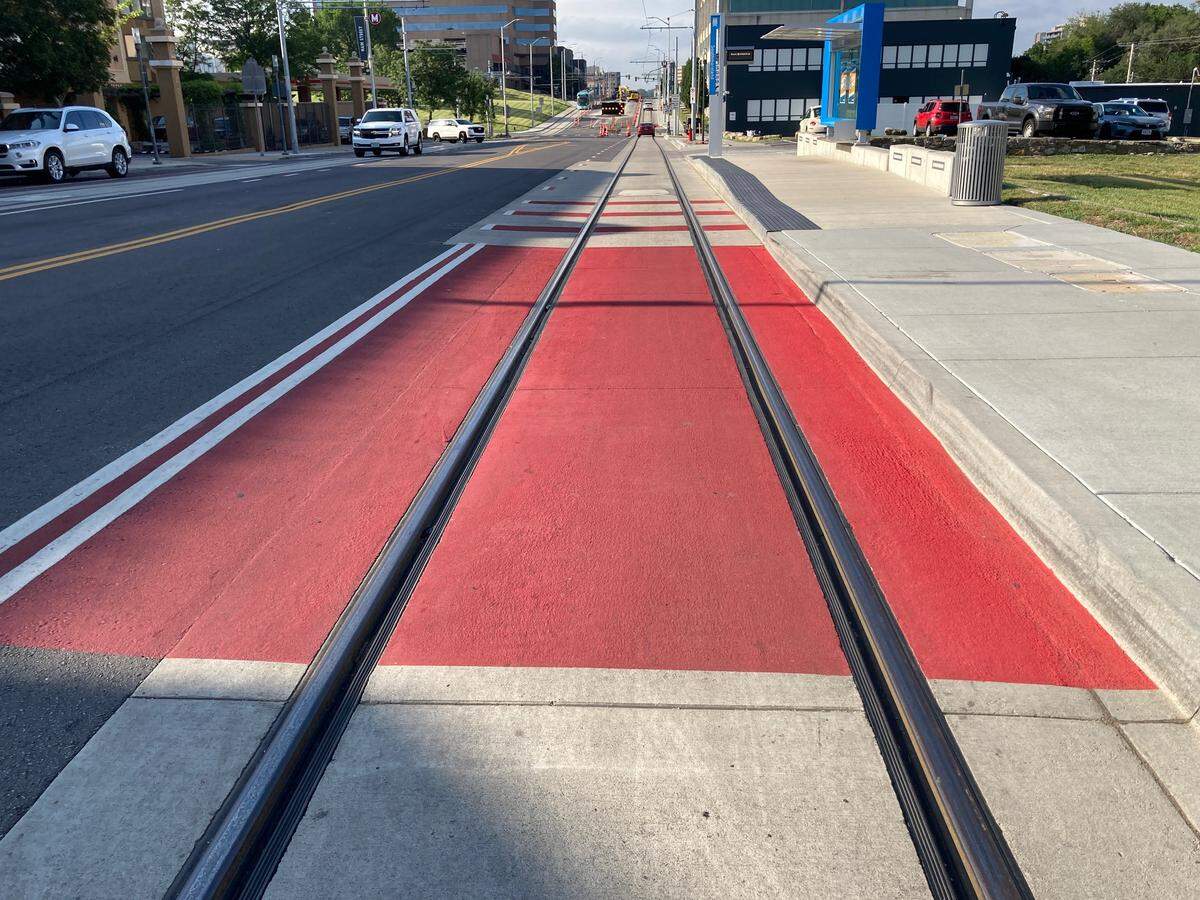
Red curbs and candy cane lines
Curbs painted red also indicate “transit only” zones — as does the triple solid line (white-red-white). Drivers know that it is unlawful to cross solid lines whether they’re white or yellow or come in ones, twos or threes. The street car extension has adopted three: two whites, one red in middle. No crossing.
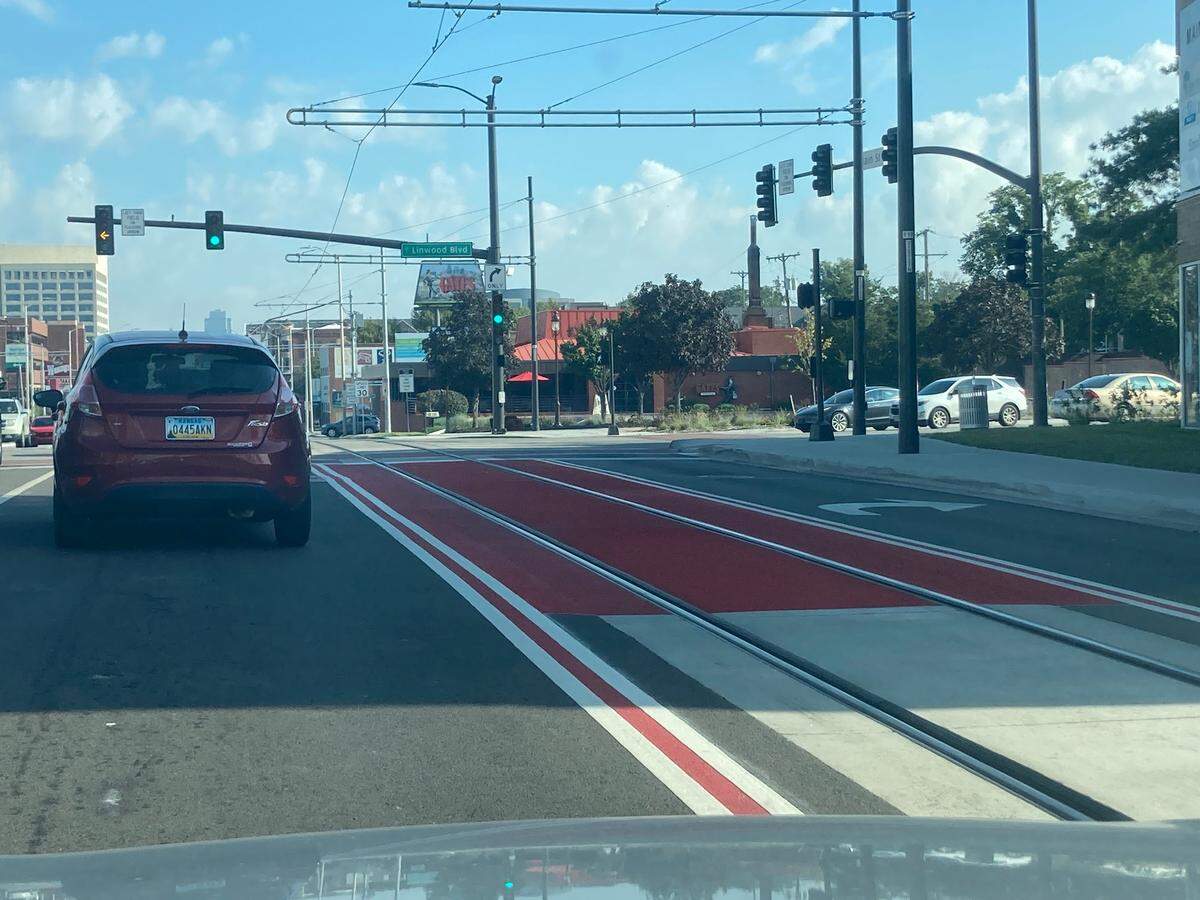
‘Piano key’ transition zones
A series of solid red rectangles that the city is calling “piano key,” indicates a “transition zone.” Again, motorists should not be in zones with solid red bars. The piano keys, however, tell motorists they are entering a “mixed use” zone where they can soon merge over to make a right hand turn onto an adjoining street or into a driveway, or, in some instances, to park along the street.
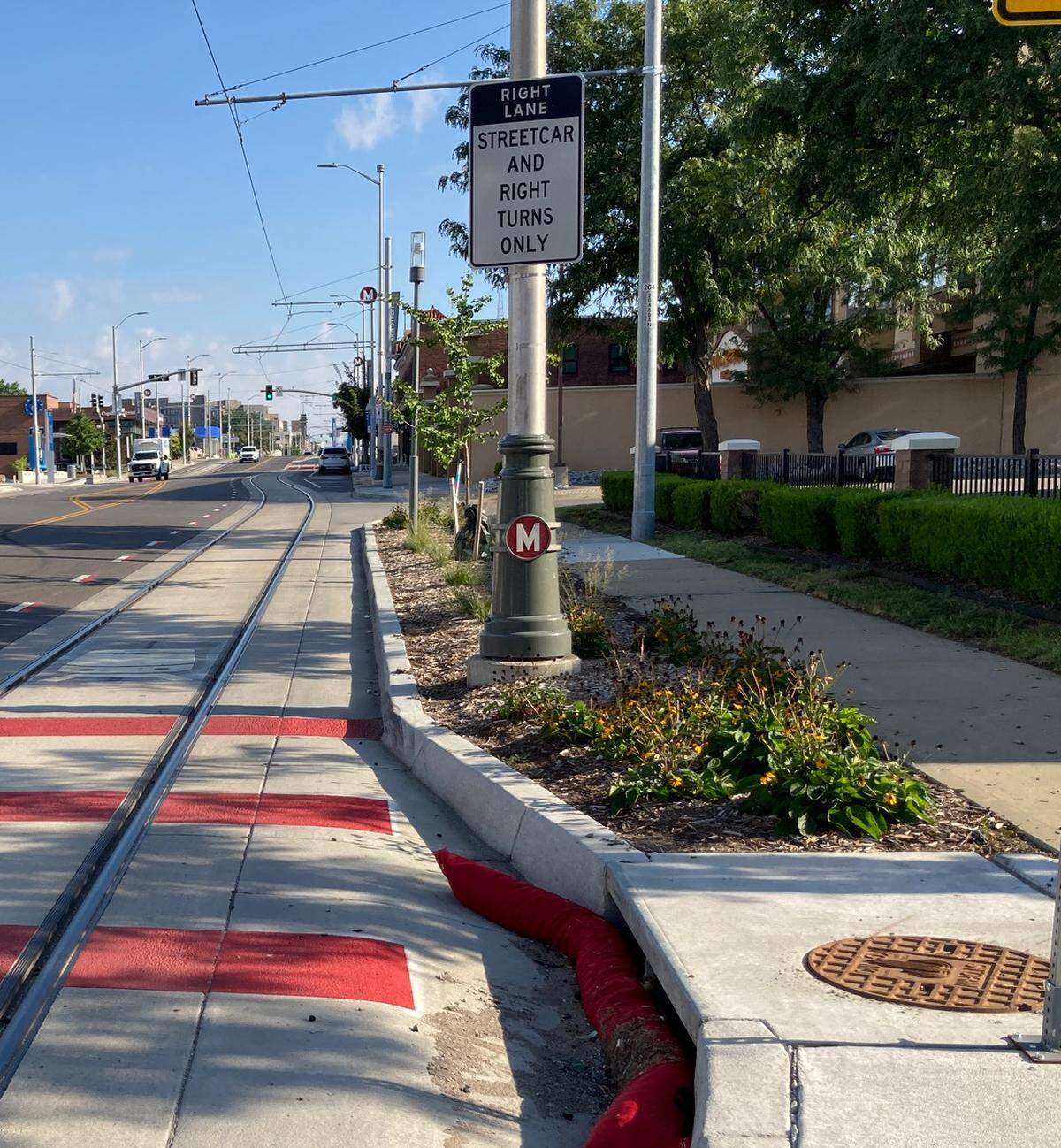
Dashed red-and-white lines
Dashed red and white lines tell drivers they can merge into the right-hand lane to turn at an intersection, into a driveway or to park on the street.
.JPG "IMG_7074 (1).JPG")
Signs of the times
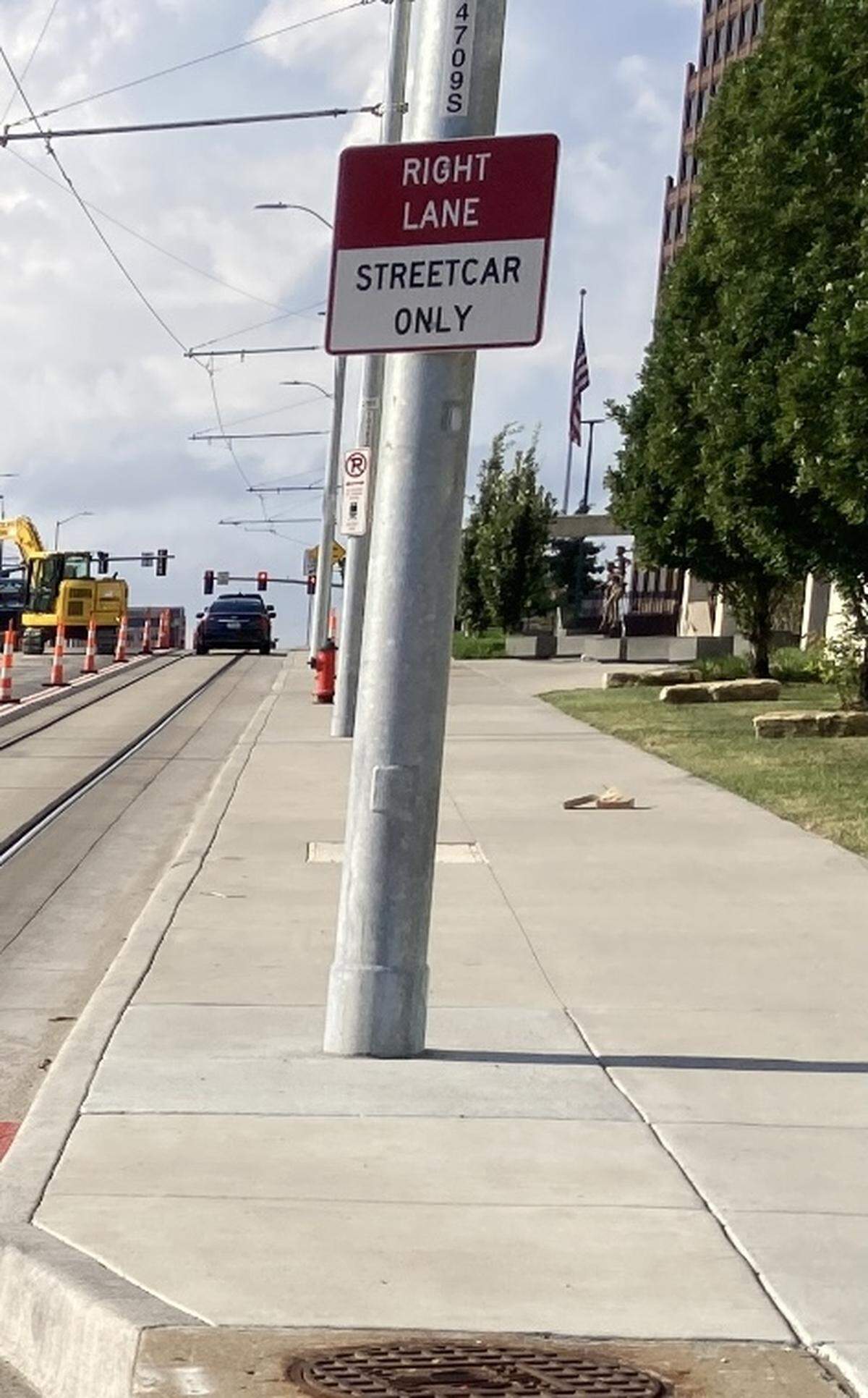
If the red markings are hard to get handle on, new signs along the side of Main Street should help clear up confusion. They include a sign with a solid red top “Right Lane, Streetcar Only,” and another with a solid black top, “Right Lane, Streetcar and Right Turns Only.”
For additional help, KC Streetcar ecommends two websites, kcmo.gov/traffic where the video and fact sheet can be accessed, and kcstreetcar.org/transit-only-lanes/.
The site notes that in April, the City Council passed ordinance 250275, that states “no person shall operate or park any motor vehicle in a designated transit-only lane except to access a driveway, building, alley, turn lane, parking space, or authorized crossing. Violations incur a fine of no less than $50 and the vehicle may be towed at the owner’s expense.”
That could really make a person see red.
This story was originally published August 22, 2025 at 5:38 AM.