KCI artwork that fell from ceiling weighed up to 10 pounds. Can it be made safe?
At the Kansas City International Airport, the question hangs inside the terminal’s entryway because the art does not.
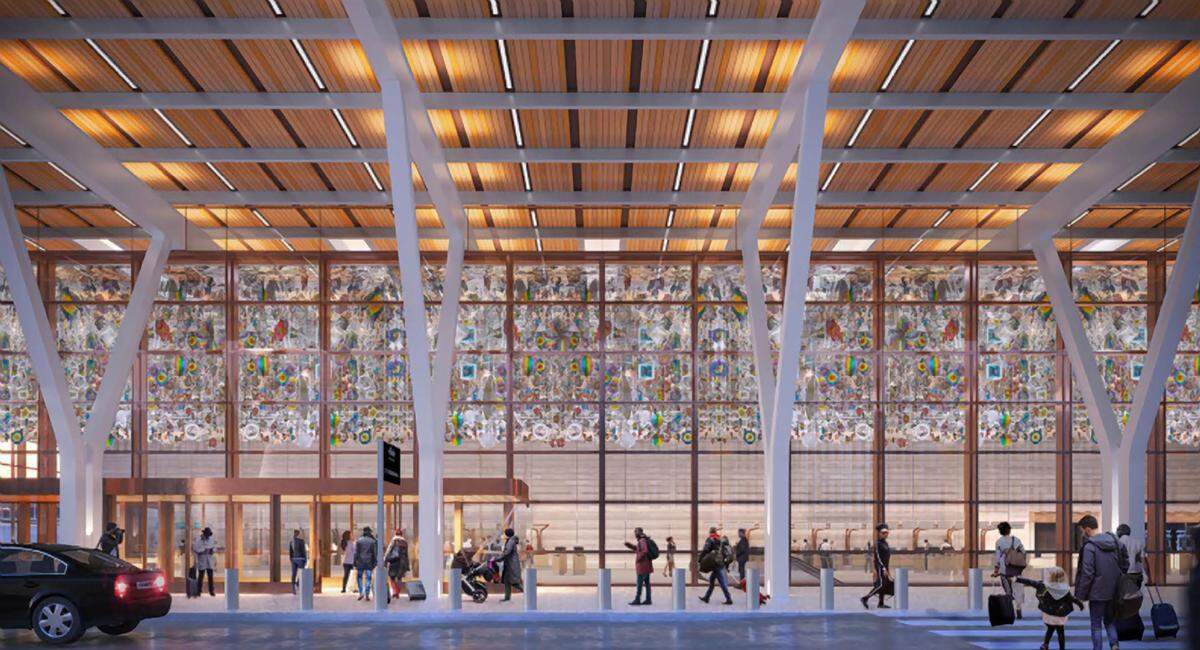
Will artist Nick Cave’s sculpture — a nearly $1 million kinetic art piece, comprised of some 2,800 “wind spinners” that dangled from the terminal’s 65-foot-tall ceiling and moved with the slightest breeze — ever be replaced?
“I think the answer,” said Justin Meyer, deputy director in marketing of the city aviation department, “is complicated.”
Art sculpture hung from ceiling at KCI airport
Which is not to say no, the artwork, voted an airport favorite in an informal KC Star poll, will never be reinstalled. But it also doesn’t mean it will.
On Feb, 28, 2023, when the airport’s new $1.5 billion terminal opened to the public, Cave’s “The Air Up There,” was a signature piece, one of 28 airport public artworks that, collectively, cost $5.65 million. The money came from the city’s “1% for art” program that sets aside 1% of the cost of construction of major city projects for public art.
For 20 months, the piece shimmered along the length of the terminal’s ceiling, until, on Oct. 6, 2024, one of the 2,800 strands — each holding five metal spinners — dropped from up high. Although it didn’t hit or hurt anyone, it could have. The spinners, from afar, looked light and delicate. They were anything but.
“The whole strand together weighs 8 to 10 pounds,” said Mark Spencer, the aviation department’s arts program manager.
“They’re heavy, sharp, steel disks,” Meyer said. He said that the possibility that another one might fall and strike one of the 40,000 people who travel through the terminal each day was not a chance that the city was about to take.
‘There’s 2,800 strands,” Spencer said. “Let’s say there is a 1% fail rate. That is 28. That is not acceptable when the airport is open 24 hours a day. If there’s any chance of anbody getting hurt by a work of art, the city is going to deal with it. If it was a 10% fail rate, that’s 280.”
The decision to take down the sculpture, Spencer said, “was made immediately.”
Nick Cave’s ‘The Air Up There’
Ten months have passed.
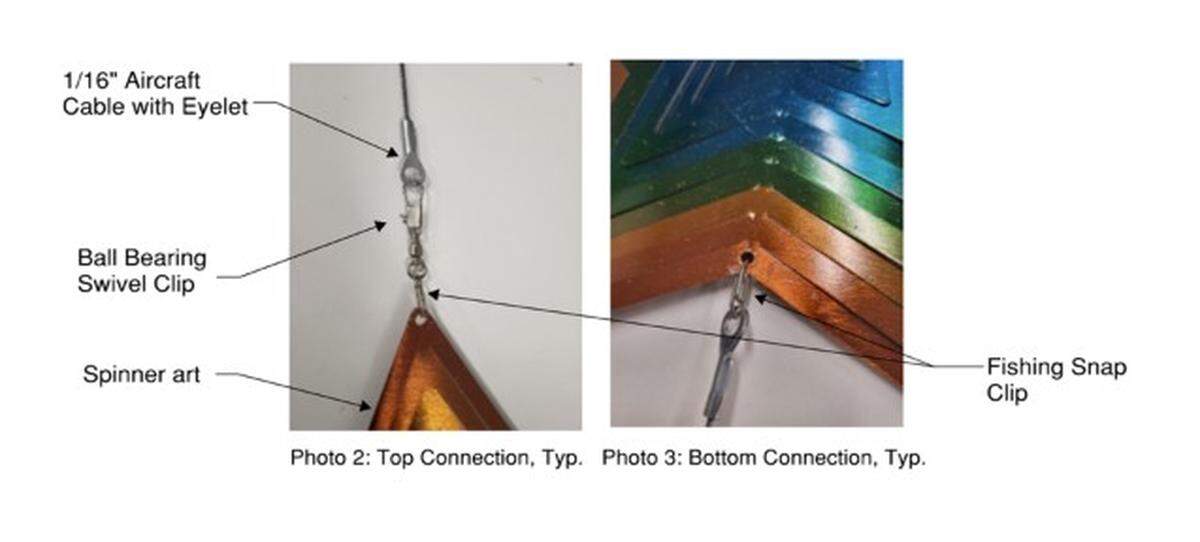
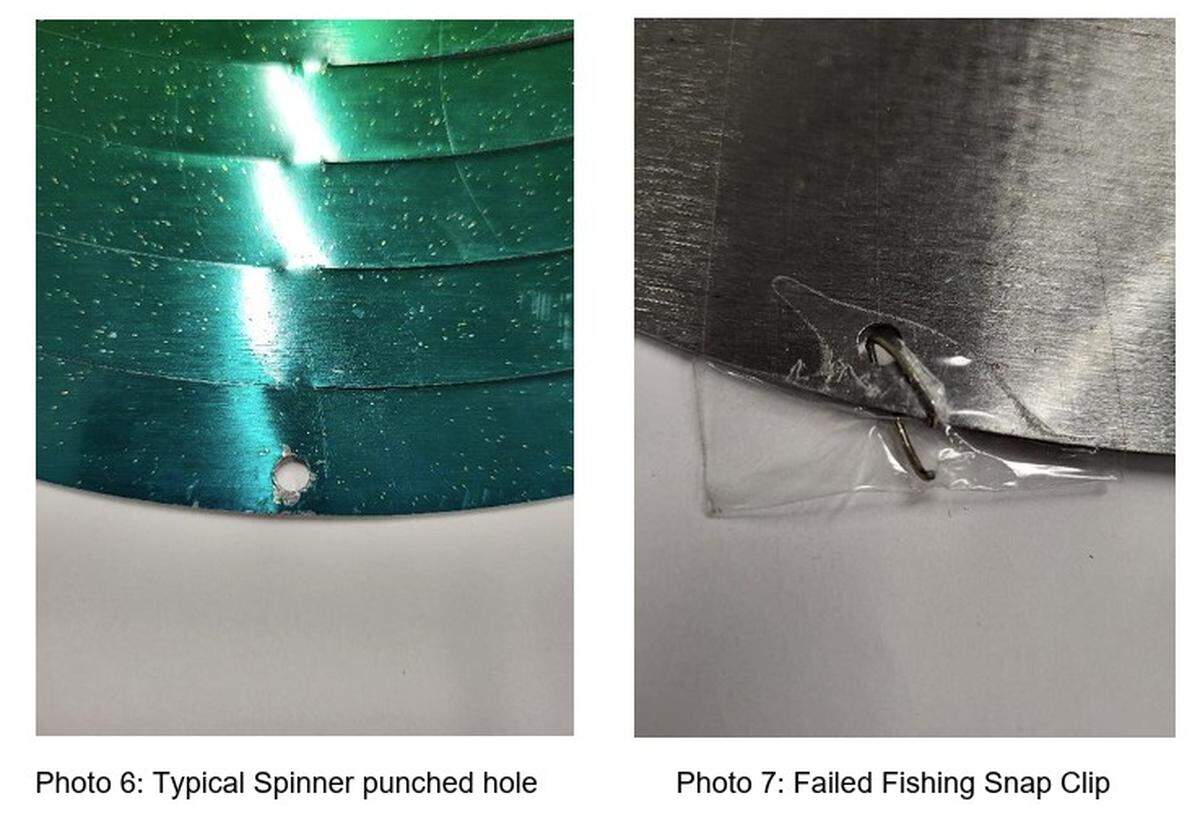
The city last year, through engineers Burns & McDonnell commissioned another firm, Kansas City-based DuBoise Consultants, to prepare an analysis of the artwork. Their eight-page “Art Structural Evaluation Report,” released in December, noted that the single strand fell due to the failure of one of the metal connecting elements used to string and hold the metal spinners.
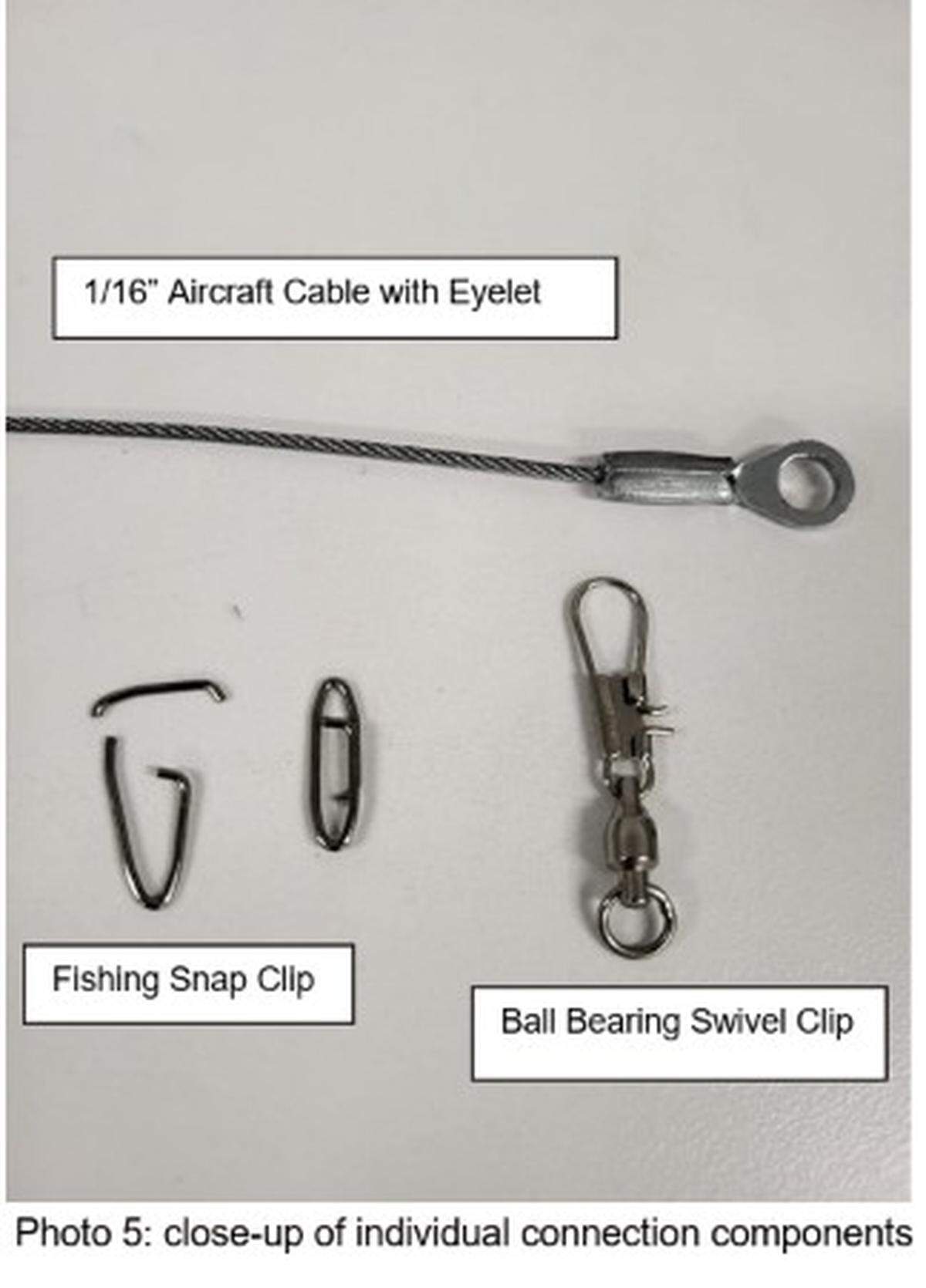
Each strand consists of a 1/16-inch aircraft cable with an eyelet, a ball bearing swivel clip of the type used in fishing, along with a fishing snap clip. It was the snap clip attached to the spinner that cracked and failed, probably because of the continued stress on the clip over time.
“(I)t was determined,” the company wrote in its recommendation, “the strength of the clip was not sufficient for the suspended weight and would likely deform and potentially fail due to a sustained and cyclical loading over a period of time. As a result, it is our recommendation the fishing snap clip not be used in the system.”
Making the artwork safe will require more than fixing a single strand. Because there are thousands of spinners, there are also thousands of fishing clips. The company highlighted another possible problem: bending the clips to feed them through holes in the metal spinners could also potentially create micro fractures in the clips.
“(T)he potential for a fatigue failure is also possible,” the report said.
This summer, Meyer said, the aviation department, again through Burns & McDonnell, asked to be presented with a report that will detail not only what kind of new hardware would be needed to assure that the artwork would not fall, but also how to create “redundancies,” — essentially a back-up system — to “eliminate the opportunity for another single point of failure.”
Meyer said the city expects to receive the engineering report in the next six to eight weeks.
Cost, Cave and copyrights
Still, that does not guarantee that the sculpture will be reinstalled. The current unknown cost of reconfiguring the artwork could be an issue, as is the artwork’s copyright.
While the city’s 1% for art program provides money to buy or commission art, Meyer said, it does not provide money for upkeep or maintenance. That cost, Meyer said, would likely be borne by the aviation department, which, based on the lease agreement with airlines, would be shared with them.
“Every cost that we incur is really their cost as well,” Meyer said. “Because they take the risk for the financial viability of this place, it’s not a quick decision for us to think about.”
It could just be that the cost of fixing a nearly $1 million piece of art becomes too prohibitive.
James Martin, the city’s public arts administrator, previously told The Star that Cave, as the artist, is under no obligation to refund his fee, as the artwork was only guaranteed against manufacturing defects for one year. Martin said he was told that the city’s insurance also is not responsible for reimbursing the city.
Then there is the matter of changing the art, itself, and the possibility that improving its safety could alter the way the piece is intended to appear and operate.
Cave was notified that the piece had be come down, Meyer said, and understood the reasoning. Changing the piece, or displaying it in some other place or fashion would require his permission.
“The copyright of the piece is owned by Nick Cave,” Meyer said. “And if it’s changed dramatically from his artistic vision, that would be his call. So if at some point it’s reassembled and hung somewhere else, that would be Nick Cave’s call— not ours. We own the piece, but he owns the copyright.”
The Star reached out to, but did not receive a response from, Cave, who is an alum of the Kansas City Art Institute and professor of Fashion, Body and Garment at the School of the Art Institute of Chicago.
“There are many, many cases where pieces have been altered and the artist says, ‘No, that is no longer my work of art,’” Spencer said. “You know (sculptor) Alexander Calder, his foundation, if you do not repaint an Alexander Calder with the approved color, they can disown it as an Alexander Calder. Artists, even after the artist dies, have that kind of power because of copright law.”
The airport terminal features other pieces secured to the ceiling. After a strand of Cave’s sculpture failed, Meyer said, the other artworks were examined and found to be sound.
For now, “The Air Up There” remains grounded, stored and idle in a warehouse near the airport.
The Star’s Mike Hendricks contributed.
This story was originally published August 15, 2025 at 5:00 AM.