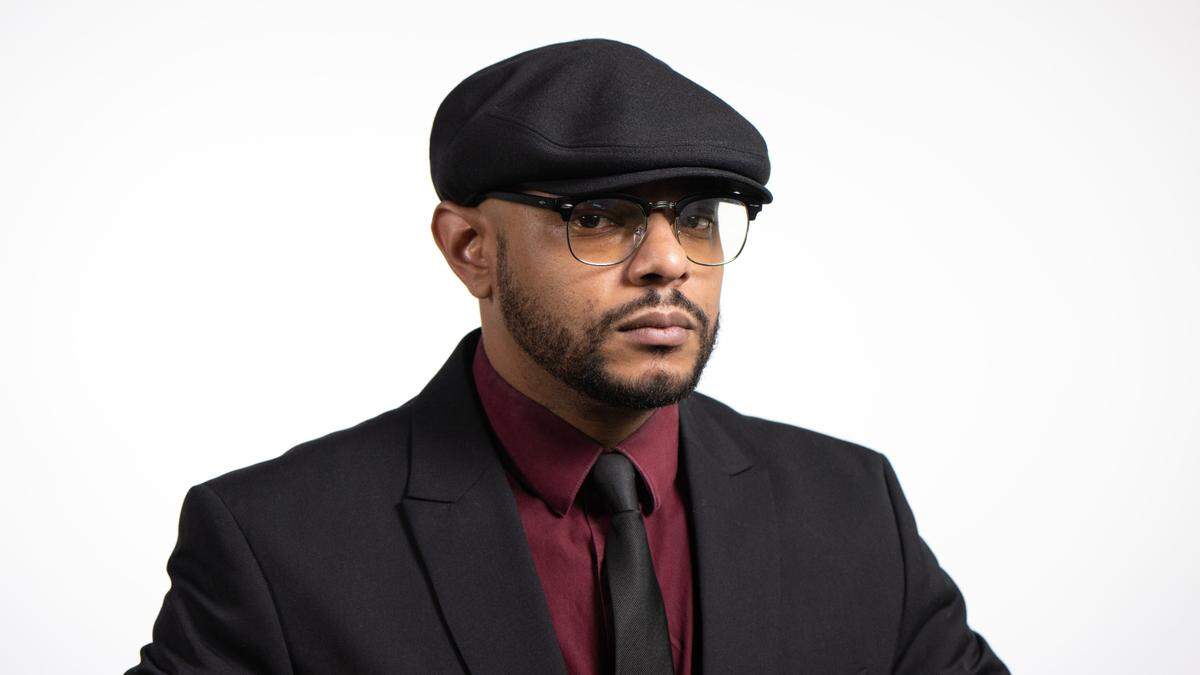
Plus-size male model walks the runway and spreads body positivity in KC fashion
.jpeg "Jorge Fuller shares his journey as a plus-size Black male model, changing Kansas City’s fashion with body positivity and inspiring self-expression.")
Jorge Fuller has spent much of his adult life in front of an audience, whether teaching in a classroom or performing poetry on stage. But it’s his work as a plus-size male model that has pushed him into an even more visible and challenging role.
Over the past four years, Fuller has made a name for himself in Kansas City’s modeling scene, emerging as a powerful advocate for body positivity and self-expression. He says that as a plus-size Black man on the runway, he’s not just walking for himself, he’s walking for the students and community members who never imagined they could.
His presence challenges traditional beauty standards and opens doors for others to step confidently into the spotlight.
Whether he is working with designers to craft runway-ready outfits or sharing wisdom during rehearsals, Fuller brings the same energy: uplifting others through unapologetic authenticity.
For Fuller, modeling isn’t about fitting in, it’s about making room, and inspiring others. He recently sat down with J.M. Banks, the Star’s culture and identity report, and talked about his journey as a model, poet and teacher in Kansas City.
Banks: Can you tell me a little bit about your background and upbringing, and how those early experiences led you into the fields you are currently involved in?
Fuller: I am a Kansas City native. I was raised in the urban core, or Midtown, particularly on the east side of Troost. I went to Southeast (high school) and I graduated in 2006. I spent time always on the performing arts side, I loved debate, I was in ROTC. I did sports but didn’t care much for the athletic programs.
I was someone that always kind of liked being on stage in some form or fashion. I didn’t always have to be the main character of the play, but I wanted to be in the play, if that makes sense.
I went from that to the University of Missouri-Kansas City, where I studied business, elementary education and then completed with liberal arts. But in all of those spaces, it was always about how I could give back to my community, what I could learn, what I could support, and how I could build bridges.
As I started my teaching career, I began early on in Kansas City. I did Jumpstart KC (a college readiness program in Kansas City) and kind of just found myself seeing education as the field I wanted to be in, primarily. But for the last 19 years I’ve been in education.
I also noticed the artistic side of me wasn’t getting any avenues. So I went ahead and brought back my poetry side, which I started in middle school. I then took it to high school at Southeast, where poetry and debate became my focus.
Later in life, I wanted to make sure I had an avenue to do something that wasn’t always focused on education, community or business.
When was your first fashion show and what made you want to try modeling?
I got into modeling because I wanted to test myself, could I just put myself out there and see what happens? I ended up getting picked up for the Curves & Confidence Fashion show, they gave me a space to just be out there.
I was able to walk in an official fashion show, and from there I’ve done many other fashion shows, different castings, gotten support and found a little community within that space. I’ve been doing it for the last four years now. This past year, I did about five shows, in the midst of still doing everything else I’m doing. I’m still making space for those two art forms to have life.
Can you give me the breakdown of the Curves & Confidence Fashion Show and what that first experience walking the runway was like for you?
It’s a fashion show for plus-size models. It started off for just plus-size women. Now they take all sizes, but it was primarily an effort to give plus-size women an avenue to be showcased, to be able to model. It also helps you start learning how to model, because they do a lot of training, a lot of confidence-building and help you get accustomed to what it looks like to be in the fashion industry.
I was able to tap into it as a plus-size male model, not knowing there weren’t really many of us. It’s really about four to five of us still actively engaged. But I was able to find a sense of confidence within myself. I didn’t have to speak, I didn’t have to perform, I just had to walk, pose and smile.
That was the one thing that made me different from a lot of people in fashion shows, I smile. They ask, “Why do you smile?” I say, “Because I’m tired of Black men not being able to showcase their joy.” Black men do smile. I’m also a plus-size guy. I’m tired of not seeing myself represented in clothing, in fashion, in spaces where we still want to buy clothes, we still want to look good.
Curves & Confidence gave me the inspiration to be courageous, to be confident, to be able to walk into a space knowing I’m the center of attention, even when I’m not doing anything extra.
It gave me the opportunity to wear things I wouldn’t normally be offered. Seeing Black male designers, seeing all types of sexualities present in the industry and being able to showcase your authentic self on the runway.
What inspired you to take modeling as a one-time experience and then continuously do it for the next few years?
The cheers. Like, when you come out and you have a crowd of people shouting your name it is a feeling like no other.
That moment gave me the feeling like, “Alright, I’m walking through the curtain and I’m going to be the center of attention.” It was me taking that attention and getting it in a positive way, not for board commitments, not for advocacy work, just for me being present in the moment.
I tell people, if you haven’t taken the opportunity to try it, do it. You’re going to be nervous at some point, but when you get out there and the crowd is cheering, someone’s shouting your name, someone’s whistling, it lifts you up. If you’re someone who’s usually humble and modest and then you see people genuinely appreciate your beauty, it gives you a different kind of confidence.
That first time stepping out behind the curtain and hearing my name shouted, it was something else. That feeling continues every time, it’s like chasing the high and I got to keep doing it.
What does body positivity mean to you as a Black male model?
I don’t think people understand how hard it is to be a Black man in America. You always feel like a threat, and you always have to be on guard. The reason we often wear the face of stoicism or intimidation is to protect ourselves. But body positivity means I can go out and smile. You can see me experience joy. You can see me in a space of adulation.
You can see me doing something that may make others uncomfortable, like wearing something bold, but I look good in it.
It doesn’t have to be received by everyone. It just has to be something you feel confident in. So when I think about body positivity, it’s about someone seeing me do it and realizing they can do it too.
As a Black male, if I’m out there walking the runway and I smile, another Black man might think, Well, he smiled, maybe I can smile too. It changes things.
You can be vulnerable and still be safe. You can be strong without looking hard. It’s not always about toughness. You can show frailty in a way that highlights strength. That kind of vulnerability, being yourself fully, is a powerful strength and it’s something we don’t always see.
It’s about seeing someone own their story without worrying about what others think. You’re showcasing designs created by people who made something from scratch and had meaning behind it. So, body positivity in the fashion industry is about being yourself and helping others see that they can be themselves too.
Do you think the KC fashion scene embraces and supports plus-size Black male models like yourself?
I would say absolutely, especially as more plus-size Black men have come into it. I think Kansas City is ready and receptive to plus-size Black men. I think if more plus-size Black men came out to the castings we would definitely see a huge influx and see designers start making room for us.
So, when I think about Kansas City and plus-size male fashion, I see the potential. The community is ready. We might be the start of something new. I’ve even thought about opening my own store, just because I believe there’s a market that’s not being tapped into. Yes, we have plus-size stores, but they’re not in the same fashion market that focuses on making you feel good from head to toe.
Have you faced any challenges or pushback as a plus-size male model? Or any moments where you felt discouraged?
There have been times when I passed casting, made the list, but didn’t get picked up by a designer. That’s happened a couple of times now. And when I talked to people in the industry, they told me, to just keep doing it. Don’t stop. So I do.
But it also shows the gap that still exists, because most designers don’t make clothes for plus-size men, especially not plus-size Black men who want a specific look or feel.
So you have to be willing to accept that not every space is going to have something for you, not yet. You have to keep trying. Eventually, someone’s going to create that space.
I think my most impressive fashion show was Heartland International Fashion Week this year. I say “impressive” because I was working with designers from across the world. My designer was from Nigeria, or maybe Ghana and they were working with us and asking for all these specific measurements.
So now you’re measuring your body, something I wasn’t used to. You have to pull out the tape and figure out your exact sizing. The outfit they designed was cool, but it didn’t fit the way they wanted, so they gave me two different options when I got to the show. I picked the one that fit better, and I was still able to walk in it.
Those are the kinds of challenges you face. You may get cast, but you might not have something that fits. You might have to sacrifice an opportunity for the safety of others. But those are things to consider and things to be willing to do, if you want to be in this industry.
What would you say to someone who is hesitant to take a chance and try something outside of their comfort zone, especially modeling or something where they don’t fit the ideal image?
In the second to last fashion show I was in, we spent time talking about how we as Black men can grow our community. We ended with affirmations, encouragement and conversations about just jumping in. So for anyone interested in modeling, take the opportunity. Go to the casting.
Try it. You never know, you might get picked. Go to rehearsal. If it’s not for you, that’s OK. But if you do get the chance, walk the runway. Do the photo shoots. You never know who’s watching, who you’re inspiring, or how you’ll feel once you see the photos, see how people reacted.
The creativity, the flair, the footprint left by the artistry of our designers and planners, it’s powerful. You just need to take the opportunity and see how you fit.
You may not always want to be a model. Maybe you’re a photographer. You’ll meet other photographers and learn from them. Maybe you’re an organizer. You’ll find ways to help and make the event run smoothly. But it starts somewhere.
Do you have any plans for the future in regard to your modeling or any upcoming shows that you’re excited for?
I’m excited for Curves and Confidence 12, of course. I might be involved in the 18th and Vine Art Showcase. I’ve got a couple of shows in August I’m excited for and I’ve got a lot going on.
But those shows give me a chance to showcase myself, meet designers, see people I know, other educators, poets, and community members, all coming out to support and be part of the moment. It’s something you can always be a part of, and it truly highlights Kansas City in a phenomenal way.
For more stories about culture and identity, sign up for our free On The Vine newsletter at http://KansasCity.com/newsletters.
This story was originally published August 6, 2025 at 10:23 AM.