Why In-A-Tub’s fried tacos — powdered cheese & all — remain KC drive-thru royalty
To the untrained eye, In-A-Tub seems like any other fast-food joint.
During the lunch rush, the line of customers steadily flows, orders ready. The cashier echoes their orders to the line cooks at a rhythmic cadence: “Two reg, one nacho cheese, one nacho pocket, fries.” Employees glide swiftly through the open kitchen, sprinkling tacos with In-A-Tub’s signature orange cheese dust.
But then, the crowd thins. The room quiets. Sunlight filters through sloped atrium windows. Pop country music hums in the background.
You’ll find owner Aaron Beeman surveying the dining area. But he doesn’t see it as just a spot for a quick bite. To him, In-A-Tub is a museum — and he’s its historian.
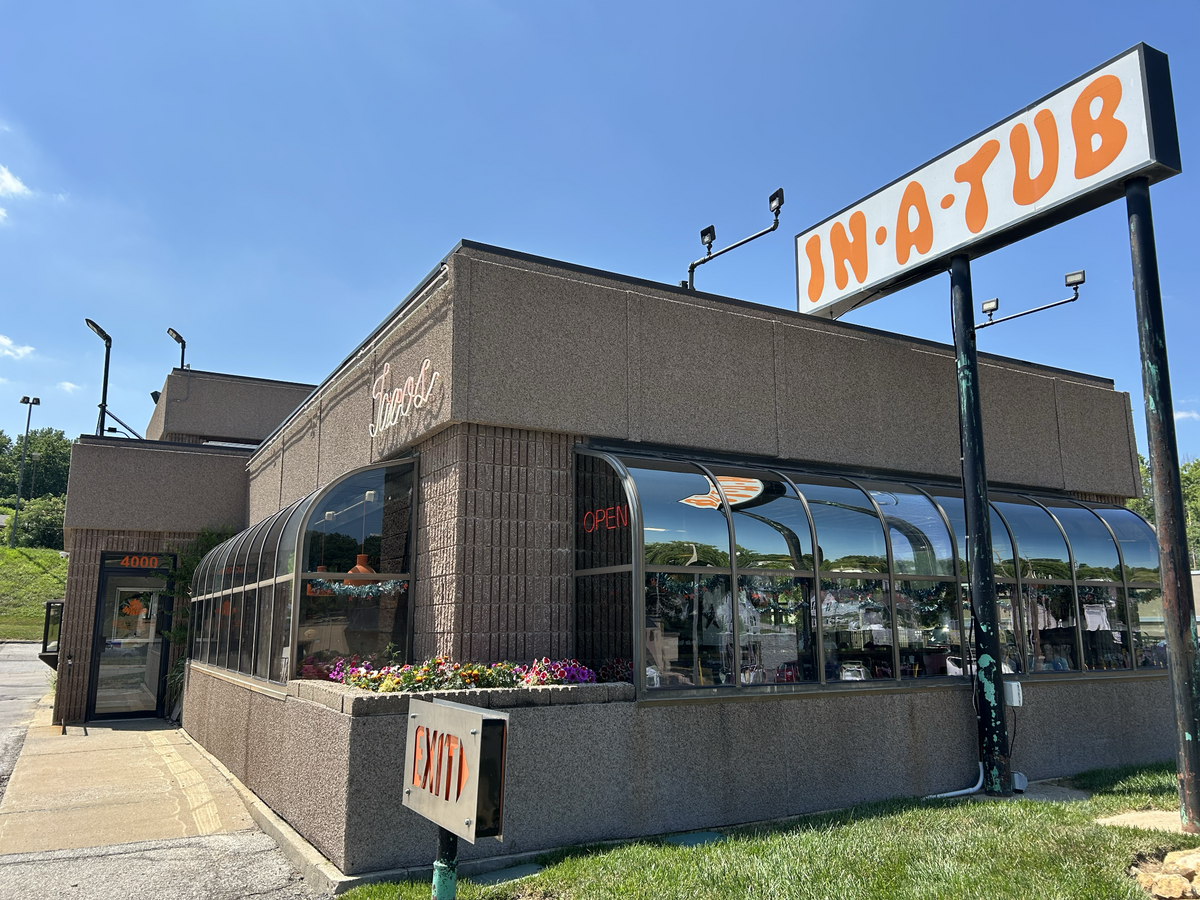
“There’s a picture of the original building right there,” Beeman said, pointing to a black and white photo of the original In-A-Tub.
Along the restaurant’s roof are the words “Whirla Whip,” which is a 1940s tabletop ice cream machine that inspired the original concept: 50 Flavors In A Tub, named after the shop’s variety of ice creams.
Beeman said the ice cream shop’s original owners were Foster Hulse and Claude Reed, who invented the Whirla Whip in Iowa.
During the 1950s, Marion and Walt Carpenter bought the first In-A-Tub restaurant at 4159 N. Oak Trafficway, according to Beeman. Marion developed the majority of the menu, he said.
From employee to historian
Beeman started working at In-A-Tub’s Metro North Mall location in 1986, working his way up to owner in 1996. Five years later, he bought his current location at 4000 N. Oak Trafficway in the Northland. It’s one of two remaining In-A-Tubs — the other is in Platte Woods and owned by Beeman’s sister.
Now, Beeman is filling in the blanks of In-A-Tub’s history, gathering artifacts along the way.
“See those square, stainless steel bins,” Beeman said, pointing to the containers for ketchup packets and straws. “When I first bought the place, I found whole boxes of them upstairs with ‘blueberry’ and ‘banana’ written on them. That’s what they would use to hold the (ice cream) toppings.”
Beeman even bought his own Whirla Whip machine for $500 last summer, driving to Iowa to pick it up. He plans to restore it and display it in the store — a new addition to his collection.
Diving into the menu
In-A-Tub is best known for its deep-fried tacos. They’re a take on the Kansas City-style taco, the love child of Mexican and Italian immigrants working in the West Bottoms meatpacking factories in the early 1900s.
Historically, the KC-style taco consists of a deep-fried corn tortilla, ground beef, shredded lettuce, tomato salsa and Parmesan cheese.
In-A-Tub keeps the recipe the same but subs the parmesan for something that would send a shudder down every Italian nonna’s spine: neon-orange powdered cheese, akin to what you’d find in Kraft macaroni and cheese.
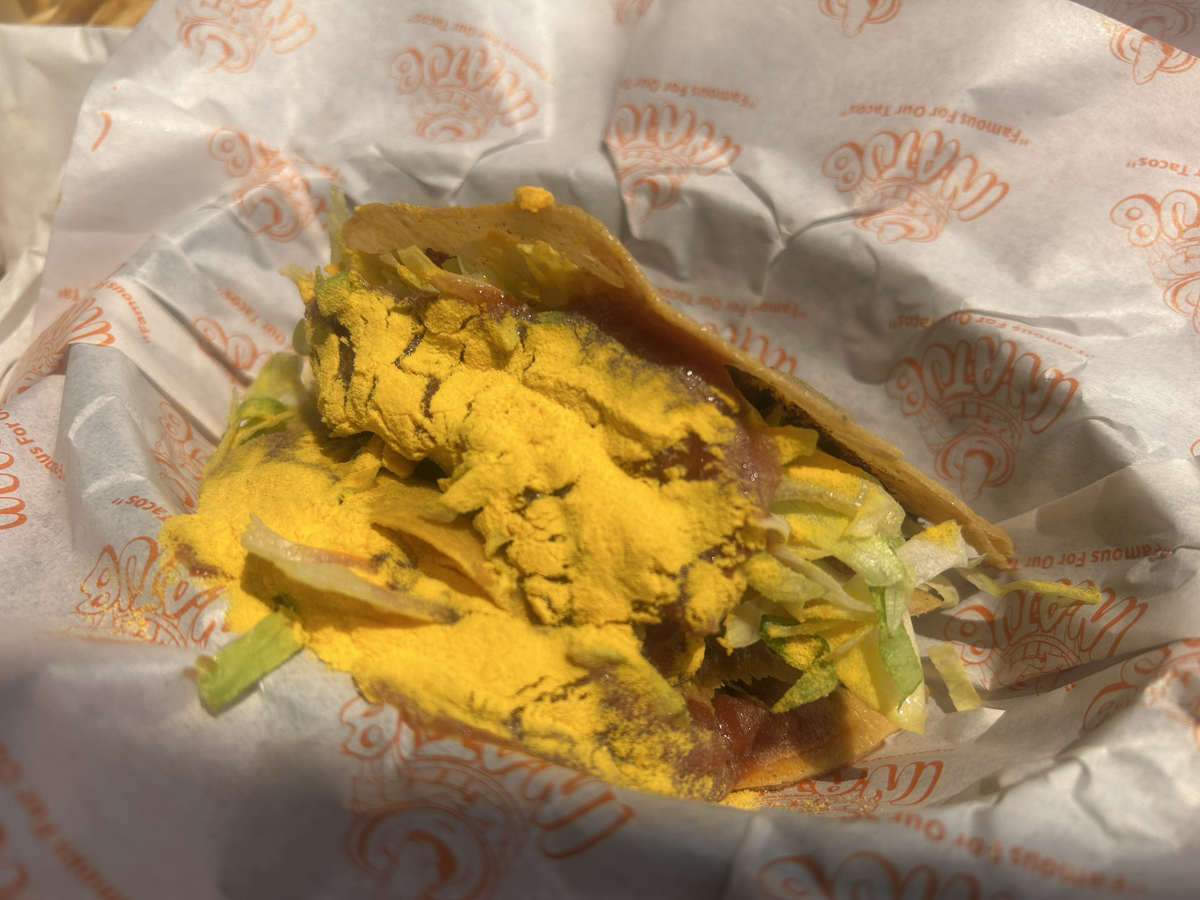
Beeman buys 5,000 pounds of cheese each year. Its artificial taste is indiscernible in the taco, unless you lick some directly off your fingertips. The ground beef is much more flavorful, salted just right, and the salsa is sweet and tangy.
Beeman said his one-of-a-kind menu offerings set him apart in a competitive fast-food market. His restaurant remains a David to its looming Goliath — the nearby McDonald’s, whose Golden Arches literally cast a shadow over In-A-Tub.
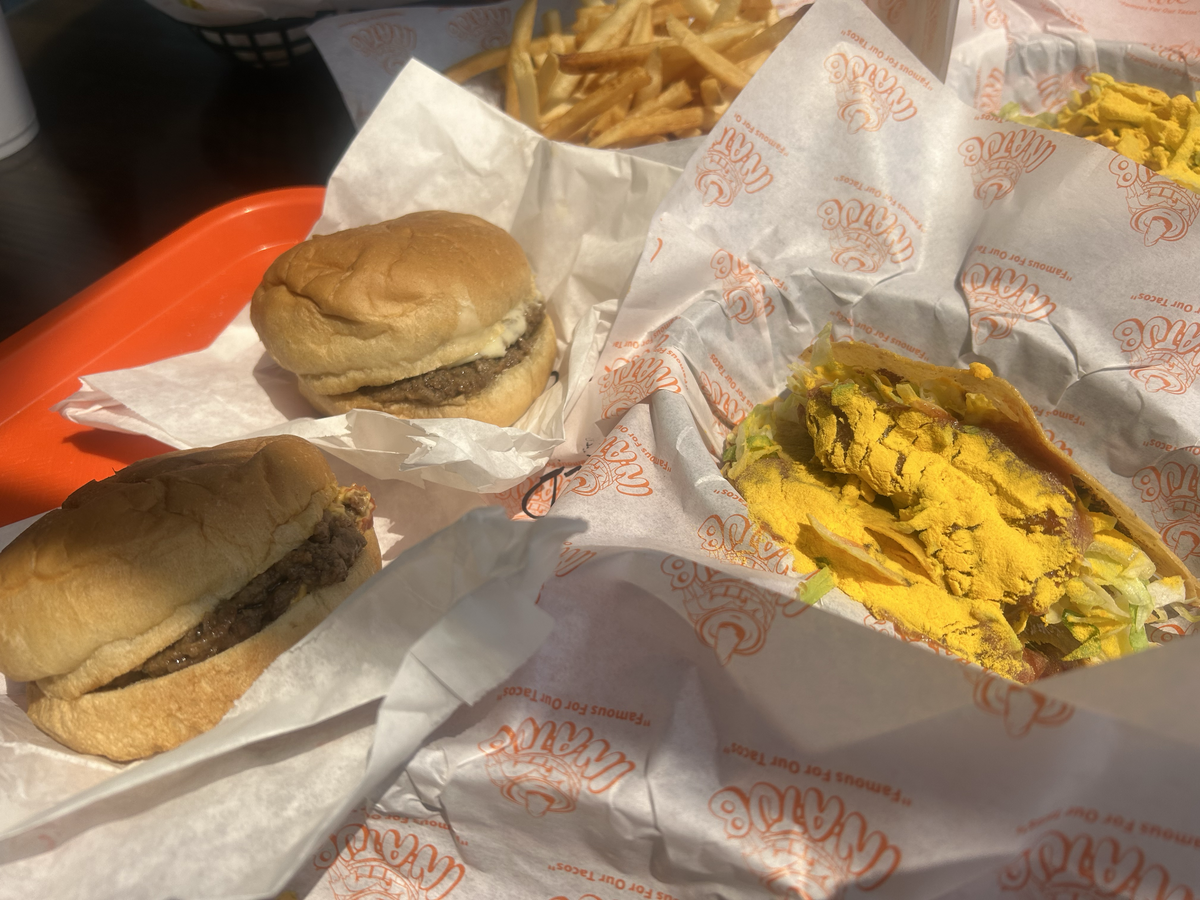
Beeman said he doesn’t worry about his next-door neighbor because In-A-Tub’s handmade menu offerings are one-of-a-kind, like the pocketburger: a pillowy, hollowed-out potato bun with loose, juicy ground beef. I topped my burger with nacho cheese, a thick, yellow cheese sauce with tomatoes and chiles.
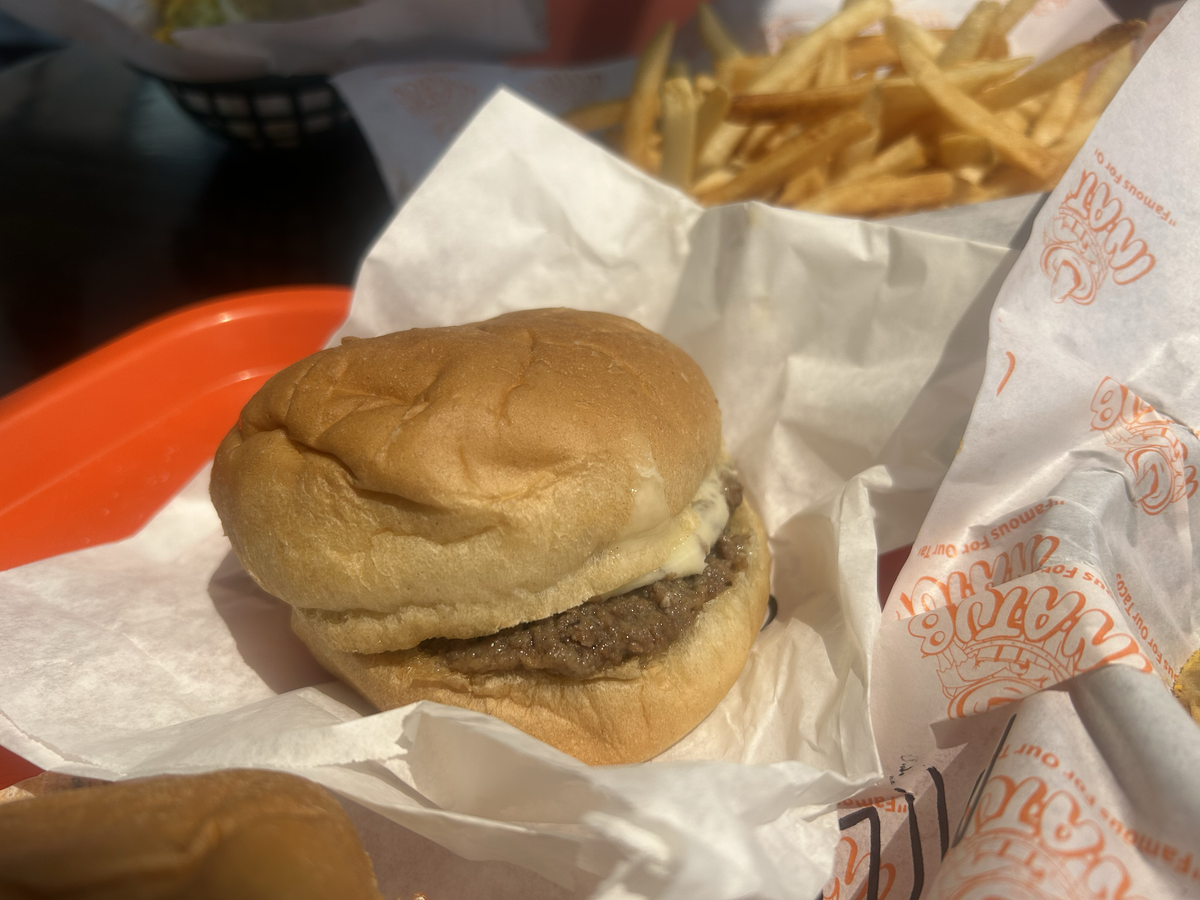
“When I was a kid, people said, ‘You should start making regular hamburgers,’” Beeman said, glancing over to McDonald’s.
“Everybody makes a cheeseburger. Not everyone makes a pocketburger,” he said with a smirk.
While I most enjoyed In-A-Tub’s pocketburger, the deep-fried tacos — which account for 50% of the restaurant’s annual sales — remain a cult classic.
Building a legacy
Northland resident Heather Henkemeyer remembers coming to In-A-Tub as a North Kansas City High School student, ordering deep-fried tacos at the restaurant’s walk-up window and enjoying them in the parking lot, which was a popular after-school hangout spot.
“It was the place to be,” Henkemeyer said.
Although Henkemeyer doesn’t frequent In-A-Tub, she’ll stop by the restaurant when she’s feeling nostalgic.
“My husband and I will pick up a dozen tacos and eat them easily and remember when,” she said. “It’s a good place to come.”
Last month, Washington Post Deputy Opinion Editor David Von Drehle wrote on KC’s taco scene, calling In-A-Tub a “former husk of itself,” turning his nose up at the Cheeto-like dust. Instead, he opted for more authentic Mexican street tacos around Kansas City, Kansas’ taquerias. (They’re even mapped along the city’s Taco Trail.)
I visited Carniceria y Tortilleria San Antonio in KCK, a stop on the Taco Trail, to see what Von Drehle was talking about. The long and short of it: they were superb — and for just $2 apiece.
So sure, I understand Von Drehle’s inclination to boast about these hole-in-the-wall taquerias as the future of the Kansas City taco, while knocking In-A-Tub as a stubborn relic.
In-A-Tub is a thing of the past. But that’s the point.
You could get a burger with a perfectly rounded top from Ronald McDonald next door. Or an authentic street taco in KCK. But you won’t find someone like Beeman, who’s dedicated his life to preserving a piece of Kansas City food history.
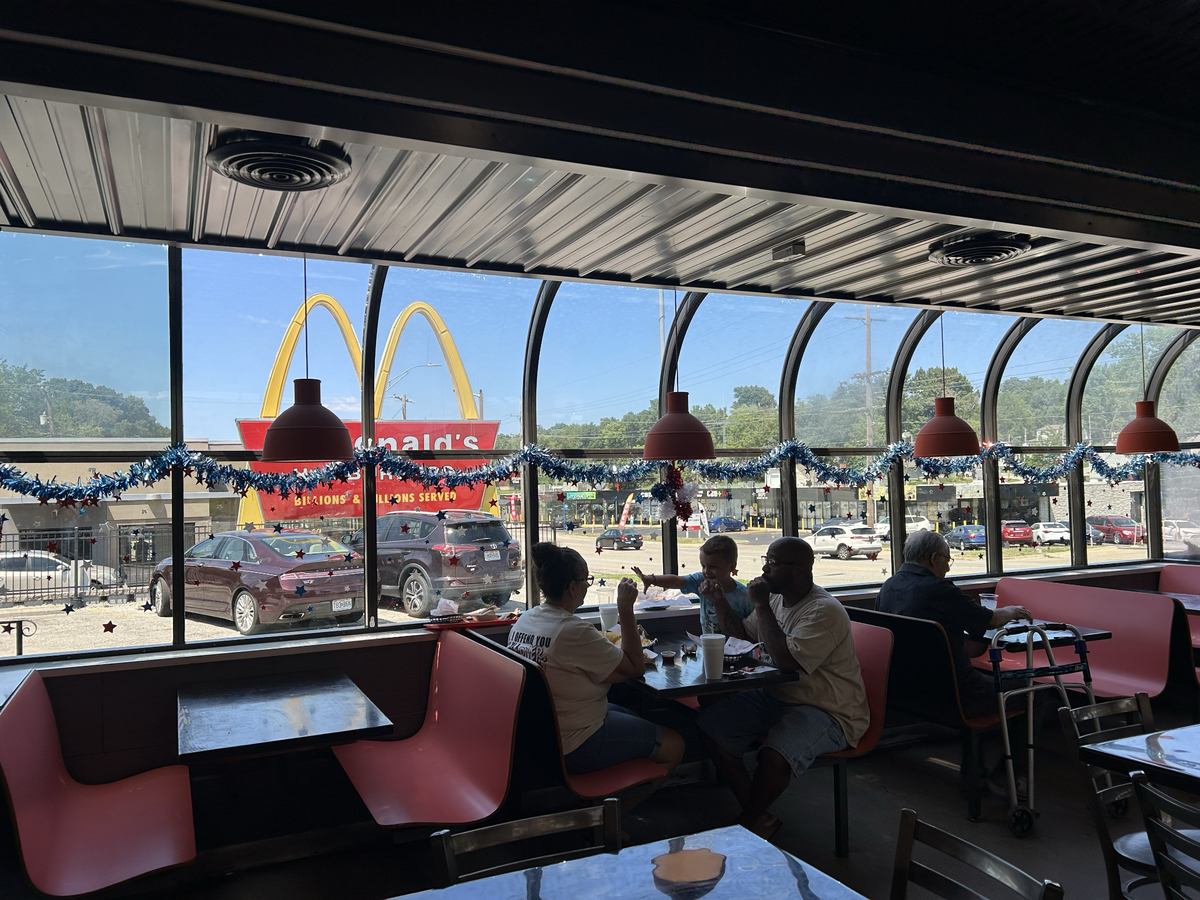
This meal is perfect for: when you want guilt-free fast food.
Not guilt-free because it’s good for you — nothing dusted in powdered cheese is going to be good for you. In-A-Tub is fast food upon first glance, but it’s steeped in a history of family life and cultural diffusion.
The McDonald’s next door won’t offer that kind of experience.
This story was originally published July 18, 2025 at 6:00 AM.