
How to get more women to become nuns? Here’s what Kansan Sister Jane Falke says
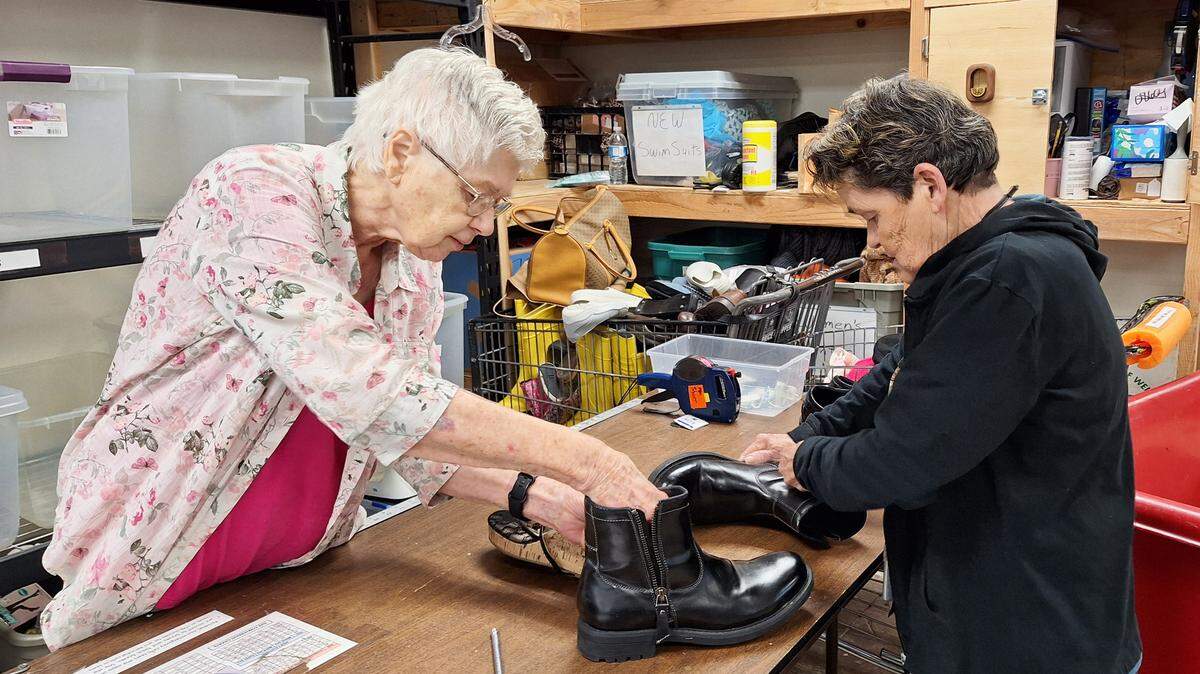
When a young girl named Teresa Elizabeth Falke entered a Kansas convent 70 years ago, she was the oldest of eight children in a Catholic farm family in Westphalia, Kansas, about 100 miles southwest of Kansas City.
She was 15.
Over the next seven decades of a religious life she calls “a great adventure,” Sister Jane Falke taught math at Bishop Miege High School to the first Baby Boomers, helped turn Paola, Kansas into more than just a spot on Highway 169 and in recent years helped refugee families settle into new lives in KC.
She also watched the numbers of women becoming Catholic nuns fall off a cliff.
That number in the United States peaked at 178,740 in 1965 — the Vietnam War era — and slid to 39,452 by 2022, according to the Center for Applied Research in the Apostolate at Georgetown University.
Today, only 100 to 200 women enter a religious vocation each year in the U.S., and some never complete the process.
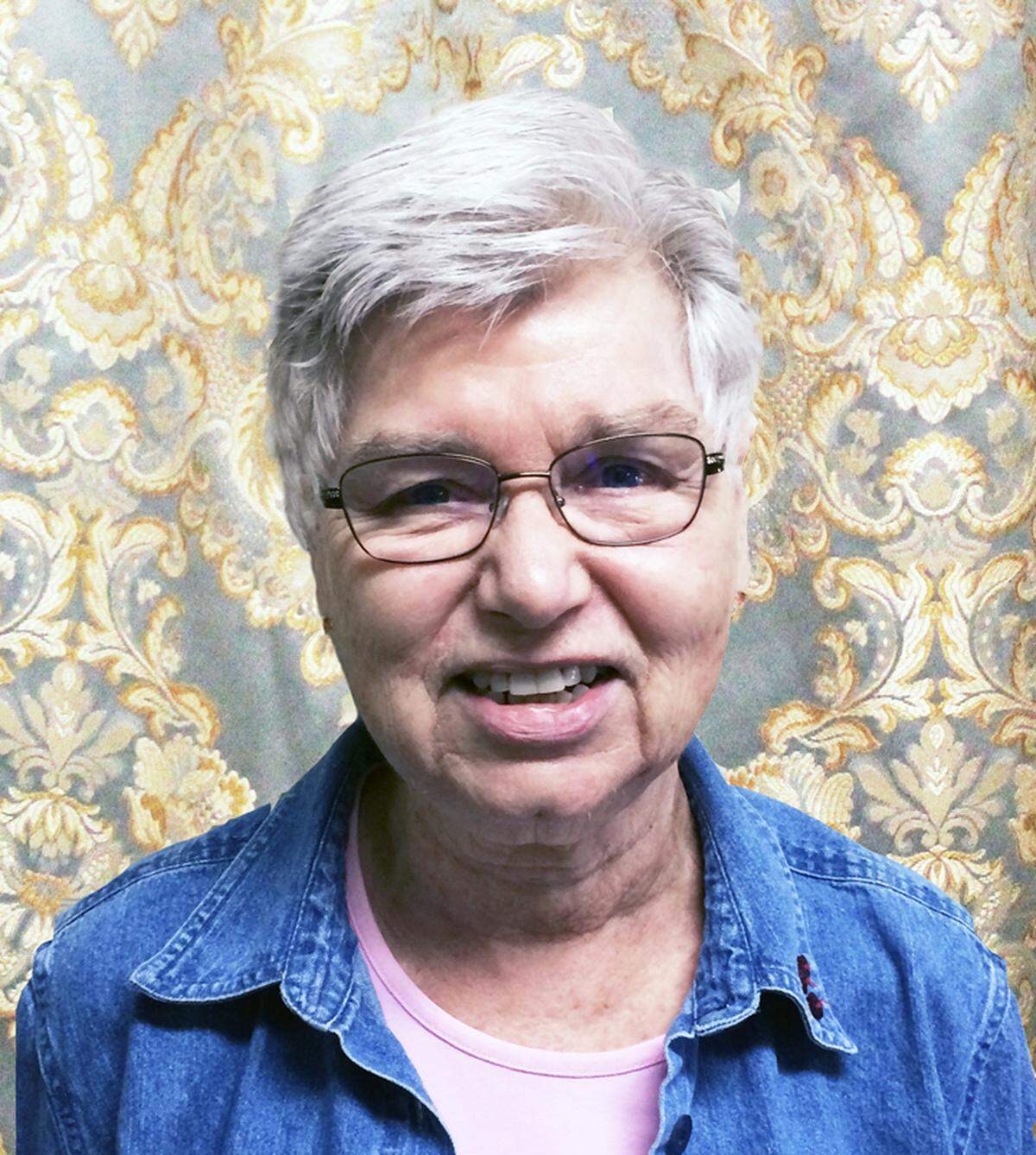
Falke, who is 85, was part of the boom era of nuns when she joined the Ursulines of Paola, a Kansas order that merged with the Ursuline Sisters of Mount Saint Joseph in 2008.
She recently left Kansas to live at the order’s home in Maple Mount, Kentucky.
Falke taught a few generations of children in the Kansas City area, including students at Queen of the Holy Rosary School in Overland Park, Bishop Miege and Holy Trinity School in Paola.
In more recent years she worked for Catholic Charities of Northeast Kansas in Overland Park and KCK and volunteered at the organization’s TurnStyles thrift store in Mission.
On Saturday she will be among a dozen sisters celebrated for their jubilee anniversaries ranging from 60 to 75 years of service.
We talked to Falke about her great adventure. (Her comments are edited for brevity.)
Why did you become a nun?
“Being the oldest of eight children I had had a lot of responsibilities already in my life, so I was quite mature. I was ready to go on to other things. After I was taught by the Benedictine sisters of Atchison in grade school — they were a very faithful, consistent group of women — at 13 I went to Ursuline Academy (in Paola). I was a freshman in high school when I was 13.
“I really liked it there and I admired the sisters and I just thought, this feels very much where I want to be and what I want to do.
“And the other thing I will tell you, when I was a child in a big family, there were times when I just had to ... pull back away from that and be quiet and just gather myself, I think. I don’t know exactly what it was when I was a child. I was always drawn to that more contemplative kind of situation.
“I was very familiar with family life and it was wonderful. When I think back to that wonderful family life we had, I’m so pleased to have had it. But I just felt drawn to something else.”
Some women today tell survey-takers they’re discouraged because it takes too long to become a nun, anywhere from seven to 10 years. How long was the process for you?
“My final vows were when I was 21. So that was six years. But for two years before that, I had taught first grade at St. Agnes grade school (in Roeland Park) when I was 19 and 20.
“It was a very interesting time. The Baby Boomers were starting to come to school ... trying to find room for them to go to school and teachers to teach them. In my first year of teaching was the year Bishop Miege high school began.
“So at that point, St. Agnes High School, which was in the basement of the church, they all moved over to Miege, which became the new high school, and then the seventh- and eighth-graders of the grade school could go to school in the basement of the church. And also, we had a third-grade group in the bowling alley (in the school).
“And I had 52 first-graders.”
Fifty-two first-graders?! And you were just 19?
“Here’s the way I’ve lived my life. Here I am, this is my situation, what am I going to do about it? And I didn’t really understand the whole historical progression (of Baby Boomers) either, at that time. It’s just here it is, this is what I’ve got, I’ve got to deal with, I’ve got to do something about it.”
How many years did you teach?
“I taught grade school for nine years and three of those were out in the country in Greeley, Kansas. The rest were in the city. Then I taught at Miege for 15 years (1967-82).
“Those were the years where people were having sit-ins and demonstrations about the Vietnam War, and most of that stuff was going on at college. But I can remember one day when one of my classes decided they were going to have a sit-in. Not because they had any issues about school or about me, it was ‘that’s what people are doing so we better do it, too.’”
How did you end up working with refugees at Catholic Charities in KCK?
“(Catholic Charities) needed somebody to be a receptionist in their counseling department. So I applied for that and got the job right away because I was way overqualified, but I’m saying I’m doing my ‘old-age jobs’ now.
“Did that for about two years. Then I worked for a little while in the development office doing data entry which I did not, I mean, that’s too boring for me.
“So one day they asked would you like to go to Kansas City, Kansas and be the front desk person there? They had just moved their refugee people to the Central Avenue place. I was delighted to go.
“I had wonderful years there meeting all these refugee people who had been through so much in their lives and had kept carrying on. They were all vetted so severely so they had no kind of records of crime or anything at all. They were all checked over for their health issues and as soon as they got here we had to get them vaccinated with all the important vaccinations. But, it was just one interesting story after another.
“We had a lot of Burmese people from Myanmar. We had Nepali people who were invited into Bhutan and then thrown out of Bhutan.
“And then we had some Iraqis who came here because they had helped American soldiers during the Iraq War. And a lot of Congolese people because of the terrible situations there. So we had a whole mix of people and their customs ...
“I just kind of have this feeling that we are all born into this world, we didn’t get to make any choices about how smart we would be, what our talents would be, what our parents were like, what country we were in, we had no say in that. So here we are. We get to be in this world. We’re people here. And we all have to kind of figure it out.
“And so people in those war-torn countries who went into refugee camps, they were all still surviving and carrying on and doing what they could to make a life for themselves. I’m very impressed by all of that.”
Immigration is such a hot topic. Thoughts on treatment of immigrants in the United States right now?
“I think that a lot depends on leadership. And I think that most of us harbor within ourselves some selfishness, that we don’t even want to mention it if the culture on the whole is more generous ...
“So I think that current United States leadership has given permission by the way it acts for people to say out loud some of those more selfish things. That’s one thing I think about.”
Having worked with refugees here, what did you think last year then about false reports of Haitian migrants eating pets in Ohio?
“When I see that, you know, it’s just more people think up stuff to say to scare people, to make them turn away from somebody whose different from them.
“There was a more local situation and I have an interest in it because my mother grew up in Olpe (Lyon County, Kansas) and I had an uncle who worked at a slaughterhouse in that area.
“But the current refugees we were dealing with, we tried to arrange for them to get employment. They go and work where nobody else will. So anyway, they started out (trying to get) people to go to Emporia, live in Emporia and work in the packing plant there.
“I have a lot of relatives living around there. What happened was people there, because they’re suspicious and all that, they started creating rumors that the refugees were raping their women. So, all this hostility built up to them.
“What we know, the police never got a single complaint about that at all. It was all rumors. So we could not place refugees in Emporia to work in the packing plant.”
As an administrator in your order when it was still located in Paola, you worked with city leaders there to develop land the Ursulines owned?
“In our community we had a superior and then an assistant superior who managed the property and funds. I was elected as the assistant superior. That was another very, very interesting time.
“I went to a meeting of the city of Paola about the future of the city and at that meeting a man who became a very good friend of mine over the years due to the work we were doing, he put his hand on a map and said this is the only place that Paola can build ... .he put his hand right on our property. We had a farm and it was the only place they could build. I just learned so much as we developed that property for the good of the city.
“There was a four-lane little spur highway that went from 169 into Paola, right across our property. So the first thing we did was, I worked with the city engineer and we plotted a lot of that property, and the first thing that went up was a Casey’s store. And then it all just kept developing.
“Now there’s a Walmart, an Applebee’s, other local restaurants, filing stations. All that on that property. So that was very important for Paola to be able to move in that direction.”
Less than 1% of nuns in the U.S. today are 30 or younger. The average age is 80. What can be done to encourage younger women to choose religious life?
“I don’t think we know that answer. But what I would say is there is a time in history when particular groups gather together, like religious orders, and do what they see needs to be done. And then that particular kind of life and that kind of service, for whatever reason, comes to an end. And then a new form has to sprout out of that ...
“Now, religious orders that are trying to go back and do it the way it was in the ‘30s or ‘40s or ‘50s, that’s not the answer. We are still waiting for what will emerge. And my particular feeling about it is it has to be people who are very spiritual and prophetic and it’s not going to take people who can just join this organization and do the work.
“That time is over. It has to be a new thing. It has to be more contemplative, more spiritual, though you’re not going to separate yourself from the world’s problems by any means.
“But it has to be prophetic and prophetic to me means that you have to speak out about what’s wrong with your culture and what’s going on and do something about it.
“Now, I can see the germs of that in the current religious communities because we’re just very, very aware and very, very active doing what we can at our age to get values into people and help them look at the world differently and all that. To me, that’s kind of the direction it’s going.
“How we get there, that’s in God’s hands. But that’s the way I see it. It’s not going to be like a big workforce. It’s going to be more contemplative and prophetic.
“It’s very much a calling. And I think in the past, when there were a lot more religious, a lot of them just found themselves in circumstances where they figured out they could join us and be part of a big workforce ...
“I’m saying we can’t try to turn young women into what we were like when we were young.”
Should nuns be allowed to get married as a way to encourage more women to consider it?
“You can’t call white back. What I mean by that is being a sister is a vowed life where you do not marry. However, there are religious communities with people called associates, people who know us, who work with us, whom we support spiritually, who go out and do good works as Ursuline associates, for example. They can be married.
“So maybe that whole associates process could grow into something more compatible with life today.”
Thoughts on new Pope Leo XIV?
“I thought it was fine that somebody from the United States finally became pope. However, he’s such a unique person he had to have something beyond being from the United States, like being a missionary.
“That made him aware of what’s going on all over the world. He was the head of the Augustinian order for a number of years which meant he traveled the world to see what was going on all over the world.
“And then he was appointed by Pope Francis to head the organization that picks new bishops. And that was a good role for him because he knew what was going on in all the countries and knew what kind of bishops they needed.
“He’s a very conscientious, careful, listening kind of person who can hear out what the whole problem is and then help people come to a conclusion. So those are all the things that I was drawn to him (for).
“Plus, as soon as he picked the name Leo XIV ... I learned a lot about Leo XIII and how he supported working people and unions and all of that, so it was like, ‘OK, he’s going to carry on that kind of a role.’”
What can he do to encourage women to consider a religious life? He just met with a group of nuns last week and urged them to stay rooted in Christ.
“I hope that he continues to help women develop strong roles of leadership in the church. He has already promoted some women to some higher officers within the workings of the church, and that’s a very important thing for him to do, whether it’s sisters or otherwise.
“And another reason I think religious life for women has diminished over time is that we were treated horribly by priests. We were just a workforce ... it was like men could just use women and that was part of a culture that’s changing and the church has to change with it.”
You’re on the record with that, Sister?
“Sure, sure.”
.jpg)