
This Harlem was once the gateway to KC. Why isn’t this place on anyone’s radar?
You may not know much about Harlem.
Or even how to get there. (More about that later.)
But without it, Kansas City might have been a very different place.
Harlem, Missouri, like the legendary one in New York, took its name from a town in Holland.
.jpg "kchistory_59485_0 (2).jpg")
As early as the 1830s, it was vitally important for one simple reason. It was the best place to cross the Missouri River to reach the emerging Town of Kansas and its Westport Landing.
The ferry business was brisk, and Harlem thrived on it—with saloons, a bank and places to stock up.
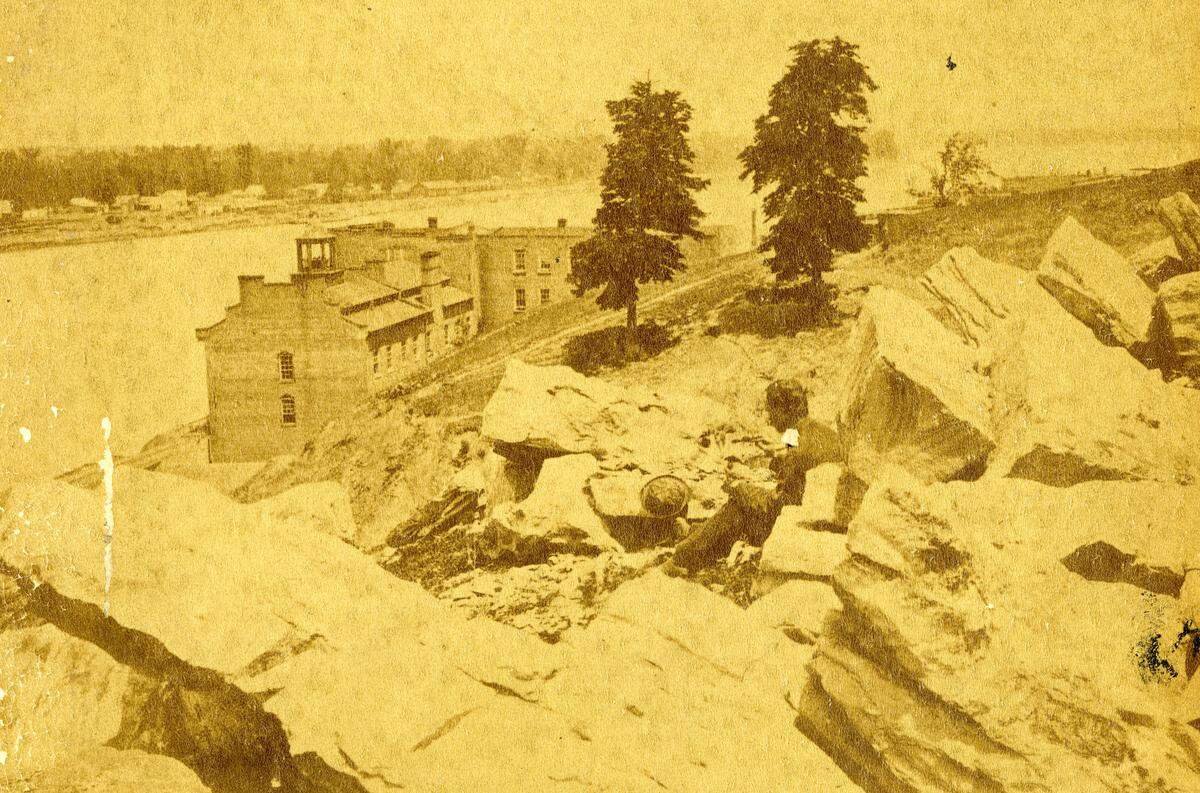
Frank James was born there. Years later, his brother Jesse came to convalesce from a gunshot wound. (He ended up marrying his caretaker.)
When the Hannibal Bridge was built in 1869, Harlem’s fortunes took a dip. But its proximity to the boom town known by then as Kansas City helped keep it afloat.
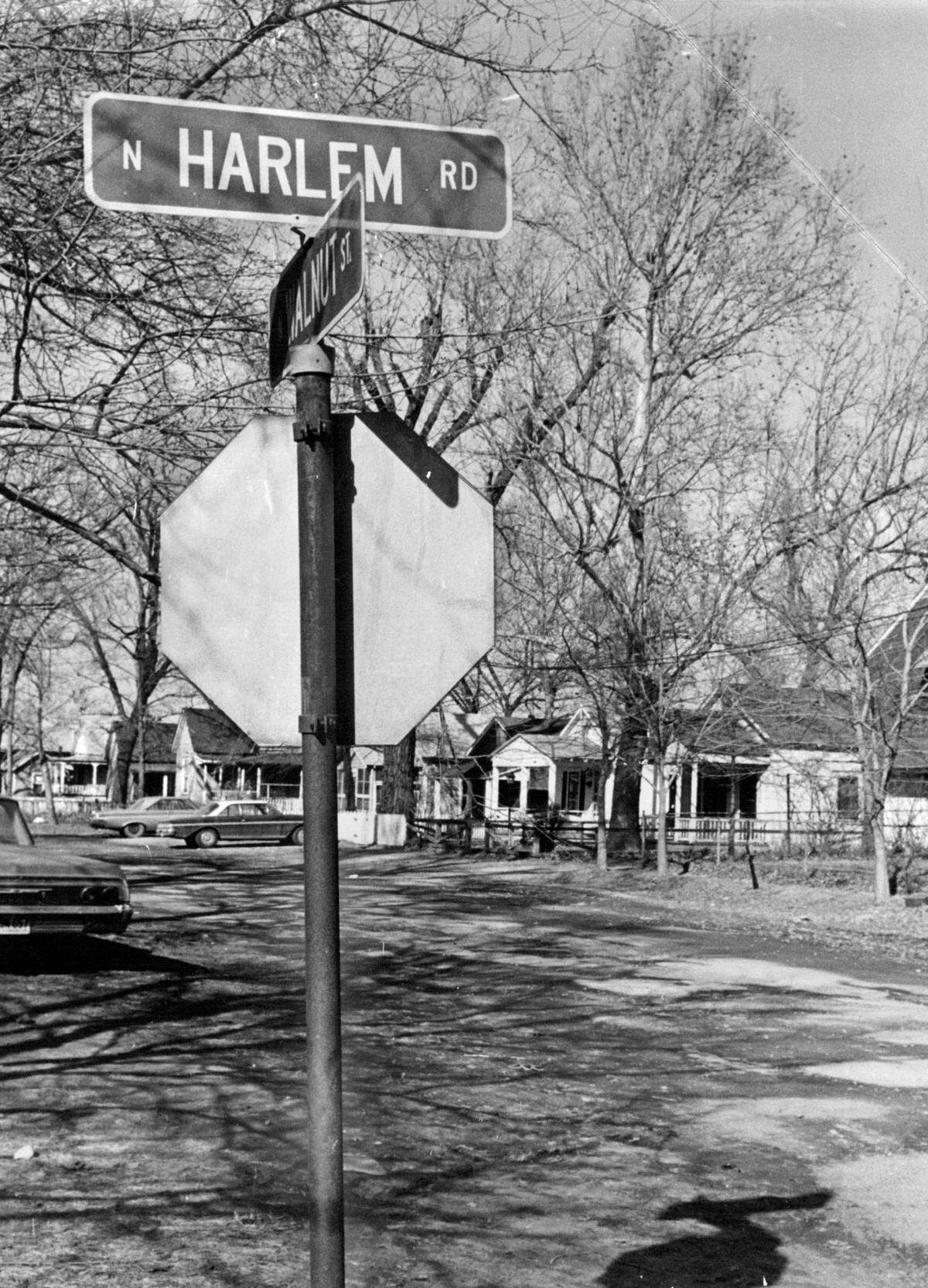
Harlem had schools, churches, a courthouse and even a semi-pro baseball team. Fishermen plied their trade along its banks, and a ferry called the Annie Cade served as a constant reminder of the the town’s origins.
The river, however, had other ideas. Headlines like “Harlem in Danger” and “Reign of Water” told the tale of floods devastating homes and property time and time again.
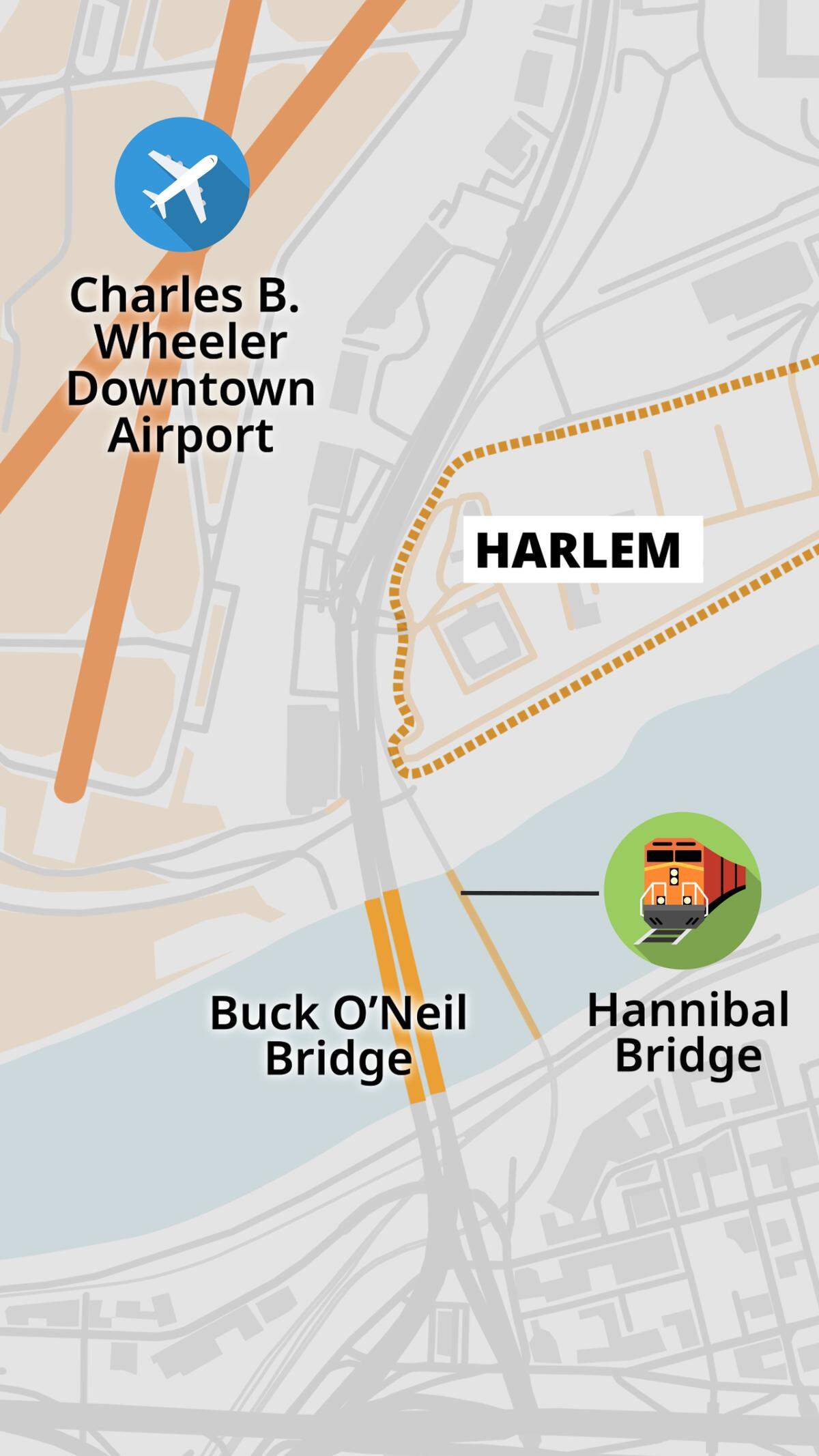
Then in 1927, Municipal Airport (now the Charles B. Wheeler Downtown Airport) sprung up directly west of Harlem. Suddenly, Amelia Earhart and other dignitaries started passing through. A Holiday Inn opened, and TWA made its in-flight meals at a commissary there.
But the water would not be denied. The great flood of 1951 chased away even more residents, while industries fled inland to less risky areas of North Kansas City. Houses were razed to make way for parking lots, or room for local businesses like Jones Iron & Metal to expand.
At Bodyworks Unlimited, Bill Shy has watched almost 33 years of Harlem history unfold. He moved his auto body shop into the old Pentecostal Church shortly before the floods of 1993. (The levee did hold back the water that time, just barely.)
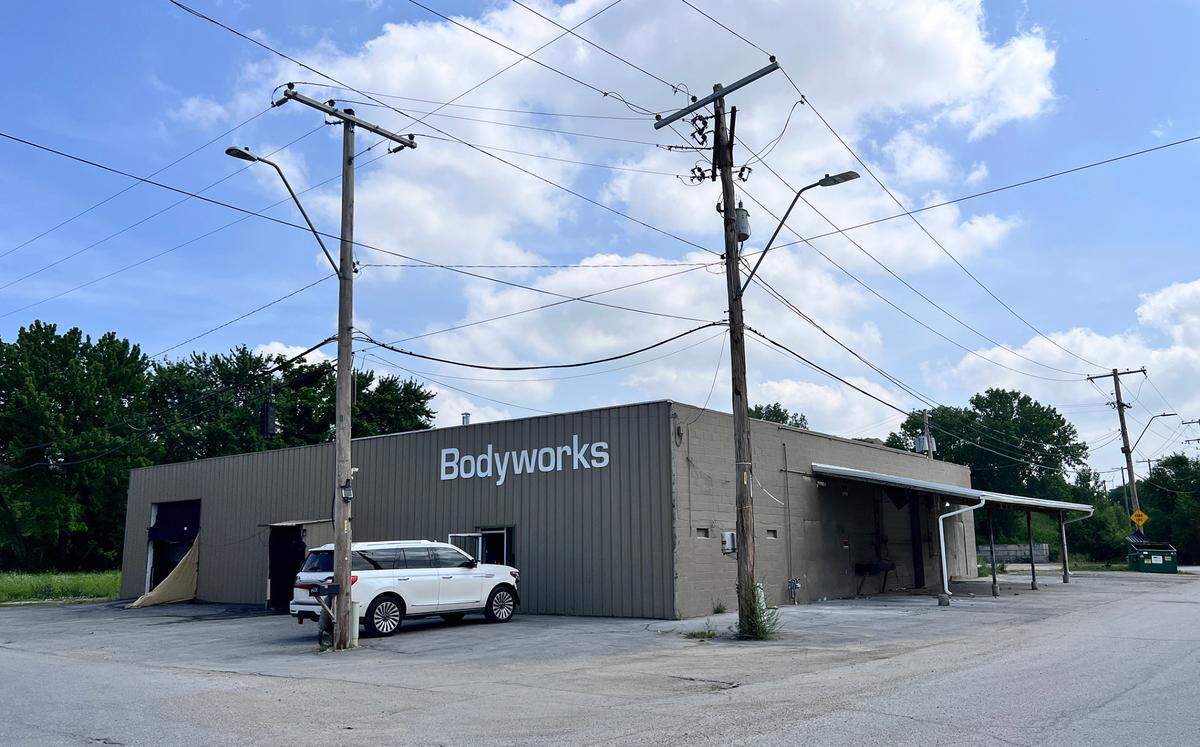
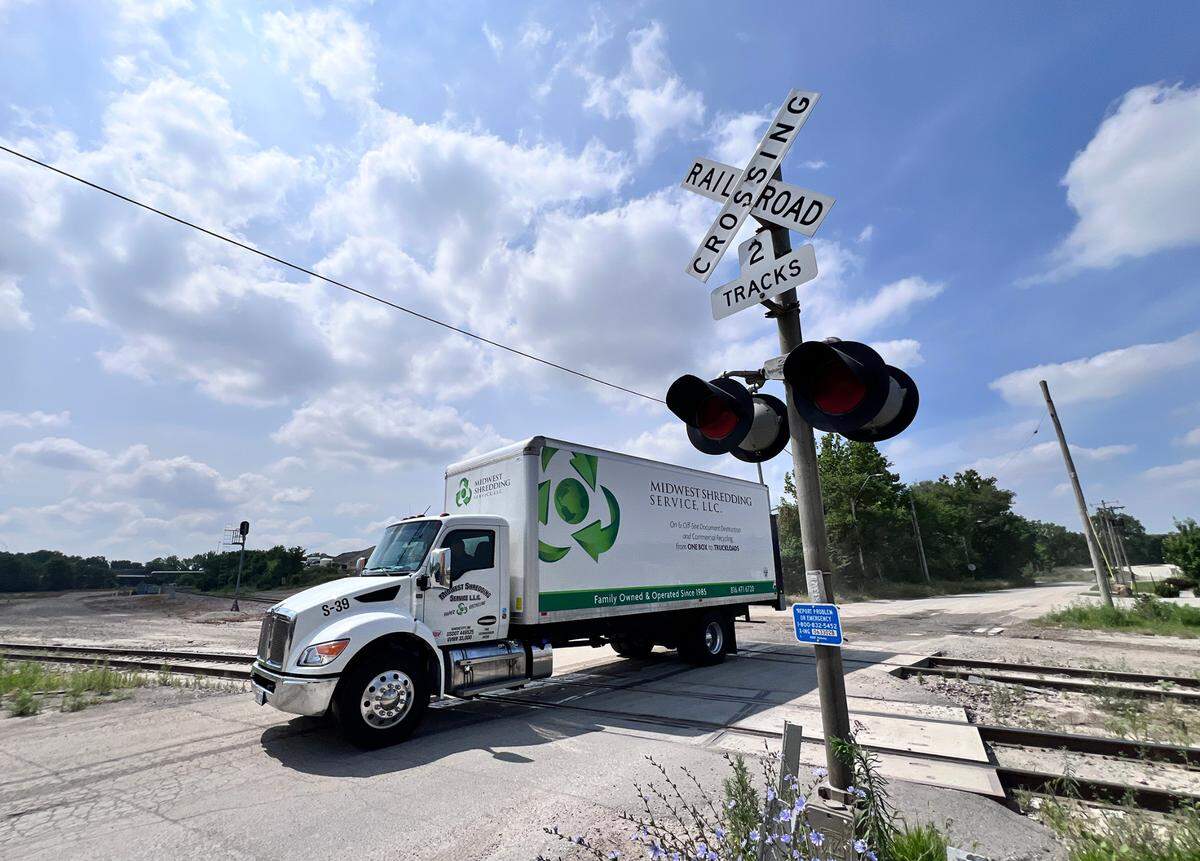
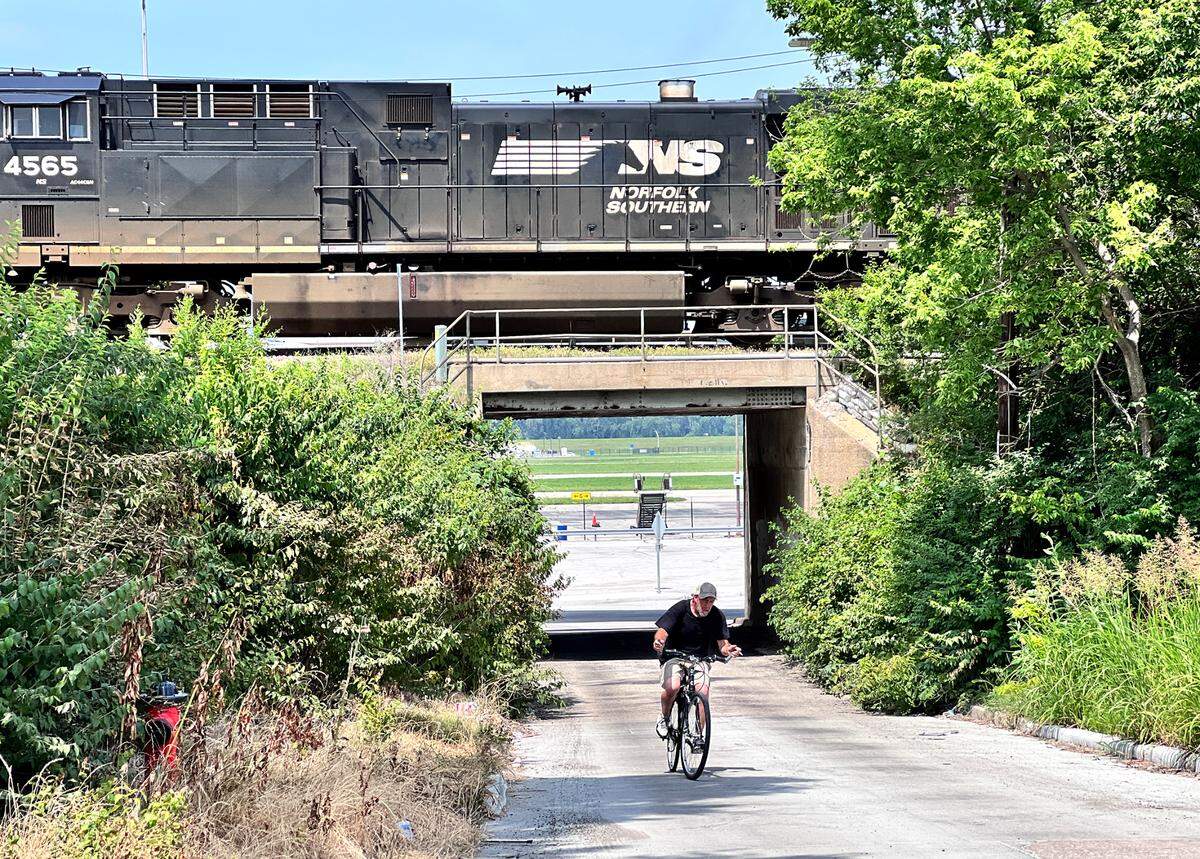
Despite the train traffic that can complicate getting in and out of the area, Shy says his customers keep coming back. “We’re centrally located,” he grins, adding that the location has other perks too—“when the trees are bare, you get a great view” of downtown KC.
In the early 1990s, rumors flew that a casino might choose to locate in Harlem. Studies were undertaken, hopes were raised, but ultimately, no “boats” dropped anchor.
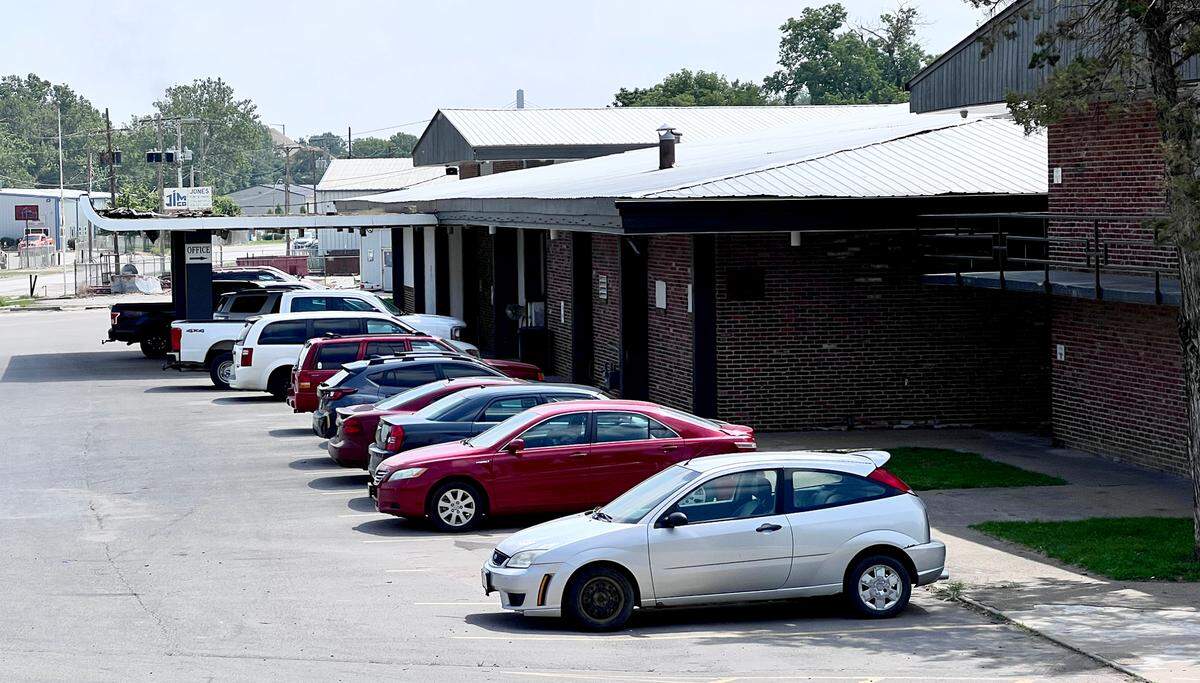
In recent years, that old Holiday Inn at the west end of Harlem Road has been converted into an apartment complex—one the Kansas City Police Department knows quite well.
A new outlook for Harlem
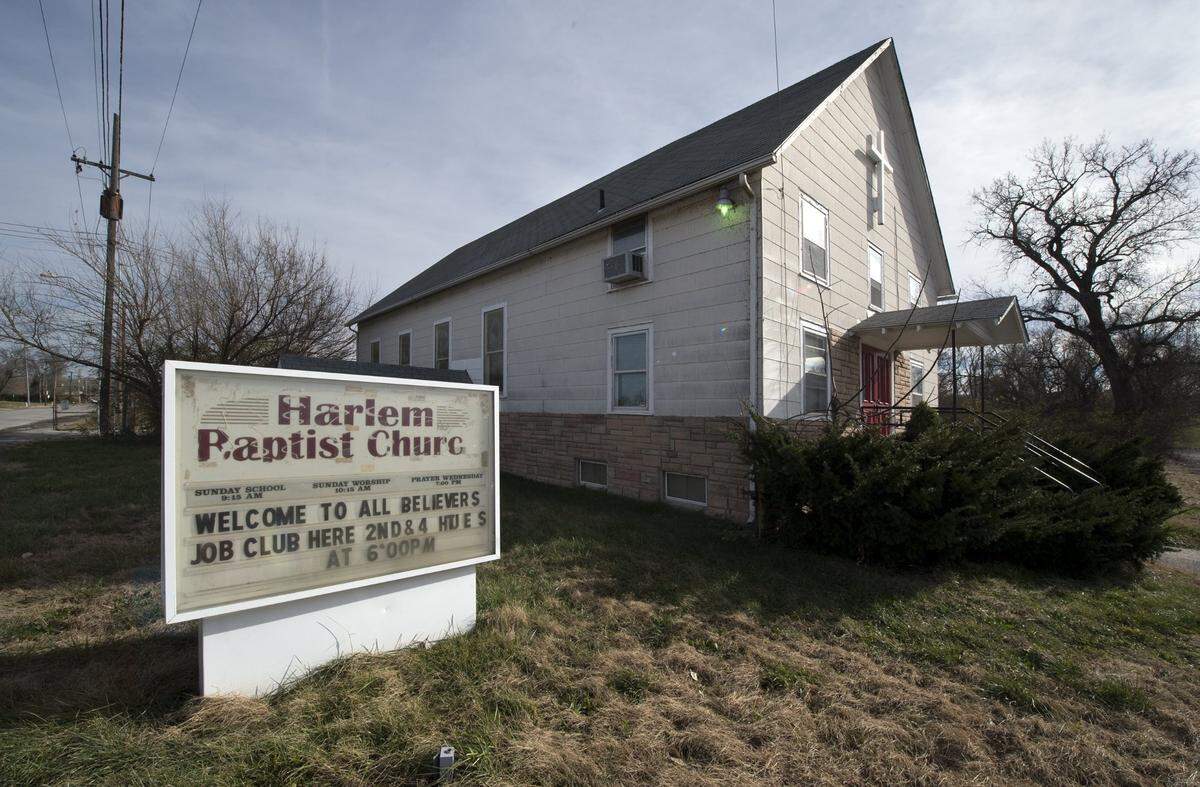
And in 2021, the oldest landmark in town—the Harlem Baptist Church, was destroyed by a fire later ruled to be arson.
Jason Withington was one of the church’s trustees. He’d been baptized there and attended services with his grandparents. Today, he’s a Clay County Commissioner, with a passion for raising awareness of Harlem and its contributions to the metro.
Perhaps more importantly, he’s trying to re-energize it.
“The goal is to eventually open up the “wet” side of the levee for recreational use, kind of like Berkley Riverfront Park,” Withington explains. “Hopefully it will attract people to the area. And then hopefully that will spur some development.”
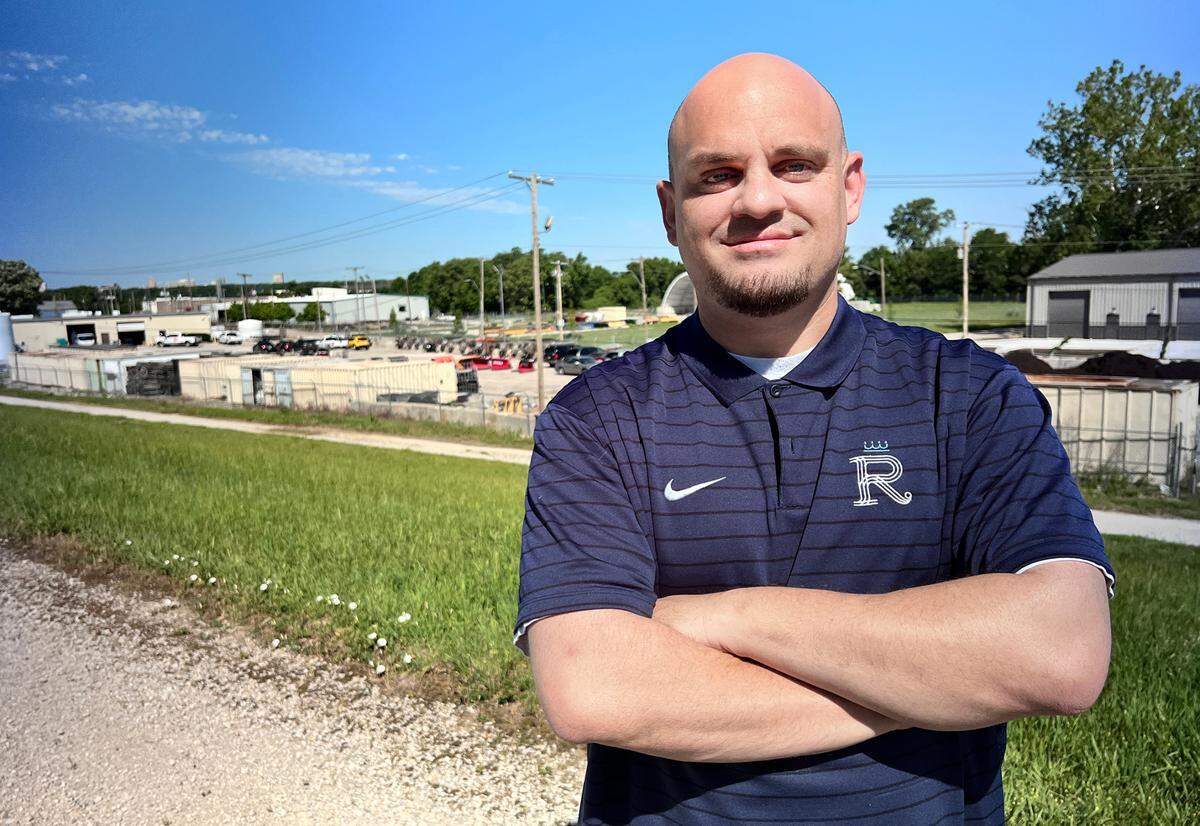
Noting that bicyclists are already drawn to the old airport, he pictures a trail system that will “open this entire riverfront from Harlem all the way over to Harrah’s, and eventually even further down to Birmingham.”
That’s a major undertaking, and it would have to come in phases. But seeing the long-dormant stretch of Berkley Park exploding with activity so close by gives Withington a genuine sense of optimism.
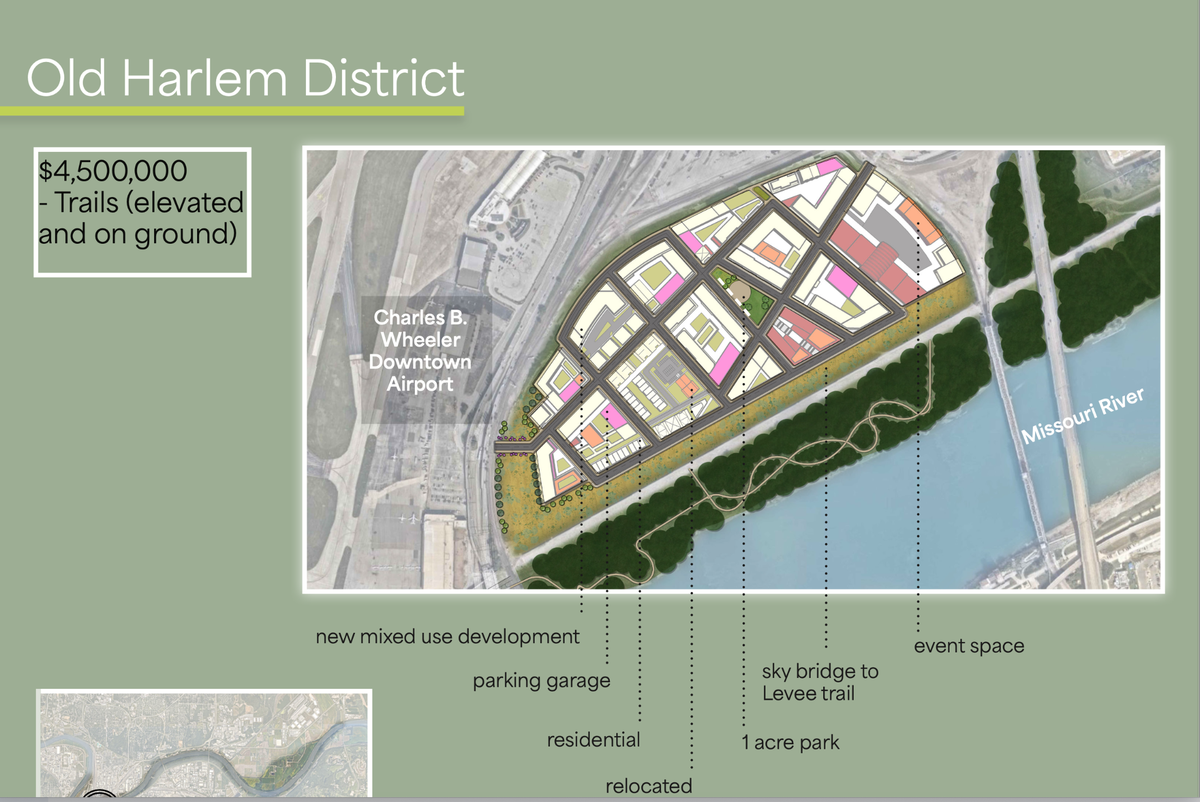
“Look at all the other river cities like Cincinnati and Pittsburgh. They’ve done a really good job. Kansas City has done a great job on the south side, but they’ve never looked at the north side. And there is so much potential here.”
Two hundred years old, and on the cusp of its third act, Harlem, Missouri is still hiding in plain sight. But maybe not for long.
How to get to Harlem
From the south, cross the Buck O’Neil Bridge on US 169. Almost immediately, take the left exit for the Downtown Airport, loop around under the overpass, and follow the signs that say “Harlem Road.”
From the north, take Burlington Street to 10th Street, turn right and go one block to Atlantic Street. Turn left, cross a cluster of railroad tracks, after which Atlantic becomes Grand Avenue. Follow it another quarter mile until it dead ends at Harlem Road. (Bodyworks Unlimited is on the corner.)
Having trouble seeing the video? Watch it here.
Looking for more Kansas City history?
With stadiums in the news, here’s a look back at how the Truman Sports Complex came to pass
KC’s Arthur Stillwell was a railroad magnate, and the supernatural was part of his strategy
They built it how fast? The amazing story of Convention Hall, KC’s 1900 construction miracle
This story was originally published June 19, 2025 at 6:00 AM.