Local

Photographs from 1860s provide rare glimpse of bridge that propelled Kansas City’s rise
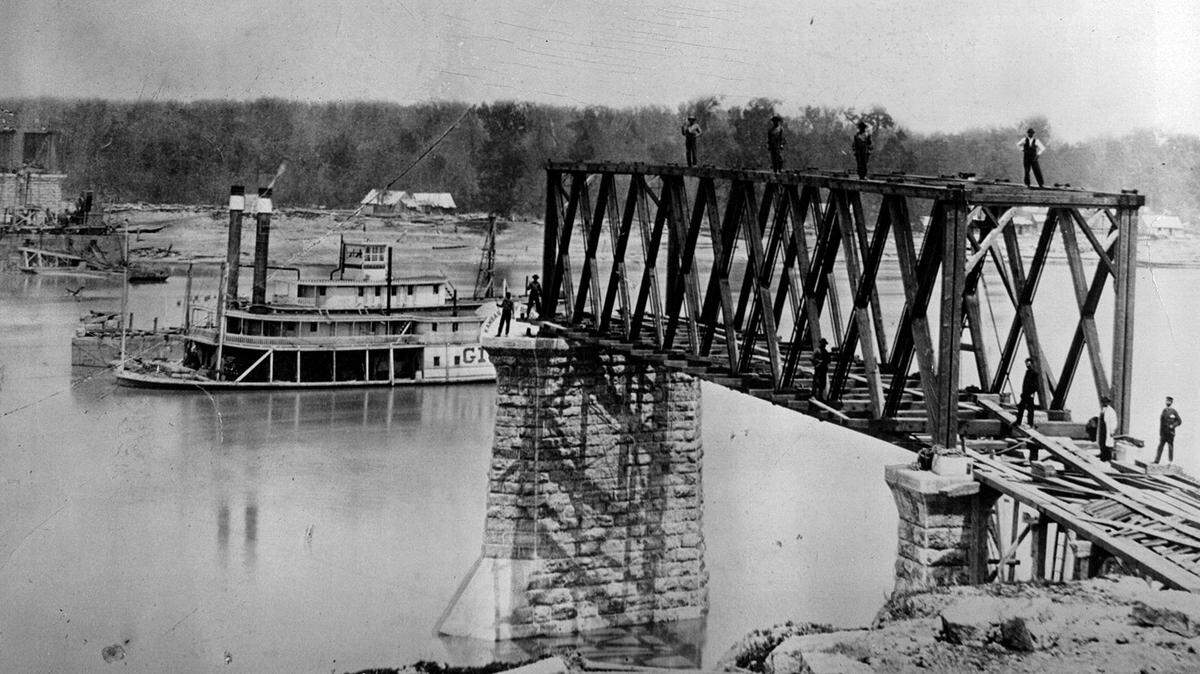
A steamboat travels past the Hannibal Bridge as it was being constructed in 1869 in Kansas City, Mo.
A steamboat travels past the Hannibal Bridge as it was being constructed in 1869 in Kansas City, Mo. Kansas City Star archives

Uniquely KC is a Star series exploring what makes Kansas City special. From our award-winning barbecue to rich Midwestern history, we’re exploring why KC is the “Paris of the Plains.”

Scroll through our archive images that show the process of the Hannibal Bridge being built in Kansas City in the late 1860s. It’s rare to have so many photographs in The Star’s archive from that period as photography was still in its infancy.

The fact that there were so many photographs from this project speaks to its importance in establishing Kansas City as a major metropolitan city.

Though not photographed by acclaimed Civil War photographer Mathew Brady, these images made by unknown photographers on the banks of the Missouri River were captured just a few years after the end of the war in the style of Brady who documented events in the field to preserve for history and share the images with a broad audience. It was the infancy of what we now know as photojournalism.
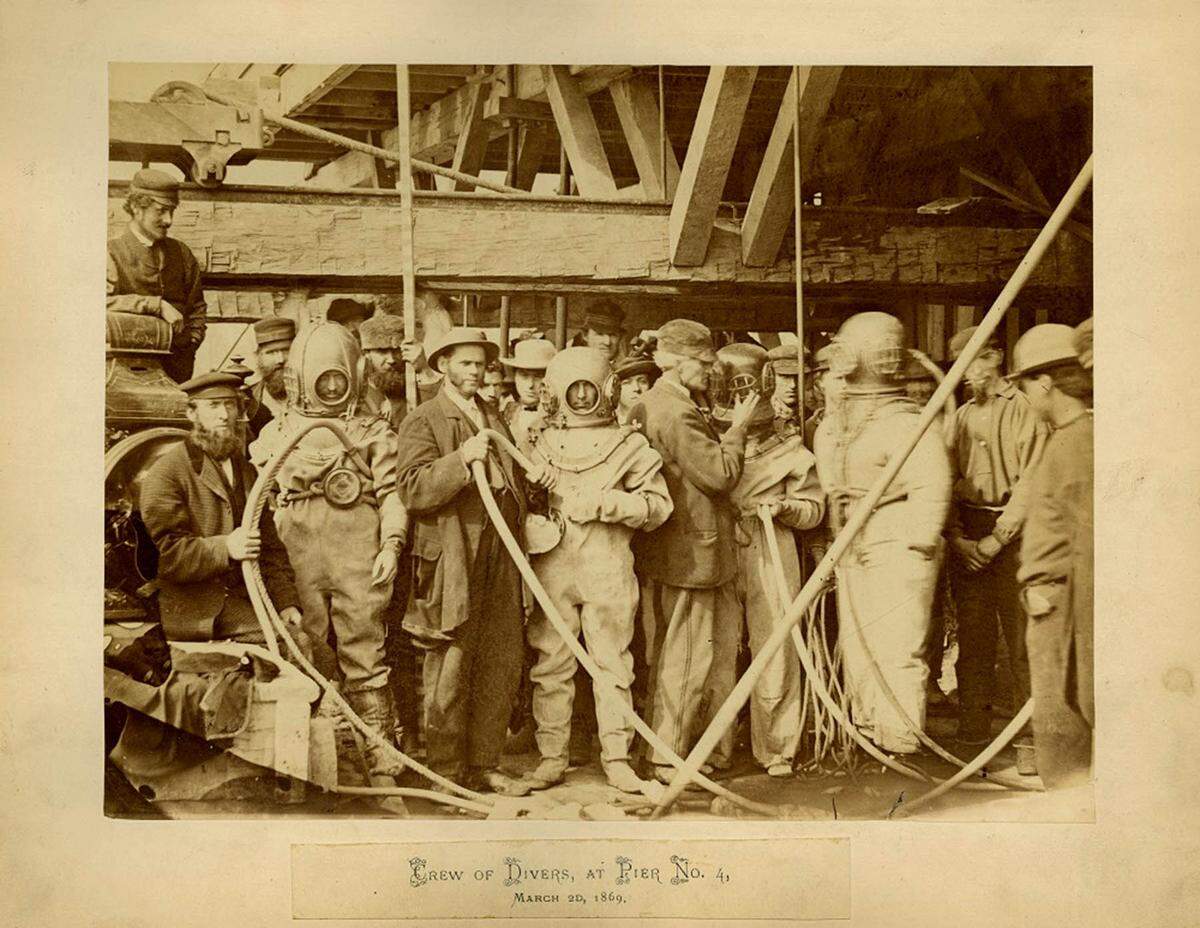
A crew of divers at Pier No. 4 on March 20, 1869 pose for a photo during the construction of the Hannibal Bridge. The divers were hired to work below the surface of the Missouri River to help with the construction project.
A crew of divers at Pier No. 4 on March 20, 1869 pose for a photo during the construction of the Hannibal Bridge. The divers were hired to work below the surface of the Missouri River to help with the construction project. Kansas City Public Libary/Missouri Valley Special Collections

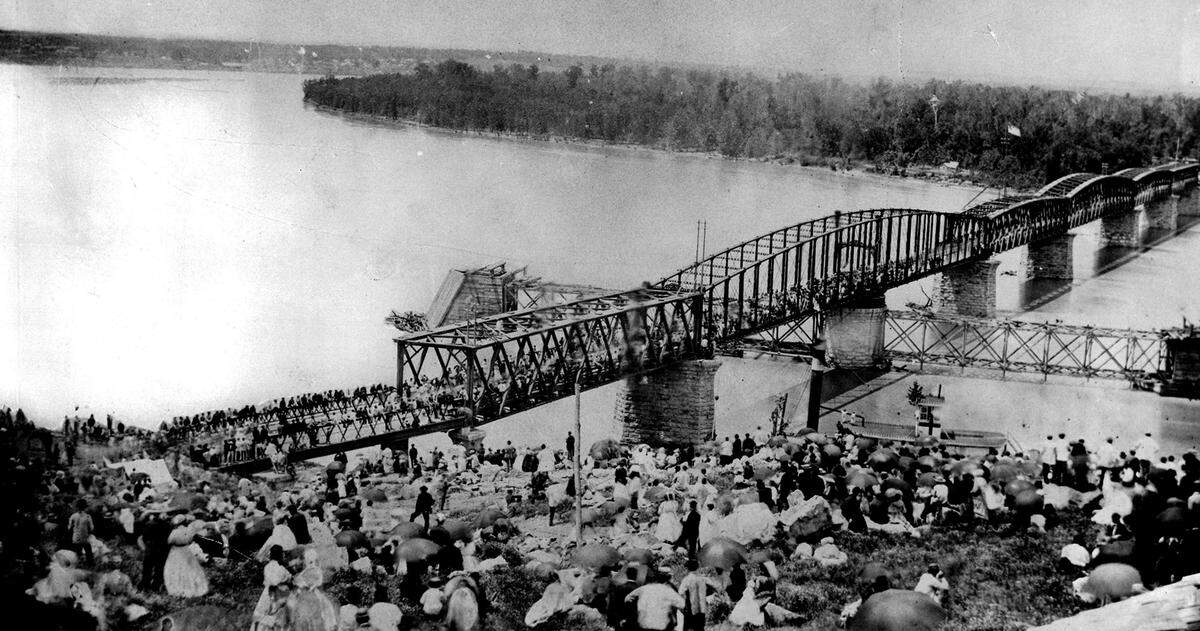
Nearly 40,000 Kansas Citians packed the banks of the Missouri River to celebrate the completion of the first railroad bridge across the Missouri River on July 3, 1869.

The completion of the Hannibal Bridge, named after the Hannibal & St. Joseph Railroad Company which built the structure, set in motion for Kansas City to expand as a major metropolitan city.

Plans for the bridge and overtures to the railroad company started in the 1850s but were put on hold until after the Civil War.
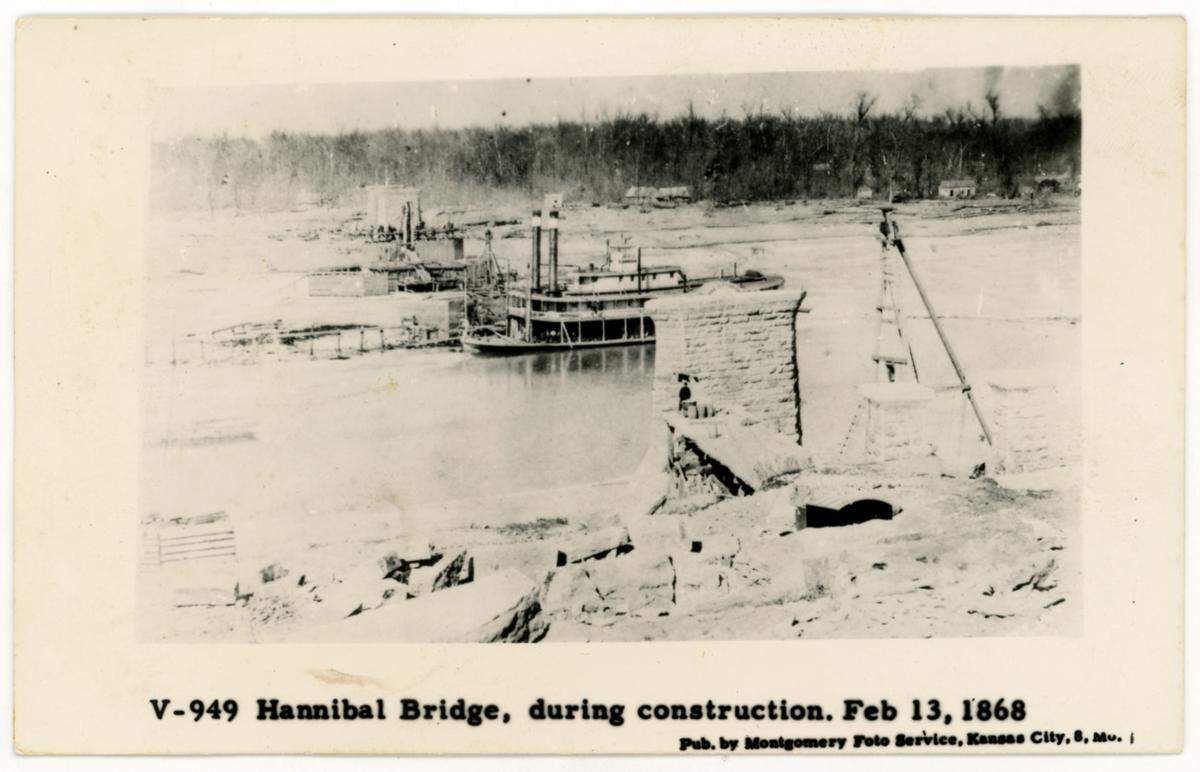
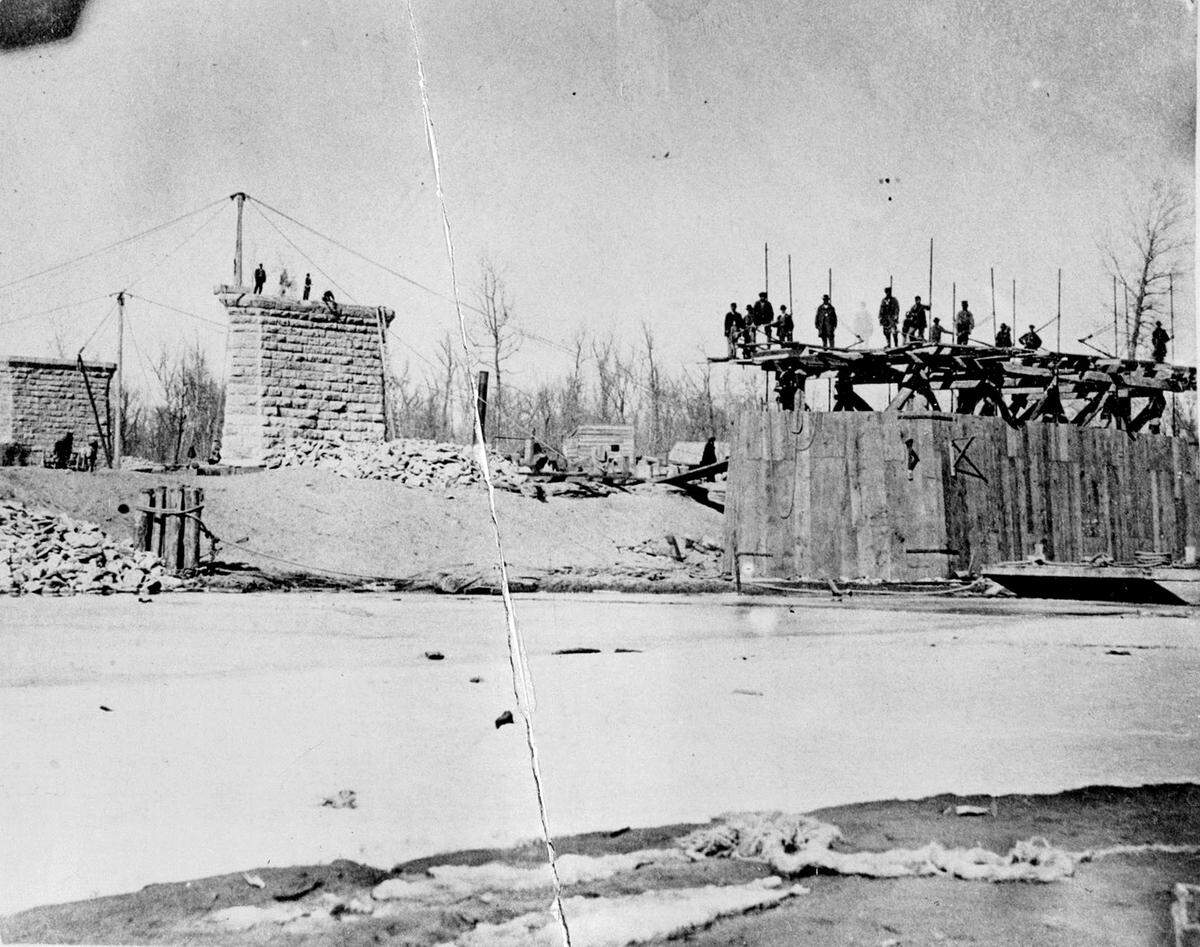
The Hannibal Bridge under construction on Feb. 13, 1868.
The Hannibal Bridge under construction on Feb. 13, 1868. The Kansas City Public Library/Missouri Valley Special Collections

Leavenworth and Kansas City were both advocating for the railroad company to build a cutoff rail line from Cameron, Mo.

Early in the process, Leavenworth was thought to have the advantage with its larger population, proximity to Fort Leavenworth, and more advanced rail development.
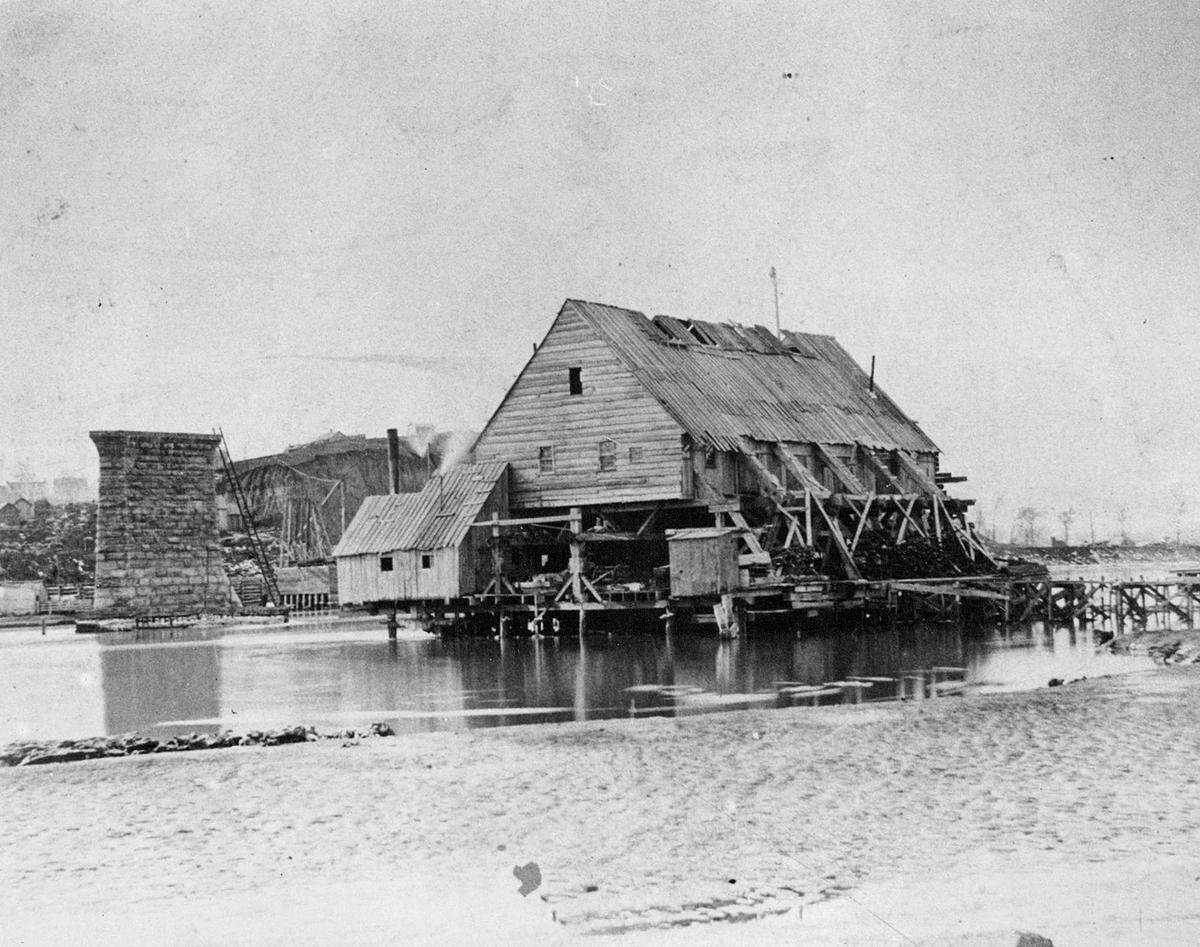
Bottom falsework is seen on Pier No. 4 as the Hannibal Bridge nears completion on March 2, 1869. Falsework is the name given to the temporary stuctures built to support bridge the bridge while under construction.
Bottom falsework is seen on Pier No. 4 as the Hannibal Bridge nears completion on March 2, 1869. Falsework is the name given to the temporary stuctures built to support bridge the bridge while under construction. Kansas City Star archives

James F. Joy, president of the Hannibal & St. Joseph, visited both cities but eventually gave the nod to Kansas City. Business leaders Charles E. Kearney, Robert T. Van Horn, and Kersey Coates are credited for convincing the railroad company to build in Kansas City.

The bridge was eventually replaced in 1917 with the Second Hannibal Bridge, which had two decks. The lower deck was for rail traffic and the under deck was for vehicles. When the Buck O’Neil Bridge opened in 1956 to vehicular traffic, the upper deck of the Hannibal Bridge was removed.

Today, the John Jordan “Buck” O’Neil Memorial Bridge runs parallel to the second Hannibal Bridge in downtown Kansas City. The first Hannibal Bridge was slightly downstream from there.
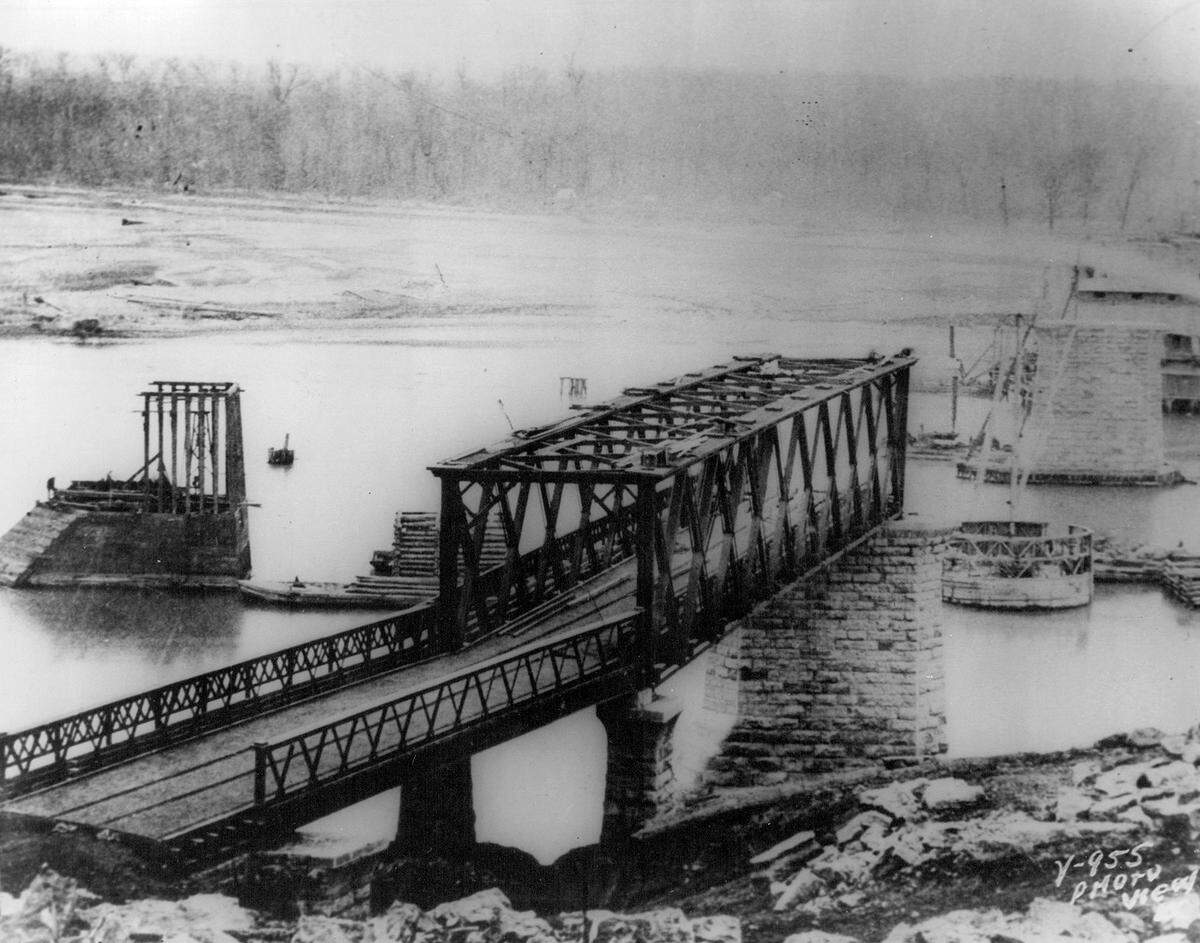
The first Hannibal Bridge under construction in 1869 across the Missouri River in Kansas City, Missouri.
The first Hannibal Bridge under construction in 1869 across the Missouri River in Kansas City, Missouri. Kansas City Star archives

To read more about the bridge, visit the Missouri Valley Special Collections.
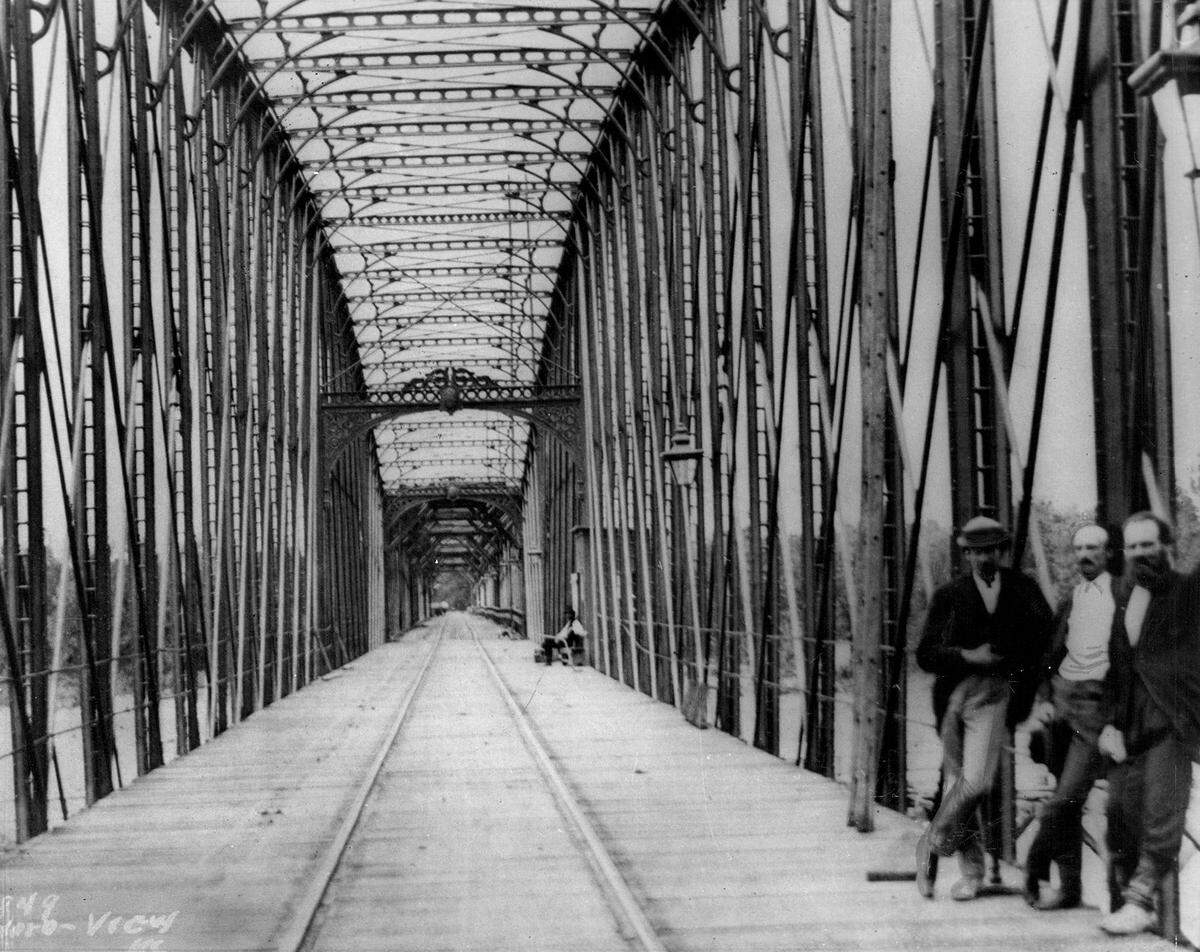
Designer and civil engineer Octave Chanute (middle) standing atop the wooden planks on the completed Hannibal Bridge in 1869.
Designer and civil engineer Octave Chanute (middle) standing atop the wooden planks on the completed Hannibal Bridge in 1869. Kansas City Star archives
Kansas City’s future as a rail center was assured by the construction of the first bridge across the Missouri River on July 3, 1869, when this photograph was made. More than 30,000 persons turned out to celebrate the public opening of the span. 
Kansas City’s future as a rail center was assured by the construction of the first bridge across the Missouri River on July 3, 1869, when this photograph was made. More than 30,000 persons turned out to celebrate the public opening of the span.  Kansas City Star archives
Work being done on Pier No. 5 on the Hannibal Bridge on Feb. 13, 1868.
Work being done on Pier No. 5 on the Hannibal Bridge on Feb. 13, 1868. Kansas City Star archives
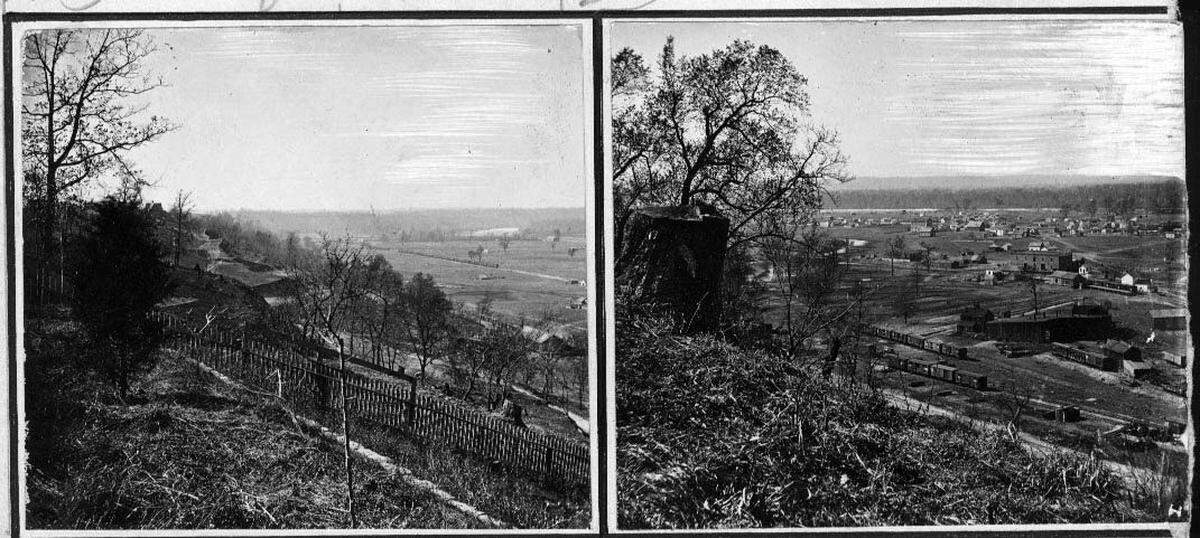
These views from the bluffs show how the West Bottoms developed rapidly from fields in 1869 (left) to a rail and business center by 1871 after the completion of the Hannibal Bridge in 1869.
These views from the bluffs show how the West Bottoms developed rapidly from fields in 1869 (left) to a rail and business center by 1871 after the completion of the Hannibal Bridge in 1869. Kansas City Star archives

Follow More of Our Reporting on Uniquely KC

Monty Davis
The Kansas City Star
Monty Davis is a video producer and has been with The Kansas City Star for 20 years. He specializes in telling human interest video stories using mobile gear such as his iPhone 13 Pro. Recently he took up an interest in deltiology which is the study and collection of postcards. From that came a new series for The Star called Past | Present. When he’s not working, he’s spending time with family, his pugs, kayaking and reading historical biographies about the American Revolution and the Civil War.
Get unlimited digital access
#ReadLocal

Try 1 month for $1

CLAIM OFFER