
Wyandotte County leaders say it’s time they get a grip on unwieldy debt, spending
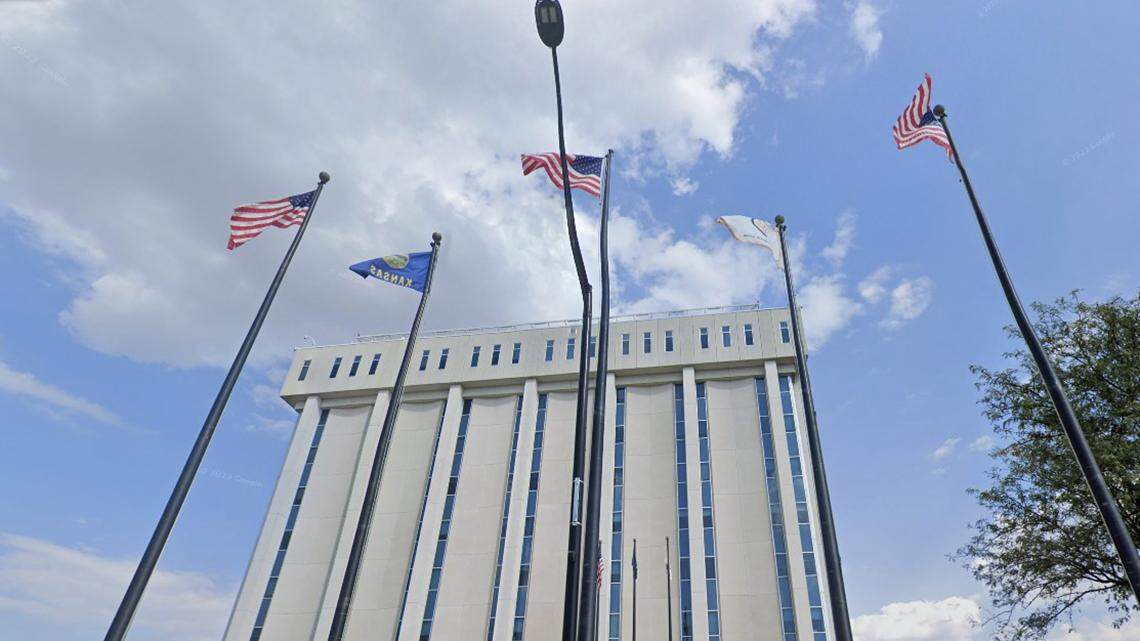
After years of hefty borrowing and financial decisions that have strained public services, the Unified Government of Wyandotte County and Kansas City, Kansas, has pledged to be more financially responsible with its taxpayers’ dollars.
Local officials this spring are trying to get a grip on their spending, reviewing past — and recent — practices including frequent dips into reserve funds and rapidly-assumed long-term debt, as they eye the 2026 fiscal year and looming summer cuts.
The UG’s financial woes are likely to impact taxpayers well beyond this budget year, which has been strained after commissioners decided to freeze property tax revenues in response to residents’ pleas for relief.
Transportation services are on the chopping block for this summer, and some governmental departments may not see a return on their decreased overtime funding in the new budget year, according to a March 13 budget workshop presentation. Both the city and county have less-than-ideal reserve funds and are facing a collective $541.2 million in total outstanding principal and interest debt.
“We can see where the mistakes were made and understand that those mistakes were already made for us,” Mayor/CEO Tyrone Garner told commissioners during an April 16 budget workshop. “And commissions present and future, along with mayors, can know that those mistakes don’t have to be repeated.”
He added that the Unified Government wants to take its use of taxpayer dollars in an “appropriate direction,” which he hopes will play a role in a years-long effort to achieve economic stability.
Garner, who said the government is heading on the right path, commended commissioners and UG staff for balancing out the 2025 city and county budgets by eliminating vacant and unnecessary positions and making millions in departmental cuts across the board.
“Even with the revenue neutral from last year, we did become structurally balanced, we are operating a little more fiscally responsible,” Garner said. “The belt was tightened at the demand and request of a lot of our residents and these numbers are reflective of that.”
Other financial goals for the UG include adopting balanced budgets in each fiscal year to come, cutting unnecessary spending, focusing on property tax and Board of Public Utilities PILOT fee relief, reducing debt by pacing itself on bond issues and finding outside funding for needed capital projects like bridge repairs instead of taking new debt.
Constrained services
Overtime pay for first responders, the public works budget, funding for outside groups, the neighborhood resource center and other services all suffered in the year following commissioners’ vote to freeze property taxes.
Shelley Kneuvean, the UG’s chief financial officer, initially told The Star that residents by June or July can expect the elimination of two local bus routes, one along 18th Street and another on Leavenworth Road due to budget constraints and evaporated COVID-19 federal relief. But the government has identified grant funding it hopes to use to delay the closure for at least a few months, she said.
The Unified Government’s commission in the summer of 2024 voted to adopt the no-new-revenue rate on property tax collection as rapidly increasing home values swelled tax bills across the county. Numerous residents, then and now, struggle to foot their tax bills and have said during public meetings that they risk losing their homes.
Adopting an even slightly higher tax rate, alongside increased valuations, would’ve brought increased revenue into the city and county at a time when the cost of operating the Unified Government day-to-day was projected to grow.
Rather than doing so, the UG adhered to public requests for relief and made the revenue-neutral call, knowing it would mean that public services would be slashed.
Aside from 2025, the only other balanced budget Wyandotte County adopted in the past decade was in 2018; KCK’s 2025 budget was the first balanced budget it had seen between 2014 and now, Kneuvean said.
Pulling from emergency fund
The Unified Government over the past decade has had a track record of pulling from reserve funds — which are like a government’s savings account and are meant for unexpected costs — to pay for capital projects and its regular operations on both the city and county sides.
During the April 16 workshop, Kneuvean, the CFO that joined in 2024, told commissioners that both the city and the county used reserve dollars to pay for capital projects during eight of the past 10 budget years. “We’re dipping into, and again, that’s not financially sustainable.” Kneuvean said of the practice.
The Unified Government should be keeping 25% of what it plans to spend each year in reserves in case of emergencies like the COVID-19 pandemic, Kneuvean told The Star.
Neither the city nor county meet the mark. KCK has 21% of budgeted expenditures in its reserve balance; Wyandotte County has 8%, Kneuvean said. The county, which has fewer revenue sources than the city, relies heavily on property taxes. Kneuvean attributed the diminished county reserve fund to stagnant tax revenues as it gets more expensive to provide essential services such as public safety, which accounted for almost half of the county’s budget in the 2025 year.
UG in major debt
According to a UG-provided bond schedule, last updated in 2024, taxpayers are currently paying off bonds that date back to 2009. They’re on track to still be paying off current debts until 2045.
Despite internal goals to limit debt borrowing to between $15 million and $16 million per budget year, the UG has exceeded that borrowing rate, and its debt has grown exponentially over the past 20 years. The total amount of debt, which as of this year totaled $541.2 million, factors in city, county and enterprise funds, according to the UG.
Kneuvean during an April 3 budget workshop told commissioners that the government has taken on debt to finance maintenance projects and pay for infrastructure, sewer, road and economic development work. Officials said some of those projects were needed to make sure the county adheres to court-ordered sanitation standards for its sewer system.
The UG is also using debt to pay for $18.2 million in lawsuit settlements; $7.5 million for workforce management software; and $1 million to digitize the district attorney’s office. She advised the government to rebuild its reserve funds to pay unexpected legal fees off with that rather than taking on added debt.
Taxpayers, through the Unified Government, are on the hook to pay roughly $700 million in principal and interest debt over the next 20 years, according to the bond schedule. It projected the UG was due to pay $55.5 million of that debt during the 2025 year and about $54.5 million in the 2026 budget year.
Mayor assigns blame
Despite being in office for nearly four years, Mayor Garner — who has previously clashed with commissioners over financial ideas and has alleged institutional corruption — put the blame for the government’s financial state on previous administrations and the commission.
In an April 19 post to social media, Garner plugged the 2026 budget season and efforts by Kneuvean to identify root problems as a push for transparency and cleanout of what he implied to be poor financial management from old leadership.
Garner, who was elected back in 2021, wrote that commissioners early on in his term sided with “high level UG bureaucrats” to stall his efforts to implement “community driven policy recommendations.”
“Because it has become increasingly apparent that we can ill afford to continue business as usual at your UG, I am pleased to announce that some of our UG Commissioners are finally beginning to slowly embrace by recommendations as a means to bring about a streamlined, efficient, customer service friendly, fiscally responsible, resurgent, financially stabilized UG.”
This story was originally published April 22, 2025 at 6:00 AM.
