‘Call before you dig’ system in Lexington explosion worked. So what went wrong?
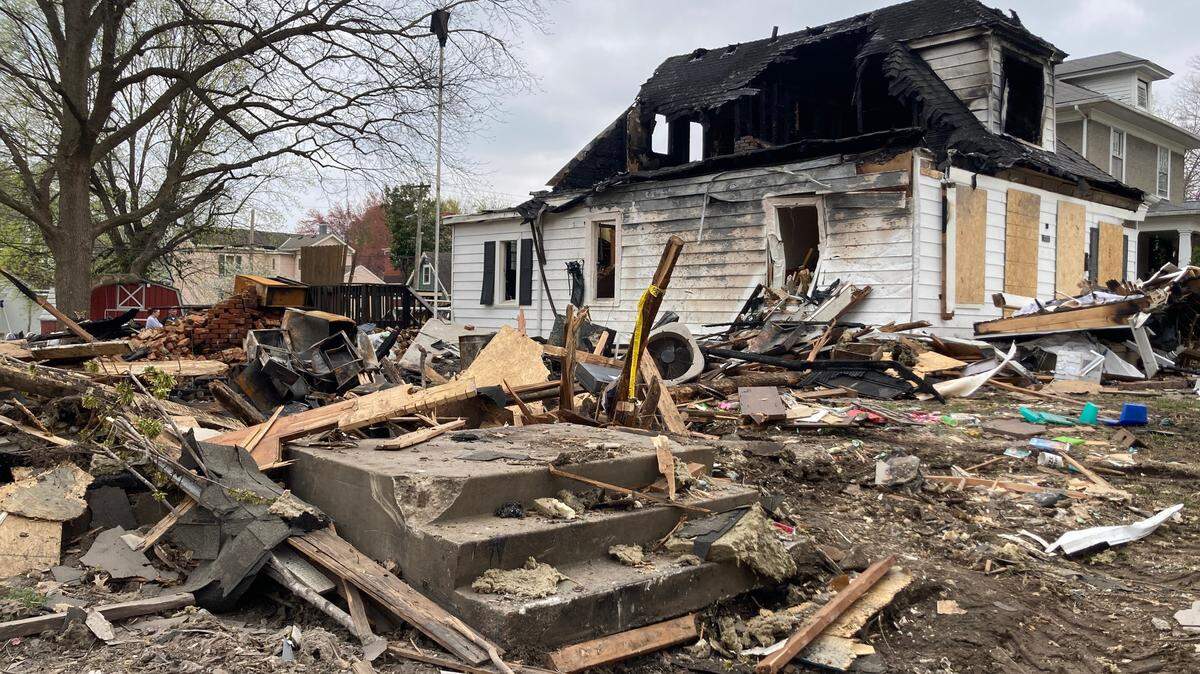
Five days before a gas explosion killed a 5-year-old Lexington boy and severely injured his father and sister, a subcontractor called Missouri’s notification center alerting about the upcoming dig.
From that 811 call, to the one excavators made at 4:18 p.m. on April 9 reporting that the gas line had been damaged, the notification process worked exactly as it should have, said Randy Norden, executive director of the Missouri One Call System.
What Norden doesn’t know is what went wrong to cause the gas leak that then triggered the explosion later that night, killing Alistair Lamb, injuring his father, Jacob Cunningham, and 10-year-old sister, Camillia “Cami” Lamb. The blast leveled their home, another home and caused damage to some to some 20 others.
“I can share that everybody did the right thing as far as ‘locate requests,’ as far as completing their notifications,” Norden said. “The excavators and utilities responded correctly.
“Going on site, whether there’s a human error or something like that involved, in either case, I would not have the ability to know.”
Those answers, Norden said, will come from the intensive investigation going on now in Lexington.
But residents say nearly a week after the explosion they still lack accountability and answers, which now may not come for months as federal authorities have taken over the investigation.
On Monday, the National Transportation Safety Board, which typically investigates only two to four of the more than 100 dangerous natural gas breaches that occur across the United States each year, confirmed that it had opened an official investigation.
All communications regarding the events now will flow through the federal agency and not the city. But it’s the city — as well as Liberty Utilities and the excavators doing the digging last week — that many in Lexington want answers from.
“If I let some people get killed, and some other people be put in grievous danger, I wouldn’t admit it either,” said resident Maria Summers, whose 1860s, antebellum-era home sits about 50 yards from where the home of Jacob Cunningham was destroyed.
When the explosion occurred, the home on Franklin Avenue at 17th Street was completely leveled, killing 5-year-old Alistair and injuring Cunningham and his 10-year-old daughter, Cami, who were airlifted to two Kansas City area hospitals.

Both remain hospitalized.
When the blast hit, the first floor windows of Maria and Travis Summers’ home exploded into their living room and rattled their home. Eighteen windows were shattered or damaged.
“We trusted them (the city) to take care of us and our property and our lives,” Summers continued. “And there was no warning. Nothing, OK? One of the neighbors even asked them, ‘Are we OK? We smell gas’. And they assured them everyone’s fine.”
How the process works
Hundreds of residents in Lexington were still without services Tuesday morning. Liberty Utilities posted on its Facebook page Monday afternoon that crews had restored gas service to approximately 939 homes and businesses in the area.
That’s roughly half of the company’s 1900 customers in Lexington, the post said. The company gave another update Monday night.
“We expect to have most customers restored by end of day Wednesday, with some restoration efforts continuing into Thursday (or as long as needed for customers who may be away from home),” the post said. “Thank you again for your patience as we took this necessary time for the safety of our customers, crews, and all those supporting our restoration efforts.”
The explosion happened around 7:45 p.m. Wednesday, April 9, after an employee subcontracted by Sellenriek Construction “hit a gas line” behind a funeral home at 18th Street and Franklin Avenue, according to city officials.
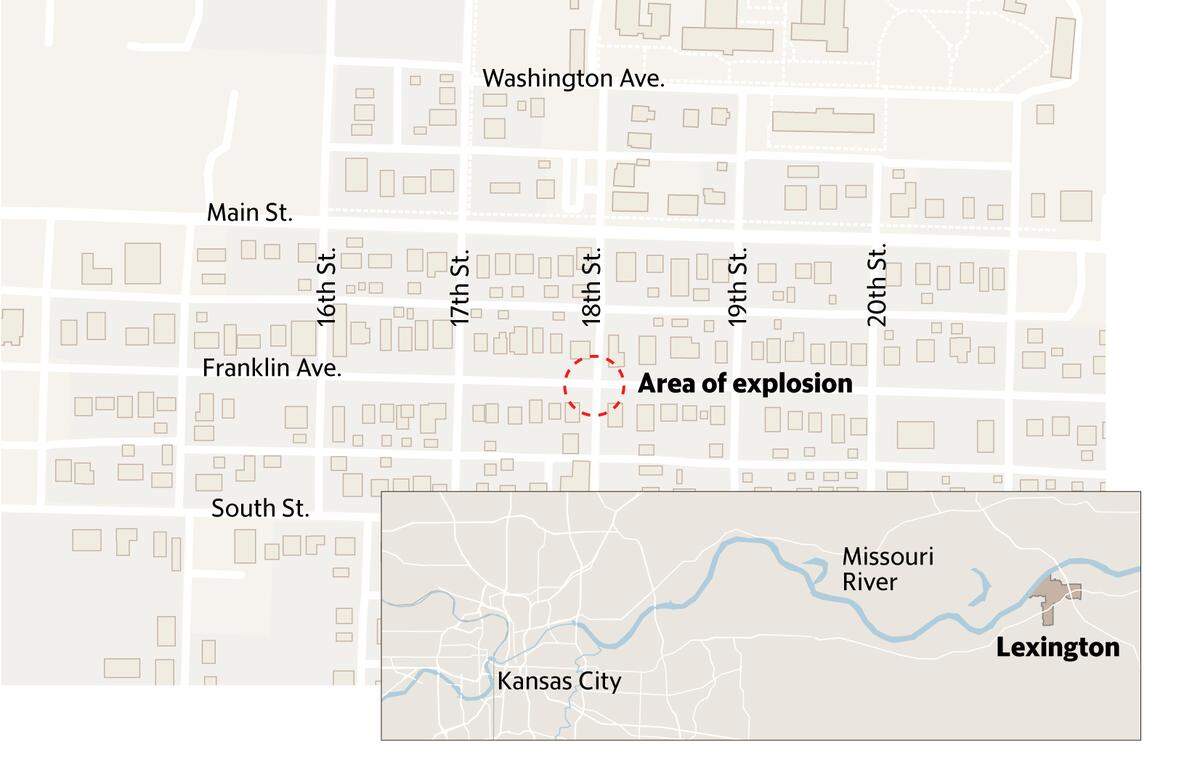
In a statement Thursday night, Sellenriek Construction CEO Steve Sellenriek wrote that the explosion occurred after the employee struck an unmarked underground gas line while attempting to install fiber optic cable. Sellenriek said the gas line was not “properly marked” with signage or paint above ground.
“According to the information we have gathered as of this moment, the subcontractor followed all required procedures before, during, and after the accident,” Sellenriek said. “We will continue to support the investigation, and this community.”
Liberty Utilities did not respond to a list of questions The Star emailed on Monday. Among those questions were whether the line was marked as a gas line and what the company does to ensure that lines are properly marked.
The few details about the process have come from Missouri 811, the not-for-profit notification center.
When the “ticket” for the project was initiated on April 4, five utilities — including Liberty Utilities — were notified. By “rule of thumb,” Norden said, for every “notification request” there are usually five utilities, including gas, water, electric and sewer.
Once the utilities have been notified, they have two full days to go to the site and mark where they have lines, if they do, Norden said. Companies use flags as markers and paint on the ground. Gas lines are marked with yellow.
“We do not do the markings,” Norden said. “We send the notifications to the utilities and it’s the responsibility of the utilities.”
Most of the time, he said, larger utilities hire a third party company to do the markings. He said he didn’t know if Liberty Utilities “does their own markings, or if they hire that out to a third party.”
If a company locates its utility in that vicinity and physically notes it, the status of that ticket would be “marked,” Norden said. If the utility doesn’t have a line there, Norden said, the status on the ticket would be labeled, “Clear, no conflict.”
“Which is proclaiming, ‘I have nothing there,’” he said, “‘You’re free, as far as I’m concerned, you’re free to excavate.’”
At the Lexington project, four of the utilities involved classified their tickets as “marked,” Norden said. And one was classified as “clear, no conflict.”
Liberty Utilities reported the site as “marked.”
“All the utilities on the ticket, statused either marked or clear, no conflict,” Norden said. “I’m probably not at liberty with the Transportation Safety Board’s investigation to give you specific names, but all of them were either clear or marked.”
The utilities responded “properly and appropriately,” he said.
“The (notification) system works pretty well,” Norden said. “But if there’s a human error made outside of the system that can cause one of the mistakes to be made, that causes the serious problem.
“And that can be on the utility side or the excavator side.”
As far as what happened at the Lexington site, he said, “we don’t know.”
Delayed memorial service
As investigators continue their work, Jacob Cunningham and his daughter are working to heal.
“We are just taking it day by day,” said Nicole Lovellette, Cunningham’s aunt.
Family have decided to have Alistair cremated, allowing them to delay his memorial service so his father and sister can be there, Lovellette said.

Relatives have been to visit both in the days since the explosion. And Lovellette, who lives in Illinois, was able to speak to her nephew briefly over the phone this past weekend.
“The goal is for his condition to improve enough for him to see his daughter,” she said.
The family set up a GoFundMe account to help with funeral expenses and other needs. As of Tuesday afternoon, more than $70,000 has been raised.
Cami’s fourth-grade classmates at Leslie Bell Elementary in Lexington made her cards and drew pictures and those will help brighten her hospital room, Lovellette said. The school is also working on a clothing drive to help both Cami and her father.
The explosion, and death of Alistair, isn’t the first time the family has faced tragedy. On December 27, 2023, the kids’ mother, Rachel Lamb-Cunningham, died unexpectedly of complications from being a Type I diabetic. She and Jacob had just gotten married two days before, on Christmas Day.
They had the wedding in the home of Cunningham’s mother and Rachel wore a wedding dress she sewed herself.

After Rachel’s death, Cunningham raised the two alone, with help from his mother and close friends and family. They would often talk about Rachel and how the kids’ mom was in heaven, family said.
Early last week, Cunningham was able to use his tax return check to finally pay off his wife’s funeral expenses. After the explosion, family members worried that he had just picked up her ashes and they were in the home during the explosion.
But they soon learned from the funeral home — which also was damaged during the blast — that Cunningham hadn’t been able to pick them up yet, and planned to go there on Thursday, Lovellette said.
So Rachel’s ashes are still at the funeral home, located behind the home the family rented.
The home that’s now just rubble.
On Monday, Alistair was back with his mother again, both in the same room at the funeral home.
This story was originally published April 15, 2025 at 4:25 PM.