Feds open rare investigation into fatal gas explosion in Lexington, Missouri
Residents of Lexington, Missouri — where on Wednesday a natural gas explosion killed a 5-year-old boy, severely burned his father and sister, leveled two homes and damaged some 20 others — will have to wait for answers on what triggered the fatal blast.
On Monday, the National Transportation Safety Board, which typically investigates only two to four of the more than 100 dangerous natural gas breaches that occur across the United States each year, confirmed that it had opened an official investigation.

Such investigations typically take months. City officials said Monday that they will be limited in what they can tell the public directly.
“This is now a full National Transportation Safety Board investigation. It’s now at the national level,” Lexington City Administrator Shawnna Funderburk said Monday. As such, public statements to the media would no longer go through the city.
“They’re basically saying that everything goes through them,” Funderburk said of the NTSB. ”You don’t cross the federal government. I can tell you that the city is cooperating fully with the NTSB for any information they need. Anything we are providing them, it is going to come out with any reports that they have.”
Explosion in Lexington
The explosion occurred around 7:45 p.m. Wednesday as employees with Liberty Utilities were working to repair a gas line that had been hit more than three hours prior, around 4:15 p.m., when a worker subcontracted by Sellenriek Construction was excavating to lay fiber optic cable.
The blast, which rattled homes and was heard for miles, completely flattened the home of Jacob Cunningham, a single father who was at home with his 5-year-old son, Alistair Lamb and daughter, Camillia “Cami” Lamb. age 10. Alistair was killed in the explosion. Cunningham and his daughter were severely burned and air lifted to separate Kansas City area hospitals where they currently remain.

No cause for the blast has yet to be determined, said Keith Holloway, NTSB spokesman, but the government felt a full investigation was warranted.
“It really comes to the fact that, unfortunately, there was a fatality, substantial property damage, natural gas fueled, jurisdictional and resources were available,” Holloway said. “Also, there may be information the NTSB is gathering that may (point to) systemic issues that could have broader safety implications, and/or high public risk.”
Resident living in and around Franklin Avenue, a stretch of older and historic homes from the town’s antebellum history, said that although they had been smelling natural gas for several hours, while Liberty Utilities was at work repairing the gas line, no one warned neighbors that a danger might exist. None were told to leave their homes or evacuate the area.
Worker hit gas line
On Thursday, Sellenriek Construction CEO Steve Sellenriek said in a statement that a subcontracted employee struck the gas line while laying fiber optic cable between the homes on Lexington Avenue and the Walker-Nadler-Fuller Funeral Home, a block south at 1720 South St. Sellenriek has maintained that the gas line was not “properly marked” with signage or paint above ground.
“According to the information we have gathered as of this moment, the subcontractor followed all required procedures before, during, and after the accident,” Sellenriek said Thursday evening, a day after the explosion.
The CEO also said that the employee called Missouri’s 811 information line to verify the location of all underground utilities, including gas lines, before starting to dig. On Monday, Sellenriek said he had no further information beyond his previous statement.
“We’ll still continue to support the investigation and the community,” Sellenriek said.
Inspectors from the Missouri Public Service Commission, which regulates investor-owned electric, natural gas, steam, water and sewer utilities in Missouri, were in Lexington soon after the explosion, and are still at the scene.
“Our goal is to help find out what happened,” said Forrest Gossett, director of communications for the Public Service Commission. “And how do we make sure it doesn’t happen again?”
On the federal level, two agencies, the NTSB and the Pipeline and Hazardous Materials Safety Administration, part of the Department of Transportation, share responsibility for ensuring the safe transport of hazardous materials, such as natural gas.
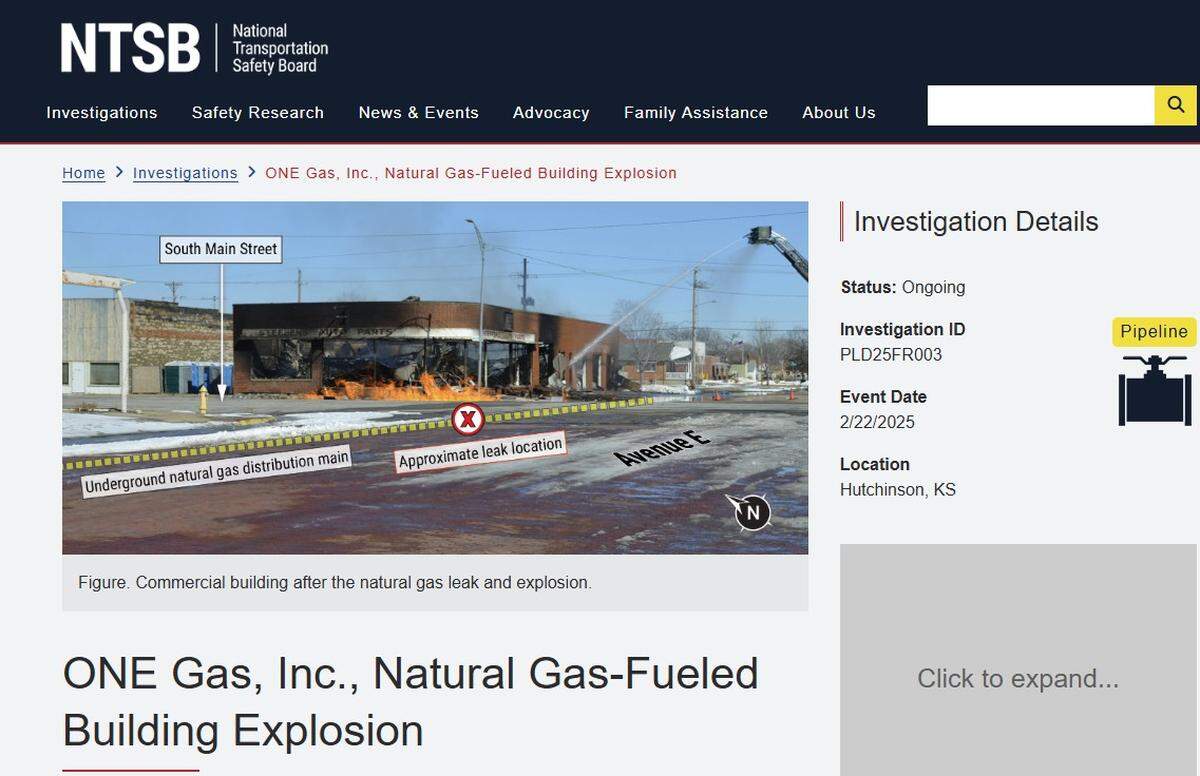
Holloway with the NTSB said that because the agency is “only staffed to investigate a very small fraction of the pipeline accidents, NTSB selects pipeline accidents for investigation based on the greatest potential to uncover systemic issues that could have broader safety implications, high public risk, and resources available.”
On its website, the NTSB maps only eight recent pipeline investigations. They include an ongoing investigation into an underground natural gas leak in Hutchinson, Kansas, that on Feb. 25 caused a commercial building to explode and for the surrounding community to be evacuated. No one was killed.
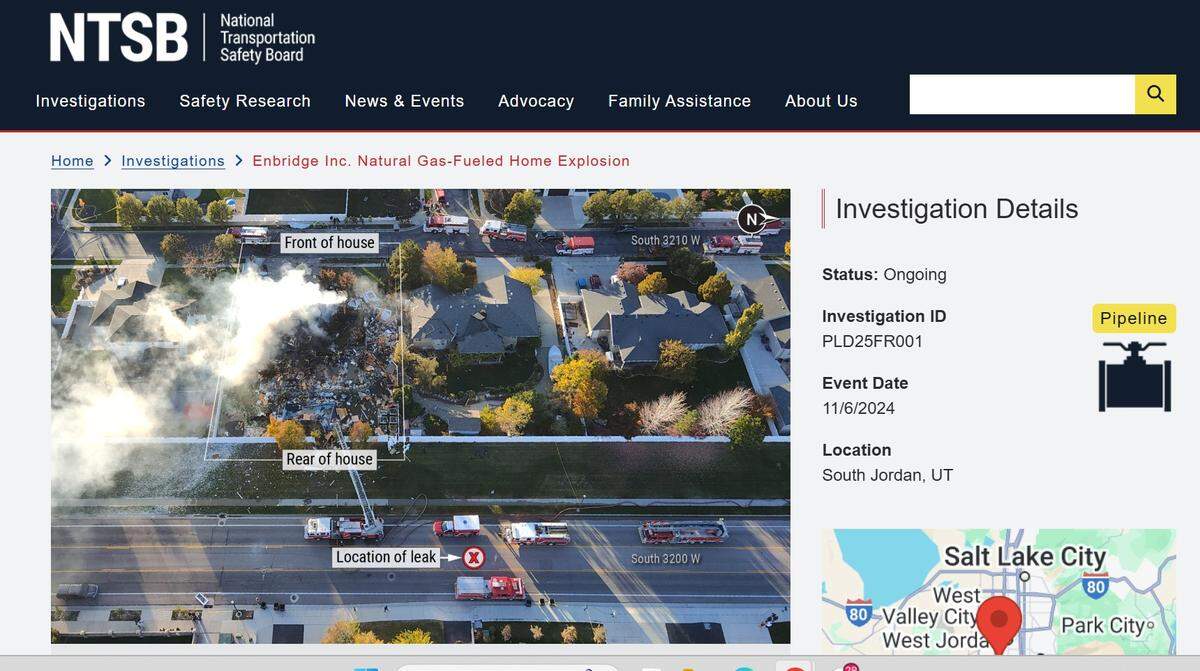
On Nov. 6, one person was killed in natural gas explosion that destroyed a home in South Jordan, Utah. The investigation is also continuing.
This story was originally published April 14, 2025 at 7:19 PM.