
From loathed to legendary: The KC artworks that sparked a new era of public art
In 1994, the Nelson-Atkins Museum of Art unveiled its most mystifying work of art, four badminton Shuttlecocks.
Kansas City philanthropist Morton Sosland and his wife commissioned Claes Oldenburg, a Swedish-American sculptor, and his wife, Coosje van Bruggen, to create a piece for the Nelson-Atkins grounds. The design was entirely up to the artists.
While taking a break from brainstorming, van Bruggen was drawn to a Frederic Remington painting of Native Americans, particularly captivated by the depiction of feathers.
.jpg "unnamed (2).jpg")
According to a past article from The Kansas City Star, the sculptors immediately examined “all things flight and feather.” They drew inspiration from the winged sphinxes outside of the Liberty Memorial, Amelia Earhart, windmill blades and their final choice: badminton birdies.
A badminton birdie, more commonly known as a shuttlecock, is a small “high-drag” projectile. It has a conical shape with feathers or feather-shaped plastic embedded in its cork/rubber head.
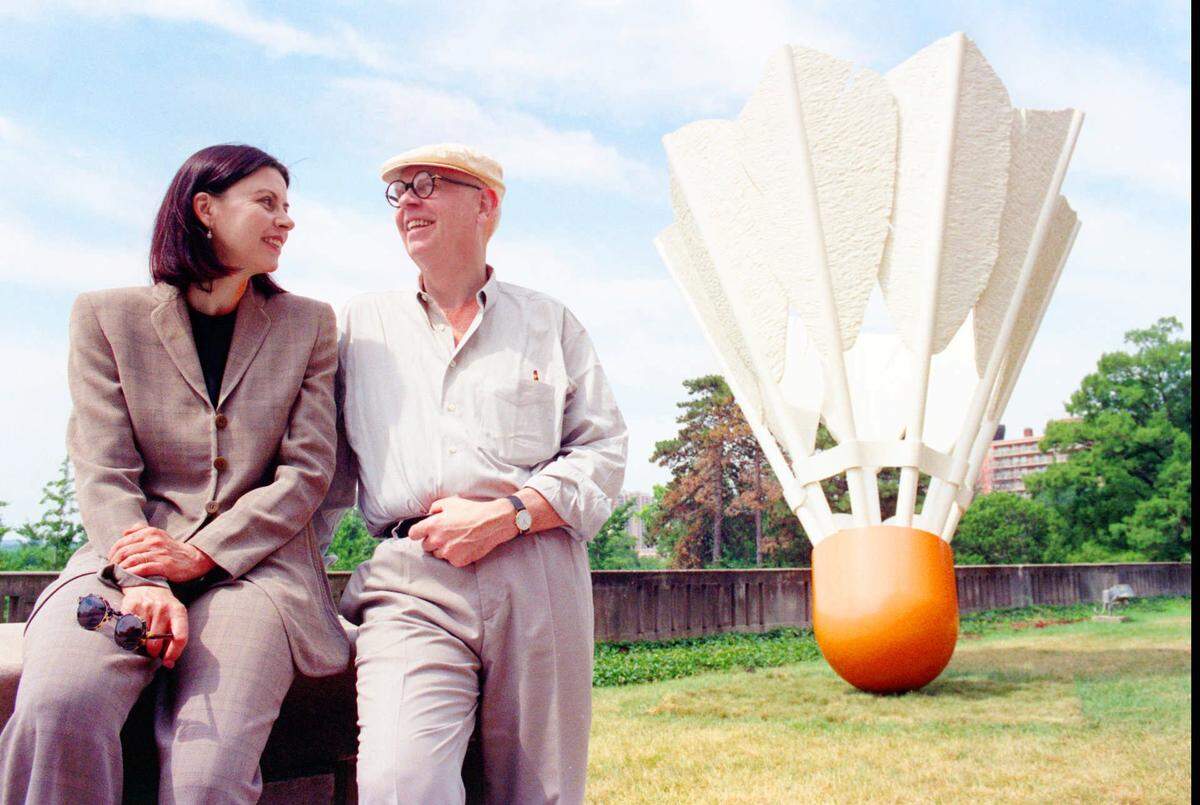
Although now widely embraced as a symbol of Kansas City, the shuttlecocks didn’t quite make sense at first. The museum and The Star received countless letters from skeptical community members.
“What a shame that these look both stolid and permanent and are so glaringly out of place against the elegant south face,” Jean Patterson wrote in a July 1994 Star article. “Please recognize the mistake and correct it.”
.jpg "unnamed (1).jpg")
Yet, over time, they have become one of the city’s most recognizable images, appearing in tourism campaigns, local pride materials and even Charlie Hustle T-shirts. Their presence in Kansas City’s visual culture underscores how public art can transcend initial controversy to become a beloved emblem of place.
But this is exactly what contemporary art aims to do: challenge perceptions.
Oldenburg and van Bruggen were pioneers of monumental public sculpture. Their philosophy centered on reimagining the mundane in ways that challenge perception, invite interaction and infuse humor into urban spaces.
“I am for an art that is political-erotical-mystical, that does something other than sit on its a-- in a museum.” Oldenburg wrote in his 1961 artist statement.
.jpg "unnamed (3).jpg")
This belief drove his and van Bruggen’s work outside traditional gallery spaces, embedding art within public life. By enlarging everyday items, such as clothespins, shuttlecocks, and spoons, they aimed to elevate the ordinary into something extraordinary.
They believed that by enlarging everyday objects, they become unfamiliar yet iconic. Enough so to become scenes shown during a Kansas City Chiefs football game. Their works often balanced monumentality with whimsy, a contrast that made their sculptures both striking and approachable. This perspective is evident in their soft sculptures and large-scale installations, which blur the line between playfulness and artistic critique.
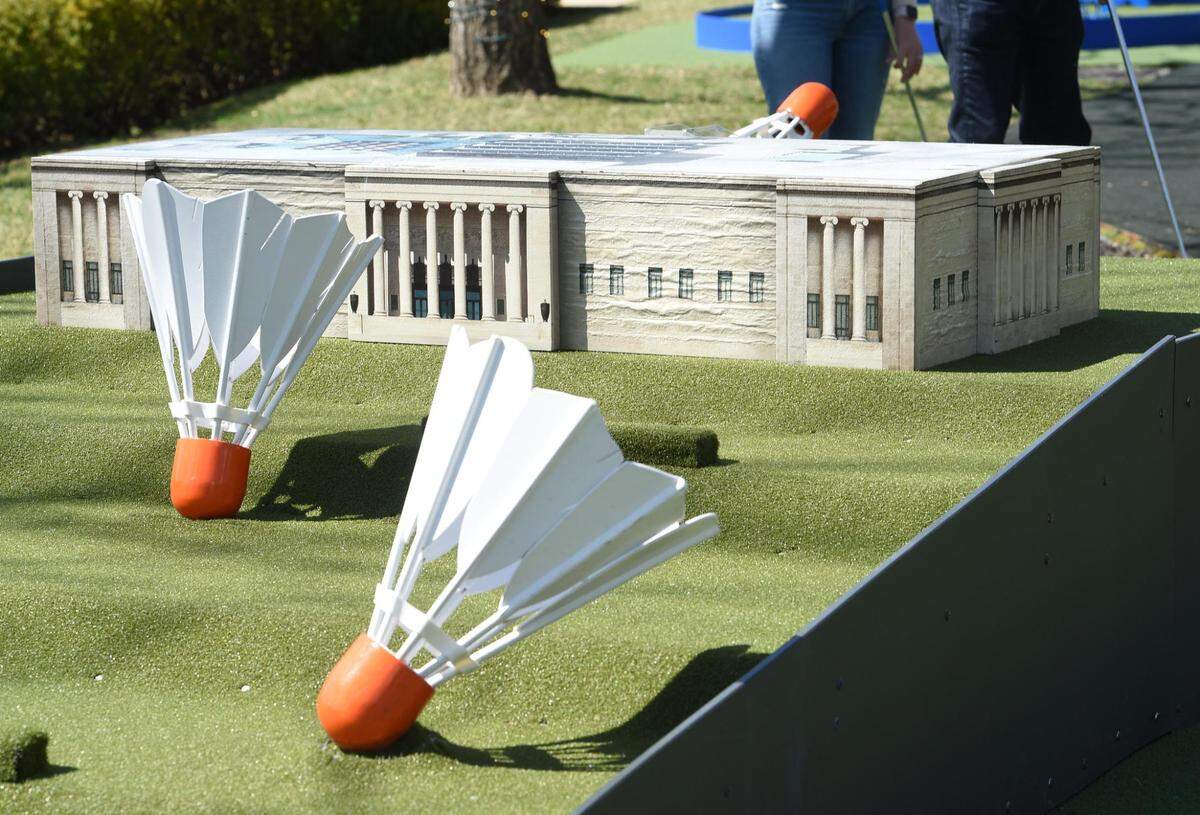
A shift in public sculpture in KC
By reimagining the grounds of the iconic Kansas City art museum as the site of a surreal, oversized game, they subverted traditional ideas of what public sculpture should be, making fine art accessible and lighthearted.
The duo’s work continues to influence contemporary public art by challenging notions of scale, materiality and viewer engagement.
Before Shuttlecocks, many public sculptures in Kansas City were traditional in form and function, often commemorative or historical. However, their approach introduced a conceptual, contemporary perspective. This philosophy resonated in Kansas City, paving the way for other large-scale public artworks.
The striking, larger-than-life sculptures that followed came to define KC’s skyline and public spaces. The Sky Stations atop Bartle Hall were installed the same year as Shuttlecocks.
These installations highlight how Kansas City evolved from primarily historical statuary to a mix of conceptual and figurative public art.
“I can say that it’s definitely had an impact on the reception of the public of contemporary art in the community,” said James Martin, Kansas City’s public art administrator. “And so, you know, through this monumental, whimsical and even fun artwork. I think it’s gotten people to think about art differently and to be taken minded to the idea that art can be whimsical.”
The city has institutionalized its dedication to public art through initiatives like the One Percent for Art program, which mandates that 1% of public construction project budgets be allocated to public art. This program has contributed to numerous installations, including at the Kansas City Airport, which has a 2-year-old terminal overflowing with similar whimsical contemporary art.
Martin pointed out several such pieces:
Ornithology Soundscape, created by Willie Cole, inspired by the sounds of Charlie Parker, is a sea of birds made from alto saxophones.
I Spy Carry-on by Kati Toivane is another prominent whimsical contemporary piece in the airport. This piece is a series of prints comprising digital photographs of objects commonly found in carry-ons. According to Martin, it becomes a fun game for people to play and find various items that resemble security X-rays.
Ode to the Tallgrass Prairie by Linda Lighton reflects the city’s evolving relationship with public art, blending contemporary sensibilities with regional identity. Like Shuttlecocks, her work challenges traditional expectations of public sculpture, inviting interaction and contemplation with a QR code with information on the flora and fauna included in the piece.
The question is would contemporary art be as prominent in Kansas City without Oldenburg and van Bruggen and their larger-than-life shuttlecock, creating a more playful environment where reality is suspended, even if for a few moments? Kansas City shall never know the world without this whimsy.
This story was originally published April 15, 2025 at 8:29 AM.