
This artist was behind famous Kansas City mosaic, other works. But where is it now?
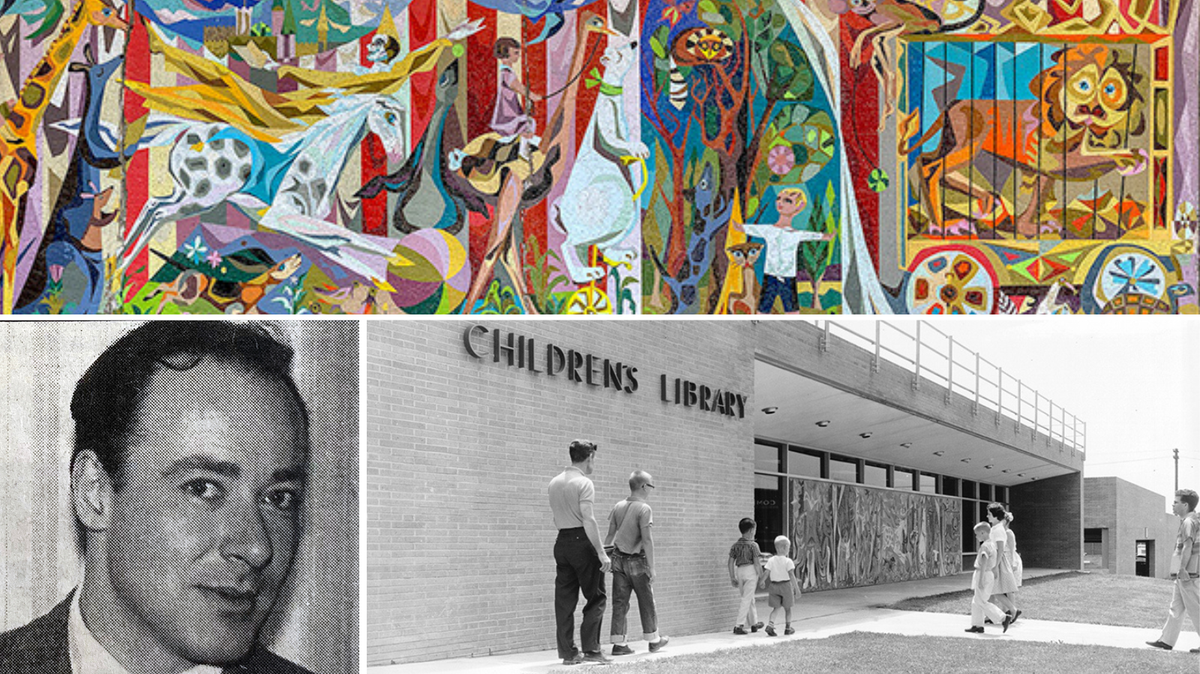
For 40 years, visitors to the children’s section of the Kansas City Public Library’s old main location at 1211 McGee were greeted by a stunning work of art. At over 35 feet long and 7 feet tall, a brightly colored mosaic depicting a procession of children and circus animals dominated the entrance of the building.
Many of the library’s patrons never knew the name Arthur Kraft, the Kansas City artist who made the mosaic, but they knew the joy of his imagination. In 2020, developers razed the building, which once housed not only the library but the offices of the Kansas City Board of Education.
A reader asked the What’s Your KCQ? project to shed light on the whereabouts of the mosaic and the artist whose vision it was.
Arthur Kraft’s artistic start
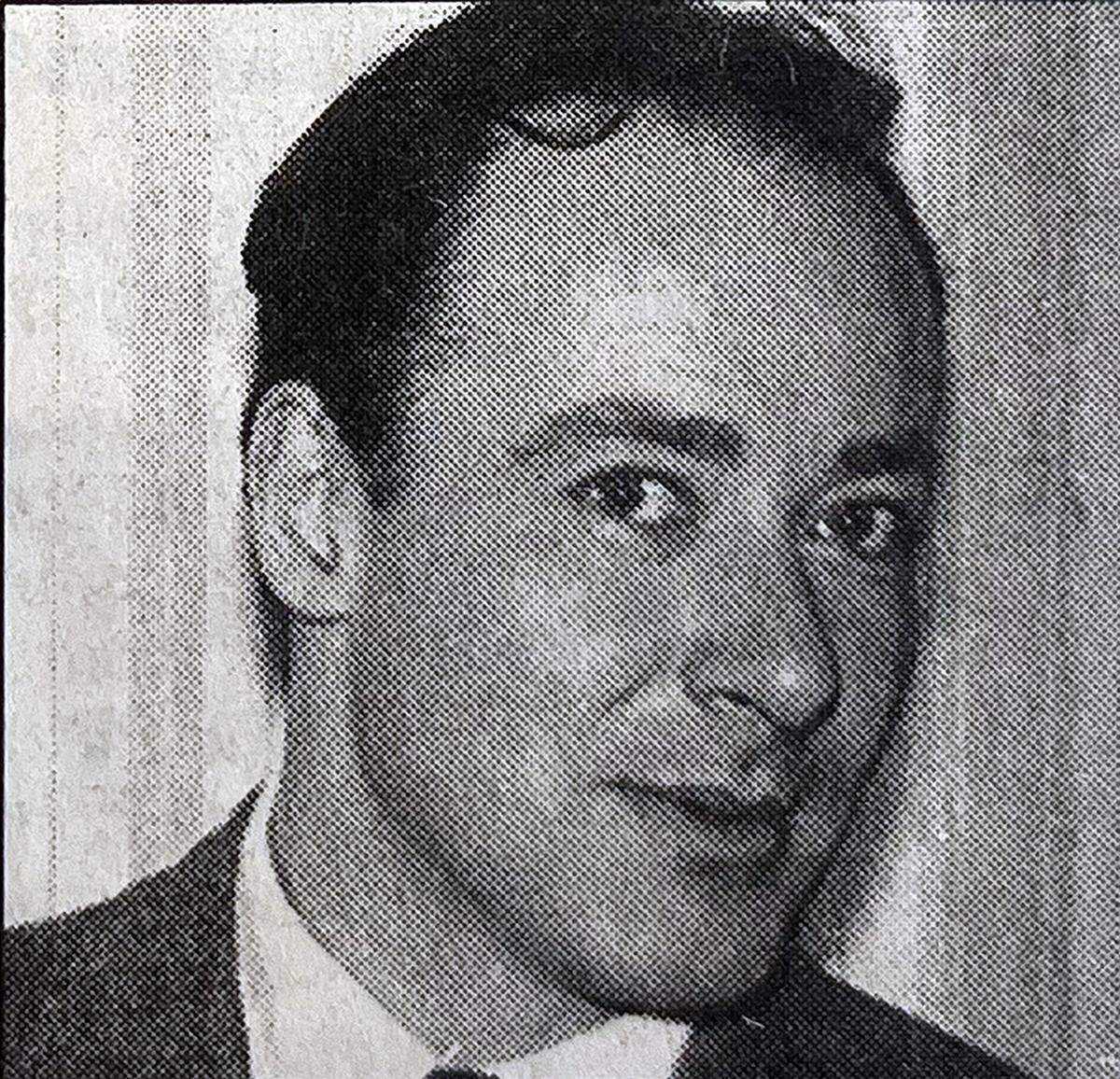
Kraft was born in Kansas City on Aug. 31, 1921, and quickly took to painting. In 1932, at the age of 11, Kraft exhibited pipe cleaner sculptures at the inaugural Plaza Art Fair. By 13, he had graduated to selling painted matchboxes and oil portraits.
It was clear even at this early age that Kraft possessed a raw talent for art. He soon began attending Sunday morning art classes at the Nelson-Atkins Museum of Art.
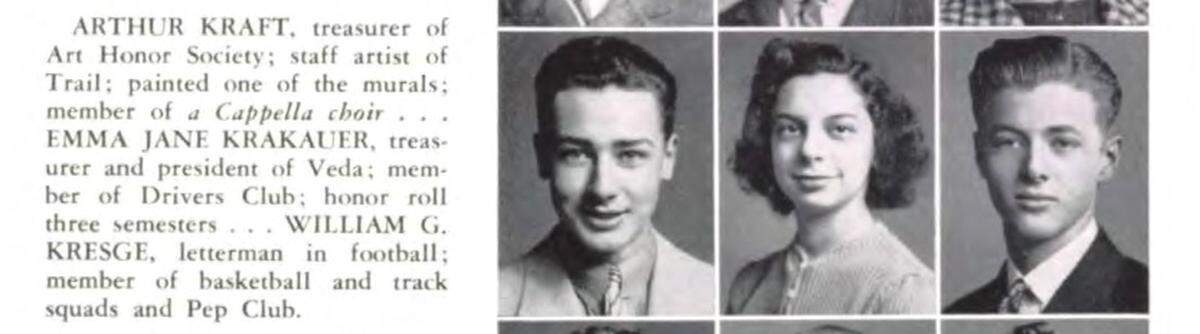
In 1939, Kraft graduated from Southwest High School, then attended the Kansas City Art Institute for a year before transferring to the School of Fine Arts at Yale University. His studies at Yale were interrupted, with only six months left until graduation, by his service in the Army Air Corps during World War II.
Acclaim and addiction
Following the war, Kraft returned to Yale and completed his degree. During his final year, he returned to a painting he had been working on for years titled “New York As Seen by a Casual Observer Through My Great Aunt Jennifer’s Ouija Board.” This painting depicted a staggering view of New York City buildings and neighborhoods, cut away to show the dramatic life inside. The work would garner him first prize at the Audubon Artists exhibition in 1946, a recognition that propelled his career.
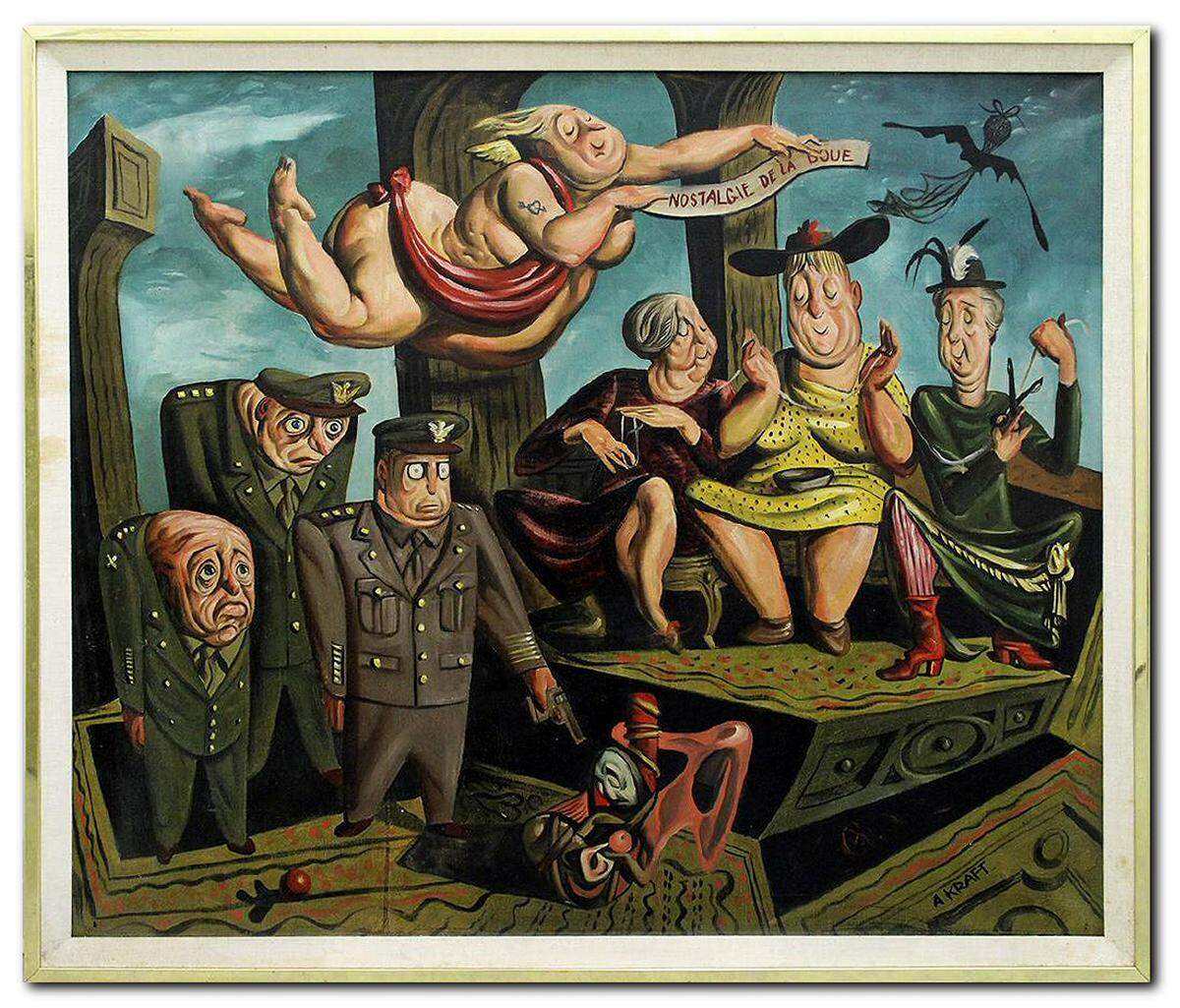
Over the next few years, Kraft held exhibitions in Paris, London, Rome, New York and Los Angeles, all to great critical acclaim. Yet his heart remained in Kansas City, and he returned to set up a permanent art studio.
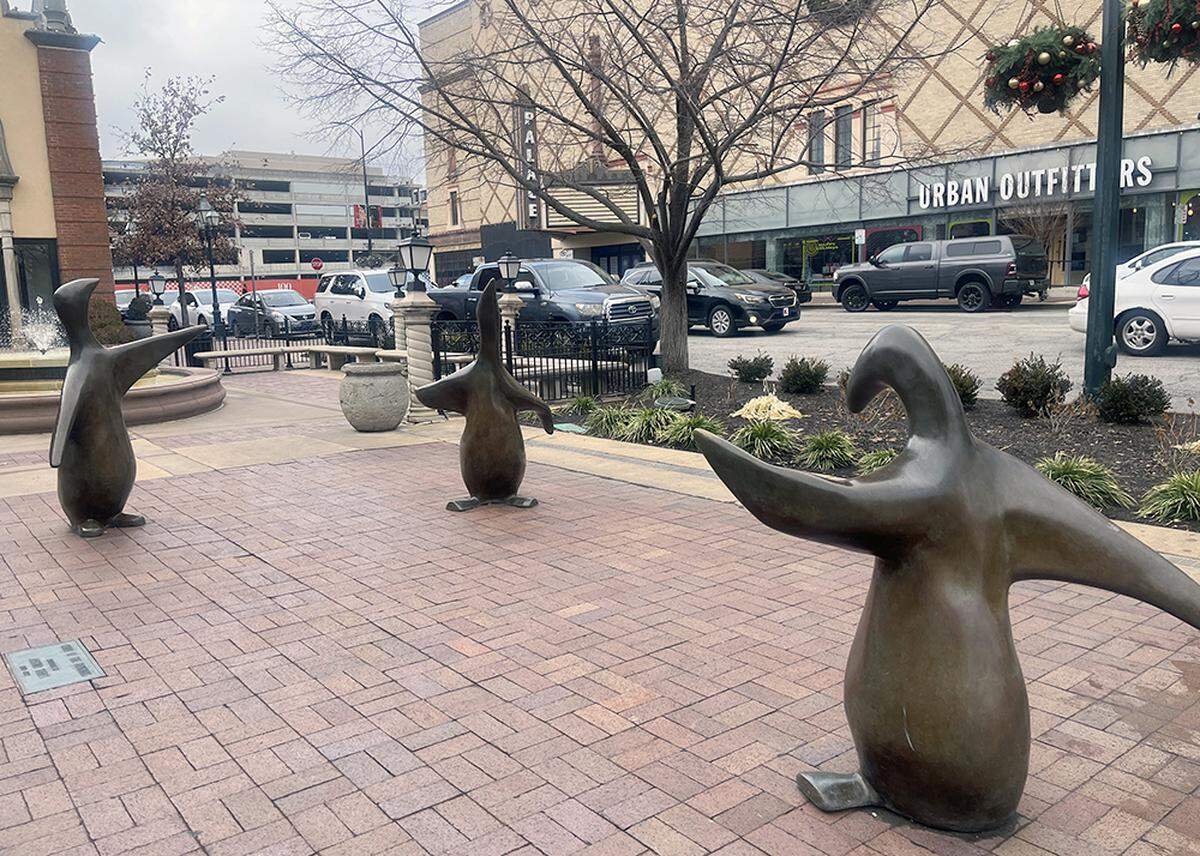
As the years passed, Kraft became increasingly well-known for his grand, whimsical sculptures and bold murals for public spaces across the U.S. Among these were a 10-ton elephant sculpture rolling on its back laughing, commissioned for a shopping center in Detroit, and the much-beloved penguins that now grace Kansas City’s Country Club Plaza.
Kraft struggled with both physical and mental difficulties throughout his life, and his nonchalant attitude toward money often made his life difficult. He sometimes resorted to settling his debts by using paintings as currency.
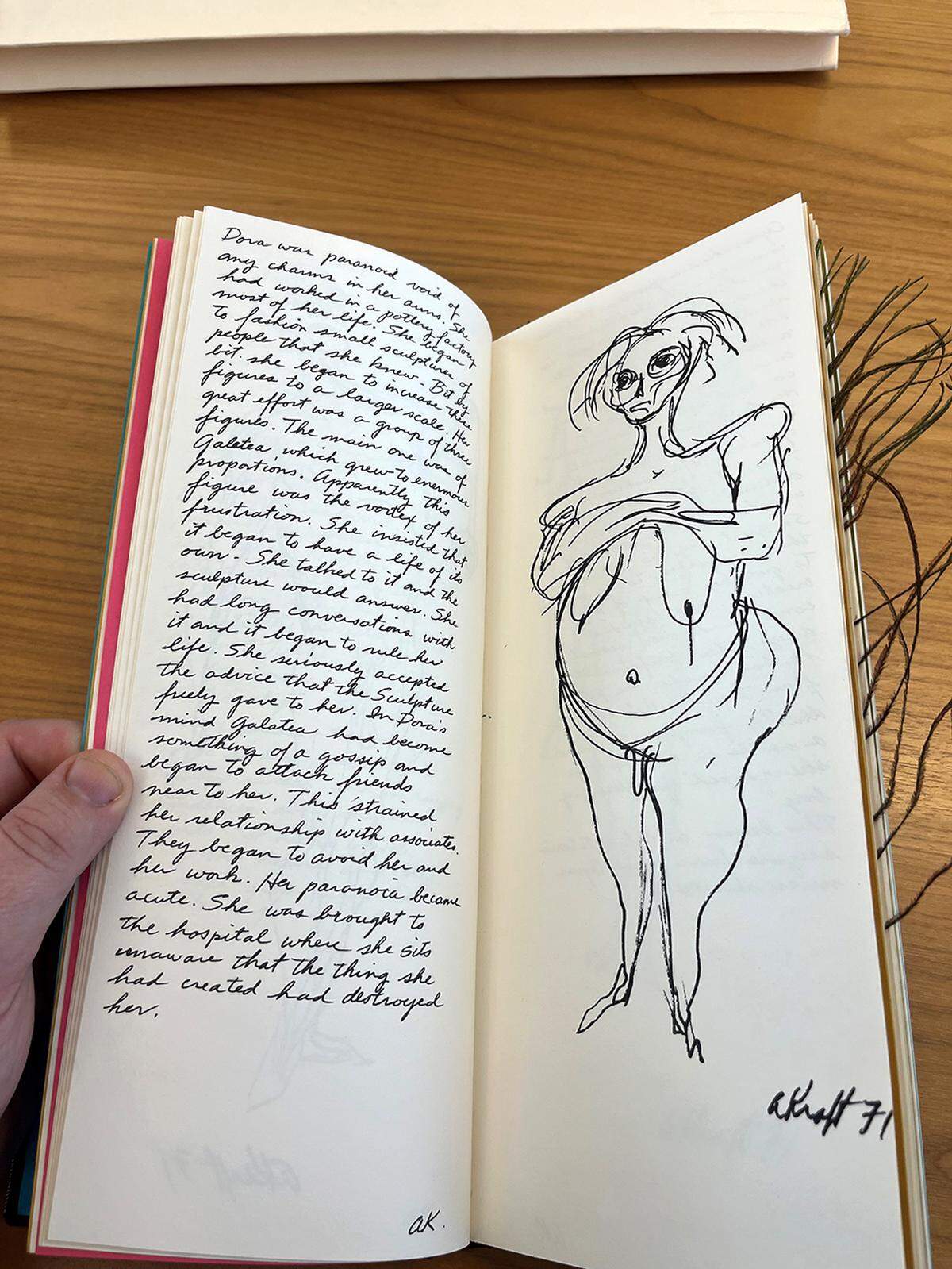
In 1971, Kraft was admitted to St. Joseph’s State Mental Hospital No. 2 for alcoholism, where he stayed for five weeks. During this time, he would wander away from the alcoholics’ ward and get to know the patients in other parts of the hospital. After he left the hospital, Kraft created a limited-edition book, “The Sounds of Fury,” in which he presented the stories and illustrations of the patients at the hospital.
On Sept. 28, 1977, Kraft died at the Topeka veterans’ hospital after a prolonged battle with cancer. His final artwork was a mural he painted for the hospital’s lobby.
Arthur Kraft’s artwork
Kraft’s legacy is spread across Kansas City with numerous works of art gracing public spaces, including a mosaic in the Missouri Public Service Company building, the “Family” fountain from the Executive Plaza Building at 720 Main St., and a mural in the now-demolished Westport Bank.
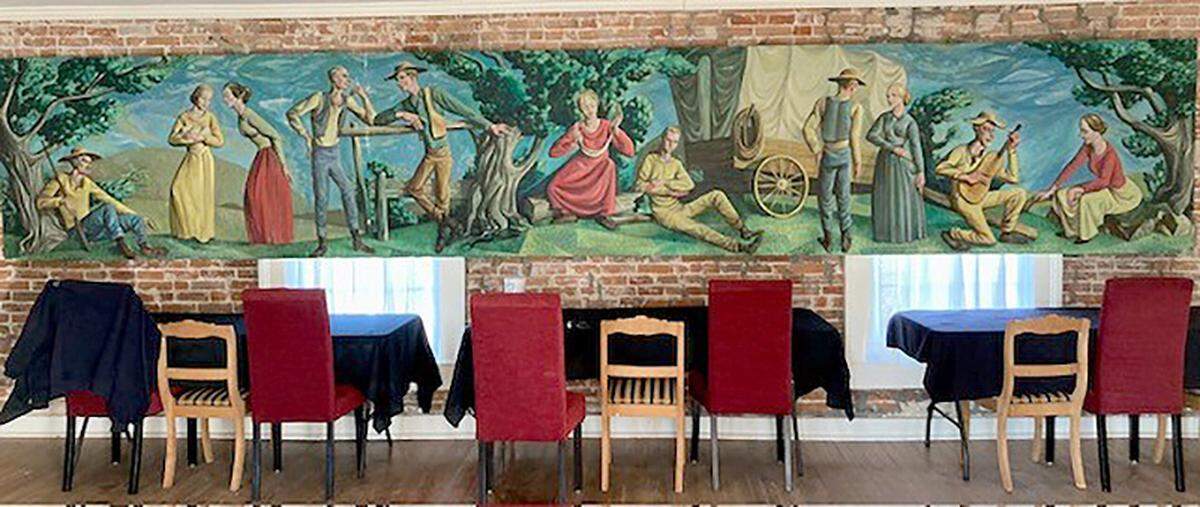
The Westport Bank mural is on display at the Westport Historical Society’s Harris-Kearney House where an exhibition of Kraft’s work will open in March 2025. The location of the mosaic from the Public Service Company building is unknown. Meanwhile, the “Family” fountain sculpture was donated to the National Museum of Toys and Miniatures in 2006, where it is prominently displayed near the front entrance.
Yet of all of Kraft’s public works in Kansas City, none was so iconic as the circus mosaic at the entrance to the downtown Main Library’s children’s department. The 11-story library and Board of Education building, designed by Kansas City architect Edward W. Tanner in the modernist style, was hailed as a triumph of design for modern libraries when it was completed in 1960.
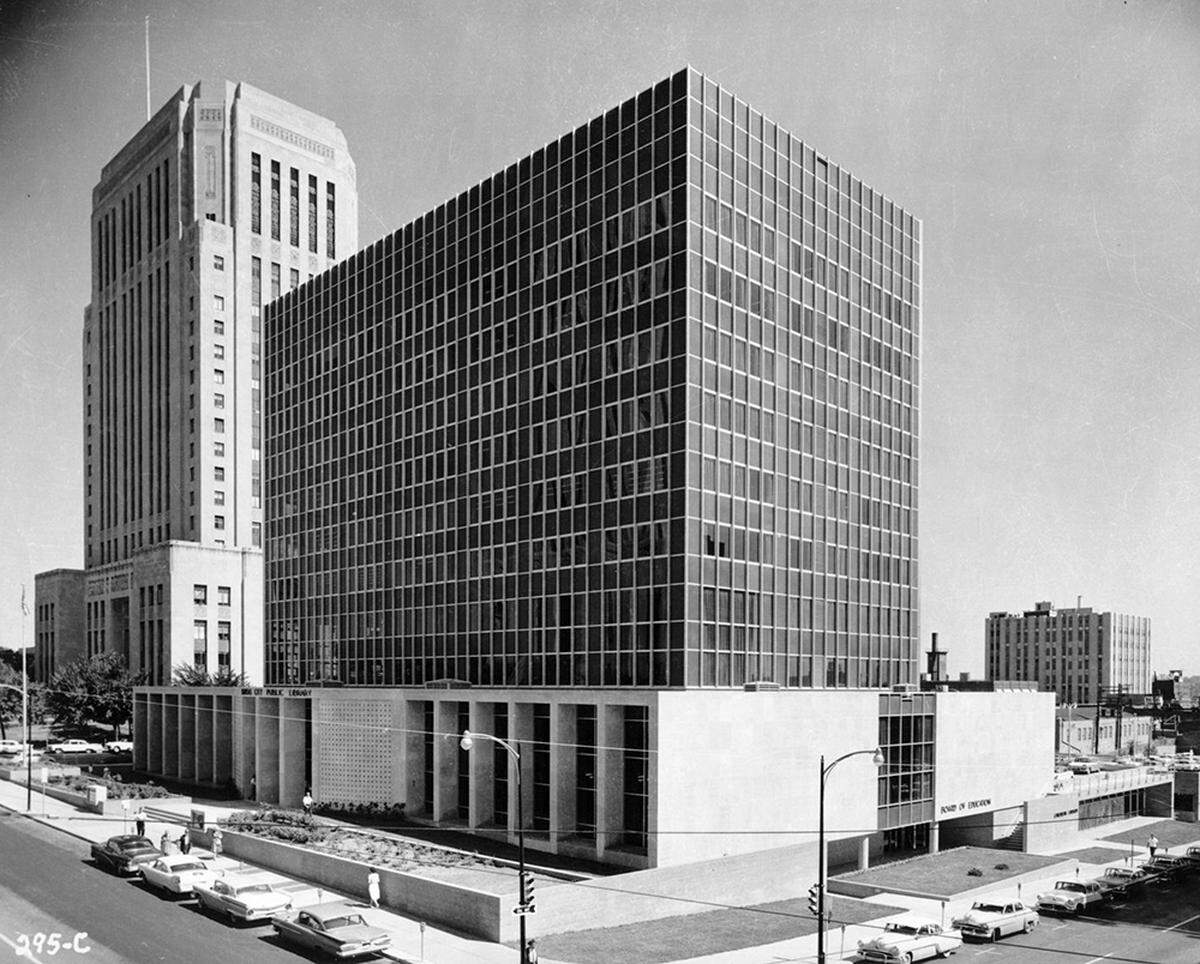
One of the new library’s most heralded features was the children’s department designed with a separate entrance to diminish the noise in the rest of the library.
The children’s room featured a semicircular seating area recessed into the floor created for a theater for story time. The inclusion of an area specifically for this purpose was heralded as an innovative addition by the Kansas City Chapter of the American Institute of Architects.
Kraft was chosen to produce the art for the entrance to the children’s library. His mosaic included approximately 220,000 colorful glass tiles imported from Italy that he used to depict a procession of circus and wild animals intermixed with children.
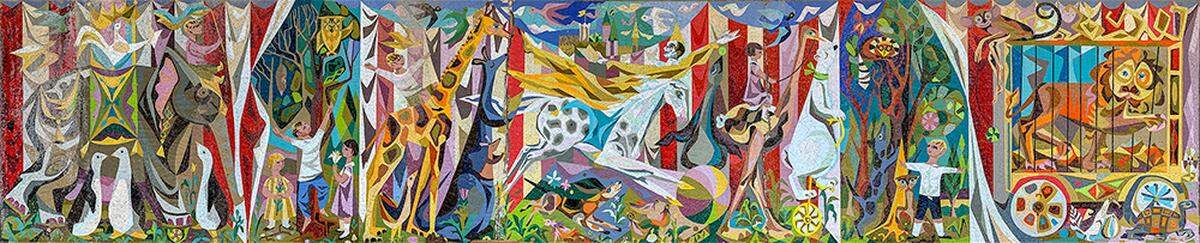
After accepting the 1960 Craftsmanship Award from the American Institute of Architects, Kraft stated: “My chief approach was to create a colorful lure that would attract the light hearts of children. After due consideration it became apparent that I had to deal with all the elements in the animal world that children know. I very carefully selected the most obvious animals which would be easily recognizable in an abstract form.”
What happened to the circus mosaic?
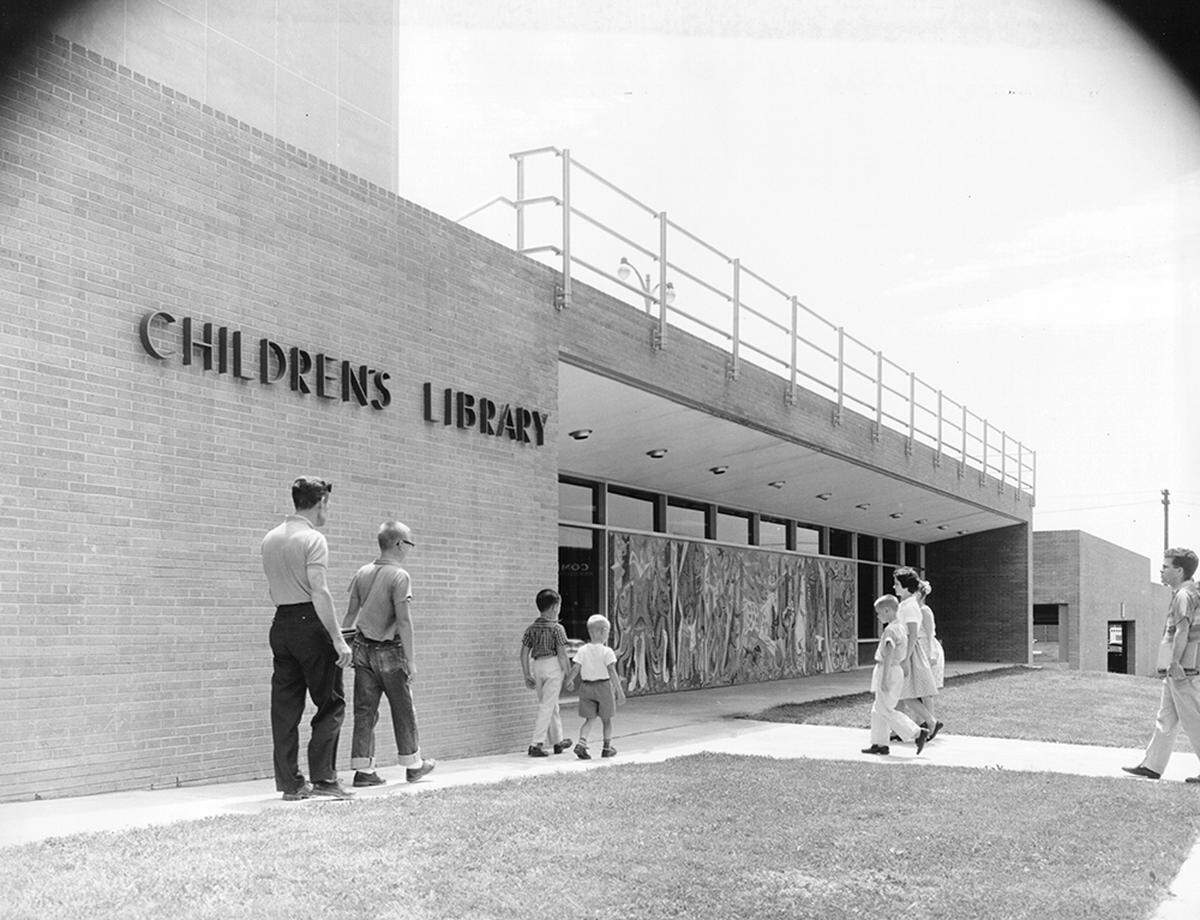
By the early 2000s, the Main Library was showing its age. It had become dated, and the innovations heralded in 1960 no longer suited a city that had largely left downtown for the suburbs. In 2004, the library moved to its current location in the historic First National Bank at 10th Street and Baltimore Avenue. The Board of Education vacated the building in summer 2016.
Finally, in summer 2020, after years of attempts to preserve the historic building, it was torn down. But what became of the Arthur Kraft mosaic?
Recognizing the need to preserve the mosaic for future generations, Copaken Brooks, the developer that bought the property, hired RETROPROS, an architectural preservation firm specializing in preserving architectural hard surfaces.
Bryan Painter, the CEO of RETROPROS’ parent company, RETROCHEM, detailed the laborious work of removing the 1-ton artwork. “Prior to any cutting, (we) took much precaution to protect the mural from any further damage.” They accomplished this by adhering plastic sheeting to the surface and then framing the mosaic with wood blocking and metal straps.
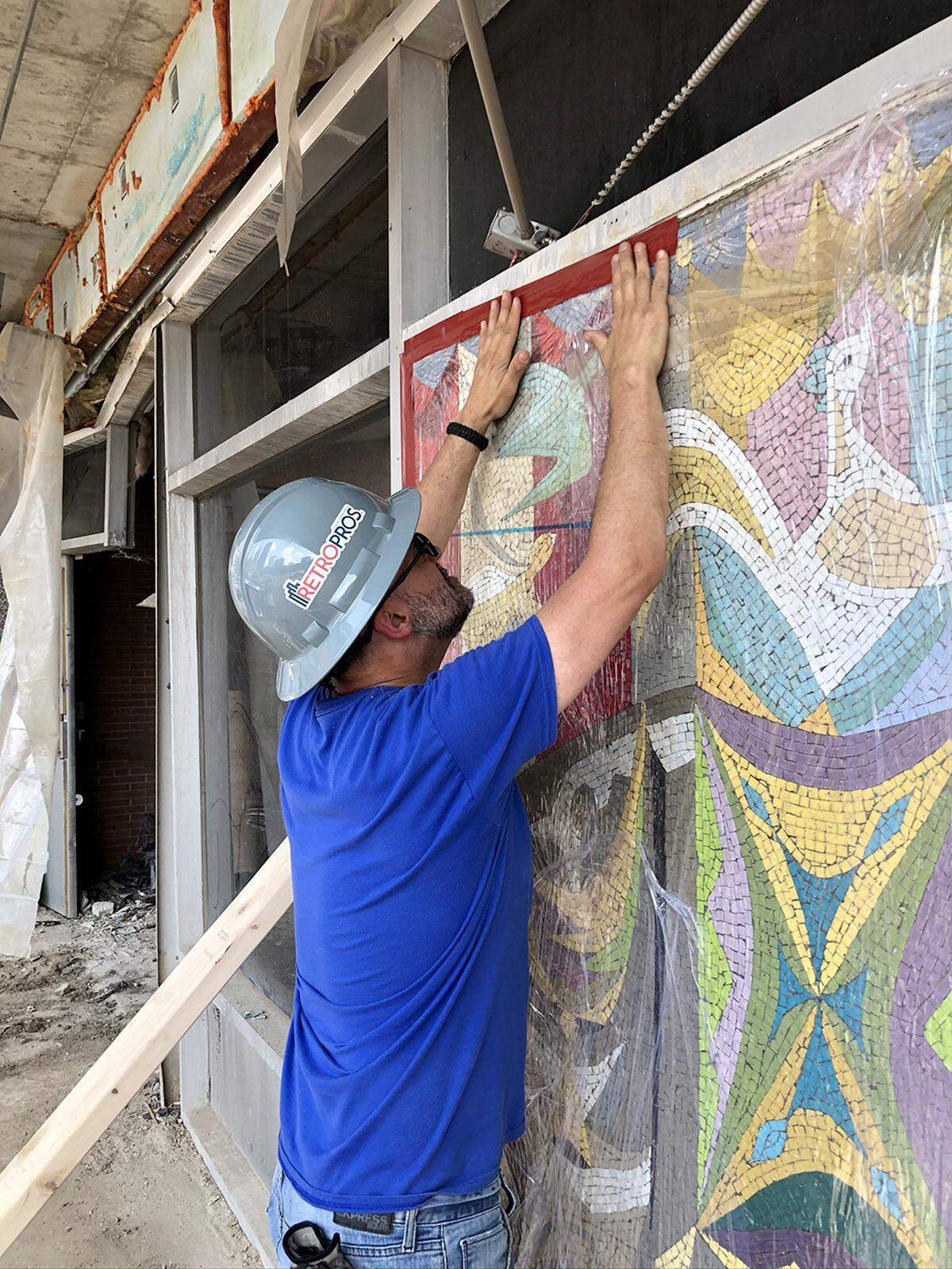
Next, the workers meticulously cut the art into seven sections and moved them offsite. In 2021, Copaken Brooks and RETROPROS received a preservation award from Historic Kansas City. Although, at the time of publication, Copaken Brooks had not responded to requests to confirm that they still possess the mosaic, Painter says the mosaic is still being stored by them until a suitable owner can be found.
Special thanks to Isaac Kostrow, Lindsey Foat, Bryan Painter, Madeline Rislow, Ph.D., and Marty Wiedenman Jarvis for assistance in tracking down the remaining public artworks of Arthur Kraft.
This story was originally published January 20, 2025 at 6:00 AM.