KCI solar energy farm project is two years behind schedule, but still moving forward
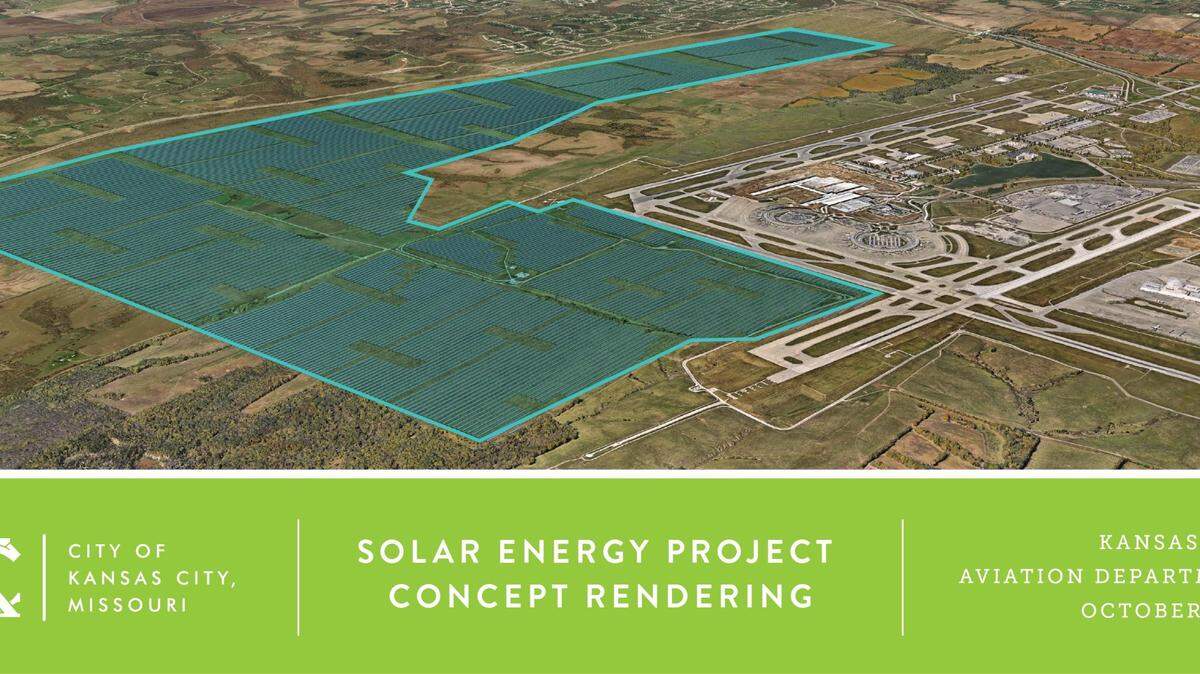
Construction of a solar power farm at Kansas City International Airport may not begin until late 2026 or early 2027, more than five years after City Manager Brian Platt proposed that renewable energy project on vacant airport land.
City officials had hoped construction would be underway by now and operating well before visitors arrive in June 2026 for the men’s World Cup soccer tournament.
But it’s taken longer than expected to work out an agreement with 816 Consortium, which will build the project. Further delays could occur, city officials said, due to unknowns in the design process and getting approvals for connections to the power grid through the Southwest Power Pool, which manages the electric grid for this region of the country.
The updated projected timeline was announced this week in documents produced to support Platt’s request that the City Council give him permission to sign a pre-development agreement with the four area companies that make up 816 Consortium, which was selected in August 2023 after the city put out a request for proposals.
The council granted Platt’s request by a vote of 11-1 without comment Thursday afternoon. Only Councilman Nathan Willett voted no, but did not explain why.
The consortium is led by the local electrical utility, Evergy, which will manage the solar farm and sell the electricity it produces. Other members of the consortium include the engineering firm Burns & McDonnell, Herzog construction and Savion, LLC, which specializes in building solar power plants.
City government’s role is three fold. The city is making land available for the solar farm under a 30-year lease and will own all the improvements built on that acreage. It fostered project development by seeking proposals and is working out a deal with 816. And the city will help with the financing by providing tax breaks.
No direct taxpayer funding
One thing it won’t do is write a big check to get the thing built. The consortium will arrange financing.
“So while the city is supporting the project through incentives and logistical assistance, it does not bear any financial responsibility for project costs,” according to a memo written in support of an ordinance the council approved Thursday authorizing Platt to push ahead.
The city will not make a lot of money off the deal. It will receive lease payments, most likely from Evergy, but the amount has not been negotiated. Key benefits: the solar farm will advance the city’s green power initiative and help keep electrical rates in check by producing a low-cost source of energy.
The project will be constructed in phases on 2,000 of the 3,100 available acres south and west of the airport runways originally made available for a solar farm. It would produce up to 500 megawatts, which is sufficient electricity to supply power for 70,000 houses, the city has said.
When completed, it will be among the largest solar energy projects at a U.S. airport, the city has said, larger than those in operation at the airports in Denver and Indianapolis.
“This solar farm could be one of the largest and most ambitious solar projects in our country to date, span thousands of acres, cover electricity needs for a sizable portion of city, and help us march toward our goal of carbon neutrality by 2040,” Mayor Quinton Lucas said in the fall of 2021.
Demonstration project
Kansas City officials had hoped World Cup visitors would see all those solar panels shimmering below as their jets landed at KCI. That’s unlikely now, but the city is asking 816 Consortium to build “some sort of demonstration project” that would be visible from the air by tournament time.
Project design is set to be completed 12 months from now, and construction would likely begin 12 months after that, which is based on the expected time it will take for the Southwest Power Pool to approve connection.
“There are a lot of unknowns before design is complete and the approval process with the Southwest Power Pool can take months or sometimes years,” the docket memo in support of Thursday’s ordinance said.
This story was originally published January 9, 2025 at 2:35 PM.