Kansas City kids are dying in their homes as state agency pushes ‘family preservation’
After a 2-month-old Independence baby and her mother died last month in a police shooting, questions immediately focused on why an officer fired at a woman holding an infant.
Before long, as an independent team investigated the shooting, additional scrutiny turned to Missouri’s Children’s Division. The Star learned the state’s child welfare agency had been called in twice during Destinii Hope’s young life, yet her paternal grandmother said workers didn’t do enough to protect her.
“I’ve been still asking questions,” Talisa Coombs told The Star. “I mean, why? That’s all I need to know, is why, why couldn’t they do their job?”
The questions being asked by experts and advocates inside the child welfare system run even deeper. They center on Missouri’s focus the past three years on keeping families together — and out of state care — and whether it’s left children, like Destinii, in unsafe environments.
Since February 2022, Destinii is at least the seventh child in the Kansas City area to die while living in their biological homes. According to police records and interviews with neighbors and relatives, at least four of those kids and their families are believed to have been involved with the Children’s Division, or the agency had been notified about problems, before their deaths.
In one of those instances, Kansas City police found a little girl dead from malnutrition and rescued her twin sister who was also severely malnourished. In two other cases, two young boys fell from windows — one last year and one this past summer — and died.
And this fall, Destinii was shot in the head by a police officer, family members said, as her mother held her in her arms. Edited footage from body cameras, worn by Independence police on Nov. 7, show that in the seconds before an officer fired first one shot and then another, Destinii’s mother, Maria Pike, raised a large kitchen knife and moved toward officers.
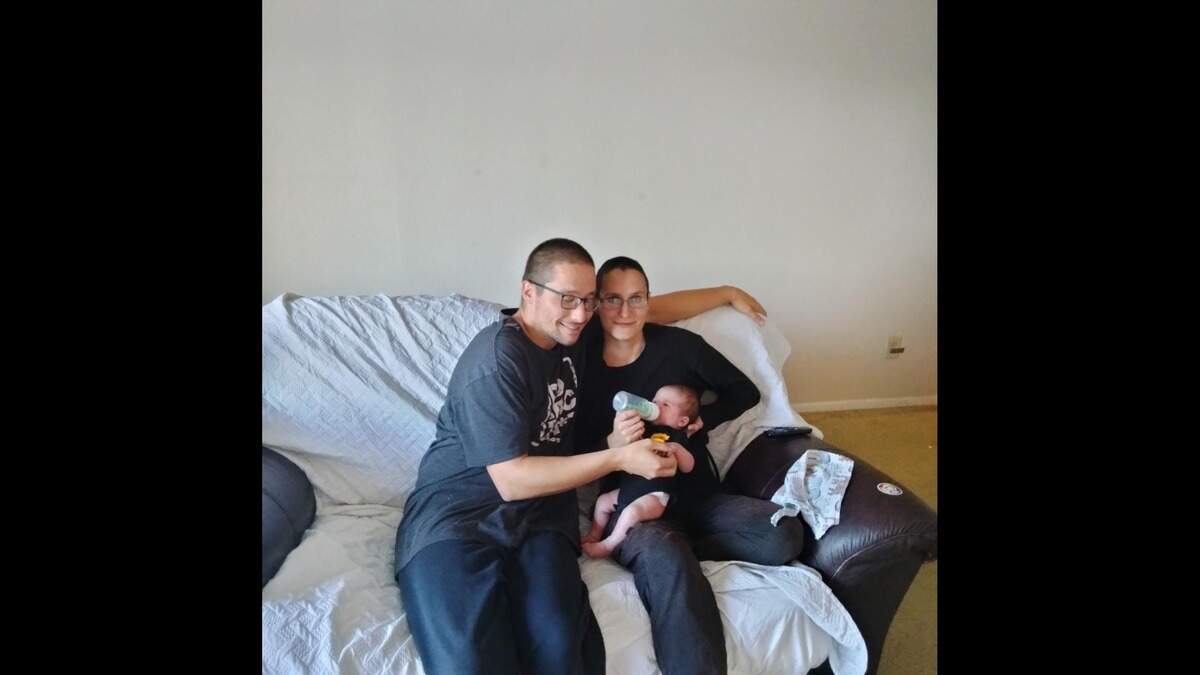
The state has denied requests for records in all seven cases, citing a state law that leaves the decision to release information to the sole discretion of the director of the Missouri Department for Social Services, which oversees the Children’s Division. So it is still unclear what engagement the families had with state workers and whether services were provided or if parents refused those services.
DSS Director Robert Knodell said any time a critical incident occurs, it is immediately reviewed to determine if policies and procedures were followed. If they were not, changes are made, he said.
“Obviously, I’m concerned about the Kansas City region,” Knodell said. “Safety is certainly the foremost priority for our children’s division. And you know when tragedies arise, we have to make sure that policies and procedures are followed.
“If the policy isn’t working, or the practice isn’t working, then, you know, we have to determine steps to correct that. That’s the case anytime one of these terrible tragedies occurs.”
The social services leader said he couldn’t talk about any specific case, including Destinii’s, but he did say that the state has increased training for risk assessment across the state. And in the past month, the Kansas City region has received additional management support focusing on the best practices for workers to use, Knodell said.
Many involved in the child welfare system have believed for years that keeping families together is beneficial to children. Removing children from their homes, studies have shown, can cause trauma and lead to dismal outcomes for some children raised in foster care.
The worry, though, has been that state systems too often don’t do enough to ensure that the environment a child remains in is safe and continues to be. That’s the fear in Missouri right now, experts say.
“I’ve heard concerns from service providers across the state about safety getting lost in the pursuit of family preservation,” said Jessica Seitz, executive director of the Missouri Network Against Child Abuse, formerly known as Missouri KidsFirst. “I agree that family preservation is the preferred route.
“All the research shows that family separation is incredibly traumatic, it impacts the long-term outcomes of young people.”
But, Seitz said, there are parameters in the system meant to keep children safe and “it’s been our concern that those aren’t being utilized properly and that the child welfare system is not consistent.”
Destinii’s grandmother said she communicated directly with Children’s Division workers from the time her granddaughter was hours old until the day she died. Coombs said she told workers that she would take custody of the baby while her mother received the mental health services she needed, but that never happened.
Jackson County prosecutor Jean Peters Baker attended a vigil for Destinii last month and spoke with Coombs about her experiences trying to protect her granddaughter.
“I can tell you that I have concerns,” Baker said. “ I don’t know the answers yet…. All I can tell you, at this moment, is I have concerns, and I will be running this down.”
Why the system transformed
On the last day of 2021, just days before Darrell Missey took over the top post inside the Children’s Division, there were 14,137 kids in care. That represented a 34 percent increase from a decade earlier.
And at the time, Missouri had among the highest number of children in foster care per capita nationwide.
A former juvenile court judge, Missey soon shared that he wanted to begin transforming Missouri’s system, which had a rate double the national average for removing kids. For him, it was all about family preservation, a move that systems across the nation have been embracing.
Missey shared what he had seen on the bench and earlier in his career as a young attorney often representing kids in state care. He also told his personal story of when he was a little boy, when his mom, who suffered from bipolar disorder, had a mental health episode.
His grandmother came to live with the family for a while so his mom could go away and get treatment. Missey told his story countless times to demonstrate that sometimes families just need help and children don’t always have to come into care to be safe.
“This is a system that deals with family trauma by busting that family apart, even temporarily,” Missey told The Star last year. “Is that the right way to do this?”
Numbers show that during Missey’s tenure — he left the department the first of November — the number of kids in Missouri foster care dropped by nearly 3,000 children. From the 14,137 kids in care when he first started in early 2022 to around 11,400 at the end of October.
That number doesn’t just reflect the number of kids kept from entering care, but just those who were adopted or moved into permanent placements from early 2022 to this year.
Missey’s vision of keeping families together was cheered by many frontline workers, supervisors, child advocates and experts who have fought to put more emphasis on keeping families together when possible.
Lori Ross — a founder of FosterAdopt Connect who has worked in child welfare in Missouri for decades — said taking children from their homes and putting them in foster care can equate to “child abuse” in some cases.
“They are being removed from everybody, everything that matters to them in our lives,” Ross said, “and you’re putting them with strangers, and even if they are wonderful, well meaning strangers, that trauma is enormous.
“It has lifelong negative impacts on kids. And we should not do that unless it is a life issue.”
Children’s Division called in
As the family preservation approach took hold in Missouri, some worried that safety wouldn’t get the same priority it had before. And in Kansas City, after several child deaths, that worry has grown.
Lisa Mizell, chief executive officer of the Child Protection Center in Kansas City, agrees that keeping kids with their families, with what they’re familiar with, is “best for them, emotionally and psychologically.”
“The state’s a terrible parent,” Mizell said. “No child needs to be in foster care. It is not a good experience for anyone. It is generally not a good experience for any child.
“Finding ways to safely keep kids with their families is an admirable goal, but safety, I think, is the key word.”
Where Mizell thinks “we are missing the boat” is that safety plans put in place for families are in many cases voluntary.
“So there’s nothing compelling the families to follow through with a treatment plan,” Mizell said. “And if you are not staying involved with those families to make sure they’re doing what they need and learning the skills they need to keep their kids safe and to parent in a safe way, then you’re still failing the child.”
The first time the Children’s Division was called in to help protect Destinii was in August, when the infant was just hours old. Pike had told hospital staff that she was homeless and wanted to hurt herself, relatives said.

Ultimately, the mother and child went to live with Mitchell Holder, Destinii’s father and Coombs’ son. At that time, the Children’s Division told the parents they needed to get services to help them, the baby’s grandmother said. The couple was supposed to go to therapy and counseling, Coombs said, but when asked if they did, she said, “not that I know of.”
Holder said he and Pike were only offered an optional parenting class, which they were discussing.
Then, in October, social services came into the picture again. Relatives told The Star that a tired and exhausted Pike escaped to the woods with Destinii. While Pike was sleeping on the ground, the relative said it was her understanding that she rolled over on top of Destinii and had to give her CPR before rushing her to the hospital.
Holder told his mother, though, that Pike tried to smother their child in the woods near the end of October, according to Coombs. Destinii was taken to the hospital while Pike checked herself into a mental hospital for an evaluation after three days, Coombs said.
After the incident, a Children’s Division worker brought Destinii to Holder’s apartment that evening, Coombs said. The worker told Holder and Coombs, who was in the home as it happened, that Pike couldn’t be with Destinii alone. But Coombs said the worker didn’t give her son any plan to follow, just left the child with him.
The couple repeatedly rejected DSS’s phone calls, Coombs said, and any attempts to help them. The day before the shooting, the couple missed a meeting with the Children’s Division and didn’t answer the door when the worker later went to the apartment. Holder told The Star that he and Pike didn’t attend the meeting because it was too cold outside.
There are still lingering questions about what workers did and didn’t do in Destinii’s case.
Knodell said because of the ongoing investigation, he could not comment or respond to any concerns in the Independence case.
Family preservation, he said, is the right move when “safety can be assured.”
“That is a national priority,” Knodell said. “It’s a state priority. And I believe that our policy makers here in Jeff City want to see families preserved safely,” whenever possible.
“The question comes down to can we remove the danger, or must we remove the child?” Knodell said. “And you know, that decision has to be made correctly.”
‘Why did the engagement end?’
In the past couple of years, prosecutor Baker said she’s grown more concerned about some of the abuse and neglect cases her office sees. Staff have worked child death cases, she said, where the kids have had “previous engagement” with Missouri’s child welfare agency.
“I can’t tell you the date that my concern started to ratchet up,” Baker said. “I can just tell you that looking back over time, it’s been notable during this part of my long tenure, that we are seeing more of these than we were before.”
And it’s not just that there was previous engagement with the state that is concerning, Baker said.
“But that engagement had a really wide gray area where you’re trying to figure out when did the engagement end?” Baker said. “Why did the engagement end? What happened? There’s not been accountability for those answers in those cases.”
The prosecutor said she could not speak about any specific case. Yet she knows the feeling as a prosecutor that comes with reviewing an incident where a child known to the Children’s Division died.
“You can imagine, you know, that damn it, if different decisions had been made,” she said. “And the number of things that could have, should have, would have been done, that could have saved that child’s life. That’s, of course, where we all go.”
Grayson O’Connor, a 5-year-old boy, died late November 2023 after falling from a 17th floor apartment in downtown Kansas City.
Several neighbors who live in that building at 10th Street and Grand Boulevard, told The Star last year that there were serious concerns about Grayson’s well-being. Cellphone videos filmed by one neighbor and shared with The Star captured audio of her screaming at the child, as he sobs, dating back to more than a year earlier, which neighbors described as a common occurrence.
Neighbors say the household was often low on food and Grayson was frequently unsupervised — sometimes seen wandering the building or heard banging on the door of his apartment when he was left by himself.
They say Missouri’s Department of Social Services was aware of problems at his home. Along with meeting social workers for Grayson in person, one neighbor said she called social services four times herself, and said others reported concerns via Missouri’s Child Abuse & Neglect Hotline.
The year before Grayson died, Kansas City police found the body of Ivy House, who was just six days from her 5th birthday, wrapped in blankets inside an apartment bedroom in the 5700 block of St. John Avenue. Her malnourished body was already decomposing.
Ivy’s twin sister, also inside the apartment, was malnourished and unresponsive when police arrived. She survived.
The twins had been removed from the care of their mother, Adair Fish, when they were much younger. They were returned to Fish in late 2019 and the twins went from being in state custody to being hidden away inside Apartment 104, most of the time during the COVID-19 pandemic.
Many questions remain in Ivy’s case, such as whether Children’s Division workers visited the family after Fish regained custody of her twins. And did Fish, who was described as reclusive and wouldn’t let people inside her apartment, turn state workers or others trying to help away?
A call for accountability
Child welfare advocates and experts say more needs to be known about all of these deaths so other children in care, or who are on the radar of the Children’s Division, are protected from any potentially flawed policies, procedures or practices.
Especially at a time the state is emphasizing family preservation.
“Maybe that’s the right decision, to try and keep kids in the home,” Baker said. “And if that’s the decision, then we have to make sure that those who are overseeing that family, and especially those children, are being held accountable for the work that they’re doing.
“And that they can explain the decisions that they made, especially, you know, when the worst might happen.”
Knodell said he understands the desire for accountability and for changes to make the system better for the state’s most vulnerable children.
One agency, he said, can’t do that alone.
“I think the Children’s Division wants to work together with the communities in partnership to address issues when they arise, and to prevent tragedies,” he said. “And we want to be a good partner in that process with anybody that is willing to work with us to make it better.”
“We want to work together to make it better. We welcome those conversations. And again, our system will only be successful if all key components throughout our state, individuals and institutions that are involved … are working together.”
For Ross, family preservation plays a crucial role in child welfare and she said she hopes it isn’t diminished in the Show-Me State or across the country.
“I don’t think that cases like (Destinii’s) discount the effort that Missouri is making, along with all the other states in the nation, to try to stop taking kids away in circumstances where it truly isn’t a safety issue,” Ross said. “I don’t think that the effort to preserve families is wrong. I think that is on the money.”
The Star’s PJ Green and Bill Lukitsch contributed to this report.
This story was originally published December 11, 2024 at 12:07 PM.