Young girl found dead, her sister starving in Kansas City apartment. What went wrong?
On St. John Avenue in northeast Kansas City, a concrete basket filled with silk flowers and a doll dressed in pink was a reminder of the little girl who lived isolated inside an apartment there.
In early November police discovered Ivy House dead inside a bedroom. Wrapped in blankets, her malnourished body was already decomposing. In just six days she would have turned 5.
Her surviving twin sister, identified in court records as AH, was malnourished and unresponsive when first responders arrived.
But until charges were filed against their mother a month later, few people knew about the little girls. The only details about Ivy and her sister have come in a news release from the prosecutor’s office and court documents detailing the abuse and endangerment charges against their mom, Adair Fish.
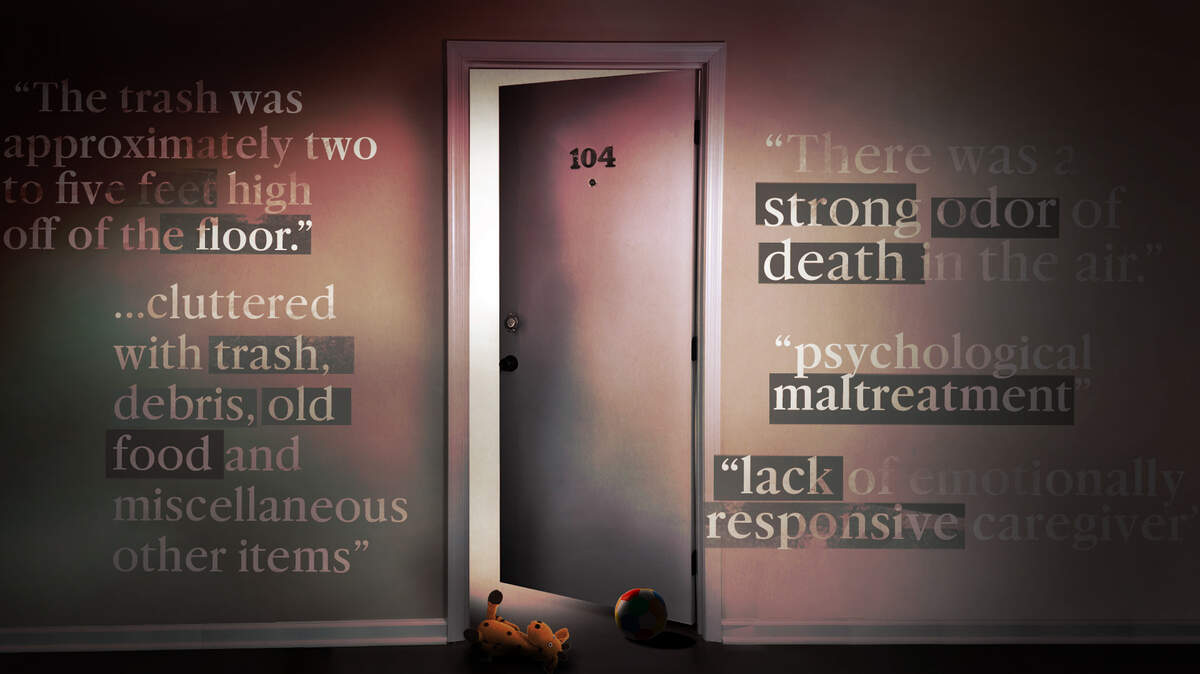
“The apartment was discovered to be cluttered with trash, debris, old food and miscellaneous other items,” court documents said. “The trash was approximately two to five feet high off of the floor.
“There was a strong odor of death in the air.”
Two months later, authorities have said little else about how the sisters, who had been removed from their mother’s care and returned in late 2019, went from being in state custody to being hidden away inside Apartment 104.
Many questions remain, such as whether Children’s Division workers visited the family since Fish regained custody of her twins. And did Fish, who was described as reclusive and wouldn’t let people inside her apartment, turn state workers or others away?
Child welfare officials also have worried about the effects COVID-19 has had on the system. In this case, did it further seclude the mother from the outside world and anyone who may have tried to help her daughters?
One neighbor told The Star that once the pandemic hit, he no longer saw the two little girls and rarely saw Fish, who only seemed to come out of her apartment to pick up the Amazon packages that were delivered there.
“This story just illustrates exactly what we were worried about happening,” said Lori Ross, a long-time child advocate in both Missouri and Kansas. “That in that time period, where everybody was staying home and kids were not going to school anymore, nobody went to doctor’s appointments, unless it was an emergency. There was nobody watching out in an effective way for vulnerable kids because of the pandemic.”
In late March 2020, after calls to the Missouri hotline had begun to plummet and with children not in school or out in the community, officials sounded alarms that abuse and neglect may go unreported. A top state official urged anyone concerned about certain children and families to let the hotline know.
It’s unclear whether anyone made that call on behalf of Ivy and her sister in the early days of the pandemic.
Fish, 43, has been jailed since her arrest in early November. She appeared in court last month and hopes a judge eventually will set bond.
She’s charged with one count of child abuse or neglect resulting in death, one count of child abuse with serious injury, one count of first-degree child endangerment resulting in death, and one count of child endangerment resulting in physical injury.
Court records from a 2015 assault charge mention that Fish had struggled with drug use and had, over the years, been diagnosed with mental health disorders. Officers who responded to Apartment 104 in early November spoke briefly with Fish.
“The mother stated the child has been deceased for several days and she was afraid to contact the police,” an application for the search warrant said. “... She believes people broke into her apartment and stabbed her children with needles.”
A mother in extreme isolation
From what sources have described, life in Apartment 104 started off fairly mundane. But a sudden shift in behavior and environment caused the mother to shutter her daughters, and herself, from everything outside her unit’s walls.
Fish lived in the northeast Kansas City apartment from late October 2019 until her arrest. She moved there shortly before regaining custody of her children.
At first, residents would see the sisters play happily with their toys in the hallway. Fish would even routinely chat with next-door neighbors and take her girls on errands. William Wise, a tenant, said she appeared to be a normal single mom.
“She was really friendly to me … I’d say, ‘How are you?’ and she’d say ‘Hi,’” Wise said. “The girls seemed like normal kids.”
But after COVID hit, sources told The Star that Fish sold her car and increasingly kept to herself. Wise, who lives just a few doors down from Fish’s old apartment, said he hadn’t seen her in close to a year — the girls in nearly two years — before the day police and paramedics arrived.
When Wise last saw Fish, she looked unkempt. He noticed scabs on her, and she didn’t seem like she’d bathed in a while.
Fish didn’t answer the door for anyone, Wise said, whether it was management or neighbors asking her to grab the packages piled up outside her door.
Delivery services made almost daily stops to her apartment — bringing fast food, groceries and dozens of packages. She ordered breakfast, bags of candy, and at one point, a double stroller.
While Fish did come out to grab her orders, the girls stayed hidden away inside.
Court records from a 2016 mental health report said among her diagnoses was a panic disorder with agoraphobia, which can cause people to fear leaving home or being in public spaces where they don’t feel safe or able to escape.
Court documents indicate Fish was in the process of being evicted. She had failed to pay rent in about a year and owed nearly $5,000 to her landlord.
The day before Fish called 911, another tenant contacted management to report a smell. Like trash but worse, a source said.
The next day, Nov. 3, Fish was seen pacing back and forth on the sidewalk. She sat at the bus stop for a while, looking nervous, someone who saw her told The Star. Shortly after, Fish phoned police to tell them what was going on in her home.
Fish said her daughter had died several nights ago and “had maggots on her,” court documents indicate.
Police entered the home and were hit with an overwhelming stench. Paramedics brought out Ivy’s covered remains on a gurney, and later a little dog covered in pounds of matted, dirty fur.
One first-responder held AH. The almost 5-year-old wore only a diaper.
Another Kansas City case
Ivy is the second child in the Kansas City area to die of alleged severe child abuse and neglect in the last year.
Karvell Stevens, 6, was found dead in his mother’s home on Feb. 15 of last year. Police responded to the home in the 7300 block of Indiana Avenue on Kansas City’s southeast side after a woman called and said “the devil was trying to attack her.” Officers found Karvell’s decapitated body inside the home.
His mother Tasha Haefs, 35, was charged with first-degree murder and armed criminal action. In June a judge found she was not fit to stand trial at that time.
Authorities allege she admitted to killing her son — a student at Spring Valley Elementary School in Raytown — in a bathtub.
The Star requested Karvell’s records from the Department of Social Services nearly one year ago. The state has not provided anything or answered questions about the boy and whether he was ever the subject of a hotline call or the agency provided services to the family.
Advocates and others involved in child welfare say when a child dies of suspected abuse or neglect it’s critical for the public to know what happened and if safety nets designed to protect were in place or if they failed to work.
“We need to be aware of what’s going on around us and make sure that the children in our community are safe and healthy,” said Natalie Julien, president and CEO of CASA of Johnson & Wyandotte Counties. “If we’re not aware of specific instances that may have happened, I think some people might think that that’s not occurring in their community.”
And if failures did occur, it’s critical to know that, Ross said, “in order to try to be sure that they don’t occur in the future for other children.”
“If we know where there were breakdowns, then we can expect and demand better practice from our helping agencies,” Ross said. “And if there are services that don’t exist, that the family didn’t have access to, then we have the opportunity as a community to get together and figure out how to offer those services.”
In Kansas City, when other high profile cases of child abuse and neglect have been detailed and system vulnerabilities exposed, the community has responded.
“They come out of the woodwork to help and they demand change,” Ross said. “That pressure causes our system to improve. And without it, it doesn’t have that same pressure.”
Police were called before
In Missouri, the release of child welfare records after a child’s death or critical injury is at the sole discretion of the DSS director after reviewing whether the information could harm siblings.
When asked about Ivy, DSS spokeswoman Heather Dolce said she cannot comment on ongoing cases and the agency does not release records if an investigation is still open.
It’s unclear when Fish lost custody of her twin girls. A docket entry on Missouri’s online database shows the mother was ordered to pay $60 a month in child support to the Jackson County Children’s Division in September 2018.
That same month, Fish was evicted from a different complex for her volatile behavior toward other tenants, according to court documents. A source told The Star she was prone to outbursts and at times could be heard screaming in her apartment when no one was there. Tenants were wary, even fearful, of her.
When Fish vacated the apartment, she left piles of things behind — new toys and personal belongings. It’s unclear where Fish went after her 2018 eviction.
On Nov. 15, 2019, Fish regained custody of her daughters.
Eight months before Ivy was found dead, police had responded to the St. John Avenue apartment on a “check the welfare” call. Someone had reported that they were concerned about the family, including the children and dog, who lived there, police said.
“Officers tried to call and knocked on the door several times with no answer,” said Sgt. Jacob Becchina, a Kansas City Police Department spokesman.
The last police call to Fish’s residence was on the day she called 911.
Prosecutors filed an order for a mental examination on Dec. 6 to determine whether Fish is competent to stand trial.
She had alleged her children communicated with her telepathically, and that neighbors had been breaking into her apartment to assault and drug them. One of the assailants stuck her child with a needle, Fish said, though these claims are unsubstantiated, according to prosecutors. Fish told paramedics she’d been off “psych meds” since early 2022.
The Jan. 10 examination found that she was able to proceed, according to her attorney, Anthony Ray Vibbard. An arraignment is scheduled Feb. 21.
The surviving child
When Fish called 911, she said one of her children had died. And her second daughter “was not well,” according to a motion prosecutors filed for the mental health exam for Fish.
The surviving girl’s condition and where she is living is not known. Child welfare officials say they cannot comment on her specifically.
The only information comes from court records, which indicate that AH gained just over four pounds in the nearly three years since her weight was last recorded.
Medical records obtained by police show that AH was treated for severe malnutrition and medical neglect. She was also diagnosed with “psychological maltreatment” from isolation and “lack of emotionally responsive caregiver.”
Other children in the Kansas City area have experienced similar severe neglect in the past, and the impact can be devastating, said Ross, founder of FosterAdopt Connect.
“The physical damage done by malnutrition can be so significant,” she said. “There are major physical ramifications in terms of bone strength and growth, all of the ways your organs function, your capacity to fight off illnesses, all of that. But then, you know, the other side of that is, developmentally, you’re paralyzed, your brain doesn’t develop either, without the nutrients that your body needs.
“So there’s a significant amount of catch-up that has to happen in those situations.”
Then there’s the trauma she has endured, with her twin sister dying inside the apartment where she and her mom were still living.
“Your brain is going to process one way when you’re a little bitty kid who has all of those developmental issues, but then to have to come to terms with that at every stage of your development,” Ross said. “So as she grows and develops, she will get a new understanding of what the reality of that is for her.”
Children who experience this, she said, “have to process all of the trauma and all of the feelings around that.”
Likely, for the rest of their lives.