Judge tosses murder convictions of man imprisoned 15 years for KCK drug den slaying
On the night of Feb. 13, 2009, gunmen entered a Kansas City, Kansas, drug den and killed two occupants in an ensuing shootout, leaving with an estimated $20,000 and a bag of cocaine.
One year and eight months later, a jury convicted Cedric Warren, now 34, on charges of first-degree murder and second-degree murder in the fatal shootings of the two men killed that night, Larry LeDoux and Charles Ford. The state’s case against Warren relied on the testimony of Brandon Ford, a man diagnosed with paranoid schizophrenia who was prone to hallucinations.
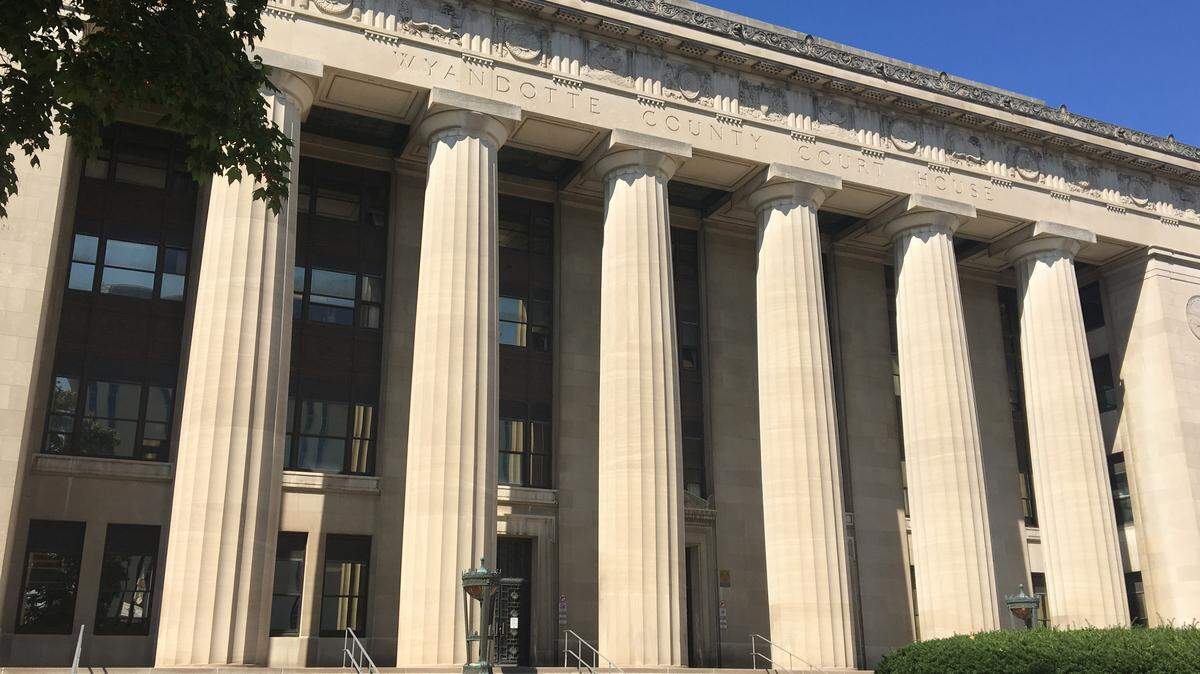
On Monday, Wyandotte County District Court Judge Aaron Roberts took the rare step of tossing Warren’s convictions, finding serious violations by law enforcement in failing to disclose evidence that undermined the credibility of the state’s star witness.
Roberts’ decision centers on a Brady violation that compromised Warren’s right to a fair trial. The governing 1963 Supreme Court case, Brady v. Maryland, requires police and prosecutors to provide evidence that could be favorable to a criminal defendant.
Warren has maintained his innocence while imprisoned at the Kansas facility in Hutchinson for the last 15 years. His lawyers challenged the conviction for a lack of physical evidence tying Warren to the crime and a series of inconsistent statements Brandon Ford gave to police.
The Wyandotte County District Attorney’s Office fought to preserve Warren’s convictions. A spokesman did not immediately respond to The Star’s request for comment on Roberts’ ruling or whether prosecutors will try to retry the case.
The district attorney has 30 days to either dismiss the case or move for a retrial.
Warren remains incarcerated without bond pending District Attorney Mark Dupree’s decision.
Inconsistent statements
On the night of the shooting, Brandon Ford was inside the drug house with Charles Ford, his brother, and LeDoux, his brother-in-law. Charles Ford had a Glock pistol and LeDoux kept an AK-47 within reach, according to court testimony and official reports.
Brandon Ford would later tell police all three were in the living room when an unfamiliar SUV pulled up front. Then there was a knock at the door as Charles Ford went to check and LeDoux was inside the kitchen.
Brandon Ford initially told police he did not know who the shooters were, according to court records, saying he was walking toward the bathroom and heard someone say “where’s the [expletive],” followed by gunshots.
On the morning of Feb.14, 2009, roughly 12 hours after the double slaying, police arrested Warren and co-defendant Dominic Moore at a house across the state line in Kansas City, Missouri.
Both were picked up as suspects before Brandon Ford changed his statement to identify one of the shooters as “Ced” or pick him out of a photo lineup, according to court filings by Warren’s attorneys.
Inside the house, where Warren was visiting when he was arrested, police officers discovered several weapons and drugs stashed in an air duct.
A Kansas Bureau of Investigation agent later testified that a Glock found in the air duct matched two shell casings police discovered at the shooting scene. A lab analysis of that gun found a DNA link to Moore.
Brandon Ford acknowledged providing inconsistent statements at trial. He said that he was actually in the living room and saw Warren and Moore enter the house and start shooting. He said he ducked into a bedroom before retrieving a gun and saw Moore through a cracked door.
No physical evidence
In 2019, Warren brought a new case seeking to throw out his conviction. Lawyers representing him in the case were with the nonprofit Midwest Innocence Project along with Cheryl Pilate, a Kansas City attorney who helped exonerate Lamonte McIntyre after he spent 23 years in prison for a KCK double murder he did not commit.
Along with alibis for Warren, the lawyers pointed to the evidence supporting his innocence including false statements within police reports and an incorrect timeline of detectives identifying him as a suspect.
A lab report for the only gun authorities had connected to the killings excluded Warren as a possible contributor. His DNA was not found on that weapon. His shoes were also excluded from a bloody print, and his fingerprints were not found there.
Further, the lawyers say a Kansas City, Kansas, police detective dropped Brandon Ford off at a psychiatric hospital after interviewing him, recognizing his mental instability. Prosecutors did not disclose that to Warren’s defense team before trial.
Defense lawyers for Warren were also unaware until trial that Brandon Ford had changed his story to say he was sitting on a living room couch when the events unfolded. During questioning on the stand, the witness said he provided this information to prosecutors roughly eight months beforehand.
In a statement Tuesday, Midwest Innocence Project said the defense attorneys did not have prior knowledge that Brandon Ford suffered from serious memory issues and heard voices, amounting to a Brady violation Judge Roberts agreed with on Monday.
This was despite Wyandotte County finding Brandon Ford incompetent to stand trial for a criminal case against him five years earlier because of his mental state.
Warren’s vacated conviction comes at a time of heightened scrutiny over long-closed cases investigated by Kansas City, Kansas, police, especially those with a connection to disgraced former detective Roger Golubski.
Golubski, a homicide captain at the time of Warren’s investigation, faced two federal indictments related to misconduct as a police officer. He is accused of raping or harassing several Black women in the city, sometimes threatening death or the cudgel of the law against those who rejected his advances.
Golubski died in an apparent suicide Dec. 2, the day he was supposed to stand trial. His death drew outrage and disappointment from alleged victims and community activists who had hoped the trial would have further exposed other instances of corruption and wrongdoing in the police department in the 35 years Golubski spent on the force.
This story was originally published December 10, 2024 at 2:28 PM.