Could the Royals move to Johnson County? What to know about former Sprint campus
Johnson County is the latest addition to the list of possible Royals stadium sites.
Multiple sources confirmed to The Star’s Sam McDowell in November that the Kansas City Royals were considering a site near 117th Street and Nall Avenue in Overland Park, among other locations.
Almost 40 acres of largely undeveloped land sit between the former Sprint headquarters and Town Center Plaza.
In April, Jackson County voters struck down a 40-year, ⅜ cent tax that would have funded construction of a Crossroads ballpark and Arrowhead Stadium renovations.
Other options to replace the 51-year-old Kauffman Stadium have included Washington Square Park, Crossroads, East Village and North Kansas City, but no formal plans or deals have been announced.
Information was not available on where a stadium would go on the Johnson County site and whether it would affect the existing office buildings or the nearby Jewish Community Center.
What is on and around the 117th and Nall property?
The 183-acre property is called Aspiria, now owned by a subsidiary of Wichita real estate company Occidental Management. Part of the site houses the former Sprint offices, now occupied with other corporate tenants.
The property is located west of Leawood’s Town Center Plaza, a shopping center with stores, a 20-screen AMC theater and over a dozen restaurants.
Directly north of the plot is the 29-acre Jewish Community Center campus, which contains a pool, theater and K-12 school.
Construction has begun for a go-kart center at 11610 Nall Ave., also north of the Aspiria plot.
The property is located just over a mile south of I-435 and 2.5 miles east of 69 Highway.
Would a Royals stadium fit here?
Approximately 38 acres on the Aspiria plot are undeveloped between Sprint Parkway, Nall Avenue, 117th Street and 119th Street, according to Google Earth. It is unclear if a Royals Stadium would go there or take land from other property owners. The property owner did not respond to a request for comment Monday.
Kauffman Stadium’s lot currently takes up 18.8 acres, according to the Kansas City parcel viewer. Plans for the rejected Crossroads ballpark and entertainment complex called for a 17.3 acre footprint, The Star previously reported.
While Kauffman Stadium has 26,000 parking spots, the Aspiria campus currently contains 12,500 spots spread throughout 14 parking garages, in addition to parking in Town Center Plaza and other nearby developments.
What tenants are based at the former Sprint offices?
A variety of companies have offices at the facility including Hill’s Pet Nutrition, private airplane company AirShare and the T-Mobile corporate offices.
What plans are already in place for the site?
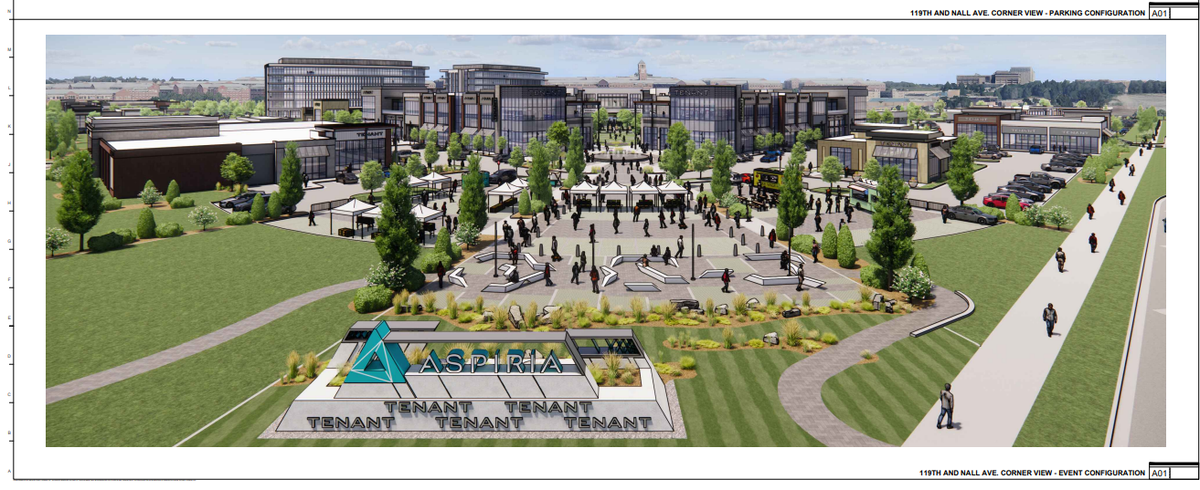
In May, Overland Park officials approved the latest set of plans for a mixed-use development on the undeveloped part of the plot. The plans include 600 apartment units and more than 400,000 square feet of restaurant and retail space, all while retaining the two ponds on the property, according to city planning documents.
Developers have gone through multiple plans for the site in the last four years.
What is the history of the site?
Sprint opened its headquarters starting in the late 1990s, which eventually consisted of 20 buildings. The 3.9 million square foot office space was designed to hold more than 14,000 workers.
When Sprint sold the campus in 2019, there were approximately 6,000 employees and 2,000 contractors working on site, according to Star reporting at the time.
How would a possible Johnson County stadium be funded?
Under a law passed in June, Kansas state lawmakers will be able to issue 30-year bonds for up to 70% of the estimated cost of a professional sports project like a Royals stadium. Called STAR bonds, the program is a way for the Kansas government to provide upfront money for attractions.
Once a STAR bond facility opens, some of the state retail sales tax from the stadium and surrounding business districts would go to paying off the bonds. City or county governments could choose to put a portion of local tax revenue toward the project, though it is not required.
The Star’s Sam McDowell and Jonathan Shorman contributed to this report.
Have more questions about development in the Kansas City area? Ask the Service Journalism team at kcq@kcstar.com.