From the archives: 46 killed in Hyatt collapse as tea dance turns to terror
READ MORE
1981 Hyatt walkway collapse
A look back at the Hyatt skywalk collapse that killed 114 people on July 17, 1981.
Expand All
This story was originally published Saturday, July 18, 1981, in The Kansas City Times.
Editor’s note: The new Hyatt Regency hotel was the host of one of its popular Friday tea dances when two of its skywalks crashed into the lobby on Friday, July 17, 1981.
As the newspaper went to press, the full scope of the tragedy was yet unknown. Eventually, 114 persons would die and 200 would be injured in the most deadly structural failure in American engineering history.
Within four days of the disaster, a professional engineer hired by the newspaper identified the design change that led to the tragedy.
Originally, two skywalks were designed to hang, one above the other, from the ceiling by six suspension rods. Because of difficulty in fabricating, the plans were changed to allow the second-floor skywalk to hang from the fourth floor walkway instead of the ceiling. This grossly increased the stress on the welded steel box beams that made up the higher walkway, leading to the collapse.
Coverage of the disaster and its causes would win a Pulitzer Prize for The Star and The Times.
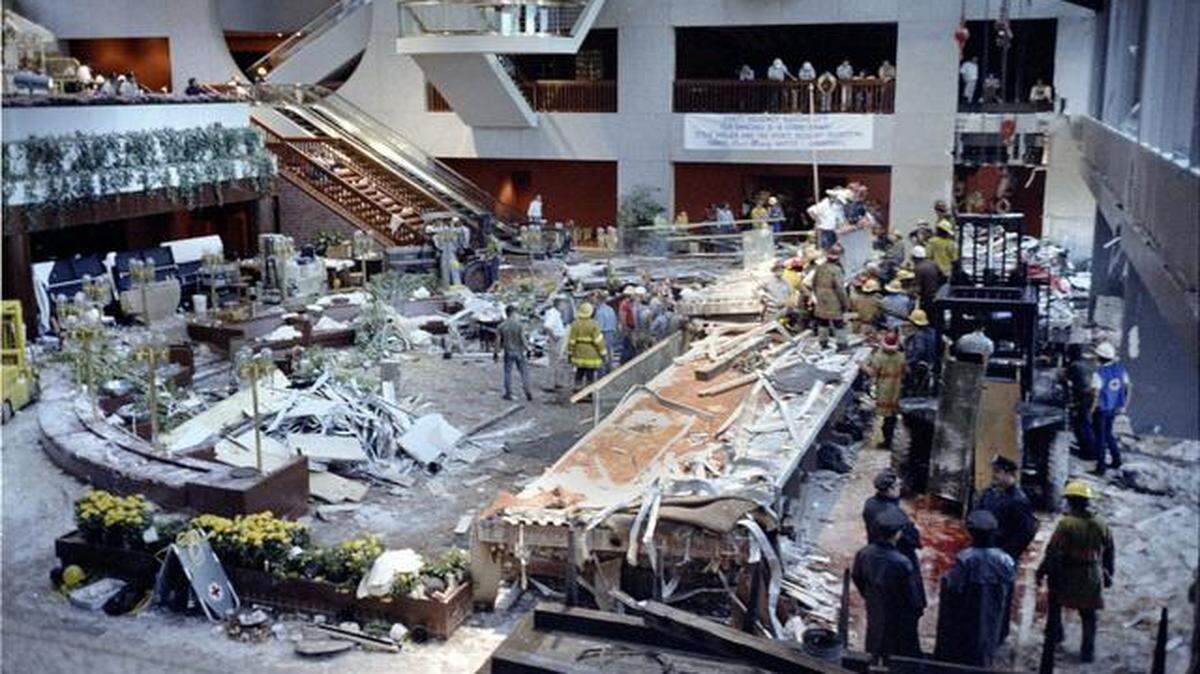
A quiet evening of tea dancing in the lobby of the Hyatt Regency hotel erupted into chaos and terror Friday night when a four-story-high walkway in the lobby collapsed, killing at least 46 persons and injuring at least 82 others.
Dozens of early evening revelers were catapulted into the air at 7:05 p.m. as the walkway collapsed onto a second-floor walkway directly beneath it. That too collapsed, trapping spectators between tons of tangled metal and crumbled concrete.
The number of dead seemed certain to increase as firefighters and other rescue workers worked feverishly with pickaxes, shovels and their hands to rescue people still trapped beneath the mass of broken glass and steel of the fallen walkways.
Police spokesman Sgt. Jim Treece said early this morning that there were still bodies inside the building in addition to the 46 already confirmed dead.
Shortly after 2 this morning, rescuers removed three more injured persons from the rubble. They were described as a boy 12 to 13 years old, a man in his 30s and a woman who was said to be in poor condition.
Treece said he thought there still were four persons trapped in the rubble, but rescuers had heard no sound from them for some time.
“This is the worst disaster I can recall in my 25 years-plus as a police officer,” said Kansas City Police Chief Norman A. Caron. “The closest thing I can recall to compare to this, God forbid, was Korea.”
At about 10:30 p.m. the police moved a crowd of about 2,000 people from the western front of the 40-story luxury hotel which only opened its doors July 1, 1980, as two cranes … moved in.
The cranes were to be used to inch the collapsed walkways up enough to reach the dead and injured.
Shortly before midnight, Caron said, 16 persons were believed to still be trapped beneath the debris, most believed to be dead. Seven were believed to be alive, however, and rescuers were using small tubes to get oxygen to them.
A temporary morgue was set up in the parking garage of the hotel. Dozens of injured were whisked away in ambulances, helicopters, taxis and private vehicles. By 11 p.m., 18 bodies had been taken to the morgue at Truman Medical Center. Names of the dead were not being released until relatives could be notified. …
The blood bank at 4040 Main was engulfed by Kansas Citians wanting to give blood for the injured, and a massive traffic jam was created. …
Near the south end of the lobby, where the remnants of the walkway angled off the wall to the floor, firefighters used chain saws to hack through the debris and 18-inch steel I-beams. Sparks flew and small fires erupted, but they were quickly doused.
Six crushed bodies lay beneath that section of the walkway. One sobbing man flailed his arms in efforts to free himself. He was pinned from the waist down and was beneath a body that separated him from the I-beams.
His cries of, “Oh my God, get this off me please!” sent off a chorus of howls and moans from further beneath the wreckage.
Less than 20 yards away, near the east wall of the lower-lobby floor, rested a large makeshift pallet that bore seven bodies. The body of a middle-aged man was dumped unceremoniously on the pallet by rescue workers who did not have time for ceremony. And then that body too was covered with a water-soaked white sheet, and the scene was all but forgotten. … Hotel workers, members of the media, any person in the hotel before the police cut off access to all but rescue personnel, helped carry the injured to safety. …
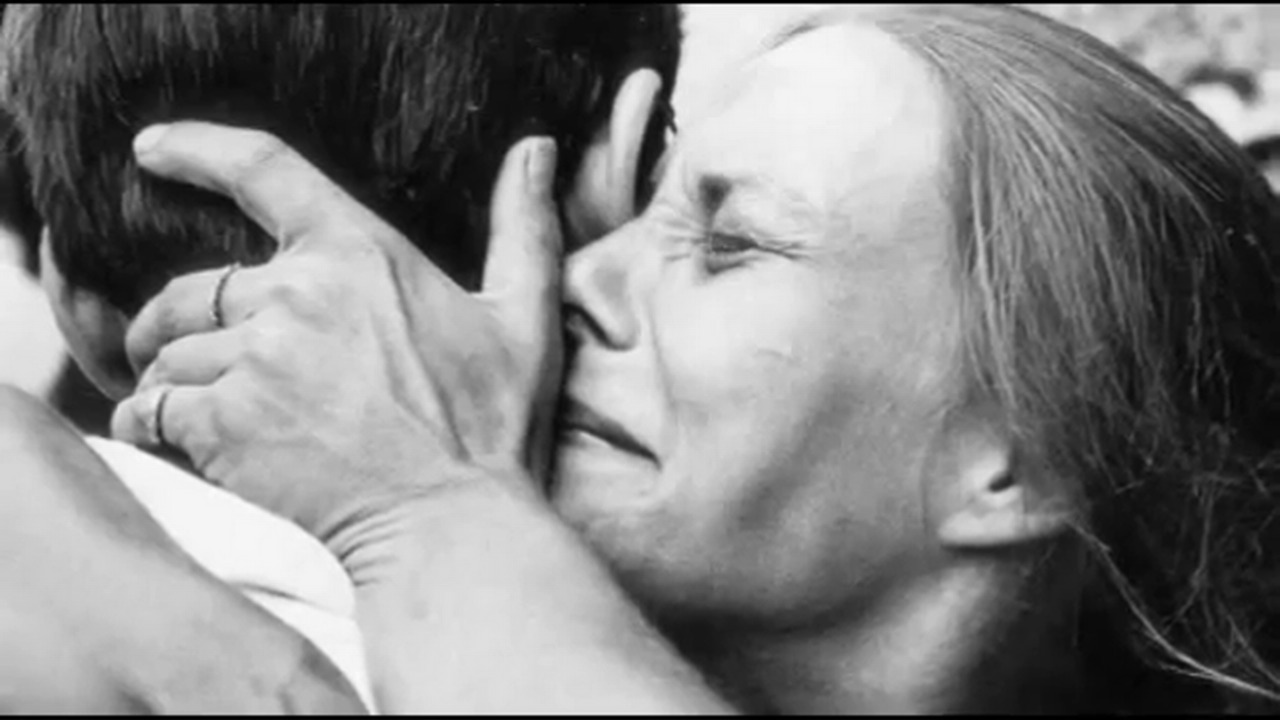
Friends and relatives of those known to have been in the hotel at the time of the collapse stood outside in silent shock or cried desperately and shied away when others tried to offer aid. …
A priest, too busy to identify himself, walked among the dead, carrying a Bible and blessing and absolving the bodies, regardless of faith.
“It’s impossible to know who they are or what they are,” the priest said. …
Kansas City Mayor Richard L. Berkley said at the scene, “There is no excuse for that happening in a virtually new building.”
“Obviously, we have a major fault of some kind,” Berkley said. “We’ll make sure there are corrections in the building code if there are failures in the code. We will certainly have a thorough, comprehensive investigation.”
This story was written by Mike DeArmond with additional information supplied by Mack Alexander, Tim Weiner and Tom Ramstack. All are members of the staff of The Kansas City Times.
This story was originally published September 18, 2005 at 3:01 AM with the headline "From the archives: 46 killed in Hyatt collapse as tea dance turns to terror."