KCK activists may lack leverage over Chiefs, Royals under Kansas stadiums plan
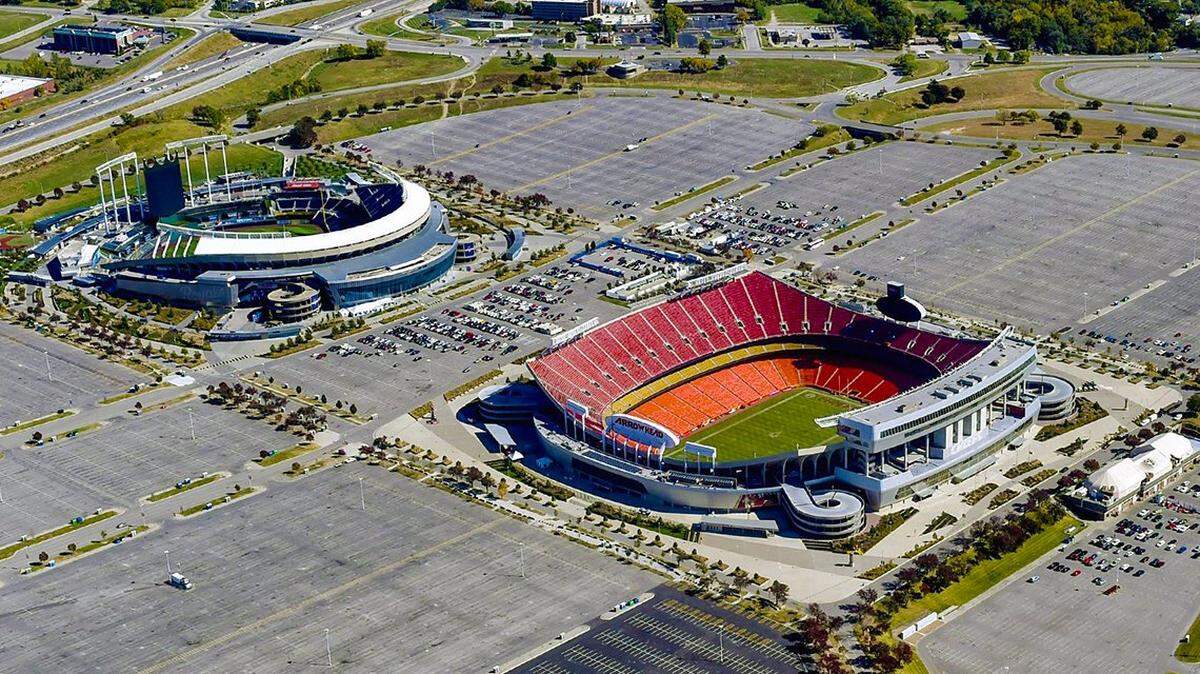
When the Kansas City Chiefs and Royals asked Jackson County voters to approve a stadiums sales tax earlier this year, the teams negotiated with local activists seeking clear community benefits. Both sides campaigned publicly. Royals owner John Sherman stumped for votes.
It was messy, but also democratic.
The Kansas Legislature on Tuesday passed a plan aimed at attracting the teams away from Missouri that relies on potentially billions of dollars in bonds to finance new stadiums. This time, the process will take place mostly behind closed doors – potentially even more so than in Jackson County – with key decisions made by just a handful of officials.
Activists and organizations enjoyed significant leverage during the Jackson County campaign because they could mobilize voters either for or against the sales tax. It’s unlikely to be the case this time, since an agreement with teams won’t require a public vote or a vote of the full Legislature.
That reality has begun to settle in the minds of some activists in Wyandotte County, which has been floated as a potential new home for one or both teams. And as efforts to win the teams progress, some are concerned about their ability to effectively advocate for community benefits.
“Even though it didn’t ultimately get passed on the Missouri side, that model of community partners being at the table and a community benefits agreement being an essential piece shouldn’t be skipped in Kansas,” said Marcus Winn, a community organizer in Kansas City, Kansas.
“If any teams or government agencies were to try to skip that part of the process, just because they can, that’d be a huge red flag.”
Under the proposal, Kansas could issue Sales Tax and Revenue, or STAR, bonds to finance up to 70% of the costs of stadiums for one or both teams. The bonds would be paid back over 30 years by tax revenue from within the stadiums and surrounding development, along with sports betting and some Lottery revenues.
Secret deliberation OK’d
The bill empowers the Kansas secretary of commerce, Lt. Gov. David Toland, to negotiate an agreement with the Chiefs or Royals. Cities and counties also have the option to negotiate directly with the teams, but aren’t required to participate.
Any proposed agreement would go before the Legislative Coordinating Council, or LCC – comprised of the eight highest-ranking lawmakers from both parties – for approval. Republicans hold a 6-2 majority on the council.
The LCC would be allowed to deliberate in secret. Only after the LCC approves an agreement would the document become public. Rejected agreements would remain confidential. In effect, the public would only learn what’s in a deal between Kansas and the teams after the fact.
“Fundamentally, if we’re going to ask the LCC to approve something so huge, the public ought to have some notice of what it is they’re being asked,” House Minority Leader Vic Miller, a Topeka Democrat, said.
STAR bonds need reform to allow for more public input, said Sen. Mike Thompson, a Shawnee Republican. The bill doesn’t contain an ability for the Legislature or voters to sign off on a final deal.
“While I appreciate the LCC as an added check, I also believe that any deal of this magnitude should be subject of the Legislature or even the people within the county or counties in which a district would sit,” Thompson said.
Sen. J.R. Claeys, a Salina Republican who helped spearhead the STAR bonds legislation, said making agreements public before LCC approval would essentially give other states and cities a playbook to copy.
“At this point you would need to, through our guardrails that we’ve set up here, decide that you’re going to trust the Department of Commerce is going to create a deal that is agreeable by the Legislative Coordinating Council that is represented by the leadership that we have voted upon in this body,” Claeys said on the Senate floor.
During the lead up to the Jackson County vote, the Chiefs and Royals pledged to contribute a combined $266 million over a span of 40 years toward various social and economic causes. The final agreement was a far cry from what community groups had initially asked for from the teams.
The Chiefs said their share would be $126 million, and the Royals would give $140 million. The money would have been distributed by separate governing boards, which would have been appointed by the county and the teams. Those boards would have then decided specifically where the money would go.
Eyes on Wyandotte
The Kansas legislation doesn’t name a location for either team. But much focus has been on Wyandotte County as a potential site thanks to the availability of land, its proximity to the current home of the Chiefs and Royals and a track record of successful economic development projects made with STAR bonds.
Commercial development can be a fierce political issue in Wyandotte County, where the western end has transformed into a top state tourism destination and other communities eastward face serious economic struggles, including high poverty rates.
In late December, Unified Government commissioners adopted a new local ordinance that established a community benefits fund.
The fund relies on developer fees to pay for local projects that include affordable housing, senior home repair or child care programs. It was the product of a task force initiated by Mayor Tyrone Garner, who has pointed to local tax relief and greater economic equity as a priority of his tenure.
Activists who spoke to The Star on Tuesday about the incentives forwarded by state lawmakers highlighted clear community benefits as a necessity of any deal — should one come to pass.
Lora McDonald, executive director of MORE2, a Kansas City metro social justice organization, said development in Wyandotte County is an entirely different story than in Jackson County. And she pointed to the areas surrounding the current stadiums on Kansas City, Missouri’s eastern border.
“I think the voters and the people of Kansas should demand and expect more from projects like these and from economic development,” McDonald said. “If you look at Kansas City, Missouri and the area around the stadiums, it’s not a desirable area. So, what do they want that to be like at the end of the day? And how do they want to benefit from this coming to their community other than bragging rights?”
“If we see a window, we would like to be trying to get in it,” McDonald added. “But I don’t see one. I don’t know what’s gonna happen.”
Louise Lynch, of Wyandotte County’s Community Conscience Action Network, questioned why the conversation around incentives had reached Topeka before a public forum locally with elected officials.
“That’s a problem. Not to discuss the good, the bad and the ugly, or any of it,” Lynch said, pointing to a process that has “rapidly” unfolded in the statehouse.
“We are very concerned,” Lynch said. “Are we going to have a seat at the table? Or are we going to be told what’s going to happen and how it’s going to affect our lives whether we like it or not?”
This story was originally published June 19, 2024 at 6:00 AM.