Johnson County mayor responded to attempted ouster. It’s now reason for new recall push
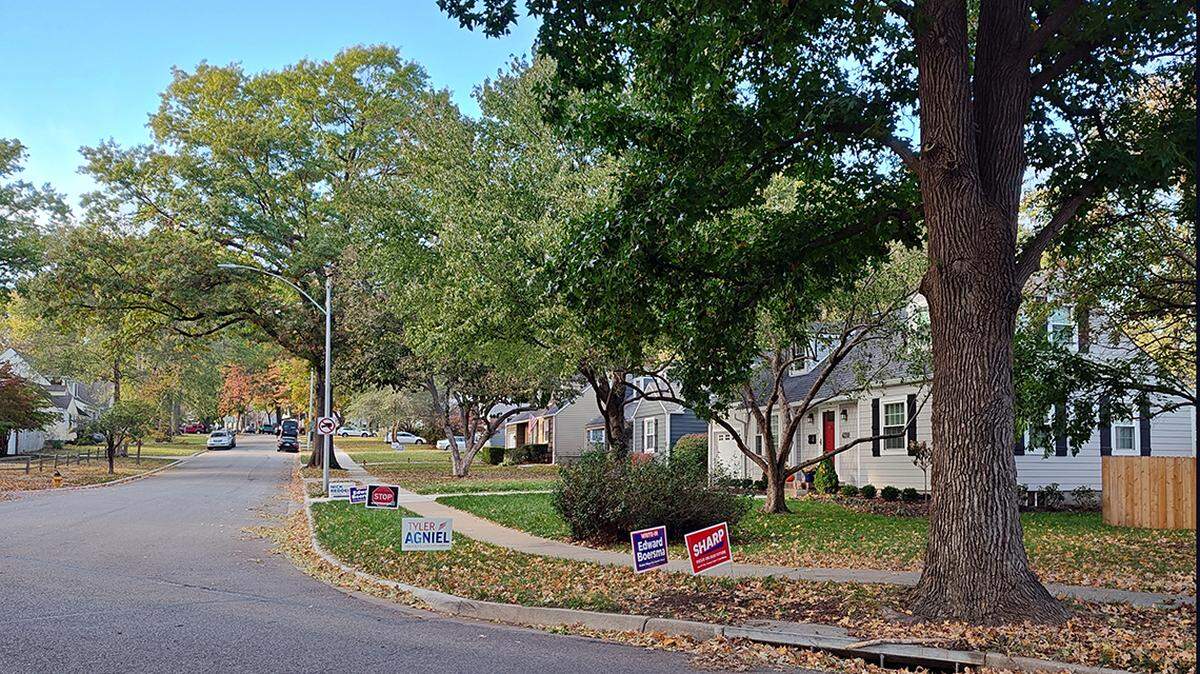
After eight past attempts, a group of Prairie Village residents now has the go-ahead to collect signatures on a petition to recall the mayor — the latest tension in an ongoing battle over city housing policy.
Some residents over the past year have aimed to put the recall of Mayor Eric Mikkelson on the ballot, submitting petitions casting multiple accusations against him. Each time, Johnson County District Attorney Steve Howe ruled the petitions were insufficient and that their claims did not meet the grounds for recalling a local official under state law.
But last month, Howe found the ninth petition met statutory requirements, meaning the group can now take the next steps to try to bring the recall question to a public vote.
The group accuses Mikkelson of misconduct in office, alleging he misused taxpayer dollars by having city-funded consultants help him advocate against previous recall petitions.
Mikkelson said the accusation is false and amounts to damaging, “abusive smear tactics.”
“There is no misconduct, no misuse, no wrongdoing, no private benefit,” Mikkelson said in a statement.
Howe did not investigate the accusation in the petition or determine whether it is true. He only found that the claim would fall under the reasons for an elected official to face recall, which in Kansas include a felony conviction, misconduct in office and failure to perform duties under the law.
The core of the recall committee’s accusation can be found in an email thread late last June between Mikkelson and Shockey Consulting Services. The city hired the firm to help with communication as a discussion about affordable housing and zoning laws caused a firestorm in the pricey suburb, pitting neighbors against one another and directing fierce anger toward the mayor and council.
The emails show the firm helped advise Mikkelson on a statement he provided to the Johnson County Post regarding an article about the first four failed recall petitions.
The recall committee alleges the messages show the mayor used city-funded consultants for personal, political gain to advocate against the effort to remove him.
Mikkelson argues the communication was appropriate and only meant to inform the public and correct misinformation. The consultant firm said the city was never charged for the exchange.
“It is ironic that it was the very process of trying to fight off the earlier recalls that support this recall,” said Edward Greim, an attorney representing the recall committee. “I think the mayor became really personally invested in it. He became personally involved, and I think he just lost his better judgment and allowed his mistakes in responding to the other recalls to become a reason to be recalled.”
Sheila Shockey, founder of the firm, said the company did not bill the city for any communication related to the recall effort, saying that the email exchange last June took less than 15 minutes, not enough time for the firm to charge for it, and did not result in any marketing materials being produced. She said the firm’s “time is invoiced for meetings and deliverables.”
Shockey and the mayor both said the recall petition is based on falsehoods, and that the statement was educational only and did not advocate for any political position. Public funds can be used to educate the public on issues before voters, but not to promote a position on them.
“All those city emails show good government in action, from the inside of the sausage factory,” the mayor said.
Mikkelson said the statement came as the city was “enduring a disinformation onslaught,” and that “Prairie Village can’t back away from communicating the truth about the city, especially in the face of politically-motivated smear. To do otherwise would be municipal malpractice.”
Shockey argued the recall committee’s claims are defamatory and that her firm is becoming “collateral damage in a political battle that is not ours.”
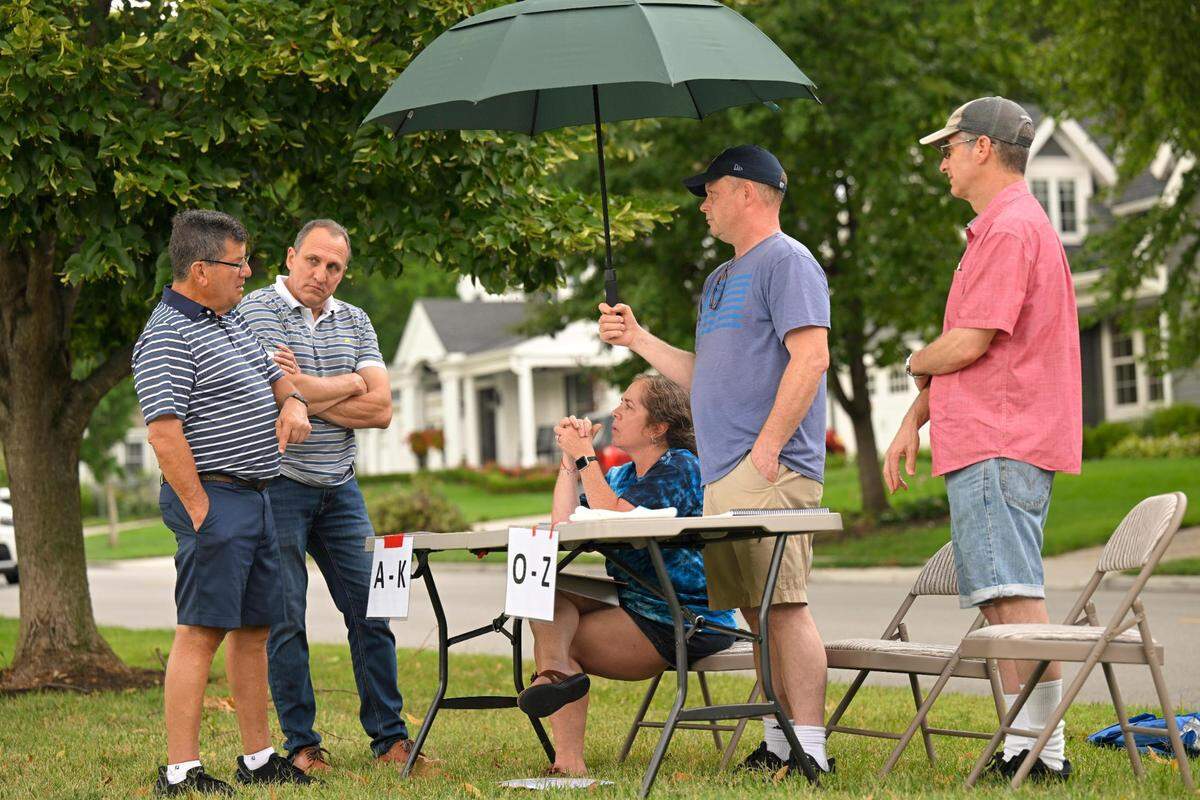
Since Howe’s decision last month, the recall committee has set up shop at a city park over several evenings to collect signatures on the petition. The group has 90 days, until mid-August, to collect more than 4,000 signatures for it to be valid and potentially placed on the ballot.
The mayor has 30 days, which started on May 20, to file a court order appealing Howe’s decision. Mikkelson said he is weighing whether to do so.
If the petition were to eventually make it on the ballot, Mikkelson would be allowed under state law to submit a 200-word statement to the county election officer justifying his conduct in office. And it would be up to voters to decide whether the petition’s claims are true and warrant the mayor’s removal.
How did Prairie Village get here?
Prairie Village remains embedded in a tense debate over whether leaders should try to tackle the affordable housing shortage by changing zoning laws to allow for a wider variety of residential development.
City leaders have prioritized addressing the lack of attainable housing for many working families, as homes on average sold for $616,988 in the city last year, a 12% increase from the year before, according to the Johnson County appraiser’s annual report.
That conversation has sparked widespread fears among many Prairie Village residents, who worry the already built-out city could invite more dense, multifamily development — like apartment buildings or duplexes — and change the character of their neighborhoods.
The debate grew more contentious and political as residents opposed to zoning changes last fall attempted to get petitions on the ballot that would restrict rezoning, change the city’s form of government to limit mayoral powers and halve the size of the council.
Other residents organized to support affordable housing initiatives in the city known for tearing down ranch-style homes to make way for McMansions. Several neighbors and officials criticized the petitions to remake the city government, calling them unconstitutional as half the council would have been ejected from their seats midterm.
While those petitions did not make it on the ballot, the fight led to one of Johnson County’s most closely watched elections this past fall. Four candidates, supported by residents who opposed changing zoning laws, won seats on the 12-member council. It was a bright spot for the local GOP, which backed those winning candidates and thus saw their greatest success in Prairie Village during (technically nonpartisan) municipal elections that largely went to Democrats across Johnson County.
Two incumbents, who support the housing work, retained their seats.
Mikkelson, a Democrat, and other city leaders argue the debate has led to widespread misinformation in the community about their goals with housing policy and what changes are actually on the table. While trying to combat that and temper outrage, the city contracted with Shockey Consulting Services last summer to help handle its public communications.
“We were hired to help engage the community and communicate clearly on many complex issues facing the community, including petitions around housing and form of government,” Shockey said. “This is the type of work we have been doing for city staff members for 26 years in this region.”
Meanwhile, a few residents, who have said they are unhappy with the direction of city leadership and question the mayor’s conduct, were submitting petitions to the district attorney’s office in an effort to recall Mikkelson. Those petitions were submitted by Mike Sullinger, who describes himself as politically independent, as well as John Anderson and Stephen Snitz, two founding members of the Northeast Johnson County Conservatives.
The petitions made several accusations, including that Mikkelson had a conflict of interest and impaired judgment during the housing debate because he sits on the board of the nonprofit United Community Services, which promotes affordable housing solutions. Howe rejected that claim as a ground for recall, saying the group did not show the mayor failed to perform his duties in office.
Another claim was that the mayor failed to address police misconduct, saying he did not terminate officer Rolando Swaby. The officer was allowed to stay on the job for 19 months after department officials were notified he had asked a woman for sex after arresting her, according to previous Star reporting.
Howe rejected that claim as well because the mayor does not have the authority to terminate a police officer, or any city employee. That duty falls with the city administrator under the city code.
Howe ruled that eight such petitions were insufficient. But on the ninth attempt, the group saw success, allowing them to move forward.
The recall attempt
The ninth petition, which was submitted by three new residents, accuses the mayor of misconduct in office, alleging he used a city-funded consultant firm to advocate against the recall effort.
Shockey has fought against some of the most basic claims in the petition, including language calling the firm “political consultants.” She said the firm “is not a political consulting firm and has never worked on a political campaign. We are community engagement and planning specialists.”
And she said the firm did not charge the city for any communication about the recall petitions. Invoices, provided to The Star, show the city paid Shockey more than $20,000 for work involving a communications plan, social media strategy, ward meetings and housing workshops.
The recall committee’s accusation focuses on communication the mayor had with the firm over email. One email from June 7 shows the mayor asking the city administrator if Shockey should help prepare the city’s response to allegations included in the previous recall petitions regarding the police department and city operations.
Later in the month, the local news outlet Johnson County Post was preparing a story about how Howe’s office rejected the first four recall petitions.
City emails, obtained by the recall committee through open records requests, show that Mikkelson was working on a statement to provide to the reporter. Mikkelson emailed a Shockey consultant about his statement, and the two went back and forth editing it. The consultant also offered to call the reporter about the coming story.
The mayor’s statement, as it appeared in the Post’s story, read:
“I’m honored to be one of the many unpaid elected officials who, along with staff, work hard every day to make Prairie Village a prosperous, safe and welcoming place to live and work. Thanks to those efforts and our residents, our city is in great shape and full of potential.
“Unfortunately, repeated, failed and false recall petitions from those with political and personal axes to grind don’t do anything to strengthen our community. Instead, they create unnecessary divisiveness, while wasting taxpayer resources.
“And these are not the only recent petitions proposed to radically disrupt our government, overturn fair elections and structurally collapse Prairie Village government into the hands of a few.
“While similar extreme tactics have sadly become the norm at other levels of government, they are not The Prairie Village Way. Over 94% of Prairie Village voters recently voted for me to lead with this team again. And so that’s what I’ll do — continue working to keep Prairie Village strong and vibrant. I look forward to continued, good faith conversations with residents about their needs and ideas for our community’s future.”
Education or advocacy?
Both sides have focused much of the debate on the content of Mikkelson’s statement.
Howe, in deciding on the latest recall petition, cites a Kansas attorney general decision affirming that public funds may be used to educate and inform the public on issues to be voted on by the electorate.
City funds cannot, though, be used to promote or advocate a position on a matter before voters.
Greim, representing the recall committee, is a partner with Kansas City’s Graves Garrett Greim law firm, which largely tackles high-profile national political cases, including representing several witnesses who testified during the special Congressional investigation into the U.S. Capitol attack on Jan. 6, 2021.
But the firm as of late has dipped its toe in Prairie Village’s small-town politics, including representing a man who recently sued the city after unsuccessfully applying for a vacant council seat.
“The line is basically this: As soon as you are advancing the personal interests of someone, you are going beyond just educational,” Greim told The Star. “When you cross that line, you are now using public funds for an impermissible private purpose.”
The recall committee argues that Mikkelson did just that in using Shockey to help advise on his statement. The group contends that the mayor’s statement dove too deeply into the politics at play and helped him advocate against the recall.
Greim also shared emails with The Star showing the city administrator working with Shockey to prepare a statement from the city’s point of view, which reads, the “recall effort is a matter that does not involve City operations,” deferring the media’s questions to Mikkelson and Howe’s office.
But Mikkelson and Shockey counter that the statement was appropriate under the law and only used to educate the public. It did not state that voters should support or reject any ballot initiative, for example.
Mikkelson said it was important to use the firm to help correct misinformation “about the police department, housing policy, city employment procedures and city personnel.” That alone, he said, was the scope of the communication.
“In all cases we were discussing how best to effectively, efficiently and professionally communicate with our residents on city issues, including through the media,” the mayor said.
And the mayor has emphasized that there was no valid recall petition at the time of the statement, since Howe had rejected all of them at that point.
Shockey said, “We did not advise the city to advocate for the mayor regarding any of the petitions” and that, “We followed state law in our scope of work and activities.”
“The statement made from the Mayor was on behalf of the City in response to a media inquiry,” Shockey said, adding that the firm “advised the Mayor to shorten his response … and to speak broadly to the petition process and the need to find common ground moving forward.”
The mayor has retained Kansas City attorney Mark Johnson to represent him, who told The Star the allegations are “without merit, both factually and legally. The facts don’t justify any action being taken, neither does the law.”
Max Kautsch, a Lawrence attorney and expert on Kansas open government law, said that, “If we’re being fair, it is up to voters to decide whether this email constitutes advocacy or education.”
Whether the communication was appropriate, as well as Shockey’s statement that no city funds were used for messaging around the recall attempt, have become main talking points as residents and officials argue for and against the mayor’s recall.
Petitioners are working on gathering the required number of signatures — 40% of the votes cast in the last mayoral election within the 90-day deadline. Mikkelson ran unopposed for a second term in 2022. The recall committee needs just over 4,000 signatures.
Mikkelson’s term ends in 2027.
Officials believe this is the first recall petition to make it this far in the past 15 years in Johnson County. The last effort in 2010 resulted in voters recalling two Gardner City Council members.
This story was originally published June 5, 2024 at 6:00 AM.