
This medicine can reverse fentanyl overdoses. Where to find free naloxone around KC
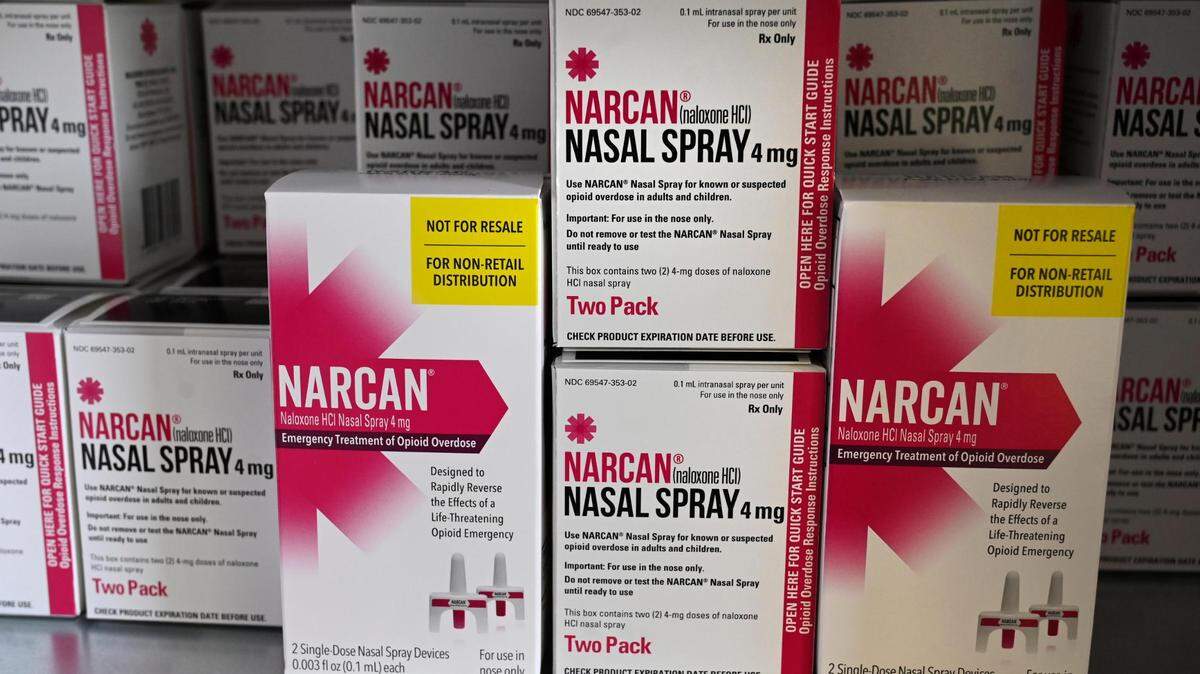
Naloxone, often known by its brand name Narcan, is a medicine designed to reverse an opioid overdose.
Earlier this year, the U.S. Food and Drug Administration (FDA) approved it for over-the-counter use, which means anyone can get it without a prescription from a pharmacy or a public health organization like your local health department.
It comes in two forms — nasal, which you insert into your nose like an allergy spray, and intramuscular, which you inject like you would an EpiPen to treat an allergic reaction.
You can administer naloxone to anyone experiencing a suspected overdose from an opioid like fentanyl, heroin, oxycodone or morphine.
According to the FDA and the Centers for Disease Control and Prevention, naloxone is safe to use even if you’re not positive someone is overdosing from an opioid, and it’s even safe for small children. If someone doesn’t have opioids in their system, the medicine won’t hurt them.
Research shows that access to naloxone doesn’t increase drug use or the risk of an overdose — like how access to a fire extinguisher doesn’t increase the spread or risk of a fire.
“It’s important that as many people get (naloxone) as possible, because you don’t know who may be affected (by the opioid crisis),” said Terrell Sage, a public health specialist for the Independence Health Department.
“The more people who have the tools to help, the more prepared we will be as a community to make sure that no one is dying from an opioid-related overdose, especially from fentanyl.”
Who should carry naloxone?
The CDC recommends that everyone who uses opioids carry naloxone — including those whose opioids were legally prescribed. People who don’t use opioids can also carry naloxone in order to help those who do in the event of an overdose.
Narcan’s manufacturers recommend storing naloxone in a temperature-controlled place, preferably at temperatures between 36 and 77 degrees. Avoid freezing it or exposing it to extreme heat. However, a recent study found that the medication remains stable even after short-term exposure to extreme temperatures.
How to recognize an overdose
According to the CDC, these symptoms can point to an overdose:
Small, constricted “pinpoint pupils”
Falling asleep or losing consciousness
Slow, weak or no breathing
Choking or gurgling sounds
Limp body
Cold and/or clammy skin
Discolored skin (especially in lips and nails)
How do I use naloxone?
To administer nasal spray naloxone, follow these simple steps:
Call 911 immediately to inform them of your medical emergency and your location.
Remove the naloxone cartridge from its packaging.
Hold the nozzle between your index and third finger, with your thumb on the plunger at the bottom.
Insert the nozzle into one nostril of the person experiencing an overdose.
Firmly press the plunger to release the spray into their nose.
Lay the person on their side to prevent choking.
Wait a few minutes to see if the person becomes responsive. If they don’t, you can administer naloxone again in the other nostril.
Stay with the person until emergency assistance arrives.
If you call 911 to report a drug overdose, could you or the person experiencing an overdose be arrested?
The laws vary between Missouri and Kansas.
Missouri has a “Good Samaritan” law that prevents the person who overdosed and the person who called for help from being arrested for possession.
Kansas is one of only a few states in the country that does not have such a law on the books.
Where can I get naloxone in Kansas City?
Naloxone is available at pharmacies, clinics, health departments and an array of nonprofits around the metro.
A prescription is no longer needed to buy naloxone, but a two-pack of naloxone nasal spray costs around $45 at Kansas City pharmacies.
Kansans can request free naloxone by visiting bit.ly/kansasnaloxone, and Missourians can request free naloxone by visiting bit.ly/missourinaloxone.
Individuals across the KC metro can also get free naloxone from the following locations during open hours. Unless otherwise noted, some may ask you to provide your ZIP code, but you don’t need to provide any other personal information to get naloxone.
Self-service naloxone distribution boxes:
Kansas City Health Department: 2400 Troost. Ave., Kansas City — Monday to Friday, 8 a.m.-5 p.m.
Cass County Health Department: 1411 S. Commercial St., Harrisonville — Monday to Friday, 8 a.m.-4:30 p.m., find additional Cass County box locations at casscounty.com/2501/opioid-response
Clay County Health Department: 800 Haines Drive, Liberty — Monday to Friday, 8 a.m.-4:30 p.m.
Available at the front desk:
Independence Health Department: 111 E. Maple Ave., Independence — Monday to Friday 8 a.m.-5 p.m.
Jackson County Public Health: 3651 NE Ralph Powell Road, Lee’s Summit — Monday to Friday 8 a.m.-4 p.m., must be 18 or over, need to provide ZIP code and age
Platte County Health Department: 7925 NW 110th St., Kansas City, Missouri — Monday to Friday, 8 a.m.-4:30 p.m.
Wyandotte County Public Health Department: 619 Ann Ave., Kansas City, Kansas — Monday, Tuesday, Wednesday and Friday, 8:30 a.m.-5 p.m., Thursday 8:30 a.m.-noon and 3-6 p.m.
First Call KC: Monday to Thursday 9 a.m.-5 p.m. For delivery, call ahead to schedule. Can also deliver discreetly, call or text 816-384-1729
Good Samaritan Center: 108 S. Thompson Avenue, Excelsior Springs — Mondays, Wednesdays and Fridays 9:30 a.m.-3:30 p.m.
KC Care: 3515 Broadway Blvd., Kansas City — Monday and Tuesday 8 a.m.-8 p.m., Wednesday to Friday 8 a.m.-5 p.m.
North Kansas City Hospital Emergency Department: 2800 Clay Edwards Drive, North Kansas City — available 24/7 by walking in triage
You can find a more comprehensive map of Missouri organizations that provide naloxone at nomodeaths.org/where-to-get-naloxone.
DCCCA is working to bring naloxone vending machines to Wyandotte and Johnson counties in the coming months. More information will be available at dccca.org/naloxone-program.
Download and print a Kansas City harm reduction guide
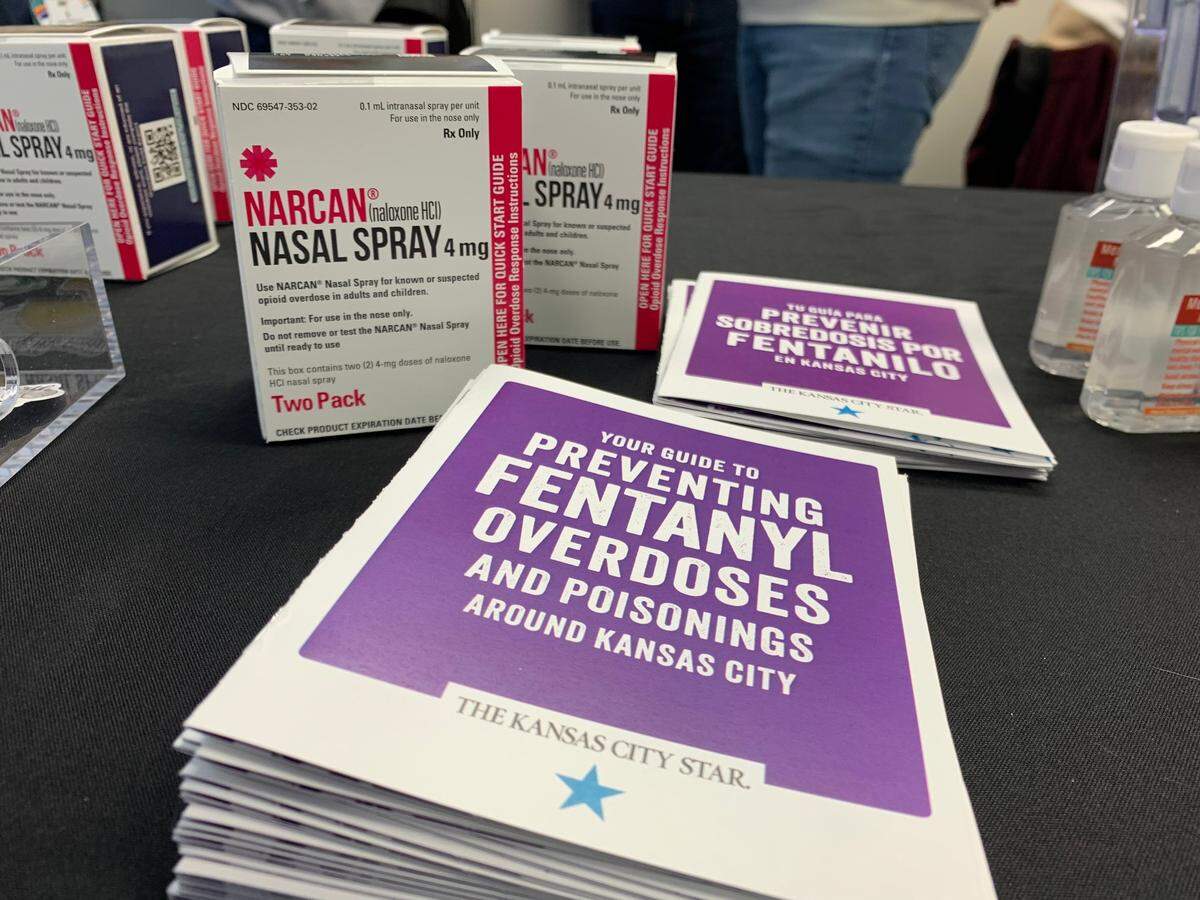
In November, The Star partnered with six local public health organizations and together distributed about 500 boxes of naloxone across the metro at events ranging from a Dia de Muertos festival to a farmers market to a free community laundry day.
As part of the events, we distributed booklets with information and local resources to make it easier to prevent overdoses. We want anyone who would find this information useful to have access to it.
Below are two files available for download, one where some of the pages are flipped upside down, because there doesn’t seem to be one standard way for printers to work.
How to print your own booklet: Download whichever file will work best based on how your printer handles two-sided files. Print both pages, and fold them in half. The page numbers are labeled as a guide.
You can email Allison Dikanovic at adikanovic@kcstar.com with any questions about the guide.
This story was originally published November 2, 2023 at 6:10 AM.
.jpg)