
New study shows poor air quality in Kansas City. How to stay safe from pollution
Kansas City’s air quality received low grades from the American Lung Association Wednesday in the group’s annual ‘State of the Air’ report.
The report ranks cities and assigns grades to counties around the country based on the number of high-pollution days they experienced during the period from 2019 to 2021.
“Nearly 36% of Americans — 119.6 million people — still live in places with failing grades for unhealthy levels of ozone or particle pollution,” the report found.
We talked to a local air quality expert and consulted the report’s recommendations to get the best tips on how to stay safe from air pollution in the metro. Here’s what we learned.
How bad is air pollution in the Kansas City area?
The report assigned grades on two metrics: daily ozone levels and daily particle pollution levels. Both of these pollutants can cause negative health effects, especially in vulnerable groups like children and the elderly.
The report identified ten key groups who are most impacted by poor air quality. These groups include children, seniors, people with asthma, pregnant people and people with other health conditions as well as people of color and those living in poverty.
“The burden of living with unhealthy air is not shared equally,” the report stated. “Although people of color are 41% of the overall population of the U.S., they are 54% of the nearly 120 million people living in counties with at least one failing grade.”
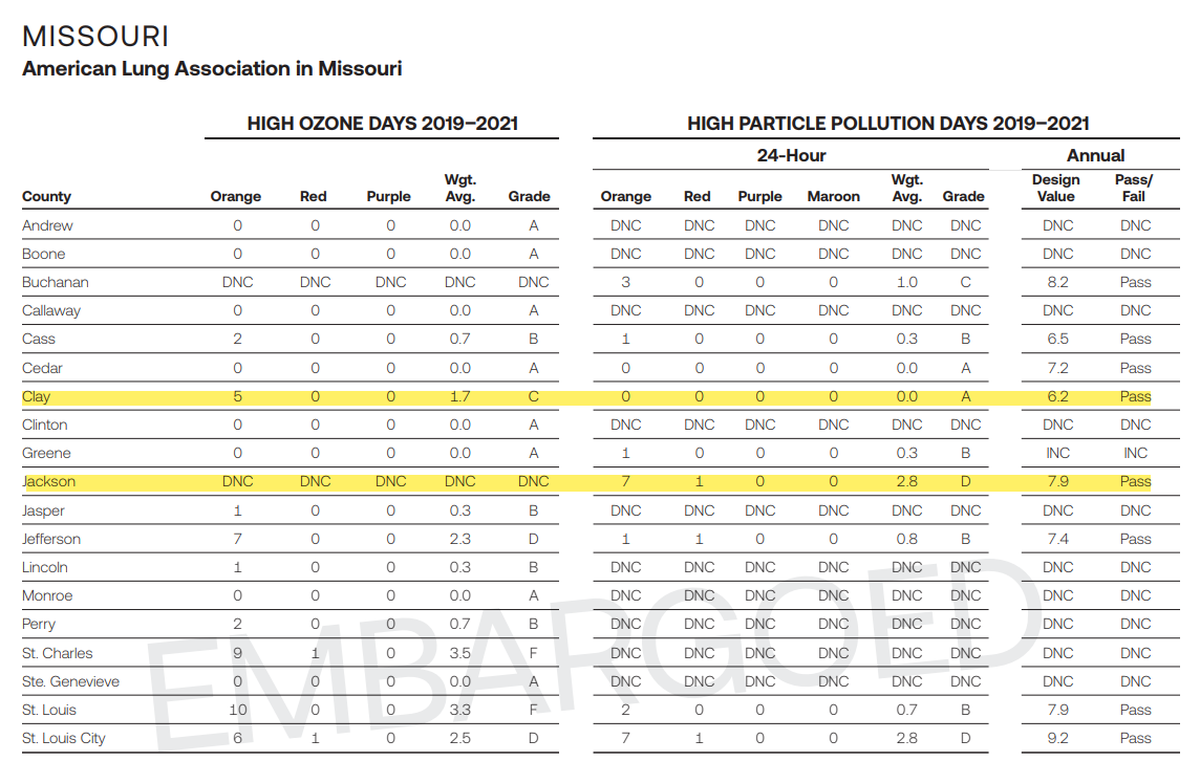
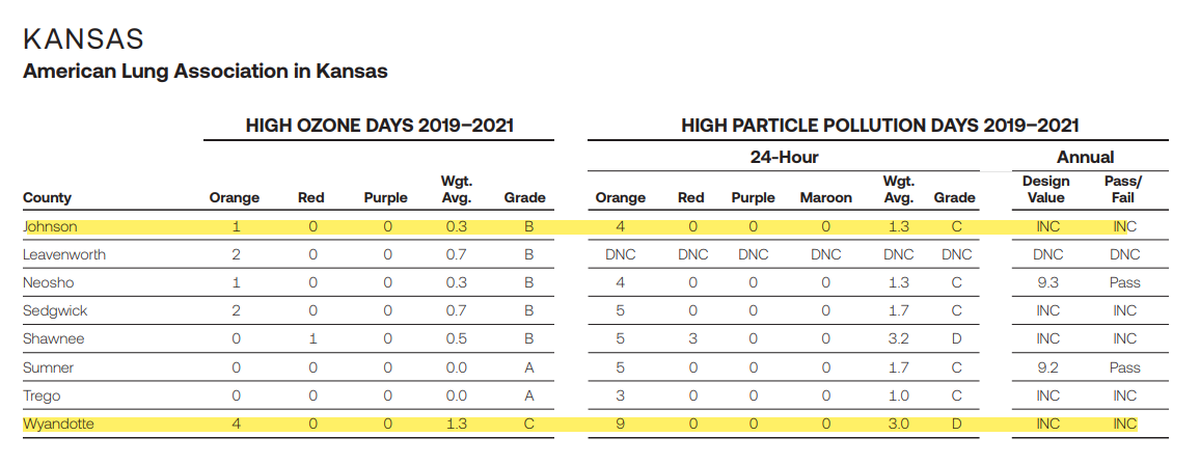
You can see how local counties in Missouri and Kansas were graded in the images below.
Particle Pollution: This type of air pollution is composed of tiny particles of soot, smoke, dust and chemicals that are commonly found in urban and industrial areas. These particles, often too small to see, can lodge deep in the lungs and even enter the bloodstream.
According to the EPA, the most common type of particle pollution comes from emissions from power plants, industries and vehicles.
Jackson County received a D grade on its particle pollution levels for having eight high-level days during the reporting period. Nearby Clay County saw none, earning it an A grade, while Platte County was not included in the report.
In Kansas, Wyandotte County received a D for its nine high particle pollution days, while Johnson County got a C with four of these days.
Ozone Pollution: Missouri was recently cited by the EPA for its high levels of ground-level ozone, also known as smog.
Ozone is formed when nitrous oxides, a common emission from any machines or facilities that burn fuel, interacts with the air. Breathing in ozone can harm the respiratory system and lead to other health problems like asthma.
The Mid-America Regional Council (MARC) tracks ozone levels in the metro, but does not have any ozone monitors in Jackson County.
Missouri’s Department of Natural Resources also monitors air quality around the state, but its devices do not measure ozone levels, a Jackson County spokesperson told The Star.
In Missouri, Clay County received a C grade in this category for having five high-ozone days during the reporting period. Platte County wasn’t included in the report, and Jackson County did not receive an ozone grade because daily ozone level data was not available.
In Kansas, Wyandotte County got a C with four high-ozone days, while Johnson County got a B with one high-ozone day.
What can I do to avoid the effects of air pollution?
The American Lung Association included recommendations for air safety measures individuals can take in their communities. We also consulted with local air quality expert Beto Lugo Martinez, the president of the Kansas City nonprofit CleanAirNow and a member of the environmental justice advisory council at the Health Effects Institute. Here are a few tips to help you breathe easier:
Check your local air quality daily. You can do this by visiting airnow.gov and entering your ZIP code, or by scrolling down to the air quality section on most weather apps. Be cautious when the air quality rating is in the “orange” zone or higher — these indicate that the air may cause irritation to high-risk groups.
“When the air is bad, move your exercise plans and other activities indoors,” the association recommended. Learn more about how to keep your indoor air safe below.
Reduce your own air pollution output. We all have a role to play in reducing air pollution both outdoors and indoors. Reducing your use of gasoline-fueled vehicles outdoors and natural gas appliances indoors is a good place to start.
Avoid lighting fires when you can: “Don’t burn leaves or trash, and avoid burning wood whenever possible,” the report advises.
Even using harsh cleaning chemicals or burning candles indoors on a regular basis can increase the particulate matter in your home, Lugo Martinez told The Star. Consider burning candles and spraying cleaners in well-ventilated areas and choosing those without added scents.
Lugo Martinez added that socioeconomic conditions can also contribute to the burden of air pollution both within the home and beyond it.
“Those living in substandard housing do not have the resources to tackle indoor or outdoor pollution. So the things people can do to reduce indoor air pollution are not accessible to everyone,” he said.
Use caution around gas stoves. According to the EPA, natural gas-burning stoves produce harmful pollutants like carbon monoxide and nitrogen dioxide. If you have an exhaust hood over your stove, make sure it vents to the outdoors. If you don’t, try to boost the air flow through your kitchen by using an exhaust fan or opening doors and windows.
Improve the ventilation in your home. This doesn’t have to mean investing in a brand-new HVAC system. Using inexpensive home air filters and changing the filters in your current HVAC system regularly are great places to start.
Check behind the air vent panels in your home or inside the front of your air conditioner to find out what filters you already have that may need replacing. Lugo recommended using MERV-13 filters, which can catch extremely small particles — learn more about how the EPA rates air filters here.
“This is not going to solve the climate crisis or reduce (outdoor) pollution,” Lugo Martinez told The Star. “But when it comes to indoor air quality, you know, there’s a lot of things community members can do.”
Do you have more questions about air quality in Kansas City? Ask the Service Journalism team at kcq@kcstar.com.
.jpg)