Notorious truck-eating KC bridge may go hungry after agreement reached to install fix
A bridge notorious for devouring trucks whose drivers fail to head low clearance warnings is about to go on a planned diet after Kansas City has reached a cost-sharing agreement with its owner.
The Kansas City Terminal Railway Company has agreed to split the cost for overhead warning curtains that will be installed on each side of the Independence Avenue bridge east of downtown, according to Shawn Lauby, director of safety and administration for the railway.
The railway will contribute $56,000 while Kansas City will contribute $60,000, said Sherae Honeycutt, a spokeswoman for the city. The money will come from the 3rd and 4th districts Public Improvement Advisory Committee funding.
The final estimate of the project and possible installation date of the curtains have not been determined, she said. The project began in 2018 when the city allocated funding for a study of the bridge and the challenges surrounding it.
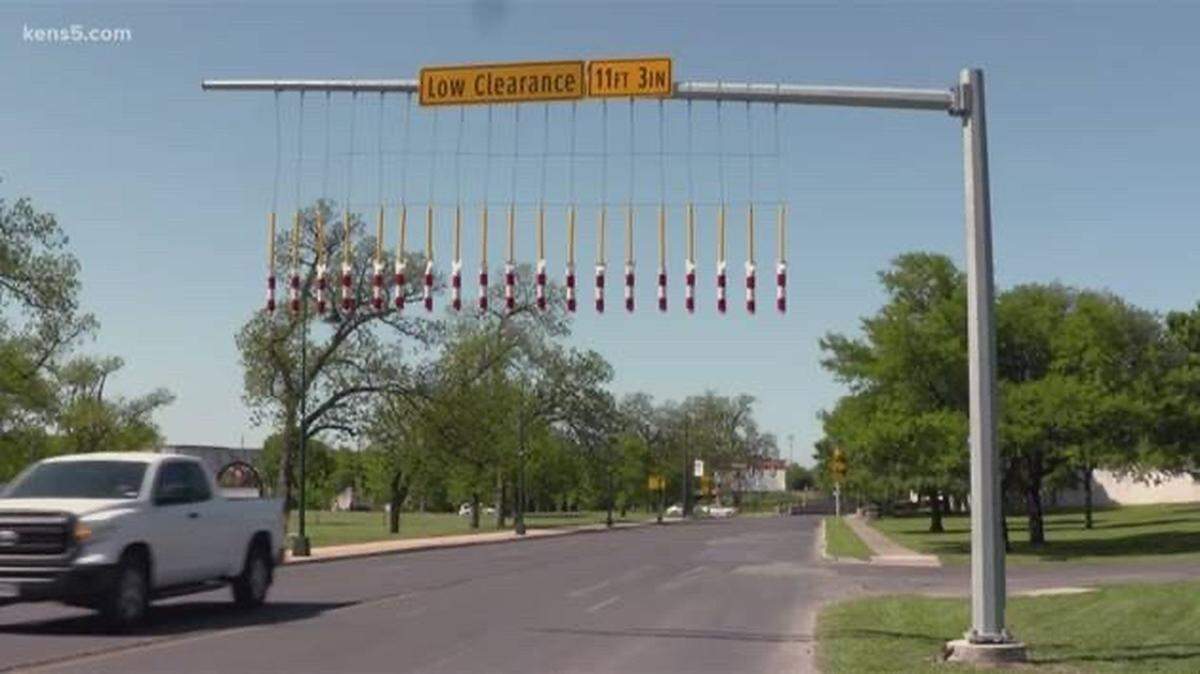
The curtains will consist of tubes hanging over the road at a height that would indicate whether vehicles can safely pass under the bridge. The curtains are designed to make a loud noise alerting drivers of trucks and other tall vehicles that they will not clear the bridge. The warning would give drivers enough time to detour around the bridge.
“These will be similar to devices implemented in San Antonio, which have been reported effective in reducing bridge collisions,” Lauby said. “We look forward to seeing positive results in Kansas City.”
Spokane, Washington, also has used the devices, which they refer to as “warning chimes” at low bridges as a low-tech solution.
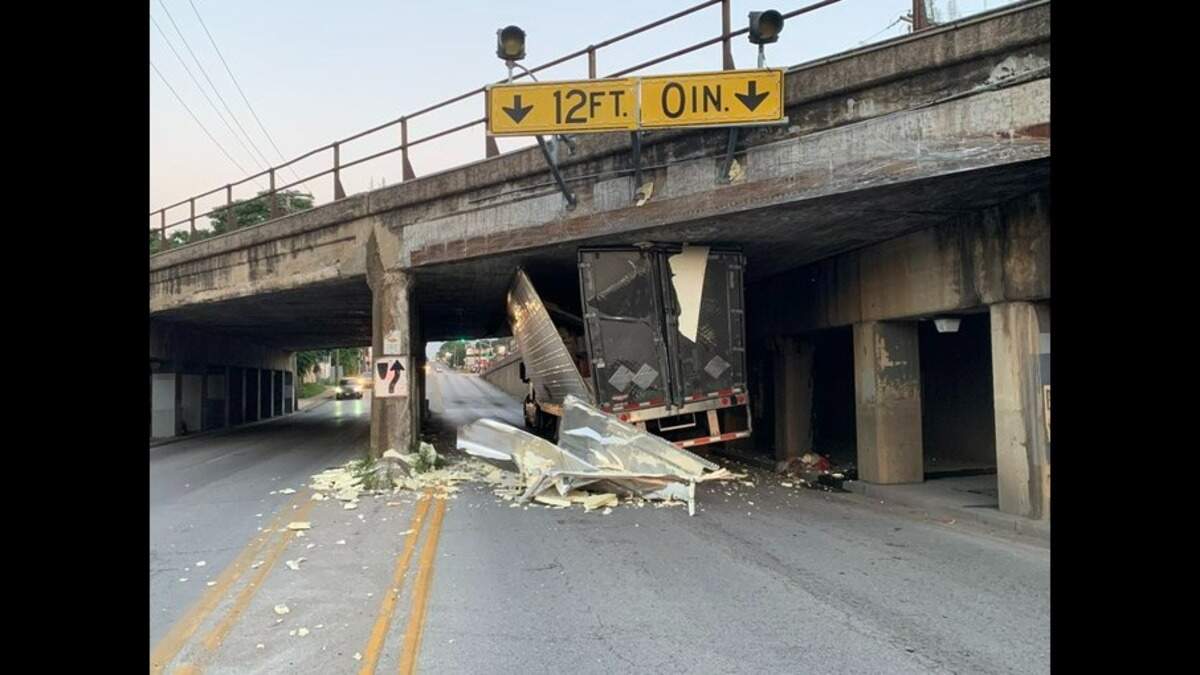
Flashing lights and signs currently warn drivers of the low clearance bridge that crosses over Independence Avenue near Wilson Avenue. Truck drivers, however, keep missing the warnings and crash into the bridge. That happens enough that the bridge has its own Facebook and Twitter pages.
The curtain for the eastbound direction will be placed before the traffic signal at Wilson. Trucks that hit the curtain should use the detour, Honeycutt said.
The bridge has a clearance of 12 feet. The average height of a semitrailer is about 13.6 feet.
The railway for years has studied options for raising the bridge, which was built in 1912 and remains structurally sound. However, it would not be feasible to raise or replace the bridge due to the associated costs, which would be in the tens of millions of dollars, Lauby said.
“Bridge vibrations from truck collisions have been measured as nearly indistinguishable from regular overhead train traffic,” he said.
The railway has had regular meetings with the city over the years to discuss and access options, including jointly applying for federal funding in the past, which was denied. The Missouri Department of Transportation rerouted the U.S. 24 highway designation around the bridge, which was helpful, Lauby said.
The city has looked into lowering the roadway, but that has its own challenges due to flooding issues and shallow utilities under the street, he said.
”These overhead structures are a fairly unique solution to a unique problem with a high potential benefit/cost ratio,” he said. “We are cautiously optimistic.”
This story was originally published December 14, 2022 at 4:53 PM.