City Council approves adding over 150 shelter beds during cold weather months in KC
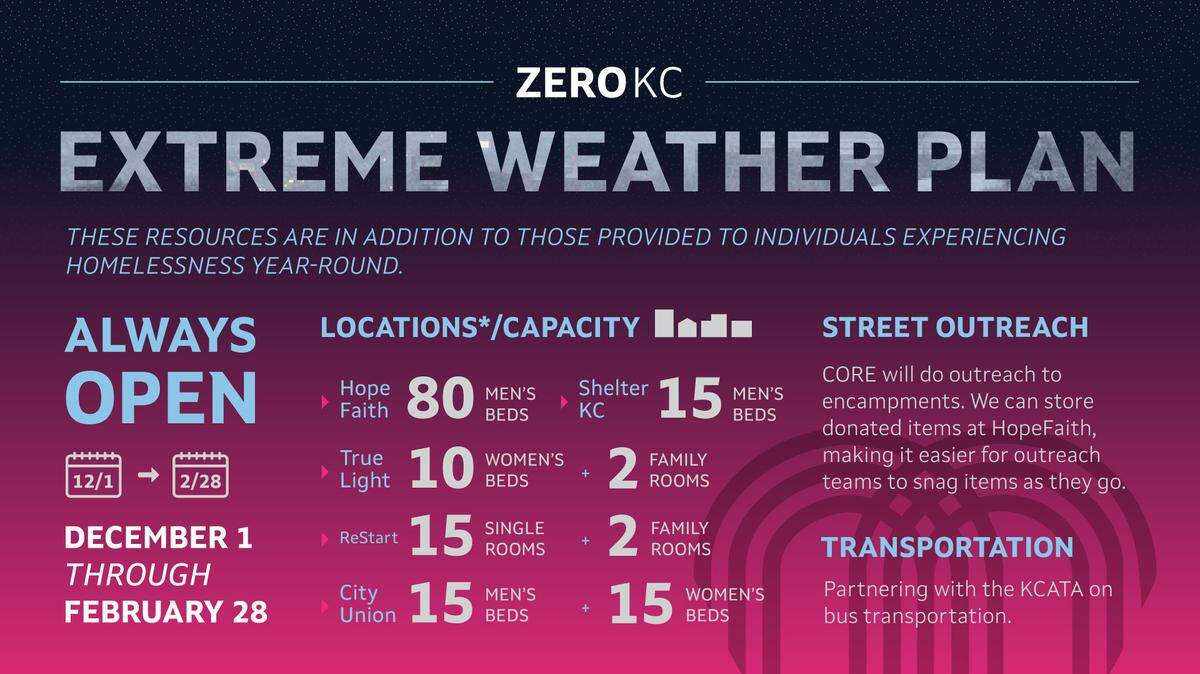
As temperatures drop heading into the winter season, officials in Kansas City have approved a plan to add more than 150 shelter beds for people experiencing homelessness.
The City Council on Thursday allocated $1.3 million for the ZeroKC extreme weather plan, which provides 154 additional beds at five shelters.
The weather plan goes into affect Dec. 1 and runs through Feb. 28. It also includes outreach at encampments and bus transportation.
The weather plan is part of an effort to end homelessness in Kansas City called ZeroKC. The five-year strategic proposal was unveiled in September and includes conducting a community needs assessment and supporting a work program. A major focus of the plan is the creation of low barrier emergency housing, which would make it easier for people including domestic violence survivors, youth and those experiencing substance abuse issues, to access shelter.
During a point-in-time count taken in the spring, more than 700 people were living unsheltered, a number that had grown during the pandemic.
In recent years, Kansas City leaders have tried different methods to support those living unsheltered during the hottest and coldest months of the year. This included an emergency overnight shelter set up in Bartle Hall in winter 2021, after Scott “Sixx” Eike, a man living on the street in Kansas City, froze to death on New Year’s Day following a sweep of his encampment.
The emergency shelter drew praise and criticism and was not replicated again. Instead, city officials experimented with other ideas, such as a hotel program which provided temporary shelter during extreme weather.
When ZeroKC was announced, Josh Henges, the city’s first houseless prevention coordinator, said if low barrier housing is prioritized, the city won’t need to make a new extreme weather plan every year.
The city’s dashboard showing shelter bed availability can be viewed here.
The Star’s Anna Spoerre contributed to this story.