Day care among dozens of KC metro locations overburdened by pollution. What’s being done?
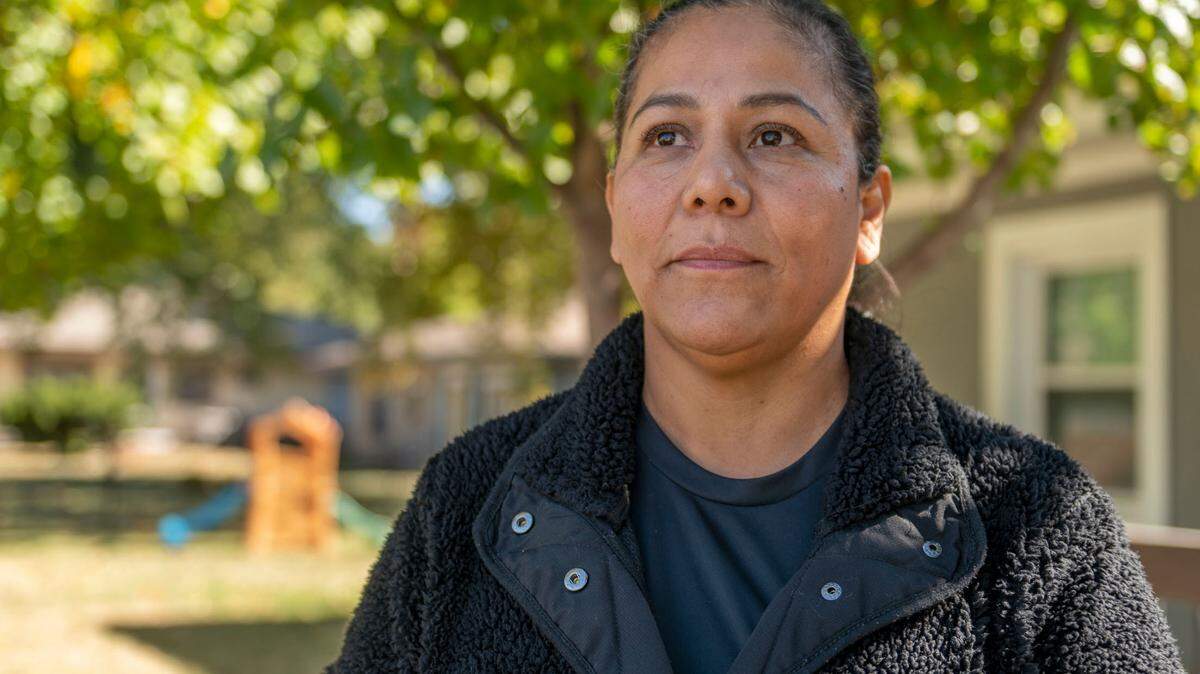
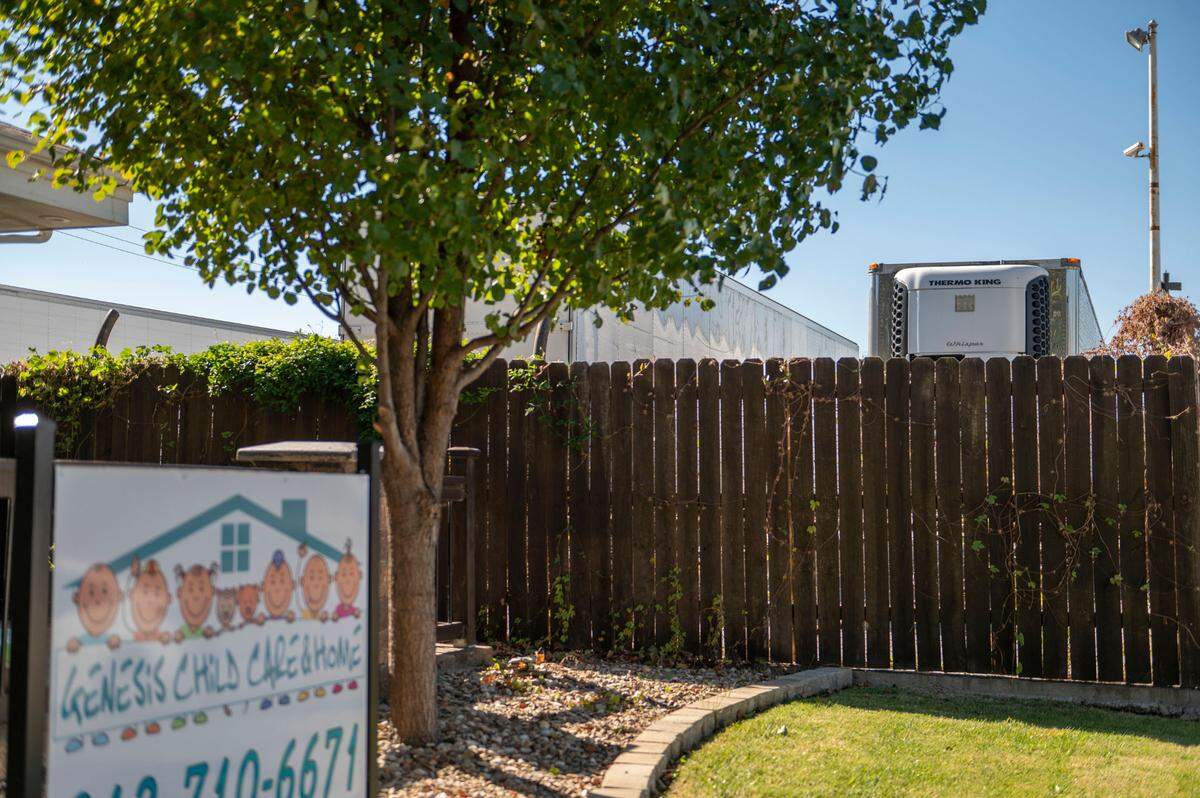
The yard of Ivonne Gutierrez’s day care in Kansas City, Kansas, has a play set with a blue slide, bouncy balls of several sizes and a row of tricycles.
But sometimes, the level of air pollution makes it unsafe for the nine children she cares for to play outside.
Just steps from the west side of her house, large semi trucks at times idle for long periods emitting exhaust fumes from the parking lot of a trucking company. Less than a quarter mile away, trains running on diesel and carrying uncovered coal whiz by. And four companies within about two miles have recently violated federal air or water laws.
The area is one of the most overburdened by pollution in Kansas City, Kansas, according to a screening tool developed as part of an executive order on climate change signed by President Joe Biden in January 2021.
In the Kansas City metro, 133 census tracts fall into at least one category considered overburdened, impacting more than 330,000 residents. Areas that have been redlined and historically neglected, including many neighborhoods east of Troost Avenue, deal with issues like elevated rates of asthma, higher energy burdens and closer proximity to hazardous waste facilities. Just eight of the 133 tracts are in Clay, Platte or Johnson counties. The other 125 are in Jackson County or Wyandotte County.
“It has been time and time again well documented that the people of color who live here are the ones that are being dumped on,” said Beto Lugo-Martinez, co-executive director of CleanAirNow KC.
“They’re capitalizing on people’s deaths,” he said.
To address such issues, a federal initiative called Justice40 is working to direct 40% of funds from large spending measures like the Inflation Reduction Act to disadvantaged communities identified on the screening tool. Nonprofit organizations like Bridging the Gap and Groundwork NRG have been commissioned to work locally on a range of projects that address environmental justice issues in the Kansas City metro.
Armourdale air monitors
In the summer of 2020, Gutierrez noticed a yellow soot in the air around her Armourdale day care. She wasn’t sure what it was, but wondered if it was a pollutant from a nearby recycling facility. She became worried for her own health and the well-being of the children at her day care, some of whom had asthma and many who come from low-income backgrounds with limited access to health care.
Gutierrez connected with CleanAirNow KC, which was in the process of working alongside community members to identify areas of concern. She had two air monitors installed on the roof of her house in October 2020.
Every day before letting the kids outside, she checks the air quality, including particulate matter and ozone levels, using an app. Midday, when there’s more traffic, is worse, she has noticed.
“We got the monitors and it tells me the levels of air quality and when it’s safe to be outside,” she said in Spanish.
She said something as simple as going outside, which is important for children’s development, can cost them their health.
Gutierrez moved to Kansas in 2003 and opened the Armourdale day care in 2007. She’s been told the solution is to relocate. That doesn’t sit right with her.
“We need to fight to stay so our voices are heard,” she said.
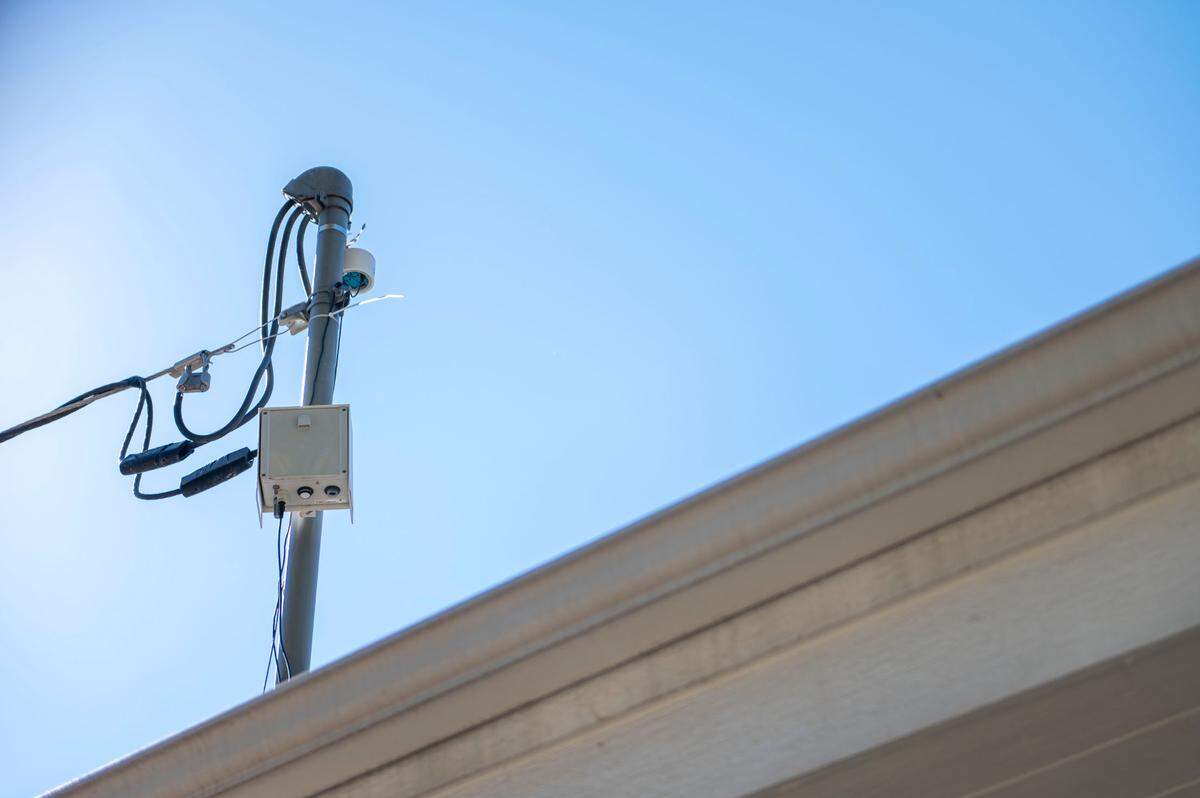
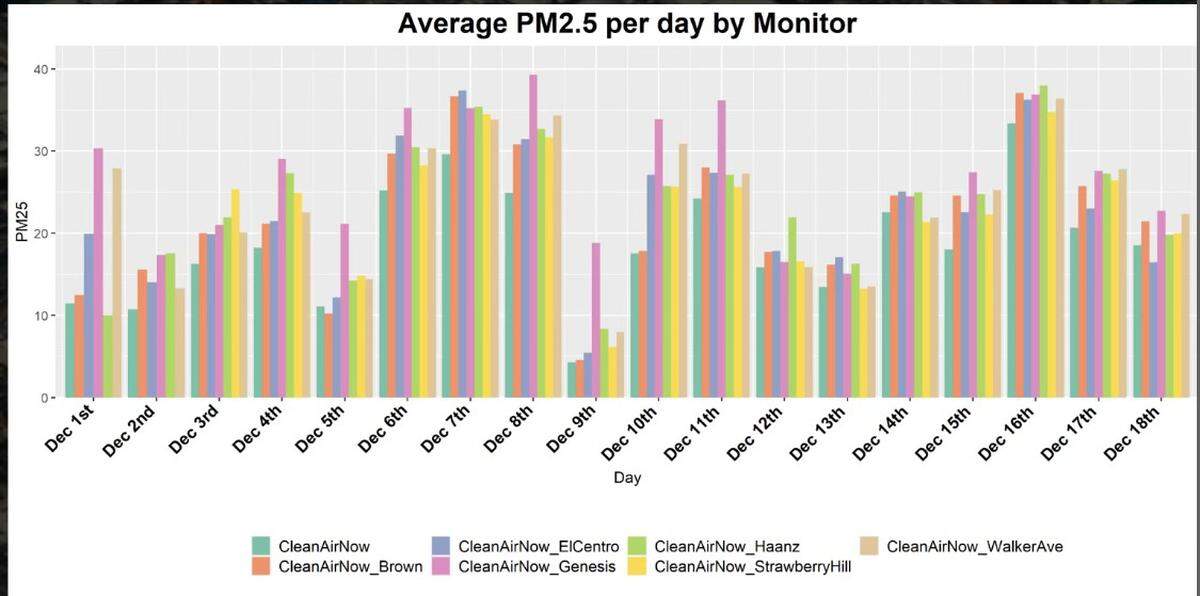
CleanAirNow began distributing the sensors in 2020. Lugo-Martinez said the EPA has only one monitor in Kansas City, Kansas, which doesn’t capture what is going on in different areas. While the organization’s monitors are not EPA grade, there are now 20 across the metro collecting data.
“Community members have to gather their own data, their own information, to be able to push the local public health agencies, or the EPA for example, to do their job, to do more to protect the health of the most vulnerable,” Lugo-Martinez said.
Environmental justice groups have been at the forefront of enforcement, he added.
People in more affluent areas of Wyandotte County live 20 years longer than some of the poorest areas, according to life expectancy data from the Centers for Disease Control and Prevention.
Several changes could be made to improve the air quality in Kansas City, from enforcing the time trucks idle to altering truck routes so they limit residential exposure, according to Lugo-Martinez.
On the federal level, CleanAirNow supports tightening regulation of vehicle emissions. Several proposals have been pitched by various agencies.
Earlier this month, Kansas Attorney General Derek Schmidt, who is running for governor, criticized a proposal by the Federal Highway Administration seeking net zero emissions on highways by 2050. He was one of 20 attorneys general to sign a letter arguing the rule would overstep the highway administration’s authority.
Justice40
Gutierrez’s day care sits in one of 11 census tracts in Wyandotte County considered disadvantaged in five categories, including clean energy, housing, pollution, health burdens and workforce development. Another 28 census tracts were disadvantaged in one to four categories.
On the Kansas City, Missouri, side, three census tracts were disadvantaged in six categories and another 83 were disadvantaged in one to five categories.
Justice40 was created to address climate and social injustice throughout the country as spending measures like the $1.2 trillion Infrastructure Investment and Jobs Act passed. At least two nonprofit organizations in the Kansas City area were selected as Justice40 Accelerators, meaning they get support to expand the capacity of their work on the ground through grants, technical assistance and workshops.
Bridging the Gap has gotten about $27,000 so far, executive director Kristin Riott said.
Their work is focused in two areas on both sides of the state line. The first is trees. They have given away about 1,900 trees to be planted on private property.
“Where there’s a lot of concrete and no vegetation, you can get temperatures that are, on any given day, seven degrees higher,” Riott said, which leads to the heat island effect.
Trees also help reduce air pollution, provide shade for homes and even have a positive mental health effect.
The second prong of the organization’s work is reducing utility bill burdens in Kansas City. For some families, utility bills can eat up to 20% of disposable income.
“It literally becomes a choice between heat and eat,” Riott said.
Bridging the Gap has helped fix air and water leaks, replace old toilets and install more efficient shower heads. They reach about 650 homes per year, reducing energy costs and energy inefficiency.
“The good news is there’s such a thing as a virtuous spiral as well as a vicious spiral,” she said.
Groundwork Northeast Revitalization Group works in northeast Kansas City, Kansas.
“Everything we do is within the work of environmental justice which includes a racial justice lens,” said operations director Adri Showalter Matlock.
The organization has a range of programs, including vacant lot revitalization, tree planting, a youth environmental skills program and a grocery co-op project.
They have received about $50,000 as an accelerator which allowed them to hire a staff member to help improve their finance process.
Ultimately, they strive “to transition from an extractive economy to a regenerative economy,” Showalter Matlock said.
“We want to strengthen the mutually beneficial relationship that we have with land and with each other.”
The Star’s Emily Curiel provided Spanish translation.
This story was originally published October 25, 2022 at 7:00 AM.