They were denied disability benefits after medical exams in KC. But was it fraud?
READ MORE
Were thousands unfairly denied disability benefits?
15 lawsuits allege a Kansas City company falsified medical exam reports for Social Security, denying disability benefits to thousands.
Expand All
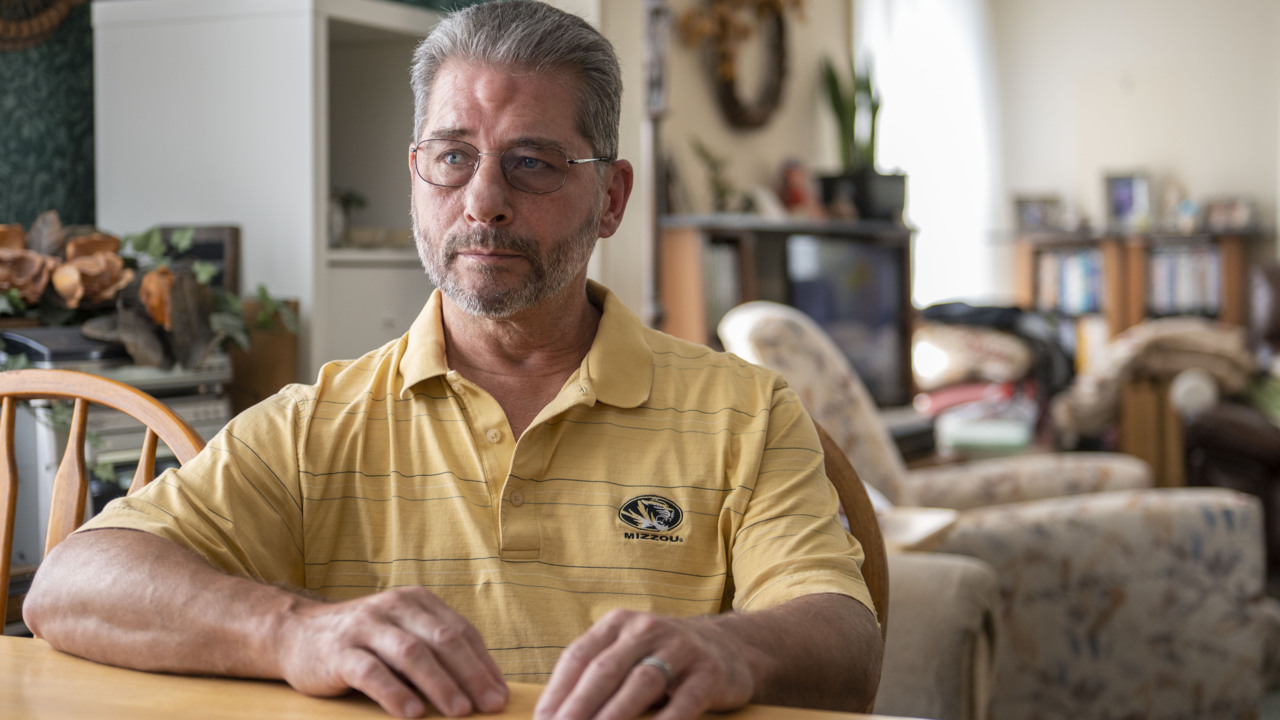
Michael Begnaud of Liberty felt confident that the medical exam he needed to help prove he was disabled would go his way.
His swollen hands, inflamed with gout, so pained him he wore braces on his wrists. The decay of his retinas from incurable retinitis pigmentosa was slowly robbing him of sight. His brother and sister had gone blind from the disease.
At age 59, he was a computer IT guy who by October 2020 could no longer type on a keyboard without making costly mistakes. He had been fired from his job. Driving was so dangerous, he’d given up his license. He had arthritis, tendinitis, asthma and hearing loss going back to a burst eardrum when he was 8 years old.
“To put it bluntly, I was falling apart,” said Begnaud, now 61.
But to prove he qualified to receive monthly Social Security Disability benefits, Begnaud was told that he would first have to gather more medical evidence. The Missouri disability office set up an exam at Midwest CES — a private company that since 2012 has been paid more than $7.6 million to conduct medical exams. At about $185 each, that is the equivalent of some of 41,000 exams in Missouri. The company’s phone message and website also says the company conducts exams in Kansas, Iowa, Oklahoma and Ohio.
Begnaud recalled walking into a nondescript exam office in North Kansas City with his medical records.
“I thought they basically were going to confirm my disability,” he said.
Except the exam at Midwest CES didn’t at all go as he expected.
In a lawsuit filed in March, Begnaud instead claims that the physician’s exam was “fraudulent, incomplete, inadequate, misleading and contained false information.”
In the end, according to the lawsuit, the exam poisoned Begnaud’s application, playing a role in his being denied more than $1,500 a month in sorely needed benefits. The incomplete exam, he said, lasted less than 15 minutes.
“I go to doctors regularly and get exams,” Begnaud said. “It just wasn’t an exam.”
Given Midwest CES’s reach, the disability attorneys representing Begnuad suspect that he is likely one among thousands of individuals who were similarly affected — given exams with false findings and perhaps denied Social Security disability benefits as a consequence.
The law firm BurnettDriskill of Kansas City has so far discovered more than 200 of its clients whose Midwest CES exams contained what the firm’s attorneys claim to be “false,” “boilerplate” or “canned” language.
Begnaud’s medical report, for example, contained a line found verbatim in numerous other exams from other Midwest CES physicians: “I generally observed the claimant to be able to grasp and turn a doorknob, pick up and grasp a pen and write a sentence and lift and handle personal belongings with ease.”
Problem is, Begnaud said, he didn’t carry any belongings into his exam. Bigger problem, as the lawsuit contends: “There are no doorknobs in the Midwest CES facility.” The doors open with handles.
As a result, the law firm so far has entered into no less than 15 lawsuits, with more to come, on behalf of its clients against the Social Security Administration or against physicians working for Midwest CES, calling into question the validity of its exams.
The firm is also suing Midwest CES directly. In one case, filed in federal court in June, they are suing on behalf of both a client and the United States of America, accusing Midwest CES of violating the federal False Claims Act. The act makes it illegal to knowingly submit false claims to the government and receive payment in return. Midwest CES does not charge the patient, but instead charges the federal government about $185 per exam. The more exams Midwest CES conducts, the more money the company makes.
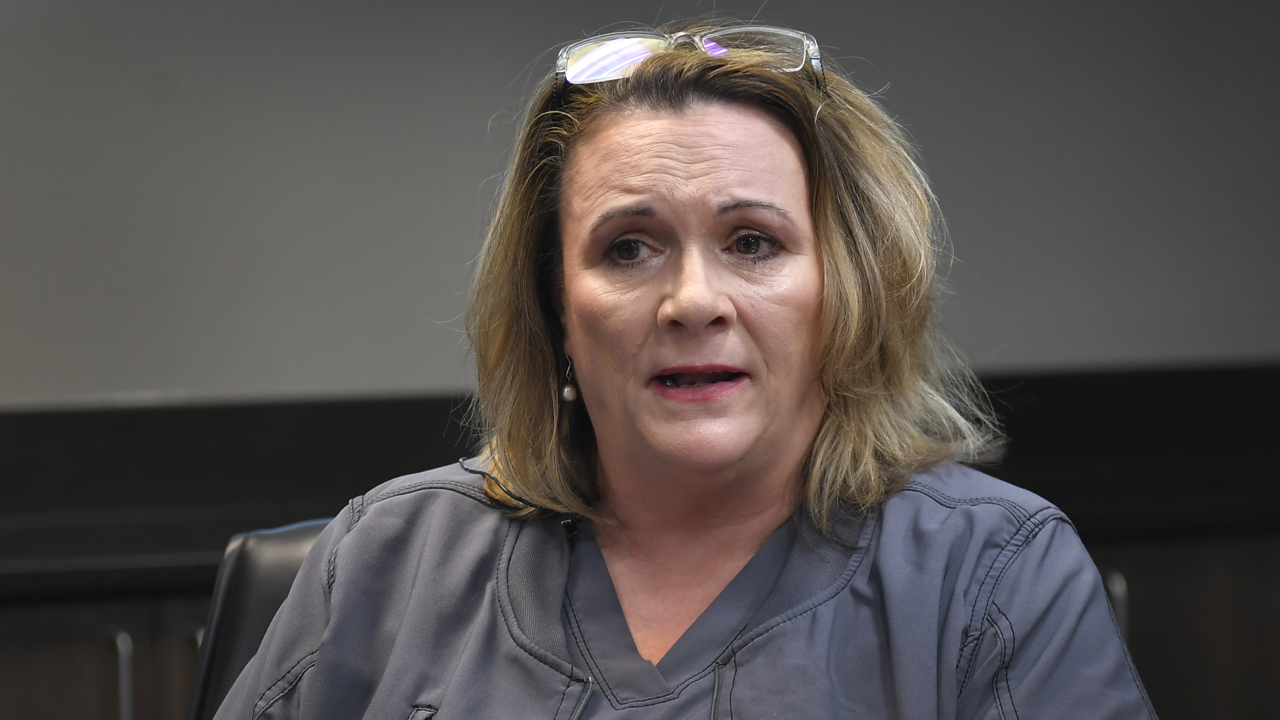
“For sure, Midwest CES has done many thousands of these,” said Kyle Sciolaro. He is the BurnettDriskill attorney who, in 2019, first noticed the canned language in report after report, prompting him to look into previous Midwest CES exams.
“Probably anyone who has ever seen a Midwest CES physician from 2017 to 2021 has the canned language in there,” Sciolaro said. “I mean, we have copies of the old (exams). We have so much stuff that you can’t deny the scheme.”
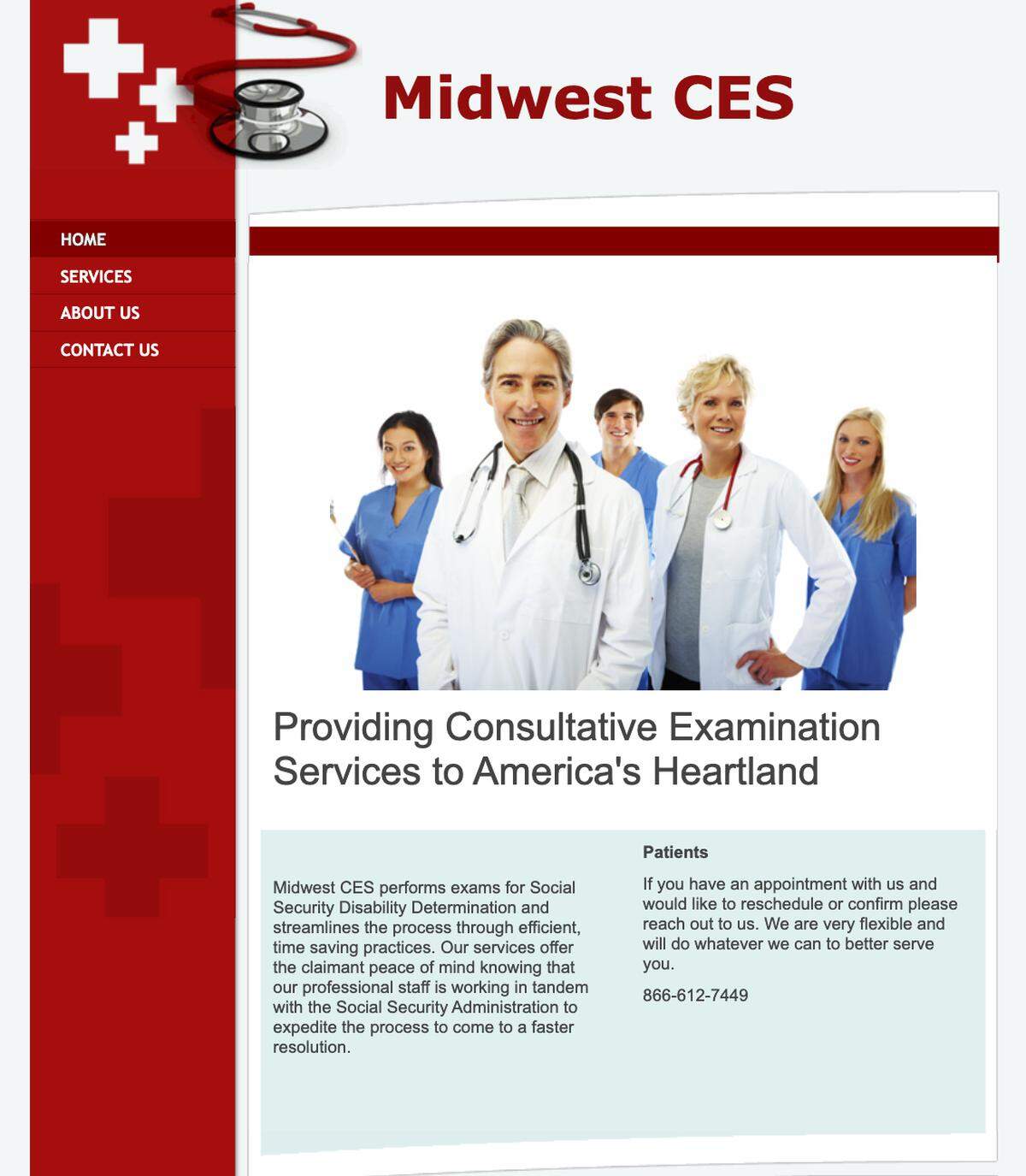
But Midwest CES denies any fraud. Owner Jacob Johnsen, when contacted by The Star, refused to comment on the various lawsuits. Johnsen is a businessman out of Bountiful, Utah, whose LinkedIn page states he previously owned a soda company and was past CEO of another Social Security exam company, Alta Medical Consulting.
The Star also contacted but did not hear back from David Frandsen of Overland Park. His LinkedIn page states he has been Midwest CES’s vice president of operations for 11 years and, before that, was a social media manager and lot manager for Baron Automotive.
The company’s attorneys at Armstrong Teasdale in Salt Lake City likewise did not respond to The Star’s requests for comment.
Importance of exam reports
The medical reports are far from incidental.
They are crucial for getting approved for Social Security Disability benefits, a process already known to be notoriously difficult, and becoming more so.
Just over 1.8 million workers applied to receive Social Security Disability benefits in 2021. Only 32% were awarded benefits and 68% were denied, according to Social Security Administration data, making for the lowest rate of approval among insured workers in more than 30 years.
Disability advocates are quick to point out that Social Security Disability Insurance, or SSDI, is not the same as supplemental security income, or SSI, that provides small monthly payments to aged, blind or disabled people who are poor.
SSDI is federal disability insurance. It comes out of workers’ wages through a payroll tax, FICA — the Federal Insurance Contributions Act, which is used to pay for Medicare and Social Security benefits for retirees and disabled workers and, in some cases, their surviving children and spouses. The payroll tax is 7.65% of gross income. Employers and the self-employed pay an additional 7.65% for a total of 15.3%.
But unlike worker’s comp or private insurance, Social Security Disability does not pay out for partial or short-term disabilities. The rules are strict: Social Security only pays out for total disability. Per the Code of Federal Regulations, there are three criteria:
First, it must be determined that a person has a physical or mental impairment that is so severe that it makes them unable to work or engage in what the government calls any “substantial gainful activity,” which, in 2022, means a regular job that pays more than $1,350 a month.
Second, the condition must be profound, having been continuous for at least a year, expected to last a year, or expected to result in death.
Third, the impairment must not only keep a worker from doing their past job, but it also must keep them from engaging in any other substantial gainful job that exists in the U.S. economy.
Some 9 million people currently receive monthly SSDI payments. For millions of beneficiaries, the money — now averaging $1,362 per month — represents most of their income, a yearly amount of $16,344 that is not far above the current federal poverty line of $13,590 a year. Payments continue as long as the recipient remains totally disabled.
Being approved can be a lengthy process, typically taking months and sometimes years depending on the number of times an applicant is denied and whether they decide to appeal those denials.
Accurate medical records are vital to every step — the first of which is to file a claim, which is then sent to the state DDS (Disability Determination Services) office. If officials at the state office don’t feel they have enough medical information to make a decision they will often send a claimant to any one of a number of medical consultative exam offices that are paid by the state, such as Midwest CES.
Physicians and vocational experts at the state office rely on medical exams and records to determine if benefits should be awarded. If an application is denied, claimants can request to have it reconsidered by DDS. If denied a second time, applicants can appeal for a hearing before an administrative law judge. A third denial allows claimants to appeal the judge’s decision to the Social Security Appeals Council in Virginia, which data show tends to deny around 85% of appeals.
If a claim is denied by the Appeals Council, applicants can then sue the Social Security Administration in federal court. Some 13,000 federal cases were filed in 2021 alone, up 44 percent from the year before.
Suing the physician
Begnaud’s current lawsuit is against physician Alan Bach Tran, who Begnaud’s attorney described as a young resident who, according to depositions, was working weekends for Midwest CES — conducting upwards of 20 Social Security consultative exams on any given Saturday and being paid about $50 per exam, around $1,000 for a day’s work.
In his suit, Begnaud claims that Tran’s report included false statements regarding observations he never made, and exams he never performed. They include: grasping and turning a doorknob, lifting and handling personal belongings, performing a specific vision test, performing a strength, motion and reflex test, performing a cranial nerve and cerebellar exam.
In the 15 minutes they were together, Begnaud said, the doctor barely looked at his hands, didn’t look at his medical documents, never asked him about the medical conditions that brought him to the office.
“They should be preparing a report that is authentic,” Begnaud said. “I think they’re really not doing any of those things.”
The Star contacted Tran’s Kansas City attorney, Jason Kotlyarov, who chose not to comment on ongoing litigation but, in legal filings, denied that Tran’s report was fraudulent.
Begnaud’s Social Security claim was denied twice, until January 2020 when an administrative law judge approved his claim 14 months after it was first filed.
A ‘crushing’ car accident
Another claimant, Michael Ryan of Excelsior Springs, was denied three times. It would take 4 1/2 years for his benefits to be approved.
A veteran of both the U.S. Army and Air Force, Ryan endured what he described as a “crushing” car accident in August 2015. He was in the front passenger’s seat, headed to AmeriStar Casino for dinner with family.
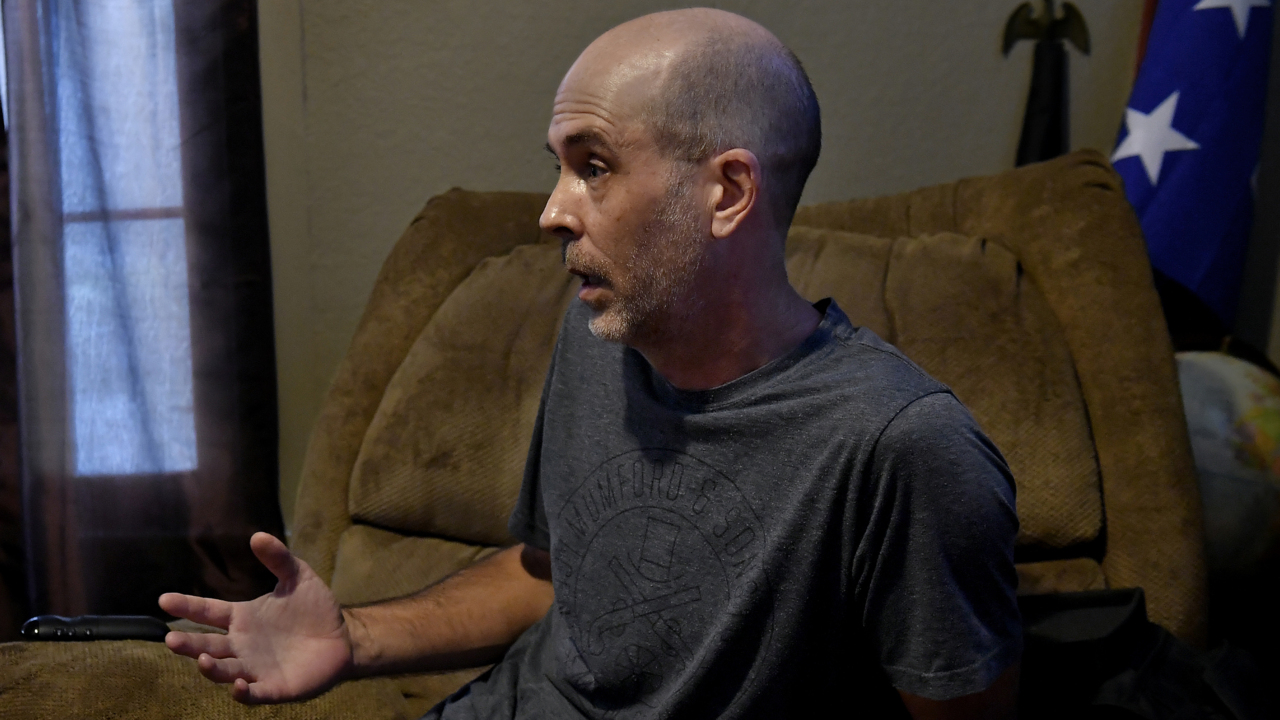
“A texting, speeding driver ran a red light,” he recently recalled, sitting in his home, a cane propped at his side.
Ryan used to work framing houses and doing other construction work. The accident disjointed his hips and back, leaving him with bone-on-bone pain, pelvic numbness, tingling down his legs, problems walking and an inability to sit for long periods.
Suffering degenerative disc and joint disease, Ryan applied for disability in June 2016 and was denied the first time seven weeks later. He appealed. It took 17 more months for him to get a hearing before an administrative law judge who ruled that Ryan needed to be examined by an orthopedic specialist.
He was sent to Midwest CES.
Instead of being seen by an orthopedic specialist, as ordered, he was examined at Midwest CES in March 2018 by an ear, nose and throat specialist. In his report, the doctor wrote: “I generally observed the claimant to be able to button and unbutton a shirt, pick up and grasp a pen and write a sentence and lift, carry and handle personal belongings.”
But the doctor observed no such thing, Ryan claims.
“I don’t wear button-up shirts,” Ryan said. Nor, he said, did he carry any personal belongings with him into the exam. “It was a whole bunch of fake stuff. Made up... The exam I received was nothing like the report that was submitted.”
Sciolaro, the attorney, said the “shirt” and “belongings” line was fraudulent, canned language found replicated in multiple Midwest CES reports, similar to the “doorknob” language.
Ryan appealed twice more and was denied twice more until he sued the Social Security Administration in federal court. The court, siding with Ryan, sent the case back to the administrative law judge to take another look at the case, noting that the Midwest CES exam was never done by an orthopedic specialist as originally ordered.
“(T)here is no evidence,” the federal court ruled in June 2020, “that the consultant administered an X-ray, MRI or any other imaging; there is not even an indication that the consultant evaluated (Ryan’s) prior records.”
In November of that year, the administrative law judge changed course and approved Ryan’s benefits.
“It took well over four years,” Ryan said. “It’s wrong that this is happening. It’s egregious this is being done to people.”
Judge: Plaintiff’s allegations ‘troubling’
The cases are drawing notice.
In April, U.S. District Court Chief Judge Beth Phillips of the Western District of Missouri ruled that the Social Security Administration, instead of denying benefits to a Kansas City woman who suffered pain, swelling and numbness in her hands, needed to take a second look at her case.
A prime concern in the case: The allegations that Midwest CES had repeatedly been using “canned language.”
“The allegations Plaintiff raised ... are troubling,” Phillips wrote. “They are not merely disagreements with a doctor’s opinion; instead, they suggest that the (administrative law judge) may have relied on a doctor’s report of events that simply did not happen.
“Moreover, if these allegations are true, then they may cast doubt on the entirety of the consulting doctor’s report. Such allegations must be considered and resolved.”
Since that time, two other federal judges have sent back cases for review noting their concerns about the Midwest CES exams.
Wife carries on the fight
In June 2019, Gary Murrill of Liberty also applied for disability. Three months later, in September, the former warehouse worker walked into a Midwest CES exam room.
The examining doctor did not have Murrill’s medical records to confirm his medical history. At age 47, that history included major depression, anxiety, narrowing of the spinal cord known as spinal stenosis, a hip replacement, liver cirrhosis from Hepatitis C and suspected alcohol abuse. He had been hospitalized twice the year before with major depression, once for attempting suicide using carbon monoxide. Thoughts of suicide would again find him in the hospital one month later.

Murrill’s wife, Jodie, insisted the Midwest CES exam lasted no more than 3 to 5 minutes.
“It was very perfunctory,” she said recently. “It was just one, two, three, zip... He (the doctor) didn’t really want details about Gary at all.”
Two months after the exam, Murrill was denied Social Security Disability benefits.
“He was denied,” Jodie Murrill claimed, “because, according to the doctor’s fraudulent claim, he had absolutely nothing wrong with him. It was unbelievable that somebody that was clearly as ill and in pain as Gary was overlooked and passed by as just fine.”
The Social Security Administration determined that Murrill was not totally disabled or had and could have worked operating a photocopier, a folding machine or been employed as a shipping weigher.
Less than a year later, on June 20, 2020, Gary Murrill died of his illnesses at age 48.
Surviving spouses can receive monthly benefits under certain circumstances. Since the time of Murrill’s death, his wife has been denied benefits two more times.
In June 2021, Jodie Murrill filed suit against Midwest CES directly on behalf of both her late husband and the United States government alleging Midwest CES violated the False Claims Act for charging the federal government millions of dollars for medical reports, many of which her suit claims were false.
This past July, she sued in federal court against the Social Security Administration for his benefits.
The medical exam said the doctor administered a visual test. He didn’t, Murrill said.
It said Gary was observed grasping a pen and writing a sentence and was observed lifting, carrying and handling personal belongings. Not true, Murrill said.
It said Gary was observed buttoning and unbuttoning his shirt.
“He wore the Royals’ World Series silver T-shirt that everybody owns,” Jodie Murrill said. “He doesn’t own a button-up shirt at all. And so that was a huge lie.”
Have issues with getting approved Social Security disability?
This story was originally published October 2, 2022 at 5:00 AM.