The embezzlers next door: Trusted but greedy, these Kansas City area people wanted more

READ MORE
Embezzlers next door
The case of Scott Simkins, a Johnson County man who had it all but still wanted more, raises confounding questions about embezzlers: Why do they steal? How do they do it? And how can they be caught?
Expand All


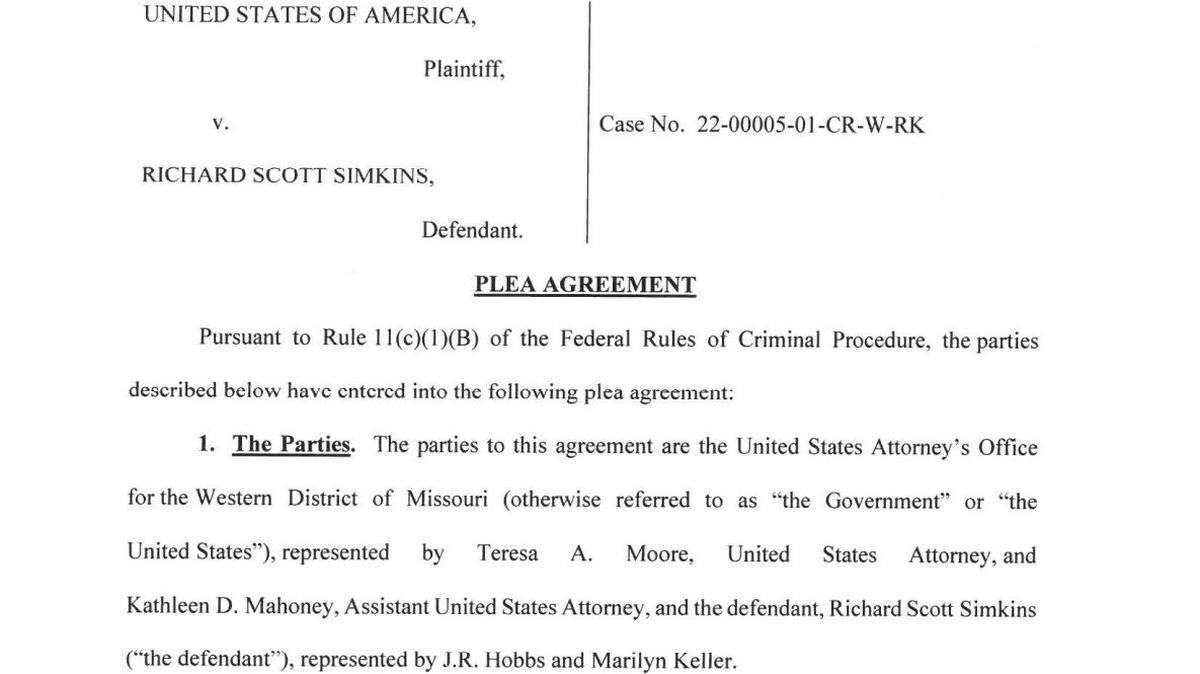
To those looking in, Richard Scott Simkins seemed to have it all — then he wanted more.
He had respect, money, a half-million dollar home shaded by towering oaks in Overland Park and a life and family to be proud of.
His then-wife, Stephanie, had begun her own popular business, Skin KC, with a shop in Brookside. Their son, Cody, studied nutrition and kinesiology at Kansas State University. Their daughter, Clara, would become a singer/songwriter and model looking to make a life in Los Angeles. The youngest son, Calvin, made a family of five.
Simkins was so good at his job — reportedly prompting a 10-fold growth in Genesys Systems Integrator’s manufacturing business in as many years — that in 2012, at age 47, he was named “Chief Financial Officer of the Year” by The Kansas City Business Journal.
“People are what matter,” he told the publication. “The dollars and cents of a business are simply another way of keeping score.”
Simkins scored big. After 12 years with the company, he began embezzling — writing company checks that really went to his own personal expenses in order to steal $1 million, $2 million, at least $3.1 million over the next eight years until he was found out in 2020.

Neighbors along Reeder Street saw no sign of it. The Simkinses didn’t drive fancy cars. They didn’t throw showy parties. Simkins seemed cordial enough, waving to the neighbors as he came and went. Fred Streck, a resident on the block for 40 years, lives directly across from the family’s home.
“I didn’t know anything,” he said.
“Not a clue,” said another neighbor.
Simkins, meanwhile, spent at will, weaving his stolen gain into normal life.
In January he pleaded guilty in federal court to using the money on his kids’ college tuition and fraternity payments, on jewelry, car payments, his mortgage, pool and lawn care. He paid the rent for family members and for trips to places like Las Vegas, Orlando, Los Angeles and Estes Park, Colorado. A separate and ongoing civil lawsuit, which names both Scott and Stephanie Simkins as defendants, claims the couple also used the embezzled money to pay the salary of a former nanny and housekeeper who also did some work for Skin KC.

Facing as much as 23 years in prison, Simkins, now age 56, is expected to be sentenced in the next few months.
When he is, he will fully join what attorneys, FBI agents, criminologists and other experts on fraud said have long been a confounding set of felons. Confounding in that embezzlers are like so many of their “white collar” criminal brethren in that they are rarely in desperate need of the money they end up stealing. Their acts raise the psychological question as to why formerly law-abiding people risk all to steal and what prompts them to begin.
“Most of these people are like the shoplifters I used to arrest when I was a police officer,” said retired FBI Special Agent Randal Wolverton of Kansas City, an accountant who continues to investigate financial crimes. “Almost every time I arrested a shoplifter, they had money in their pocket to pay for the item.
“A lot of these people (embezzlers) have money in their pocketbooks. They have money in their bank accounts. They’ve got assets, a home. They really don’t need to steal, but they do.”
‘Can Scott work from jail?’
Whatever his motivation or psychological profile, Scott Simkins was a force at Genesys.
“Scott deserves loads of credit for growing the company,” said one long-time employee who knew Simkins well, but who spoke on the condition of anonymity. Company executives, through their attorney, declined to speak to The Star or to make employees available. The Star reached out to more than 20.
“His knowledge of the business was sensational … Can’t take that away from him,” the employee said.
Simkins was so effective, he said, that company sentiment was split after the breadth of Simkins’ embezzlement sunk in. “I think at first everyone was happy. Now the joke is, ‘Can Scott work from jail?’ simply because the true impact of what he did has been irreplaceable.”
But Simkins, he said, could also be belittling, cutting and arrogant.
Psychologists have long searched to find connections between criminal behavior and personality disorders. Some weak connections have been found between thieves and frauds and what are known as cluster B personality disorders, such as narcissism and anti-social personality disorder.
Individuals with anti-social personality disorder tend to manipulate, violate and exploit others. A narcissistic personality includes an over-inflated sense of importance and entitlement, constant thoughts of being smarter or more powerful than others.
“He (Simkins) wouldn’t know the word humble if it hit him in the face,” the employee said. “He was better than you and he let you know it.”

Kansas City defense attorney J.R. Hobbs is representing Simkins. As such, he could not talk about him or the case. In general, the goal once a client pleads guilty is to focus on possible mitigating factors, such as remorse, accepting responsibility, being a first-time offender and perhaps other relevant personal events that might help reduce a sentence.
“Sometimes there is no good explanation” for an economic crime, Hobbs said. “Sometimes, it’s impulsive. Sometimes it happens over a course of time. Then you have to start emphasizing other factors.”
A rogue’s gallery of embezzlers
Also confounding is the extent of the crime. The FBI’s National Incident-Based Reporting System shows an average 19,500 incidents of embezzlement have occurred each year since 2011, equating to 50 to 60 daily.
But those are only the cases that reach law enforcement. Large numbers of incidents never get reported or prosecuted. Many organizations — embarrassed to be swindled by a trusted employee — opt to take the financial hit, fire an employee and have them move on rather than invite police and bad publicity.
“Do we know how many people are taking from the till? We don’t. It’s a really tough question,” said Ellen Podgor, a professor of law at Florida’s Stetson University, who authors the “White Collar Crime Prof Blog.”
What is certain is that where there’s money there’s embezzlers, with the Kansas City area adding regularly to its own rogue’s gallery.
Dawna Kellogg, formerly known as Dawna Brandt of Williamsburg, Kansas, worked in the very place were criminals are tried. She was the former accounting supervisor for the Johnson County District Court.

In April, the 61-year-old pleaded guilty to stealing more than $1.1 million from the court over 10 years, from 2007 to 2017. Most of it was stolen as cash, such as bail bond payments. Kellogg then manipulated the court’s computerized accounting system to hide her theft, writing more than 500 checks that made the accounts look balanced. Yet to be sentenced, she now faces as much as 23 years in prison.
Outwardly, accountant Thomas Hauk of Overland Park appeared to live a quiet life. But in 2016, then age 42, he was sentenced to nine years in prison for stealing $4.1 million from four clients of his employer, Assured Management of Westwood, Kansas, over a nearly 10-year period. He stole close to $2 million from one client alone.
Hauk was only caught after he left the company in 2015 for another job. Before coming to Kansas City, Hauk had previously embezzled $70,000 from an employer in Indiana, who declined to prosecute after Hauk said he would pay them back.
Away from work, he basked in his stolen riches. He traveled the world and used at least $1.5 million to purchase and stash away a dozen gleaming Ducati motorcycles and more than 20 sports cars, some worth $100,000 to $200,000. They included a 2009 Ferrari F-430 Scuderia, a 2012 McLaren MP4-12C, a Ford Mustang Cobra Jet drag racer, a Mosler MT900 made of Kevlar, all of which were seized and sold in 2016 by the U.S. Marshals Service in an eye-popping auction.
Hauk used the money for living expenses while getting married and divorced twice. He bought his next fiancee a 2.5 karat diamond engagement ring. Held in federal prison in Arkansas, Hauk is scheduled to be released in 2024.
Something happens to trigger action
Such serial embezzlers are the exception to the rule, Wolverton said.
“Most of what we see are good people who do bad things,” the retired FBI agent said. “They’re living a double life. Most of the time they don’t join the company thinking they’re going to start stealing money. Things happen in their lives. They have downturns. They miss a promotion. They get angry with the company.”
Attorney John Gill has interviewed or studied dozens of embezzlers, some famed such as Nathan Mueller, an accountant with the international finance company, ING. In 2003, Mueller was making $80,000 a year when he decided to cut a check from ING to pay his own credit card bills. Over the next four years, he’d create a false company, false invoices and embezzle nearly $8.5 million, sending him to federal prison for five years of what was an eight-year sentence.
“The average person does not just start stealing because they’re bored one day,” said Gill, vice president of education for the Association of Certified Fraud Examiners. “There’s some kind of pressure that gets them started in the first place.”
That pressure can be either real or perceived.
The Fraud Triangle
Gill and others point to The Fraud Triangle, a framework developed in 1953 by sociologist Donald Cressey. Cressey conducted 133 jailhouse interviews with embezzlers who he called “trust violators.” He identified three prongs common to fraud: 1) a “non-shareable” pressure that often is tied to finances, 2) the opportunity to commit the crime and 3) rationalization.
The pressure can be anything: a drug addiction, gambling, mounting bills, or something purely personal, like resentment at being overworked or underpaid, being overlooked for a raise, jealousy, a sense of being poor, a desire to appear successful.
“Sometimes it is self-imposed pressure,” Gill said. “They need this. They want this. They will not be satisfied until they get it.”
For Gary Foster, the trigger was a co-worker’s pay stub left next to an officer printer. He looked at it and found that a subordinate of his at Citigroup bank was making $10,000 a year more than him. “Really pissed me off … I felt completely devastated,” Foster, a former assistant vice president, said in a 2020 video.
The result: Asked in 2003 to find reconciliation for some $722,000 of unclaimed money, he transferred it into his own account.
“This is payback for what I deserve,” he said he thought. He kept at it. Over eight years, he embezzled $22 million. Sentenced to eight years in prison in 2012, he was released in 2019.
Crime of opportunity
Opportunity means that a thief needs access to accounts, which is why embezzlers are often accountants, managers, financial executives or bookkeepers. Four departments — sales, operations, accounting and upper management — account for nearly half of all cases of corporate fraud, according to the Association of Certified Fraud Examiners’ 2022 report.
Perpetrators frequently have unique access to accounts, trusted as rulers of their own financial fiefdoms or an under-watched corner of a business, with little or no oversight. A place, as Gill put it, “where there’s a giant hole in the controls.”
At age 50, Michael Tae Kim Ahlers of Lenexa had a good job at the University of Kansas Medical Center as the administrator for the Occupational Therapy Education Department. His job gave him control of a KUMC Credit Union bank account.
From 2009 to August 2015, he created false invoices to hide the fact that he was using credit union money as his own. In six years, he embezzled $556,000, spending $87,000 on gambling, $81,000 in cash, $36,000 on golf memberships and fees, another $36,000 on sports tickets and $81,000 more on trips to Las Vegas, New Orleans, New York, Myrtle Beach and Caribbean cruises.
In 2021, he was sentenced to two years in prison.
Rationalization and relief
Countless rationalizations precede or follow the crimes: they need, they’re owed, they’re entitled, the company’s corrupt, leadership is corrupt, no one is being hurt, no one will miss the money.
In his 2016 book, “Why They Do It: Inside the Mind of the White-Collar Criminal,” author and Harvard professor Eugene Soltes says proximity matters. It’s one thing to mug and rob someone at knife or gunpoint, with the victim within arm’s reach. It is easier with financial crimes to push a button or concoct a phony check or invoice, distancing one from their victims both physically and psychologically.
“I would actually suspect that most of the people that have been convicted of prominent white collar crimes would never even consider stealing someone’s wallet from their back pocket,” Soltes told The Star.
“It’s close. It’s intimate. It’s physical. But when it comes to fraud, most of the individuals that are hurt are remote. They don’t have to get physically close to the individual. They don’t even have to know who those individuals are. Because they don’t have that deep seated feeling that you’re causing harm, it allows people that are otherwise reasonably well-intentioned to do something egregious.”
Soltes interviewed more than four dozen white collar criminals for his book. He found — counter to the popular conception that street criminals act rashly and white collar criminals act with businesslike reasoning, weighing the pros and cons of their crimes — that most white collar criminals didn’t think that way at all.
“I found that they expended surprisingly little effort deliberating the consequences of their actions,” Soltes wrote. “They seemed to have reached their decisions to commit crimes with little thought or reflection. … Over time, I began to understand the reason for this shortsightedness. . . .(T)hey never deeply felt that the decisions were actually harmful to themselves or others.”
But they do know it’s against the law and that capture is in the cards.
“I’m telling you,” Gill said, “I can’t think of one instance where they (embezzlers) didn’t tell me that once they got caught that, yes, it was scary, but that there also was a sense of relief. It’s finally over. Think of the burden.
“You’re lying to your family about where the money came from. You’re lying to everybody at work. You’re stealing and trying to cover it up. It’s just constant deception 24 hours a day. Imagine the pressure. Then, once they’re finally caught, it’s like, ‘Oh, thank God.’”
Light sentences
With rare exceptions, like Bernie Madoff who was sentenced to 150 years in prison for his $65 billion Ponzi scheme, the perpetrators of economic crimes tend to get light sentences compared to those who commit street or certainly violent crimes.
The average sentence is about two years for crimes under the U.S. Sentencing Commission statute for fraud, theft and embezzlement. Investment and securities frauds average around 52 months. The more money one steals the higher the sentence tends to be.
Sentencing for Scott Simkins, who currently lives in Florida, has yet to be scheduled.
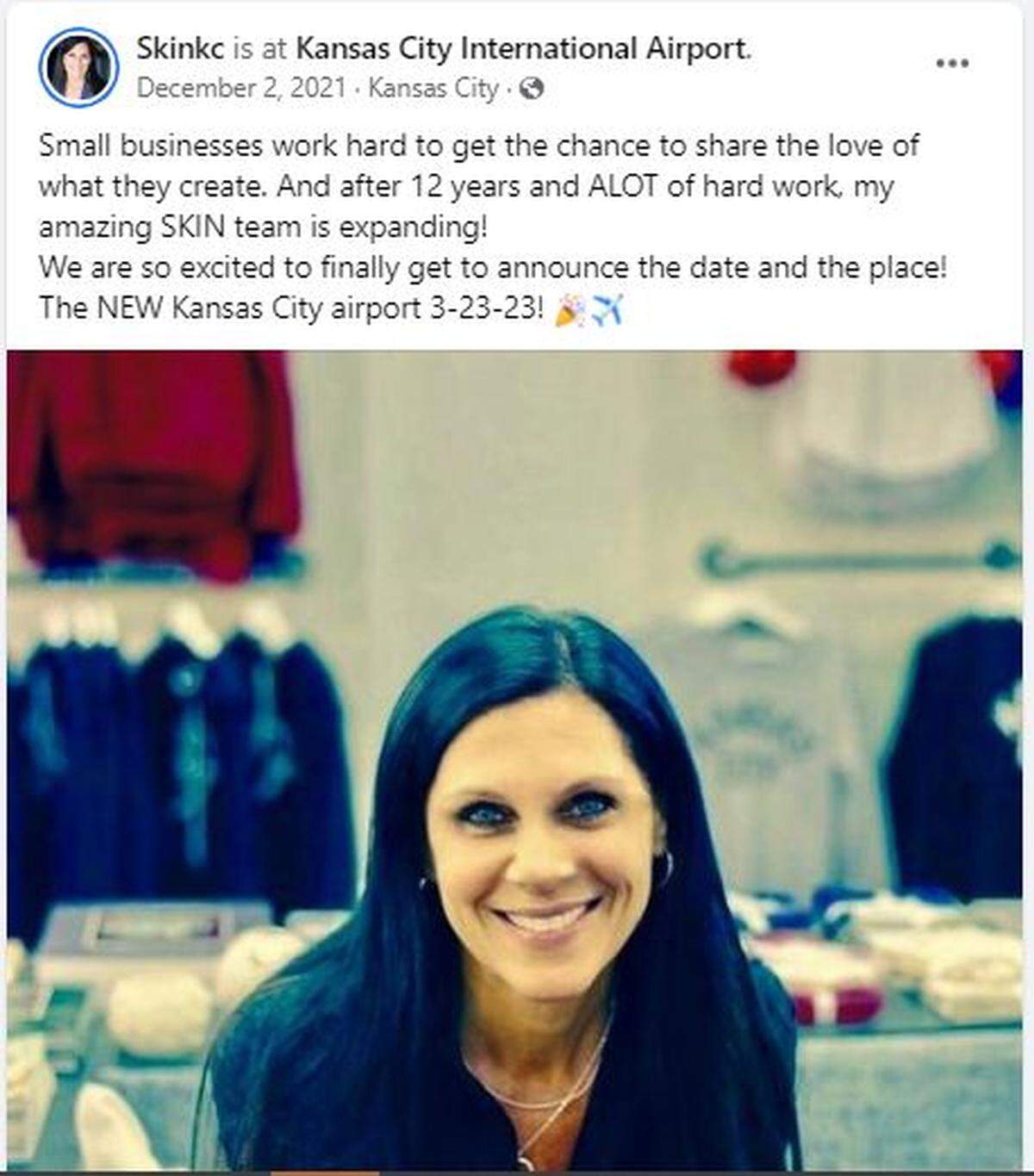
In 2017, he and his wife divorced, long before his embezzlement was revealed or lawsuits were filed. In December, Stephanie Simkins, who returned to her maiden name, Stephanie Lyn Hamilton, announced on Facebook that Skin KC would be adding a location at the new Kansas City International Airport when it opens in 2023.
As part of Simkins’ plea agreement, the family’s home in Overland Park was to be forfeited, later to be sold at auction by the U.S. Marshals Service. In May, Stephanie Hamilton, who continues to live in the home and pay the mortgage, filed a motion to challenge the forfeiture.