‘I’m increasingly concerned’: New WyCo administrator still doing work for Kansas City
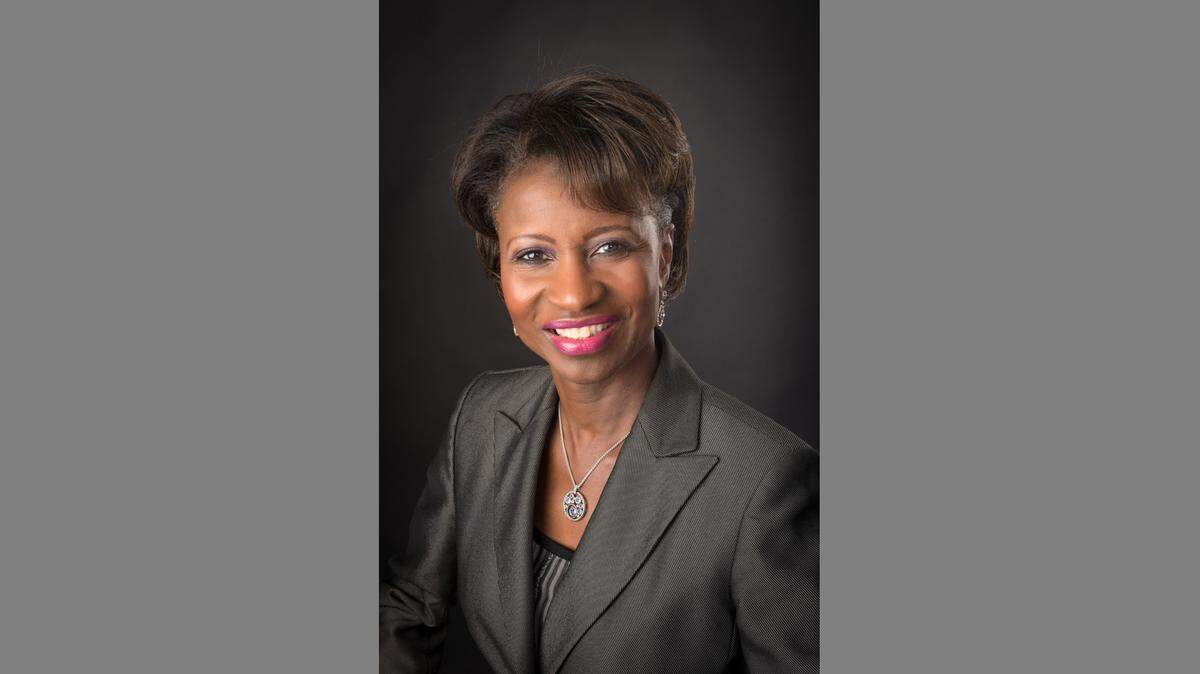
One of the highest paid officials at the Unified Government of Wyandotte County/Kansas City, Kansas, has also been working for the city of Kansas City, Missouri, raising concerns about the commitment to her full-time job.
Cheryl Harrison-Lee, who was appointed as the interim county administrator for Wyandotte County in January, is also the CEO of the consulting firm Harrison-Lee Development and Consulting.
Her contract with the Unified Government says she can still work as a consultant on the side so long as it does not interfere with her job as county administrator. But commissioners with the Unified Government have raised concerns on how she is able to perform two jobs at the same time and how much of her time she is dedicating toward her job as county administrator.
Several commissioners have heard complaints from staff within the Unified Government that Harrison-Lee is hard to reach and is at times unavailable, several commissioners told The Star.
“It’s been pretty tough, I won’t lie to you, because it doesn’t necessarily feel like you’re getting the service of county administration,” said Andrew Davis, a commissioner for District 8. “It feels like we’re getting the service of a consultant, and there’s nothing wrong with that, but we didn’t ask for a consultant. We asked for a county administrator.”
“I want a full time administrator,” said Mike Kane, Commissioner for District 5. “I want them to focus on Wyandotte County and Wyandotte County only.”
“Commissioners began to receive feedback from our team members that Ms. Harrison-Lee was not available for them to receive guidance from her to do their job,” added District 2 Commissioner Angela Markley.
In a text message to The Star, Harrison-Lee said her company represents clients in various industries across the region and none of them are affiliated with the Unified Government. It’s unclear how many cities her company works with.
Harrison-Lee did not respond to detailed questions. Mayor Tyrone Garner, who championed her appointment, did not respond to multiple requests for comment.
Harrison-Lee’s contract with the Unified Government allows for her to accept consulting or other business opportunities, “with the understanding that such arrangement must not be incompatible or interfere with or conflict with the duties and responsibilities,” of her job, her contract says.
Harrison-Lee’s consulting firm has been under contract with Kansas City, Missouri for several years. It helps administer the Central City Economic Development tax. That’s a special sales tax that raises funds to boost development on Kansas City’s East Side, where neighborhoods were redlined by banks and neglected by political leaders for decades.
While she has been consulting with the CCED for several years, her firm is now up for a contract worth more than $3 million to take over day-to-day administration of the program.
The Code of Ethics for the International City Managers Association points to teaching, writing and consulting as permissible outside work that does not necessarily result in a conflict of interest. But that organization says its members should always notify the governing body of those outside activities in advance.
Several Wyandotte County commissioners said they were unaware of Harrison-Lee’s ongoing consulting work.
“Even if this administrator isn’t violating any law, it can certainly look bad if she’s not performing her duties that taxpayers are funding her to do and often the perception can be just as harmful and it can call into question that public servants should be serving the public interests, not minding their own pockets,” said Aaron Scherb, director of legislative affairs at Common Cause, a non-partisan government watchdog nonprofit.
Changing leadership in WyCo
Doug Bach previously served as county administrator from 2014 until his retirement on January 6, shortly after Garner defeated incumbent David Alvey for the mayorship.
Bach received more than $800,000 in a separation agreement with the Unified Government.
The same day Bach retired, commissioners voted 10-0 to approve a 15-month contract with Harrison-Lee to serve as interim county administrator. She was recommended by the newly elected mayor.
She became the first woman and Black person to serve in the role — a month after residents of Wyandotte County and Kansas City, Kansas, elected Garner as its first Black mayor.
“I selected just looking at her resume, because of her qualifications and because of my belief that this appointment is what Wyandotte County needs at this time to really address some of the needs that we have within our community when you talk about taxes, when you talk about investing in the disinvested parts of our community, as well as the leadership that’s needed to really move the Unified Government forward,” Garner said during the full commission meeting Jan. 6.
Harrison-Lee’s tenure is scheduled to run through April 1, 2023. Before or at the end of her term, the commissioners can vote to make her the permanent administrator. Garner has indicated a desire for Harrison-Lee to fill the position in a permanent capacity.
Harrison-Lee’s base salary is $249,995.20, according to her contract. She also receives a $1,600 a month car stipend – a $24,000 benefit over the life of her contract. Bach’s base salary was $209,000.
During a special session meeting last month in which the commission, Harrison-Lee and Garner were discussing the budget for 2023, Markley asked Garner to start the process of beginning a nationwide search for a permanent county administrator so the commission has enough time to find a new person if Harrison-Lee decides not to continue with the job. Garner declined to begin a search.
“I haven’t crossed that bridge yet and I’m not prepared to,” Garner responded.
Several commissioners told The Star they were disappointed in his response, preferring to start the search for a permanent administrator.
“I’m disappointed for the voters and the taxpayers of Wyandotte County,” Davis said. “They deserve transparency. They deserve better than what is being done right now. They deserve a county administrator that is going to be permanent, that is going to have no other employment, no other distractions.”
Harrison-Lee’s background
Since 1990, Harrison-Lee has worked in multiple municipal governments. Her tenure includes more than 20 years working for multiple Florida cities, including Orlando, Titusville, Eatonville and Daytona Beach, according to her Linkedin profile.
In 2012, she became city administrator in Gardner, a rapidly growing community in southern Johnson County.
She left that post in 2018 after being placed on administrative leave under mysterious circumstances. The mayor and city council members refused to comment about what they termed a “personnel matter.” She received $350,000 under a separation agreement with the city.
That year she began her own consulting firm.
In May 2020, Gov. Laura Kelly appointed Harrison-Lee as the executive director of the Kansas Recovery Office, which was charged with leading the state’s pandemic recovery efforts.
But she stayed in that position for less than three months. A July 27, 2020, news release from the state said Harrison-Lee had “taken an interim job and will return to the private sector.”
A year prior, Kelly also appointed Harrison-Lee to the Kansas Board of Regents. Her term is scheduled to end in June 2023.
When introducing the new administrator at a Jan. 10 public event, Garner rattled off a list of topics he expected her to tackle in the UG’s top staff role. Those included streamlining government, auditing government functions, abating blight, enhancing essential services and lowering taxes and fees.
“I can reassure the public that Ms Harrison-Lee brings a wealth of experience and expertise in her knowledge of management, administration, leadership and effective governance,” Gardner said. “Looking at Ms. Harrison-Lee’s experience, track record of success and her vision for a more vibrant and resurgent Wyandotte County Kansas, I was left with no doubt that Ms. Harrison-Lee was the best choice for our community, not just today, but moving forward.”
Garner pledged the administrator would enjoy “unwavering commitment from this mayor to fully support Ms. Harrison-Lee.”
For her part, Harrison-Lee said she was committed to creating change in the local government. She said she would bring a “fresh sense of energy and optimism” to the office.
“In this new role, I believe it’s my duty as a responsible public servant to continue to serve with integrity, transparency and with an unapologetic commitment to smart, sound leadership and accountability,” she said. “I am here for you and I want you to share with me what concerns you the most.”
Central City Economic Development
Voters in Kansas City, Missouri, approved the central city tax in 2017 to breathe new life into the long-depressed neighborhoods east of Troost Ave.
The vote was a result of frustration from East Side leaders who for years listened to unfulfilled promises from politicians to revive the urban core.
The one-eighth of a penny sales tax brings in about $12 million per year. While it’s helped some projects get off the ground, volunteer board members have faced obstacles at City Hall in getting the funds onto the streets.
One challenge has been staffing: Currently, CCED has no offices and no direct employees, save for two City Hall employees the city has assigned to work on CCED projects.
Harrison-Lee’s firm has contracted with the city to help administer the program.
The city inked a two-year contract with her company in March 2019. The contract was worth up to $182,000 per year. That was extended another two years, making her firm eligible for up to $728,000 in taxpayer dollars.
Last year, the city issued a request for proposals for a CCED administrator that could help hire an executive director, develop organizational policies and develop a communication and marketing strategy, among other responsibilities.
But no entities, including Harrison-Lee’s firm, responded to that request.
Instead, the CCED board voted to award her firm a multi-year contract to oversee the day-to-day operations of the organization. That proposed contract is worth up to $1,074,700.00 per year over the next three years.
The City Council hasn’t finalized a contract but is expected to take up the issue soon.
D.J. Pierre, chair of the Central City Economic Development sales tax board, noted that the contracted amount is a cap, not a guarantee.
“The reason the number is where it is is because she would be hiring multiple full time employees and then taking out office space within the district,” he said. “That’s also a maximum contract number. I don’t think it’s going to be anywhere close to that.”
Pierre said Harrison-Lee had taken a step back since taking the county administrator job. Since her appointment, employees of her firm have played a larger role with the CCED.
With challenges at City Hall, Harrison-Lee’s firm has been instrumental in shaping a strategic plan, analyzing proposals from developers and tracking metrics – like the creation of new affordable housing units – for the organization.
“I really like the work that Cheryl and her firm have done,” Pierre said. “They’re very professional and above board and I don’t think they’d put themselves in a position to risk the reputation of the CCED or their own professional relationships.”
Pierre said he didn’t see any potential conflict between Harrison-Lee’s work in Wyandotte County and her company’s work with the CCED. He noted that the CCED only uses the funds it collects from taxpayers, not general fund dollars from the city. And the organization doesn’t compete with other cities for opportunities like federal grants.
“I can’t identify anything crossing paths,” he said.
Two commissioners said they were concerned Harrison-Lee was working with the city across the state line. Kane said it’s a conflict of interest.
Brian McKiernan, commissioner for District 2, first told The Star it didn’t really bother him. But he changed his mind when he found out Harrison-Lee was seeking a new multi-year contract.
“I’m increasingly concerned, not only for how you do two full-time jobs at the same time, but also about the potential for a conflict of interest between those two jobs,” McKiernan said. “I need to be educated about what steps have been taken, or are being taken to reduce or eliminate the possibility of a conflict of interest.”