Before Alzheimer’s, many get mild cognitive impairment. Never heard of it? You should
READ MORE
Fading Memories
Is it normal aging, or something more serious? Mild cognitive impairment is little known, but it could be a sign of Alzheimer’s.
Expand All
A retired lieutenant colonel in the U.S. Air Force, Robert Perry has long prided himself on his thinking, having had the kind of sharp and nimble mind that, when he was a young combat pilot, allowed him to fly F-111 jets at more than 1,500 miles per hour.
Perry spent 22 years in the military, 20 more making decisions with the Johnson County Airport Commission until his 2012 retirement.
But more recently he noticed his memory slipping — and he worried. His dad died of Parkinson’s disease, although doctors say he has no real signs of that. His mother lived to 89. She developed dementia toward the end.
Perry, 74, of Overland Park, said it was his wife Nancy who noticed his short-term memory was “fading a little.”
“We’d be talking about something, like going somewhere,” he said. “We would get in the car and start driving, and I would have forgotten where it was that we were going. ... Nancy would have to remind me.”
He’d momentarily forget which streets to turn on, although he’d turned on them thousands of times before. He was great at remembering relatives’ names, but friends’ names sometimes escaped him until they came rushing back.
“It was frustrating to me,” Perry said, enough to see if it was more than normal aging. The neuropsychological test of his mental processes and memory lasted more than two hours.
His diagnosis was MCI, mild cognitive impairment. Despite affecting some 8 million older Americans — from 8% of those age 65 to 69 up to 37% of those age 85 and older — MCI remains mostly unknown to the vast majority of people. Some 82% of adults have little or no knowledge of it, according to a report released last month by the national Alzheimer’s Association.
Mild cognitive impairment, also known as mild neurocognitive disorder, is defined as a condition in which one has a slight but noticeable decline in mental abilities — meaning any combination of memory or reasoning, language skills, judgment — that is more than one might expect from normal aging.
But it also is not dementia, meaning it is not severe enough to interfere with the normal activities of daily living like eating, cleaning, dressing or hygiene, moving about on one’s own.
For many people, mild cognitive impairment is an early sign of Alzheimer’s disease, a kind of pre-Alzheimer’s that develops before dementia is obvious. Studies show that when a group of people, from age 65 and up, are diagnosed with mild cognitive impairment, close to 50% within five years (or about 10% each year) will progress to a diagnosis of Alzheimer’s.
“But there’s also a 50% chance that they won’t,” said Russell Swerdlow, a neurologist and the director of the University of Kansas Medical Center’s Alzheimer’s Disease Research Center.
For others, MCI can be caused by something completely aside from Alzheimer’s, such as obstructive sleep apnea or memory-hurting medications, depression or other disorders like Parkinson’s disease. Other causes of MCI can be vascular problems such as undetected strokes, vitamin B-12 deficiencies or mood disorders.
A physician’s first job is to ferret out other possible causes. In cases where those problems are treatable, the cognitive impairment can often go away.
It’s the many questions about MCI — who gets it, why, how it might be stalled, prevented, or kept from advancing to the worst of Alzheimer’s — that have researchers nationwide eagerly studying the condition.
In the U.S. alone, 159 studies centered on MCI are now recruiting participants with another 40 ongoing, according to the U.S. Library of Medicine’s searchable database, clinicaltrials.gov. That number does not count the more than 400 other clinical trials in the U.S. recruiting for studies on Alzheimer’s, a great many of which include MCI participants.
Titles of the studies speak to their range: Sound and Music for Mild Cognitive Impairment; Enhancing Memory in Mild Cognitive Impairment and Early Stage Alzheimer’s; Neurofeedback to Improve Working Memory in Mild Cognitive Impairment.
The KU Alzheimer’s Disease Research Center — one of 33 national centers for Alzheimer’s research funded by the National Institute on Aging — currently has 15 on-going clinical studies, nearly all of which involve MCI participants.
At Washington University in St. Louis, the Knight Alzheimer’s Disease Research Center, also part of the national consortium, is testing several of the more than 140 experimental drugs now being looked at for targeting the earliest stages of Alzheimer’s.
The Alzheimer’s ‘gut punch’
Dale Irwin has been part of two studies — including one in which he slips on a cap that looks at the electrical activity in the brain and an earlier study looking at a medication. He was recently informed that he had been in the placebo, or control group, of the drug study, which is now over.
A retired Kansas City attorney, Irwin, 73, first noticed something was amiss in about 2015 at a time when he was still taking on clients.
“I was a practicing attorney for 45 years,” Irwin said. “I was doing some pretty complex litigation — class actions and things like that, representing consumers. And I always did that without a lot of problems. I could generally start off writing a brief without even doing an outline. I could sketch it out off the top of my head.”
Around 2015, he began to notice that he was having a harder time. He felt less fluid, figuring he was just aging and slowing down a bit.
“I was convinced there was nothing wrong with me,” Irwin said, and a visit to his internal medicine physician confirmed as much, telling him that whatever problems he was having was just normal aging.
But Irwin’s wife, Terry, didn’t agree. She’d been noticing his growing memory lapses.
The couple scheduled an appointment with a neurologist who, indeed, diagnosed mild cognitive impairment. Then, to help with research, Irwin in late 2017 signed up to be part of a study. As part of the study, they scanned his brain for signs of Alzheimer’s .
It’s estimated that close to 6 million people are currently living with Alzheimer’s, with white people making up the majority. Research shows Black and Hispanic people are affected at greater rates, but they are less likely than whites to have a diagnosis.
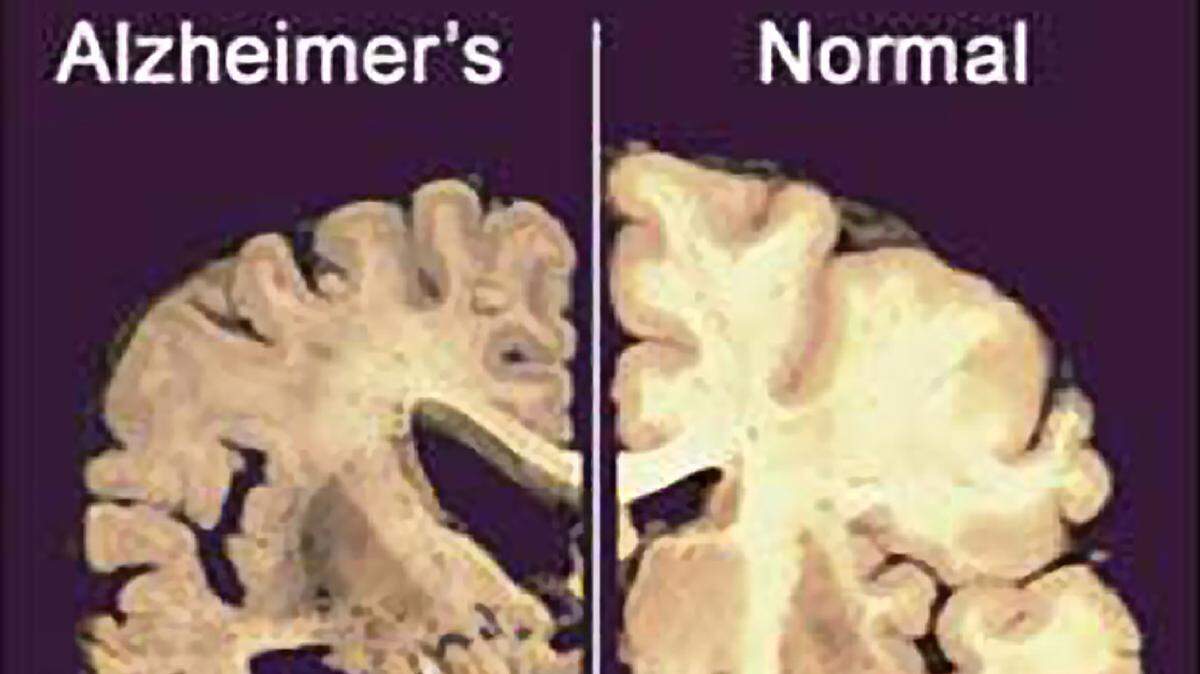
In clinical studies, researchers use two main tools to help diagnose Alzheimer’s over other types of dementia. They look for protein in the brain — clumpy amyloid plaques or tau protein tangles that are a defining hallmark of the disease.
One tool is a PET scan which, using a radioactive tag, allows doctors to see and measure plaques and tangles on a computer image. The other is a spinal tap that allows doctors to detect and measure the proteins in the cerebrospinal fluid.
“Alzheimer’s disease means that someone has plaques and tangles,” said neurologist Suzanne Schindler, a researcher at the Knight Alzheimer’s Disease Research Center. “Actually you accumulate these plaques and tangles for about 10 to 20 years before you develop symptoms. But once people get to high levels of plaques and tangles, they’re also at higher risk for developing dementia.”
As part of his study, Irwin was given a PET scan. Just before Christmas in 2017, he got a call. Plaques and tangles were present. His mild cognitive impairment was an early sign of Alzheimer’s.
“It was a gut punch,” Irwin said, “because my head automatically went to the old guy in the nursing home in a wheelchair in the hall, like mumbling. That was my picture of somebody with Alzheimer’s. And it was horribly depressing.”
He said he went online, as many do, and saw a disturbing statistic. Life expectancy after a diagnosis of Alzheimer’s can be as short as three years or as long as 20. But on average, death comes in eight to 10 years after diagnosis.
“I even told my wife at one point, I’m just going to off myself,” Irwin said. “I don’t want to go through that crap. I don’t want to be a burden to you.”
But that was five years ago, before he experienced firsthand how the disease can progress quickly in some, but can move very slowly in others. Although he concedes that his short-term memory is ”shot” — “I’m talking about real short-term memory,” he said. “It’s like not remembering I laid a paper down two seconds ago” — his diagnosis remains mild cognitive impairment.
At some point in the future, he said, he knows it’s possible that he may need to take up residence in a memory care unit. But there is no certainty that that will happen. At this point, he is also looking forward to more years.
“Where I am today, as opposed to where I was when I got the gut punch news, is just miles away,” Irwin said. “I look back on it now, on the past five years, and I really almost have a sense of gratitude for having an early diagnosis.”
Making lifestyle changes
Irwin’s early diagnosis, he said, led to him doing advocacy work through the Alzheimer’s center and to his involvement in clinical studies. There is no medication that halts mild cognitive impairment related to Alzheimer’s, but the medication Donepezil (Aricept) has been shown to improve some symptoms for a limited time.
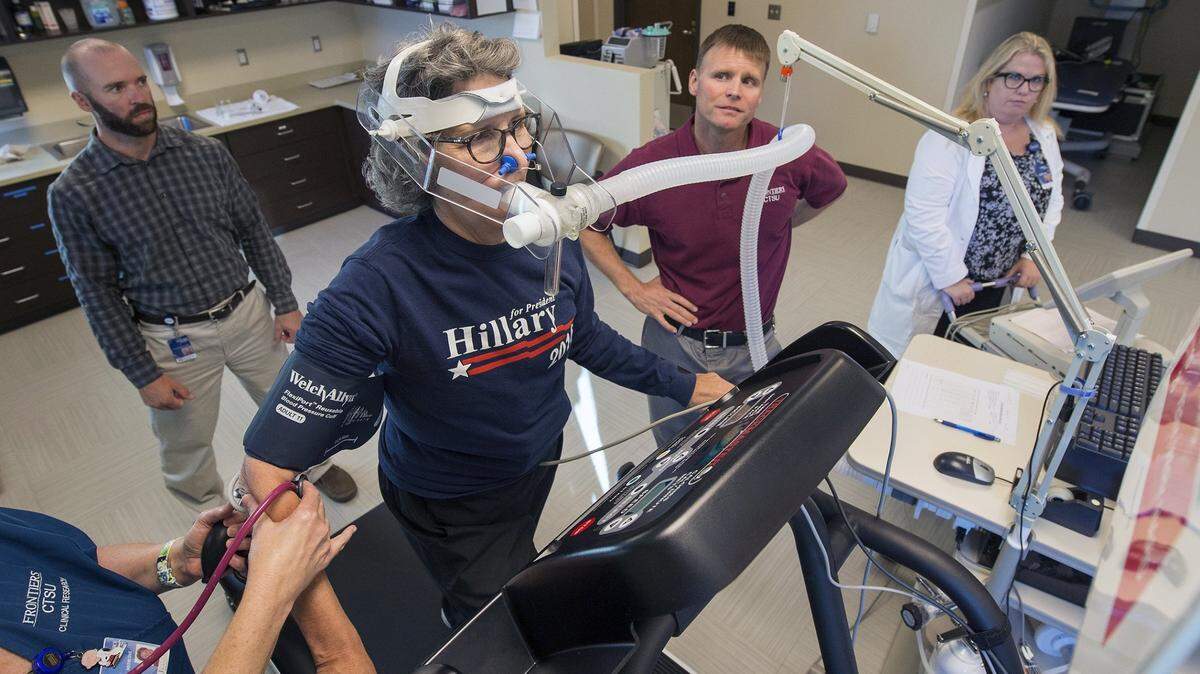
Early diagnosis, he said, has allowed him to put a greater focus on the six lifestyle changes that research shows may help improve cognition affected by MCI and Alzheimer’s, even if they don’t stop the disease. They are:
▪ Exercise: getting 30 minutes of aerobic exercise at least five times a week. Studies are now looking what possible benefits weight-bearing exercises, like weight-lifting, may also have.
▪ Diet: A Mediterranean-style diet focused on dishes prepared with extra-virgin olive oil, fish, fruits, purple berries and vegetables.
▪ Remaining socially active, staying connected to family and friends.
▪ Reducing stress.
▪ Getting a healthy amount of sleep.
▪ Cognitive engagement: keeping the brain active and stimulated through mentally challenging tasks, brain games or learning new skills.
Irwin was working on renovating a classic Airstream trailer five years ago. He continues to work on it to keep his mind active.
“It really is good for me, you know?” he said. “I come out here in Pleasant Hill where I have it. Just spend the day working on it. I can see that I’ve slowed down in being able to figure things out. But I still figure things out. And I don’t get frustrated. I don’t bag on myself for being slower. I still manage to do things correctly, and they’re kind of complicated.”
An avid runner who said he’s done about 35 marathons over the course of his life, Irwin said he used to feel he could eat anything he wanted. He’s taken up more of a Mediterranean diet.
“My diet has changed quite a bit, and for the better, really,” he said.
Perry, the retired Air Force pilot, has made changes of his own. A self-described introvert, he said his MCI diagnosis has prompted him to become more social with his Overland Park neighbors. He’s begun to take Aricept and gets regular speech therapy to help him retrieve words that might sometimes fail him.
When he and Nancy were younger, they both played mahjong. Nancy still plays and he’s taken it up again, along with chess.
“She’s much better than I am, so that helps,” Perry said. “I’m doing it specifically, trying to jump-start my memory on different things.”
This story was originally published April 13, 2022 at 5:00 AM.