
On The Vine: Black History Month & baby RiRi


I’ve got an awful memory, but I’m pretty certain I hopped on this very newsletter about a month ago and spouted off about declaring 2022 the year of joy.
I’m trying to remind myself that. Every day. Especially this month.
The minute the calendar turned over to Feb. 1, I was acutely aware of my need to tap into, hold onto and facilitate joy.
That’s one reason why, as I mentioned last week (for the loyalists), The Star has embarked on a project to collect stories and moments in pictures of Black joy from folks in and around Kansas City (the last day for submissions is Feb. 14). It’s also one of the reasons we’re working with Black Student Unions at area high schools to tell Black stories and Black history they want to learn more about.
But joy for me isn’t solely tied to work. The 2022 credo is why after every morning meeting here at The Star I annoy my cat and neighbors by blaring Janet Jackson — the doc on Lifetime is a must-watch — Carly Rae Jepsen, the “Encanto” soundtrack, as I dance around the apartment, voice at full blast.
The crusade for joy is why every day this month I’m tweeting a reminder to myself to rejoice in Blackness.
So I’m curious, Black people, what are you doing to shine a light on joy?
Around the block
In the Kansas City coffee industry, these Black entrepreneurs are brewing change
The lockdown period of the pandemic was long and wandering for most of us. These Black creators though, used the time to dive into what they love and begin to transform the local coffee industry.
The Star’s J.M. Banks writes:
Like many folks, Brent Rice was bored.
The COVID-19 lockdown had begun, and he was stuck inside his home in Independence. He couldn’t even go out to get a good cup of coffee.
So he decided to use those long hours to make his own. Not just brewing it, mind you. He learned how to buy the raw beans and roast them himself, studying and testing different methods...
Rice stands among a growing number of local entrepreneurs who created Black-owned coffee brands during the pandemic, slowly breaking into Kansas City’s predominantly white coffee scene.
Alongside Rice, there is now Black Drip, founded by two Kansas Citians whose day job was helping others create startups, and Kinship Cafe, a new Kansas City, Kansas, coffee shop that brews community along with its coffee.
Only recently, their feats may not have been possible. But they are capitalizing on the strength of the “Buy Black” movement in Kansas City, inspiring them to take the leap of faith into the unknown.
Check these out too...
Harris-Stowe State University in Missouri among latest HBCUs to receive bomb threat
Vandalized Jackie Robinson memorial finds new home at Kansas City’s Negro Leagues museum
Feds think KCK cop, ‘a player in a much bigger operation,’ killed Rhonda Tribue himself
‘I feared I would become another statistic’: Kansas mothers look to curb maternal deaths
Taye Diggs, Kansas City’s Shane Evans create children’s book about racial injustice
Beyond the block
Here’s the story behind Black History Month — and why it’s celebrated in February
Seemed only a matter of time the scores of individuals decrying critical race theory would come for Black History Month, which is sadly — I say from experience growing up in predominantly white spaces — the only time Black students feel seen, heard, or “important.”
We do our best to combat ignorance with knowledge.
For NPR, Jonathan Franklin lays out what and why Black History Month is:
Critics have long argued that Black history should be taught and celebrated year-round, not just during one month each year.
It was Carter G. Woodson, the “father of Black history,” who first set out in 1926 to designate a time to promote and educate people about Black history and culture, according to W. Marvin Dulaney. He is a historian and the president of the Association for the Study of African American Life and History (ASALH).
Woodson envisioned a weeklong celebration to encourage the coordinated teaching of Black history in public schools. He designated the second week of February as Negro History Week and galvanized fellow historians through the Association for the Study of Negro Life and History, which he founded in 1915. (ASNLH later became ASALH.)
The idea wasn’t to place limitations but really to focus and broaden the nation’s consciousness...
ASALH designates a new theme for Black History Month each year, in keeping with the practice Woodson established for Negro History Week.
This year’s Black Health and Wellness theme is particularly appropriate, Dulaney said, as the U.S. continues to fight the coronavirus pandemic.
More for you to read...
FBI identifies 6 juveniles as persons of interest in bomb threats at Black colleges
Art Spiegelman decries Tennessee school board for removing ‘Maus’ from its curriculum
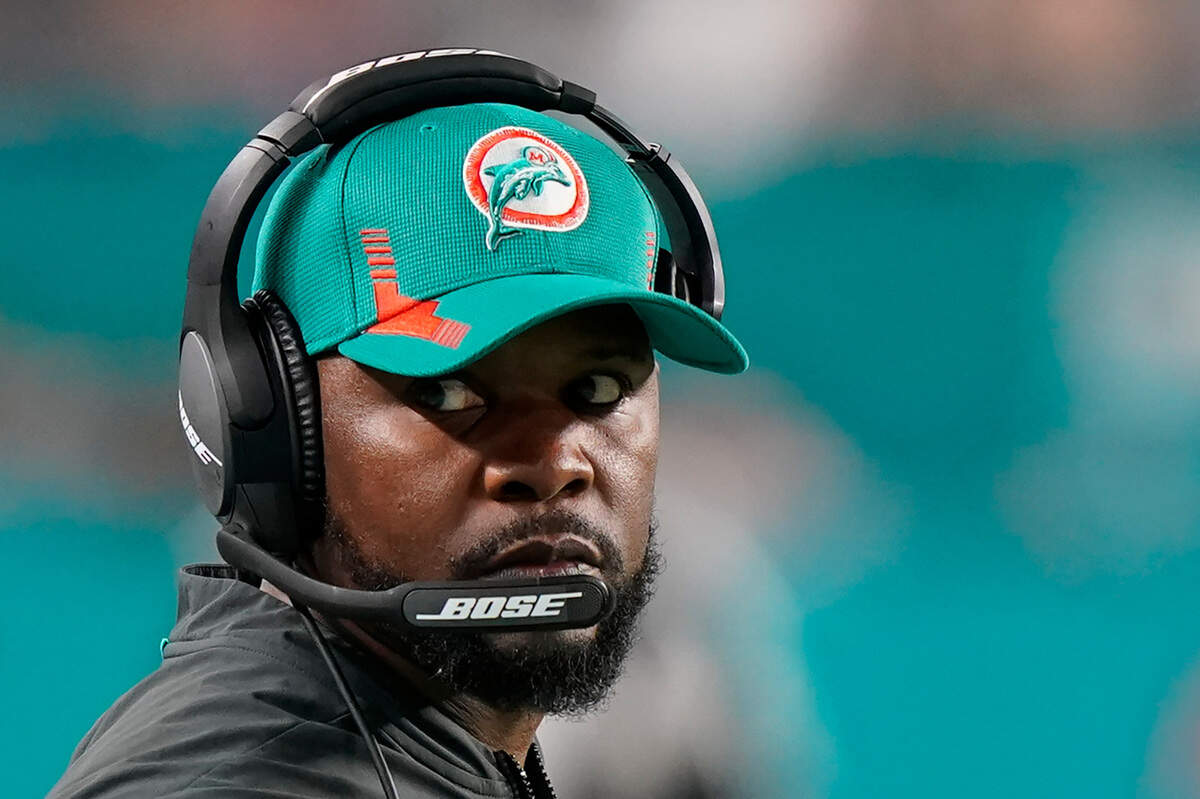
The Continuing Humiliation of Black NFL Coaches
Former Miami Dolphins head coach Brian Flores this week sued the NFL and three teams — the Dolphins, Denver Broncos, and New York Giants — accusing them of discrimination in hiring and his firing by the Dolphins.
ESPN reported that in the 58-page lawsuit Flores alleges that Dolphins owner Stephen Ross attempted to incentivize him to “tank,” or purposely lose games, shortly after he was hired in 2019. He also accused the teams of interviewing for head-coaching vacancies for no other reason than compliance with the NFL’s Rooney Rule, requiring teams to interview minority candidates for their open positions.
Jemele Hill wrote in The Atlantic last month:
Coaches such as David Culley, just fired from the Houston Texans, and Brian Flores, of the Miami Dolphins until very recently, face a major problem in the NFL. It’s not their pedigree. It’s not their experience. It’s not their ability to relate to players. It’s not their offensive or defensive schemes.
It’s that they’re Black.
That conclusion might seem harsh, but it’s been almost 20 years since the NFL adopted the Rooney Rule, which was intended to give candidates of color a better shot at head-coaching jobs and was eventually expanded to cover front-office openings as well. What the league has to show for its efforts in 2022 is the Pittsburgh Steelers’ Mike Tomlin as the lone Black head coach in the league. The reason is painfully obvious: In a league where roughly 70 percent of players are Black, owners have no real interest in seeing Black coaches thrive...
Since its inception, the NFL has twice expanded the reach of the Rooney Rule in an effort to force NFL owners to consider minority candidates more seriously. The rule was well-intentioned, and sometimes over the years it has appeared to have some impact. But no substantive change will occur as long as NFL owners continue to see Black coaches as expendable. These owners’ failure to value Black male leadership becomes obvious at this time every season—just as it did last year. Unfortunately, it’s a serious problem that the NFL doesn’t seem to have the motivation or will to solve.
For the culture

Rihanna Is Pregnant! Singer and Fashion Icon Expecting First Baby with A$AP Rocky
Forget what you heard, this is the biggest news of the week. This is Black history.
People’s Benjamin VanHoose and Georgia Slater report:
Rihanna has babies on the brain!
The “Diamonds” singer and fashion mogul, 33, is pregnant, expecting her first baby with rapper A$AP Rocky.
The couple was photographed out in New York City over the weekend, where Rihanna debuted her baby bump while wearing a long pink jacket. Her oversized outerwear was unbuttoned at the bottom to reveal her growing bump adorned in a gold cross with colorful jewels.
Work, work, work, work, work
Seek joy
Did someone forward this newsletter to you? You can sign-up here. If you’d prefer to unsubscribe from this newsletter, you can do so at any time using the “Unsubscribe” link at the bottom of this message.