Kansas City nurses protest for more staffing, safer work conditions as COVID surges
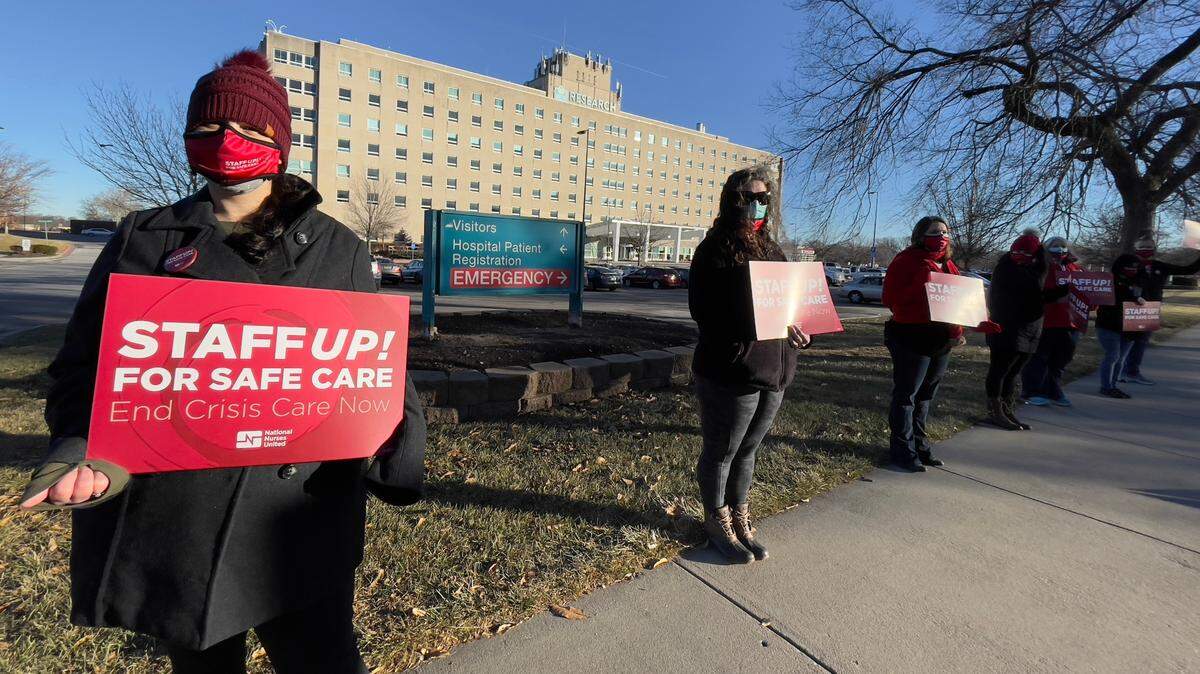
In her 42 years as a nurse, Cheryl Rodarmel has never seen work conditions created by a staffing shortage be as bad as they are now.
“I think the moral injuries that nurses have experienced pre-COVID and right into COVID itself has caused nurses to want to leave the bedside,” said Rodarmel, a rehabilitation nurse at Research Medical Center in Kansas City.
Rodarmel was one of about two dozen nurses from Research and its sister hospital, the Menorah Medical Center in Overland Park, who rallied outside the hospital Thursday morning demanding that the hospitals’ owner, HCA Midwest Health, increase staffing and provide nurses the protections they need at work.
The rally was one of several held in cities across the country by members of the National Nurses United, the nation’s largest union of registered nurses. The nurses believe there isn’t a nursing shortage, rather a lack of people willing to work under the conditions created by the hospitals.
Safety is the top priority at HCA Midwest Health, especially as it contends with the surge of COVID-19 patients in the region, said Christine Hamele, a spokeswoman for HCA Midwest Health.
To keep its staff and patients safe, the hospital has policies in place to protect them from COVID, including universal masking for employees and visitors and providing all staff with the necessary personal protection equipment, she said.
“The caregivers at Research Medical Center and Menorah Medical Center have been working extremely hard — both during this latest surge and for the past two-plus years as we’ve battled COVID — and we’re proud of how everyone has worked together to provide high-quality care to our patients during this critical time,” Hamele said.
Patricia Conley, clinical nurse coordinator for the progressive care unit at Research, said that there was a nursing shortage even before the pandemic and the hospital administration has “done an incredible job finding support in the first wave of the pandemic.”
That included bringing in a group of nurses from Tulane Medical Center in New Orleans and most recently a team of medical professionals from the National Disaster Medical System to provide surge support, she said.
For nurses experiencing burnout, the hospital provides multiple resources to help them cope and deal with an stress that is impairing their daily lives, Conley said.
The staff across all departments at the hospital works “24/7 to care compassionately for each one of our patients,” she said. “I feel that they go over and beyond to try to maintain the highest level of care.”
Even before the pandemic, the nurses union had been warning the hospital that the staffing plans were not safe. Since the COVID pandemic started, staffing plans have left fewer nurses per shift, said Lisa Broeker, a nurse for Research for 12 years who currently works in labor and delivery, and attended the protest.
“At this point, nurses are getting burned out and leaving in droves and the staffing crisis just gets worse and worse,” Broeker said. “We really need the hospitals to step up and make a commitment to staff retention and implementing safer staffing plans with more nurses.”
When nurses are spread too thin, it’s demoralizing and heartbreaking and some quit to work elsewhere or find other careers, she said.
In December, Research lost 23 nurses and hired only two replacements, Broeker said. Meanwhile, Menorah lost 11 registered nurses and hired only three.
Research currently has about 620 registered nurses, down from close to 800 nurses before the pandemic, the union said. Meanwhile, Menorah has about 313 nurses, down from 350 to 370 nurses prior to COVID.
The staffing levels at Research are insufficient, said Rodarmel, who added that she is often pulled into other units to help care for patients. Even before the pandemic, the hospital was pushing nurses to the their limits.
“Ultimately, we want to be able to come to work, take care of our patients and know our families at home are going to be safe as well,” she said.
She choked back tears as she talked about nurses not having enough time at the patients’ bedsides because of current staffing levels.
“If you don’t have enough time to be able to listen to what the patient says, they will not talk to you,” she said. “You never want a patient to think you’re too busy not to take into their concerns.”
Because of COVID and the surge due to the omicron variant, patients are showing up to the hospitals sicker.
“By the time that we see them in the hospital, they are sick and they need us and we know they need us,” Rodarmel said. “We just want management to know that they’ve got to do something to retain us.”
Michael Evans, a nurse who works in Research’s cardiac telemetry unit, said some nurses in his unit are taking as many as seven or eight patients per shift, about double the workload they should in order to provide patients the care they need.
“Nurses are overextended and we can’t continue to work in in these conditions,” said Evans, who said turnover in his unit is over 60%. “This is just going to lead to more nurses quitting, leaving fewer of us left to take care of the patients. It’s just going to snowball.”f
This story was originally published January 13, 2022 at 3:10 PM.