In Netflix doc ‘Procession,’ KC men recreate abuse they suffered in Catholic church
The call took Rebecca Randles by surprise.
An award-winning Missouri filmmaker was on the phone, urging the Kansas City attorney to meet with him about an idea he had for a documentary.
Robert Greene had seen video of an August 2018 news conference Randles had held in which she called on Missouri and Kansas authorities to launch grand jury investigations into clergy sexual abuse in their states.
Randles spoke along with four men who said they had been sexually abused in their childhood by priests. She referred to a just-released report of a Pennsylvania grand jury that found church leaders had covered up sexual abuse by more than 300 priests over seven decades and identified more than 1,000 child victims. Then Randles revealed that there were more than 230 priests in the Kansas City and St. Louis areas alone who had been sexually abusive.
“Robert called me and he said, ‘I have been watching this video and I’m thinking, wow, this is amazing. I want to do something about that,’” Randles told The Star. “He explained that he had been interested in psychodrama, and he wanted to see if he could meld psychodrama with this film project.”
So began a three-year journey that brought together six men who wrote, directed and acted out fictional scenes based on their memories of the sexual abuse. With the assistance of a trained drama therapist, the project was designed to collectively work through their trauma. The men accompanied each other to places where the abuse occurred and took on roles in each other’s segments.
The result: “Procession,” a feature documentary directed by Greene and created in consultation with the men — Joe Eldred, Mike Foreman, Ed Gavagan, Dan Laurine, Michael Sandridge and Tom Viviano. The film premiered in early September at the Telluride Film Festival and was recently acquired by Netflix.
Film critics have described the documentary as haunting, powerful, harrowing, cathartic, profoundly moving and mesmerizing, and it is being talked about as an Oscar contender.
“Procession” premieres in Kansas City at 7 p.m. Wednesday at Grand Screen at B&B Theatres Mainstreet KC in the Power & Light District. The 118-minute R-rated documentary will be followed by a question-and-answer session with Greene and participants from the film.
The Kansas City premiere is sold out, and the film is scheduled to debut on Netflix on Nov. 19. It also will be released in selected theaters around the country that day, including the Screenland Armour Theatre in North Kansas City.
“Procession” premieres Thursday in St. Louis during opening night of the 30th Annual Whitaker St. Louis International Film Festival and on Nov. 8 at Missouri Theatre in Columbia.
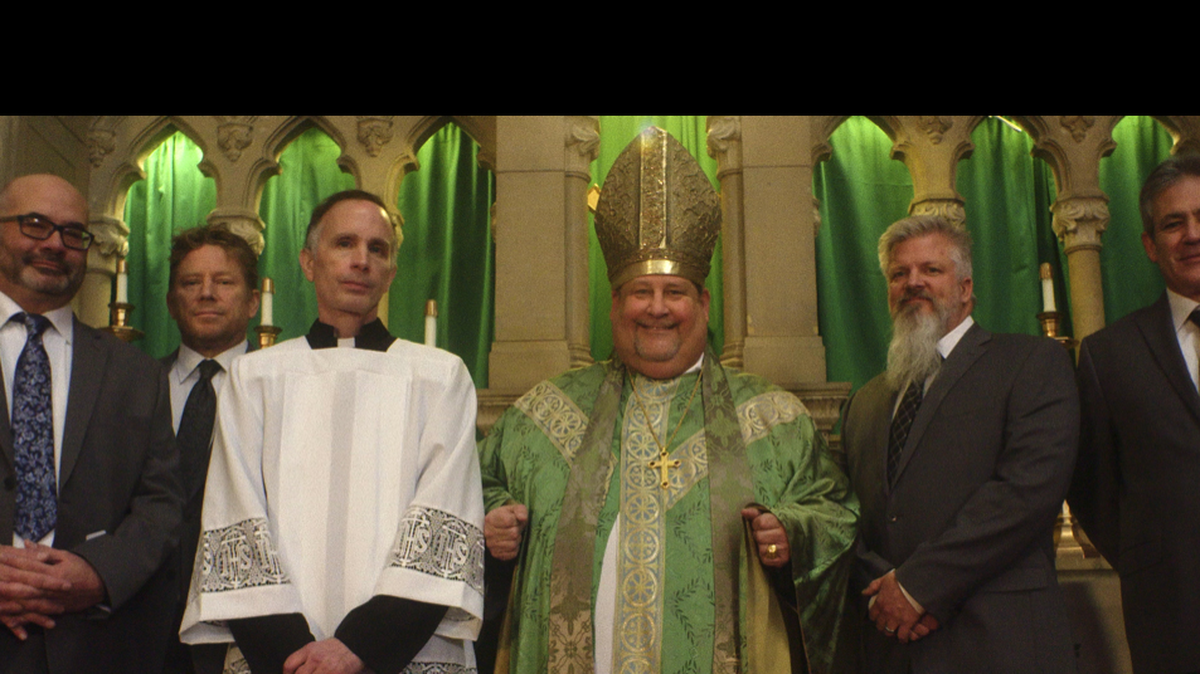
Much of the filming was done in the Kansas City area, and most of the priests who are named as abusers served in the Diocese of Kansas City-St. Joseph. One was with the Archdiocese of Kansas City in Kansas. Four of the six men in the film have received settlements from civil lawsuits, but none of the accused priests has ever been criminally charged. Some of the priests have died, and the highest-ranking — former Kansas City priest and retired Bishop Joseph Hart of Wyoming — is 90.
.png "Procession, Gavagan, Sandridge, Laurine (2).png")
Randles said red flags went up when Greene started describing the project during that first phone call.
“My concern was that that’s kind of like conducting therapy in front of the whole world,” she said.
But after consulting with a well-respected clinical psychologist and meeting with Greene, she decided to get on board. She came up with a list of abuse survivors who might be interested and contacted them. Three of the six who decided to participate — Foreman, Sandridge and Viviano — had taken part in the August 2018 news conference.
“One of the things that I did is I looked for men who were capable of expressing themselves, but also who had had their voices taken from them one way or another,” Randles said. “These guys are stand-ins for every other victim who the justice system failed.”
Influenced by drama therapy
“Procession” is the seventh feature documentary for Greene, who is Filmmaker-in-Chief for the Murray Center for Documentary Journalism at the University of Missouri.
“I sort of reached a point where I was really questioning what the point of making films with real people is anymore,” he said in an interview with The Star. “This is a major intervention into someone’s life. And if you can’t justify that, if you can’t sort of make it meaningful for them, then why do it?”
That’s what was going through his head when he saw Randles’ news conference.
“This was the one story that I would turn off on the radio or not watch, you know, it was the one thing I couldn’t handle,” he said. “And so the combination of this feeling of I just want to help, but also, I’m contributing to the silence by not listening, it just sort of led me to pick up the phone, and me and my producer called Rebecca. And that started the process.”
Greene said the idea of having people stage their own scenes in the documentary was something he’d been working toward for a long time.
“I think there’s a lot of power in staging things, a lot of power in role play, a lot of power in transforming spaces, and I think there’s a lot of truth that can be seen in the act of staging,” he said. “But what I didn’t understand fully, I think, is just the therapeutic power of that.”
A straightforward journalistic documentary, Greene said, could not get at the full effect of the abuse the men endured.
“For people who were raised Catholic, or any other religion, your entire worldview is sort of dominated by this culture that you’re indoctrinated into,” he said. “And so it goes far beyond the abuser. We needed to find another method that could get to the heart of that.”
He said though they’re not engaging in drama therapy in the film, the registered drama therapist they worked with, Monica Phinney, played a crucial role.
“She was so important, because the film was very much influenced by the ideas of drama therapy.”
Like others, Greene said, he had concerns about retraumatizing the men.
“The fear of retraumatization is genuine,” he said. “But it really misunderstands the scope that they’re dealing with every single day. What’s worse is silence, what’s worse is not being listened to, what’s worse is not being given a chance to do something. And these guys can watch this movie, and they can say, ‘You know, I did something. I helped other people.’ And that is a powerful thing.”
Greene said the men all seemed to experience some form of healing through the process. Eldred stopped having the recurring nightmares about his abuse that had plagued him for years. And Sandridge finally stepped foot inside the church where his abuser served.
“Sometimes the healing came from helping,” Greene said, “but everybody, I think, had a moment.”
The men decided to cast the same young actor, Terrick Trobough, to portray them in their boyhood years, “because we’re all that one boy,” Sandridge said.
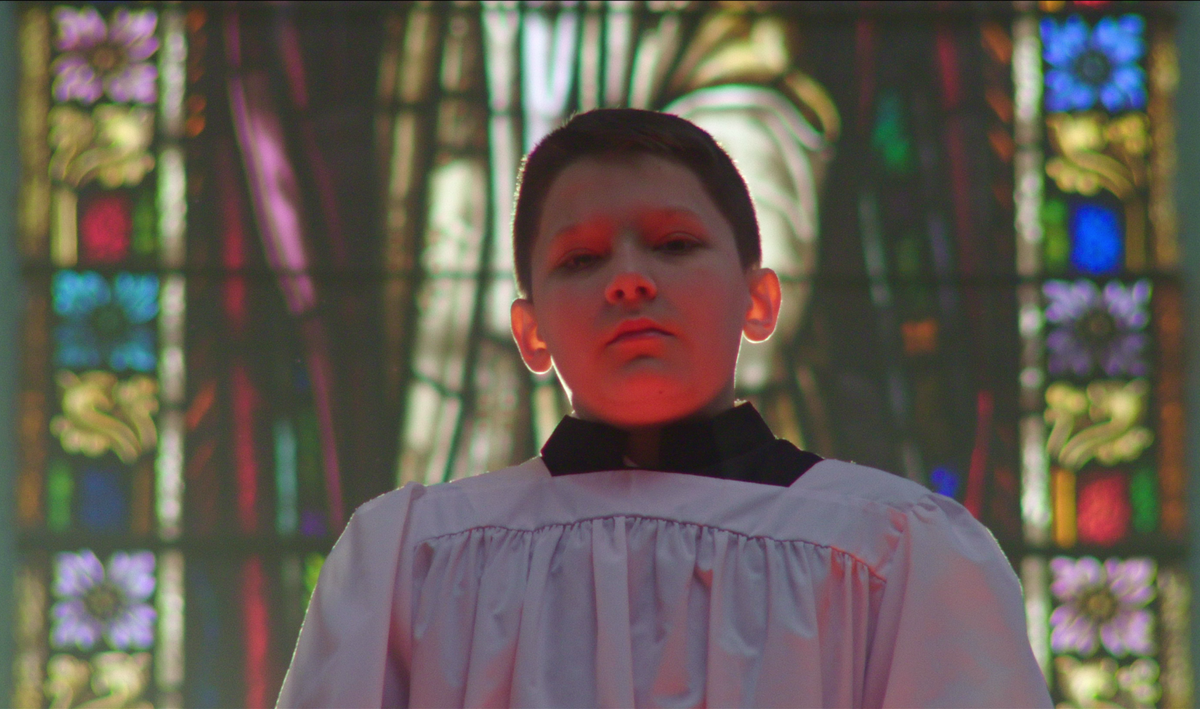
Terrick’s parents describe in the documentary why they let him take on the sensitive role. At first, his mother says, they weren’t going to tell their son about the script “because it was heavy for us as parents.” But after discussing it more, they talked to Terrick.
“And he said, ‘OK. Yeah, I want to do it. This really happened?’” his mother says. “And I said, ‘It did. It did really happen.’”
Greene said they asked the Kansas City-St. Joseph diocese for permission to film inside some of the churches.
“They were not at first willing to let us film in there,” he said. But then Kathleen Chastain, the diocese’s victim resources coordinator at the time, got involved, he said.
“Kathleen Chastain is a hero,” Greene said. “She’s an individual person who was inspired to make real change, and she wants to help and our whole thing was, ‘If you want to help, we’ll take your help.’”
Coming up with a name for the film was challenging, Greene said.
“It was a very difficult film to name, frankly, because words are inadequate,” he said. “That’s kind of the point of making the movie in the first place. So, to come up with a phrase or something, everything is too nauseating or too terrifying, or too this or too that. And procession is people moving forward, right? So that became just sort of this word that kind of stuck in my head.”
Greene said the response to the film has been remarkable.
“People are understanding what it is; they’re embracing it,” he said. “I think that these guys are leaders of a kind of movement. They didn’t choose to be leaders, but they are — of a movement of dealing with trauma.”
Society is just starting to have hard conversations about the effects of trauma on our lives, Greene said, including how the things that happen to us as children have a lasting impact.
“When you watch these guys do their work, and face their demons, and face what happened to them and what was taken from them and face the everyday dilemmas of trauma — when you see that on screen, I think it gives you some hope that you can do it yourself.”
Men supported each other
Sandridge, a Kansas City interior designer, said when Randles called to see if he was interested in taking part in the film, “I laughed.”
“I thought she was playing a practical joke,” he said. “She said, ‘No, I’m not kidding.’” But when he learned the details of the project, he was sold on the idea.
“Robert was just so enthusiastic,” he said of Greene. “He really likes to help people through his art. He really believes that film is healing. And it was like, ‘Yeah, so we’ll give it a try.’ If it could help other people, then why not?”
Though there were concerns about retraumatization, Sandridge said, the men all had each other’s backs.
“When you have other people around you, you can express it, so they understand it, and you can get over it really fast,” he said. “And everyone kind of looked after each other that way.”
Sandridge, who was about 10 when his abuse occurred, said the film has been a positive experience.
“Well, I was always weird,” he said. “And now maybe people understand why I was so weird. So it’s a healing process for me if people understand that one thing can change your whole life. You hear that, you see it, but you really don’t get it. But it’s true for some people. And it helped me get over that one thing.”
Foreman struggles throughout the film to keep his anger in check as he tells of being sexually assaulted when he was in sixth grade during counseling sessions at the priest’s house. Though the Archdiocese of Kansas City in Kansas settled lawsuits with other victims of the priest, it deemed his allegations not credible. He had also filed a lawsuit, but lost the case because the statute of limitations had expired.
“I have so much anger and hatred, I can’t even put it into words,” he says in the film.
After the first assault, he says, his mom took him back to the priest’s house for another counseling session even though he begged her not to. She baked the priest a chocolate cake and dropped her son off, the dessert in hand.
One scene in the film shows Foreman sitting in the lower level of his home, a grown man rocking back and forth with eyes closed as music blares in the background. Foreman says that after he was sexually abused, he would sit and rock in his parents’ dark basement for hours a day. And the rocking has continued ever since, he says.
“If I don’t do this, I’m just not right,” he says. Then, pointing to a photo of Naumann, he adds: “The reason I can’t move forward is not because of the priest that assaulted me. It’s because of this f------ a------ here and the Catholic Church.”
Laurine, who works as a location scout for film productions, was sexually assaulted in fifth grade at a house at Lake of the Ozarks. He tells about how, when he and his brother were adults, their mother arranged for them to meet with the Kansas City-St. Joseph diocese’s independent review board to talk about their abuse.
“It was a whole table of people wanting us to tell these stories that we hadn’t told each other,” he says in the film. “We hadn’t told anybody. And we’re both turning back into little boys — scared and trying to explain what happened to us.”
As the meeting wrapped up, he says, a man at the head of the table spoke. “He says, ‘Tell your mother we’re sorry.’ That was his response to me. And I lost it. And I said, ‘You tell my mother you’re sorry. Because she still believes in you.’”
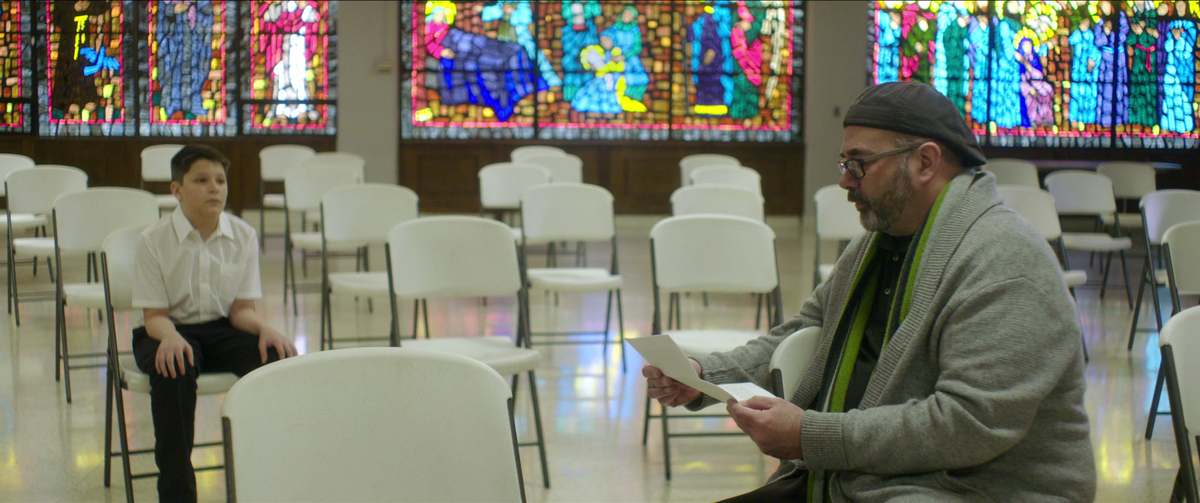
In “Procession,” Eldred goes to Lake Viking near Cameron, Missouri — accompanied by Laurine and Sandridge — in search of the lake house where some of his abuse occurred. When they find it, Eldred walks up to the door. “I’m standing on the porch of my nightmares right now,” he says. He later films his scene at a church in the diocese. In it, he reads an emotional letter he wrote to his 10-year-old self.
For Gavagan, the film is the first time that he’s publicly revealed his identity.
In 2002, Gavagan accused Hart of sexually abusing him as a boy in Cheyenne, Wyoming, when Hart was bishop. Wyoming authorities concluded there was no evidence to support the allegations. But in July 2018, the new Bishop of Cheyenne, Steven Biegler, announced that the diocese had reopened its investigation into Hart. Biegler said a second man had come forward alleging sexual abuse by Hart and that both men’s allegations had now been deemed “credible and substantiated.”
Eventually, a dozen accusers reported allegations. Wyoming authorities opened a new criminal investigation, but it ended last year with no charges being filed. And in January, the Vatican exonerated Hart. Gavagan said the investigation was conducted by a canon lawyer, not a clinical psychologist or someone with child sex abuse training or expertise in interviewing victims in a criminal case.
“They could not determine the truth of my allegations with ‘moral certainty’ even though Biegler found multiple abusers credible and substantiated,” he said.
Gavagan chose to remain anonymous through the years, including in numerous stories in The Star, concerned about how it might affect his family and his contracting business.
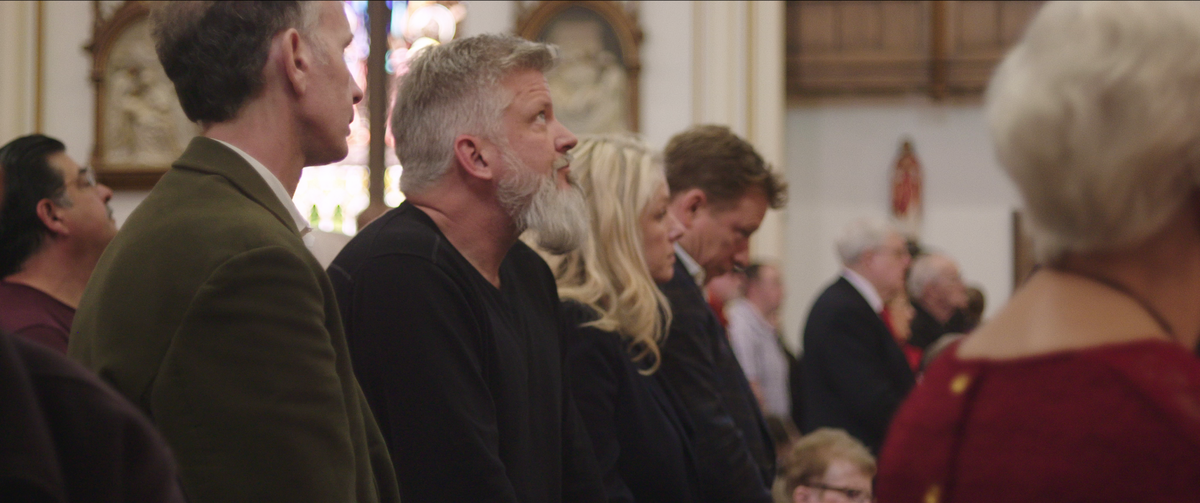
In one scene in the documentary, Gavagan returns to Cheyenne in 2019 and attends Good Friday liturgy at St. Mary’s Cathedral, sitting up front with his sister, Laurine and Sandridge. He can’t remember the last time he stepped foot in the church.
And Bishop Biegler, facing them, says: “I want to add a petition today for healing, for those in society and those in the church. For all those who have been harmed by sexual abuse. That the healing of the Lord would wash over them and that the community of believers would accompany them with great love.”
One of Gavagan’s vignettes involves recreating the bedroom at the rectory in Cheyenne and his abuse that occurred there. Afterward, he spray-paints the entire set white, then destroys it with a sledgehammer.
In an interview with The Star, Gavagan said working with the other men helped him open up about the shame he’s felt all his life and has never been able to talk about.
“I’m a New York City contractor,” he says in the film. “I can chew the balls of a union electrician, but I can’t tell you what happened to me when I’m 13.”
Gavagan said he was in a New York City theater last week after a showing of the film.
“And I’m talking about this thing that I had been bitterly ashamed of my whole life,” he told The Star. “And for the first time, I’m able to think it wasn’t my fault. I was a victim. And I had no responsibility for what happened to me. The shame belongs on the shoulders of the bishop and the people who protected him.”
In August 2020, Gavagan wrote a heart-wrenching letter to Pope Francis, describing how the abuse had shredded his faith and devastated his family. He asked Francis to remove Hart from the priesthood.
“He should be exposed and then laicized by the institution of the Catholic Church, which he has also betrayed,” Gavagan wrote. “I am asking not only for myself, but for my mother and my family and the families of other victims.”
Francis replied in a letter written two days later. He said that as he read Gavagan’s letter, “I felt pain, indignation and great shame in learning that a brother bishop had done these things…”
“Your letter ends with the words, ‘I need help,’” Francis wrote. “For my part, I will make every effort to help. Please know that I am close to you, and allow me to say that, since reading the letter and beginning to reply, I myself have been brought to tears. I ask your forgiveness and I promise that I will seriously concern myself with this matter.”
Five months later, the Vatican’s Congregation for the Doctrine of the Faith cleared Hart of the allegations.
“The thing that I hope can come out of this film is for people to see that someone’s good works do not give them a free pass,” Gavagan said. “If someone is an artist, a painter, musician — whatever they bring into the world that’s good — and they rape somebody, they’re a monster. We don’t give them a pass.”
The father of a 12-year-old, Gavagan said he described the documentary to his child by saying “that there were some men who were very inappropriate with children.”
“And that I was one of the children and that I didn’t speak up because I didn’t think anyone would believe me,” he said. “And this movie is trying to help people speak up.”
At every screening the film has had, Gavagan said, the audience has given a standing ovation at the end.
“And just the idea that these people we don’t even know are finding what we did worthy of that is just incredible.”
This story was originally published November 1, 2021 at 1:35 PM.