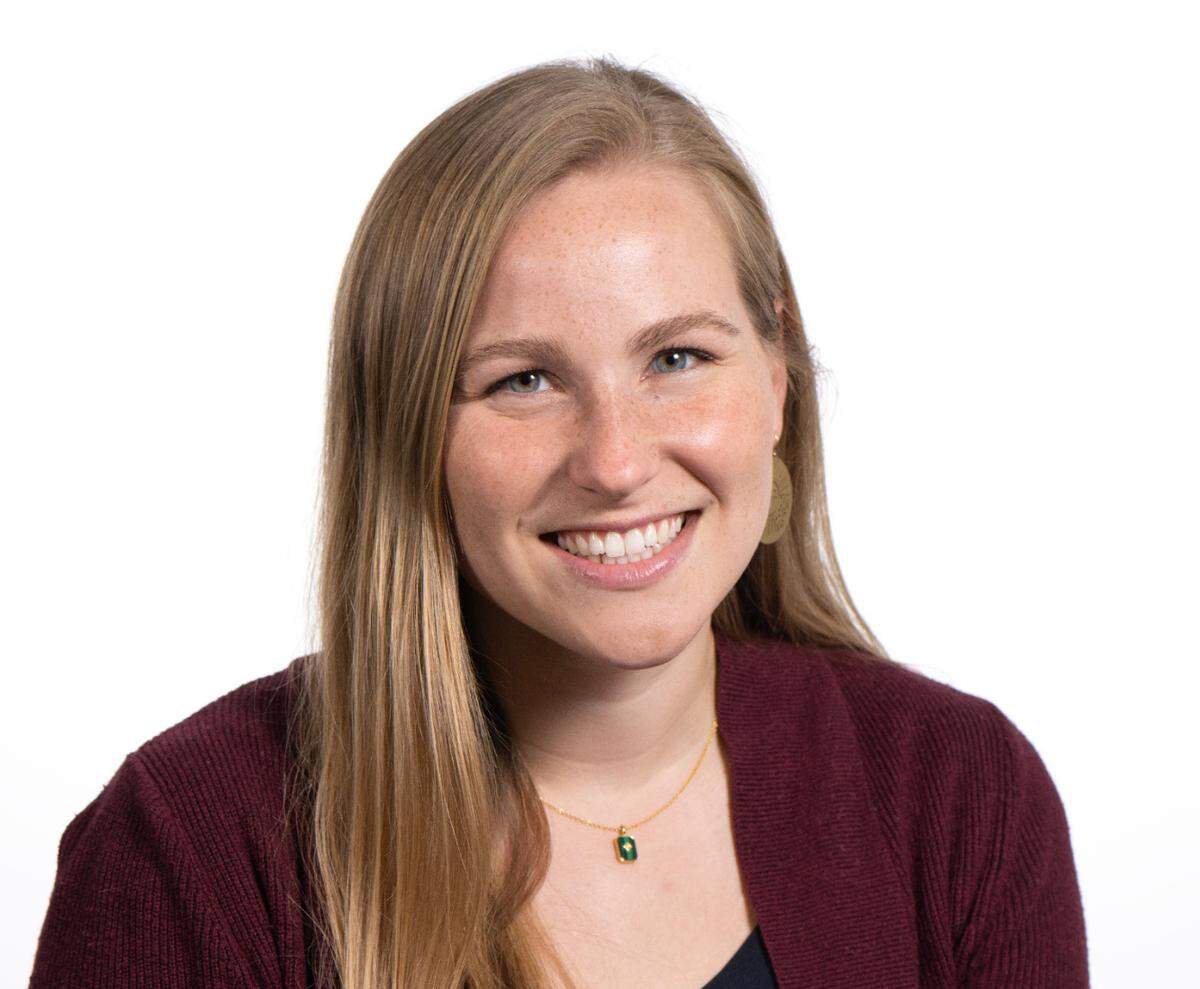
In 2001, these Kansas Citians reflected on 9/11. 20 years later, we asked them again
In 2001, The Star’s Lisa Gutierrez connected with five people across the Kansas City metro to ask what was on their minds in the weeks after the Sept. 11 terrorist attacks that left 3,000 people dead after two hijacked planes crashed into the World Trade Center.
Among those interviewed were a social studies teacher, a health care executive, a firefighter in training, a high school senior and an expectant mother.
Ahead of the 20-year mark since the attacks, we were able to reach three of them again. They wrote to us once more, this time reflecting on their words from two decades ago. They wrote of how the time since has changed their perspectives on the U.S. and the events of that day.
Mahnaz Shabbir
When the Twin Towers fell, Mahnaz Shabbir was working as a health care executive at a Kansas City-area hospital. She now runs her own consulting company, Shabbir Advisors, and lives in Parkville.
In 2001, she wrote: “I am a bit fearful. But what is stronger, what’s bigger is this other piece of me that’s grown, my identity of who I am, probably since Sept. 11.”
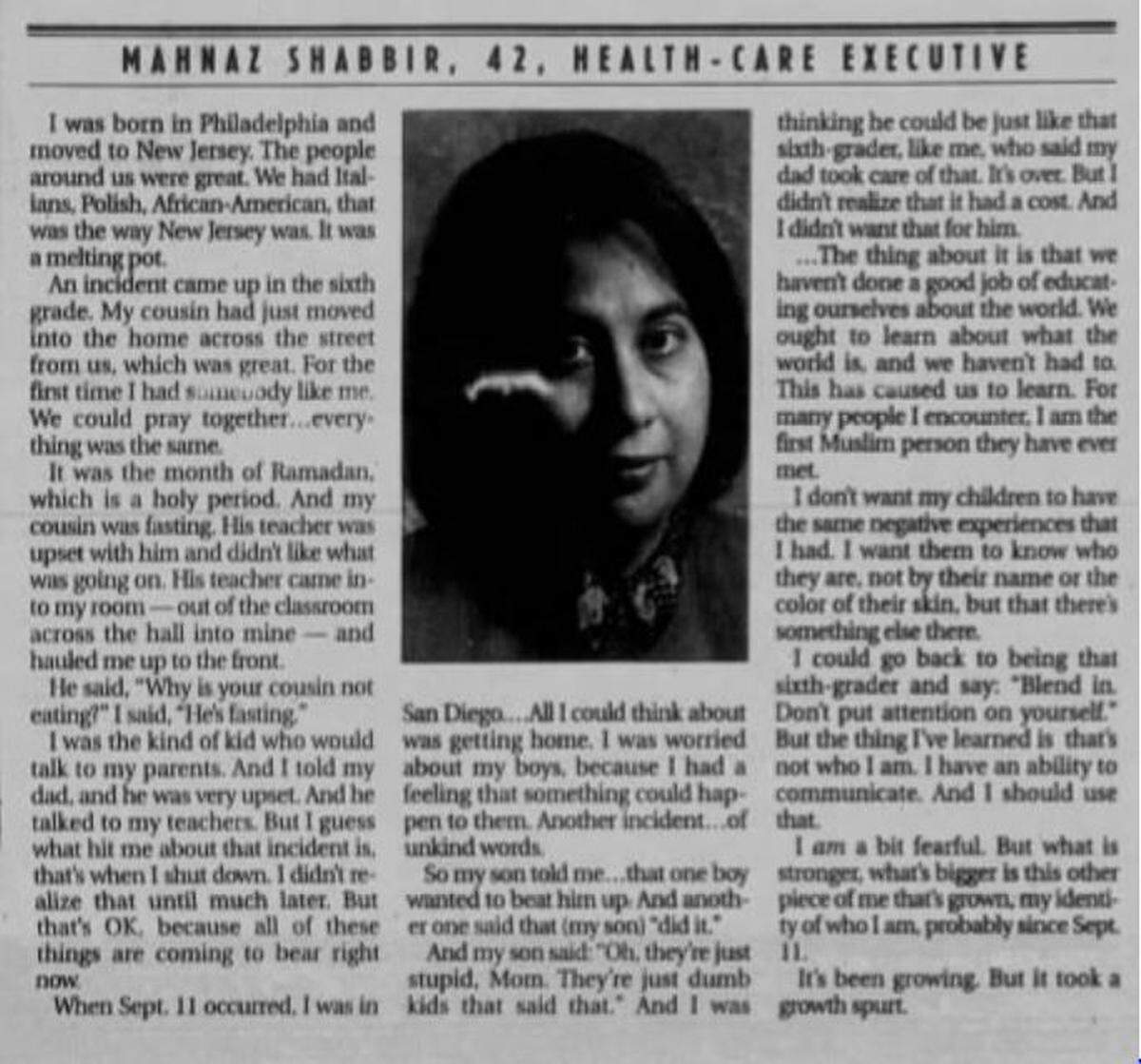
She later went on to submit an essay to The Star in January 2002 titled: “I am an American Muslim Woman.”
Shabbir now writes:
September 11, 2001 impacted every American. For me, as an American Muslim, it had a major impact on my family, my career and my identity.
My four sons ages at the time were 19, 14, 4 and 1. My two older children faced anti-Muslim comments, and I didn’t worry about the two younger boys because they were in day care at the time. However, the anti-Muslim comments that these two younger boys faced throughout grade school were more than those of their older brothers.
Soon after 9/11, the Bush Administration practices toward the American Muslim and Arab populations were extremely punitive. Programs like the Patriot Act spurred many anti-Muslim actions. This anti-Muslim rhetoric increased during the Trump Administration-again impacting my sons and the Muslim community in general.
This had me realize that I had to do something to help educate the community around me. It was my only way to address this negative climate.
In July 2003, I started my own consulting company, Shabbir Advisors, where I was not only able to continue to provide strategic planning services to corporations who needed it but to also provide diversity training to these corporations, government organizations, military schools, secondary schools, universities, non-profits and health care organizations.
In the past two decades, I’ve spoken with soldiers about to be deployed to Afghanistan and Iraq, sharing my faith so that when they were in situations, they would at least have some understanding and appreciation for the people they were trying to help. I helped educate chaplains so they could provide the best spiritual care to Muslim patients they were serving. I went to schools, educating students, professors, teachers and staff about being an American Muslim.
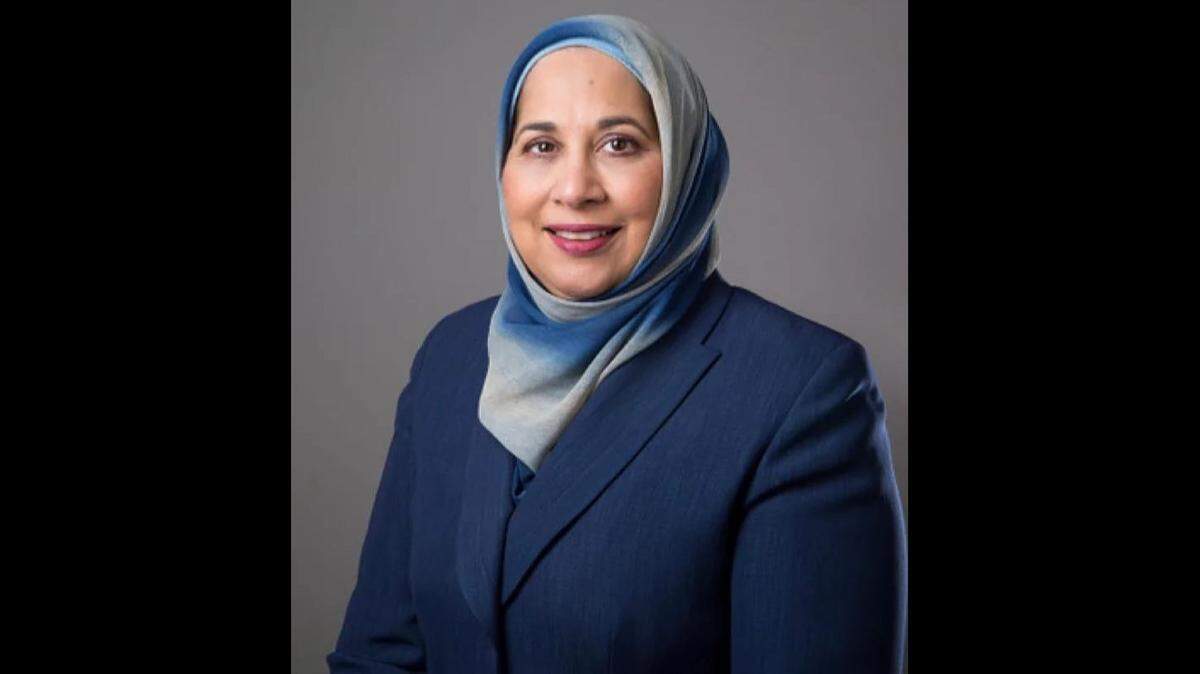
My physical appearance also changed when I went on the Muslim pilgrimage (Hajj) in 2010 and started wearing the Muslim head covering, the hijab.
Reflecting on my 2001 writing, I would tell my younger self:
“You knew you couldn’t stay quiet. You took a stand that helped not just your own sons, but other children as well. None of this would have happened without you taking the first step after September 11, 2001. Your children are now having children. You are showing your grandchildren the importance of being American Muslims and to be proud of their identity.”
Rodney Baldwin
At the time of the attack, Rodney Baldwin was a firefighter in training. Now he’s deputy chief and fire marshal at the Grandview Fire Department.
In 2001, he wrote of role models, both movie starts and the first responders so many looked up to in the aftermath of the attacks. He said while the attacks didn’t change him, they did change how he views his training at the fire department: “Because you never know. You never know what’s going to happen.”
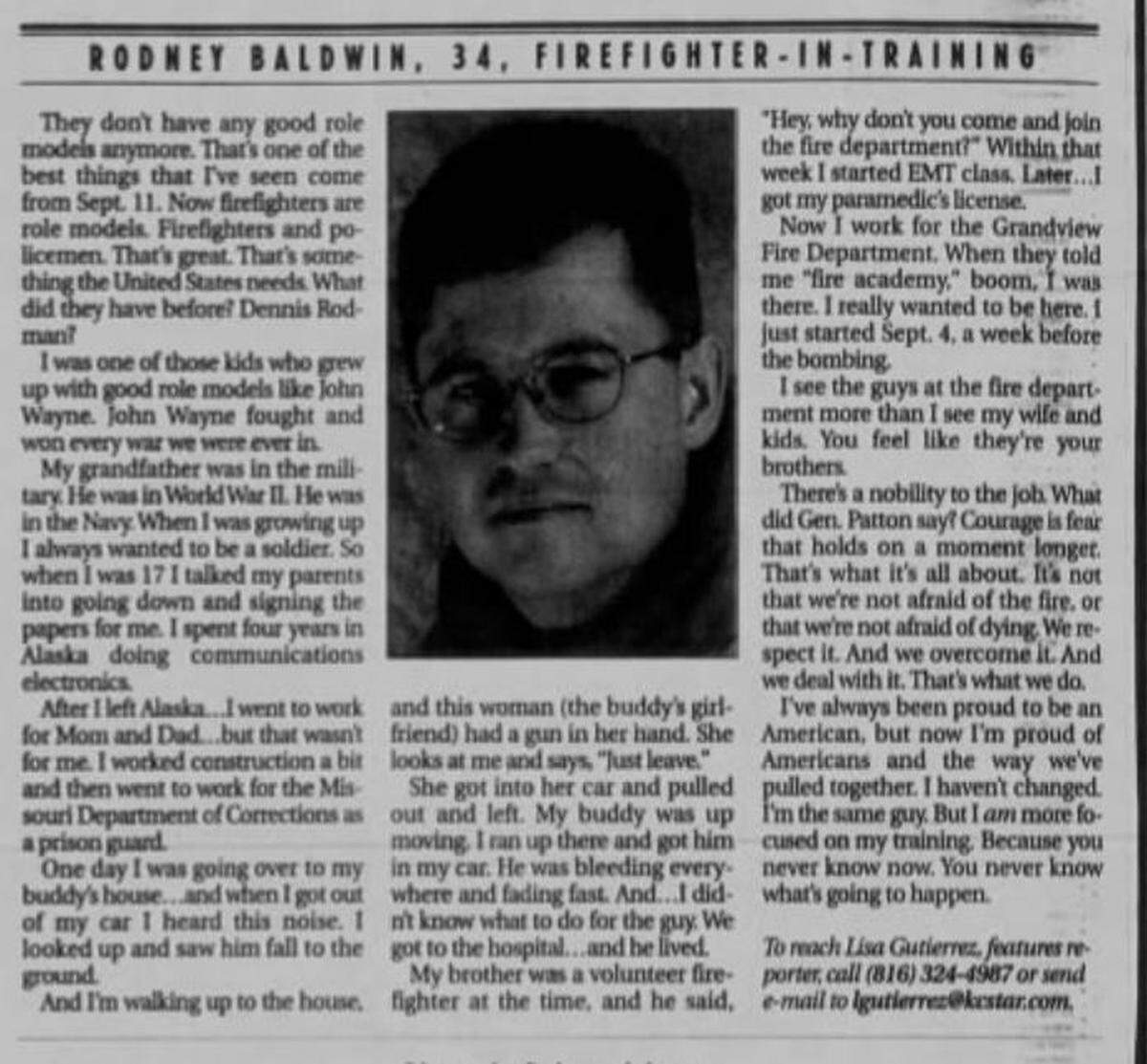
Baldwin now writes:
Since that time I’ve realized how naïve I was, how little of the world, people and cultures I had experienced or understood. I made comments on role models and as I’ve grown or aged, I see that those role models — while I didn’t agree with their messages — they were still role models. Their messages, their beliefs and their strengths were needed to be heard by someone.
In the years that followed I moved a couple of times with the military, during that time I encountered different cultures and people. Some were below the poverty line and some were wealthy.
I found that regardless of where people land on a socioeconomic level, they all have needs. Seeing the needs of other people reinforced how important it was, for me, to serve others. Not just the underprivileged, but everyone.
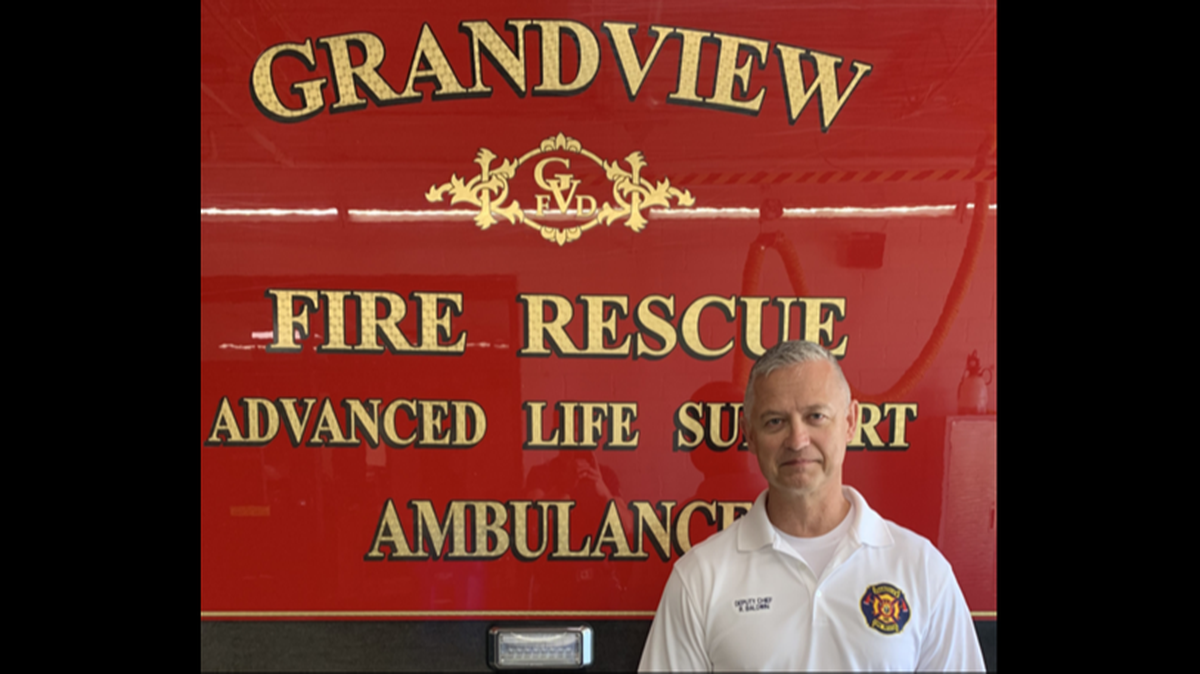
Meeting and working for all the groups with needs I realized I was missing a very important group – I missed the ones that stood shoulder to shoulder with me: the other firefighters, the soldiers, the police officers, the clergy The people that wanted to serve others.
I missed them and I knew that to be able to serve others they needed to be empowered to train more, lead more, and engage more people. So, I guess that my perspective changed a little: Never underestimate someone else’s message or desire to help. Never forget those that struggle alongside of you; they have needs too.
Jada Kohlmeier
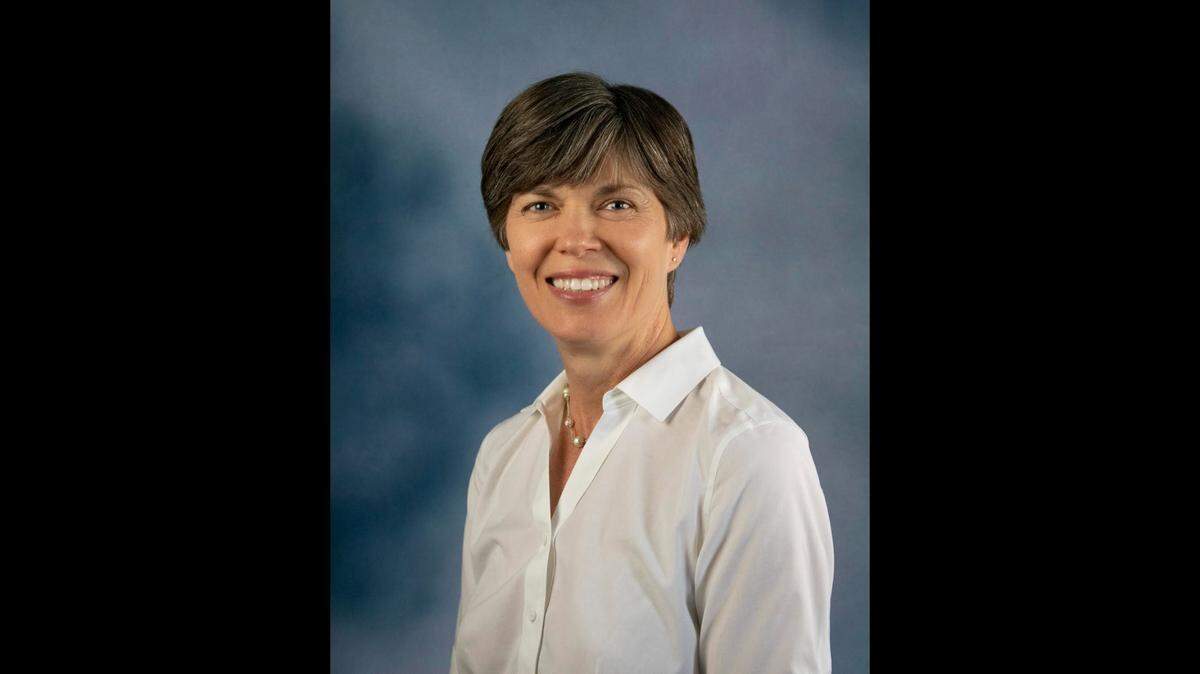
When the Twin Towers fell, Jada Kohlmeier was living in Overland Park and teaching U.S. government, world history and U.S. history at Mill Valley High School in the De Soto school district. She now works at Auburn University in Alabama where she serves as Humana Foundation Germany-Sherman Distinguished Professor and Program Coordinator and Secondary Social Studies Education.
In 2001, Kohlmeier wrote of contemplating how education affects one’s world view, and her own responsibility of teaching “tolerance and acceptance and freedom.”
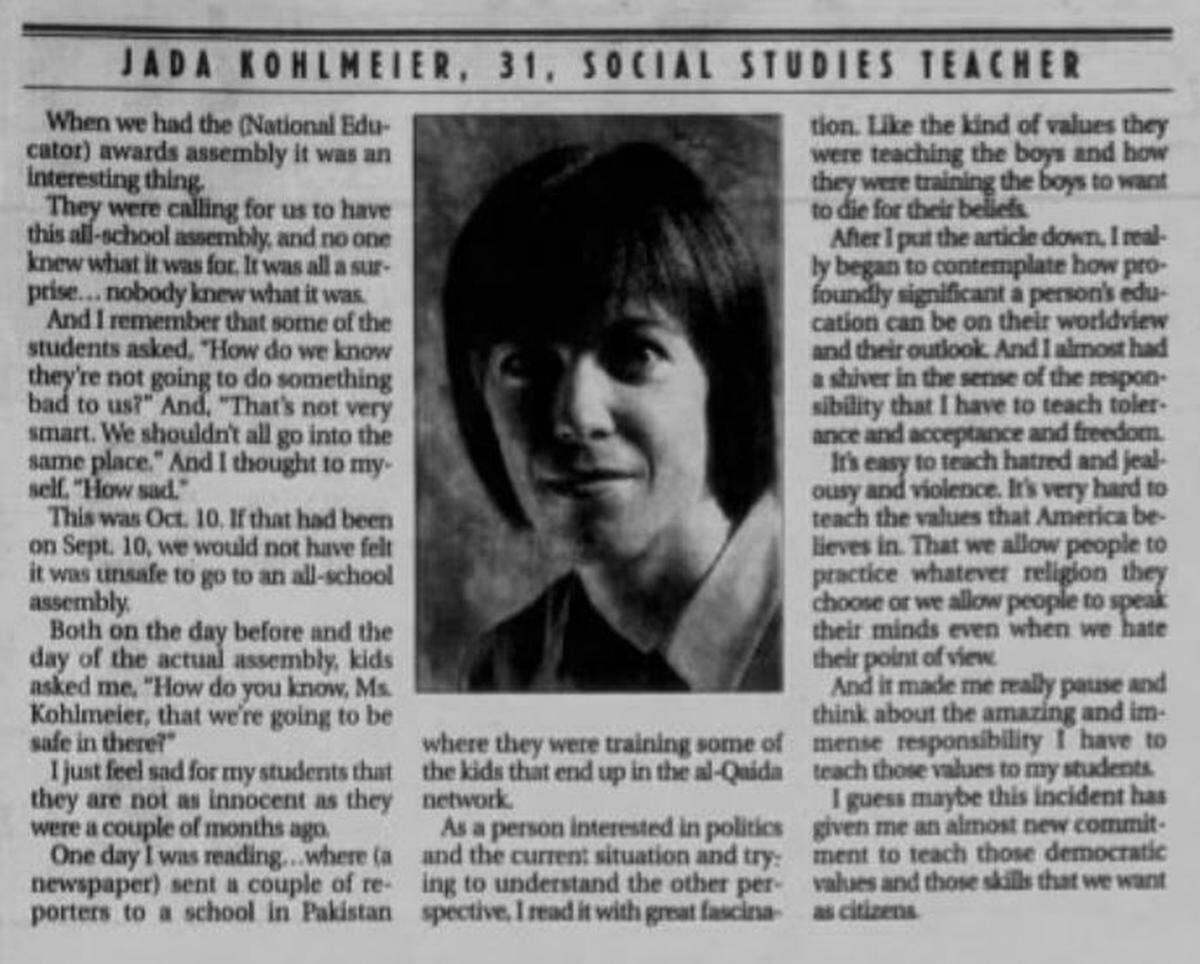
Kohlmeier now writes:
The importance of education was and remains a central part of my response to extremism in any form. I have always believed that educating citizens for a pluralistic democracy requires us teaching the democratic values of human dignity of all people. At the time, I was beginning to investigate a topic for my dissertation and empathy became my research focus.
I decided to conduct a year-long study of my world history students to investigate whether a series of historical thinking activities would increase their abilities to engage in historical empathy.
I found that my students grew over time in their ability to consider the historical and cultural context of a person’s actions/decisions and consider their perspective. I conducted this study believing that the skills they learned in history could translate to their civic life.
I find I am often more concerned with the state of our democracy today than I was 20 years ago. Our citizens today dehumanize people with different views as much as we dehumanized Muslims and Muslim-Americans after 9/11.
A robust democracy requires us to see the human dignity in all people. I will continue my efforts in preparing teachers to focus their social studies courses on the central purpose of preparing citizens for pluralistic, global society facing complex challenges. That focuses shifts the emphasis from remembering a lot of facts to learning to analyze and solve complex ethical problems in a way that increases the human dignity of all people.
This story was originally published September 10, 2021 at 12:50 PM.