
On The Vine: All the good things and the bad things

Let’s talk about sex.
(It’s Salt N’ Pepa, baby. I’m trying to culture you)
OnlyFans nearly broke the internet over the course of the last week, and not because some new hot celebrity joined the platform launching headlines of record engagement and memberships being broken.
The app/website — a content subscription service in which creators receive money from “fans” who subscribe on a monthly basis, as well as one-time tips and a pay-per-view feature — last week said it would ban pornography on the platform. The policy change was kiboshed this week, though some creators are still wary of the decision to reverse the ban.
Why is this important? Why am I writing about it? Why do I care?
We as a society for much of our puritanical history have gone out of way to police bodies and ostracize “deviants” and “perverts.” We’re not gonna solve that with a newsletter.
But OnlyFans was perfectly fine making hundreds of millions of dollars off of sex workers — many of whom rely on the platform to survive — until it came time for scale (capitalism speak for beaucoup bucks) and securing investments... as if investors unlike the rest of us don’t like sex.
In trying to appeal to a wider audience and “clean up” its platform for money men, OnlyFans risked shutting out the some two million people who’ve come to rely on it as a source of income. “OnlyFans is how I pay my rent,” one creator told The New York Times in an interview. “I feed myself from this.”
According to Axios, since it’s inception in 2016, some $3.2 billion has been paid out to OnlyFans creators. More than 300 creators earn at least $1 million a year and roughly 16,000 creators earn at least $50,000.
There’s a lot of really good literature out there on the issue, and surely more to come.
“Is pornography a vice to be regulated, or is it a kind of speech to be left largely alone? And what does the answer mean for the people whose livelihoods depend on it? Here’s what people are saying,” The New York Times’ Spencer Bokat-Lindell wrote, detailing the where the debates lie.
Around the block
Here’s how far Kansas City area students fell behind amid COVID. Can schools recover?
If you didn’t catch this stand out piece of journalism from The Star’s Sarah Ritter and Canwen Xu, allow me to present it to you here.
While (some of us) continue to argue about masks in schools and vaccinations in general, students across the Kansas City metro and the country at large are struggling as they enter their third school year disrupted by the coronavirus pandemic. And that’s before we even talk about whether this year will see the return of remote and, or hybrid learning.
National research shows that the pandemic has exacerbated historical inequities. McKinsey researchers who studied i-Ready data, for example, found that majority-Black schools ended the year six months behind in both math and reading. That’s compared with students in majority-white schools falling only four months behind in math and three months behind in reading...
Data from Kansas City Public Schools, which administered i-Ready assessment tests to its elementary and middle schoolers this spring, mirrored national trends, showing steeper declines in younger grades, and deficits across the board in math.
The district reported its largest learning losses among students in first through fifth grades. In reading, for example, more than 33% of second graders met expectations this spring, down from 55.4% in 2019. In math, nearly 28% of second graders met growth goals, down from 57% in 2019.
Don’t miss reading this...
‘I thought I’d lost you’: Kansas City husband, wife survived earthquake in native Haiti
Funds could be on their way to bolster 18th & Vine. Kansas City leaders will decide
News media, including The Kansas City Star, let down Wyandotte County time and again
Kansas and Missouri grow with more diversity, while KC records its highest population
You can get a COVID vaccine in Kansas City’s 18th & Vine District. Here’s what to know
The Star’s Anna Spoerre reports:
A new vaccine effort launches next week in Kansas City’s 18th & Vine District, following full FDA approval of the Pfizer COVID-19 vaccine.
On Monday, coronavirus vaccines will be available from 7 a.m. to 2 p.m. at the Negro Leagues Baseball Museum at 1616 East 18th Street, said Kansas City Councilwoman Melissa Robinson, who is also president of the Black Health Care Coalition.
All three vaccines —Pfizer, Moderna and Johnson & Johnson — will be available.
“We knew that not having FDA approval was an impediment to people getting vaccinated, so now that Pfizer is approved, we wanted to be able to provide vaccine opportunities to those who were hesitant for that reason,” Robinson told The Star.
Beyond the block
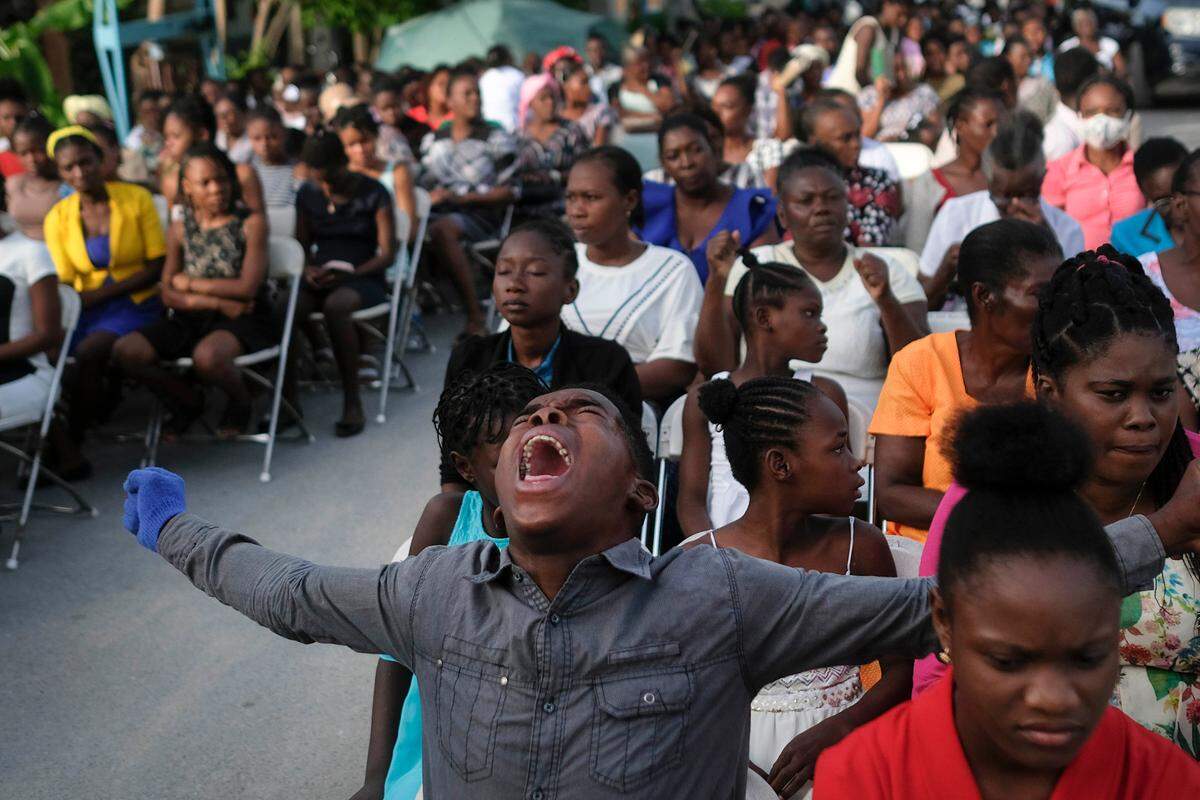
Almost 2 Weeks After The Quake, Aid Is Just Getting To Some Remote Towns In Haiti
Maybe I don’t know what I’m talking about, but it seems that the idea of global citizenship, which so many of us seemed to latch onto through much of the early days of the pandemic and as a racial reckoning swept the globe in the wake of the murder of George Floyd, has begun to go out of fashion.
But I can tell you this: Haiti is very much still in need of your aid and attention.
Becky Sullivan and Carrie Kahn from NPR write:
Eleven days after a magnitude 7.2 earthquake killed 2,200 people and destroyed 50,000 homes in Haiti’s southern peninsula, humanitarian groups and Haitians alike say that aid is only just now reaching some of the region’s most remote communities. And residents say their needs are greater than what they’re receiving.
Haiti’s mountainous southern peninsula is full of small communities that are typically accessible only by dirt road or footpaths. This month’s earthquake shook loose mudslides and rocks that are now blocking access. In this region, there are few airfields, and the steep, wooded terrain makes for difficult landing by helicopter. In many places, the only clearing large enough for a helicopter to land is the town soccer field...
Across Haiti, the U.S. Agency for International Development has distributed some 163,000 pounds of food aid, along with medical supplies and tarps. But the agency said its workers are still working to reach remote areas; they finally arrived in Baradères for the first time on Monday, along with another town called Anse-a-Veau.
Also check out...
Death sentence upheld for Dylann Roof, who killed 9 in South Carolina church shooting
On TikTok, LGBTQ creators push back against sponsors who just who just want their identity
Explosions Outside Kabul Airport Kill Dozens, Adding to Chaos
Many news outlets were still issuing live updates on the chaos Thursday.
But the Pentagon confirmed that at least two blasts occurred just outside Kabul airport as the United States continues to work to get people out of the country. There was no official number given, but the government said there were a number of casualties, including U.S. service members.
According to The New York Times:
One Afghan health official said at least 30 people were confirmed dead and at least 120 wounded. Another health official said at least 40 were dead and 120 wounded. Both officials spoke on the condition of anonymity because the Taliban told them not to brief the press, they said. The Taliban spokesman, Zabihullah Mujahid, condemned the attack, and said that at least 13 civilians were killed and 60 wounded.
There was no immediate claim of responsibility. But the night before the attack, a senior U.S. official warned of a “specific” and “credible” threat at the airport by an affiliate of the Islamic State, the Islamic State Khorasan, or ISIS-K, and Western governments began urging people to leave the area.
Even with such a specific warning, military officials said, it would be very difficult to pick out a suicide bomber with a concealed explosive vest in a huge throng of people, like that at the airport.
For the culture
Just some quick hits this week
Showtime to Adapt Rick Famuyiwa’s 1999 Film ‘The Wood’ as TV Series (reported by friend of the newsletter Tim Baysinger at The Wrap)
Milk Crate Challenge another example of Black creativity (maybe don’t try it though?)
Kanye West files to legally change his name to Ye over ‘personal reasons’
Don’t be coy, avoid, or make void
Did someone forward this newsletter to you? You can sign-up here. If you’d prefer to unsubscribe from this newsletter, you can do so at any time using the “Unsubscribe” link at the bottom of this message.
This story was originally published August 26, 2021 at 1:24 PM.