On The Vine: Black history is more than Martin and Rosa

I wracked my brain more than usual trying to land on the best way to address y’all in this, the first newsletter of Black History Month 2021, after the year we’ve had.
I’ve got nothing; no words.
Instead I’ll borrow a sentiment from Atlantic writer and author Clint Smith (h/t @raceproject_kc). Smith wrote on Twitter that while Black History Month — as it’s been presented to us since we were babes — is a reminder to honor those who have made, and continue to make, enormous contributions to this country and Black Americans, “it’s also an opportunity to remember that those contributions didn’t just come from major figures. They also came from millions of Black folks whose names we’ll never know.” Preach on it.
Black History Month is of course Martin Luther King Jr. and Rosa Parks, but it’s also Iris Clemmons and Hakima Payne.
This is core to what we’re doing at The Star this Black History — telling stories of Black Kansas Citians who have come and gone, but left a mark all the same, as well as highlighting the businesses, causes and passions of everyday Black Kansas Citians still leaving their mark.
We hit publish on the first of both of these series this week, starting with an obituary of Iris Clemmons, who died last month and was one of the last living Black Rosie the Riveters in the Kansas City area. Didn’t realize “Black Rosies” were a thing? Yeah, well, they skipped that in history class. Let’s talk about it.
Got a question, recommendation, or just want to say what’s up? Email me at cewilliams@kcstar.com
Around the block
Iris Clemmons, one of Kansas City’s last Black ‘Rosie the Riveters,’ has died at 98
I’ve been working with a writer The Star tapped specifically to write obituaries about Black Kansas Citians who simply lived. For so long, even on the day of the paper’s big apology and “Truth in Black and white” series, those faces and celebrations of life were missing from the pages of The Star.
That said, this isn’t really about that. It’s about Iris.
Iris Clemmons, 98, spent most of her life in Kansas City, Kansas, attending Sumner High School and later the community college in the city. By 1943, she had joined the war effort, building wings for B-25 Mitchell Bombers in Kansas City’s North American Aviation plant. The factory would become the top producer of the B-25, supplying more than 6,000 planes by the spring of 1945.
I don’t think I need to say it, but I’m gonna point out the obvious anyway — she did this, like so many, fighting for a country that refused to see her as equal. She went to work through a different entrance, drank from a different water fountain and used a different bathroom than her white co-workers.
Some half a million “Black Rosies” across the country worked long, grueling hours in shipyards and factories, along railroads, and inside administrative offices for their part in the war effort, according to History.com (a dope piece, written by friend of The Star Aaron Randle). And for decades, as is far too often the case, they received little recognition for their contributions.
You should check out Iris’s obit, there’s so much more to learn about her. We’ll be doing these features every Sunday, online and in print.
In case you missed it...
Immigrant rights group raises public support for KC area dad set to be deported
Missouri selects contractor for new Buck O’Neil Bridge, sets date construction begins
As vaccine rollout expands, Black Americans still left behind
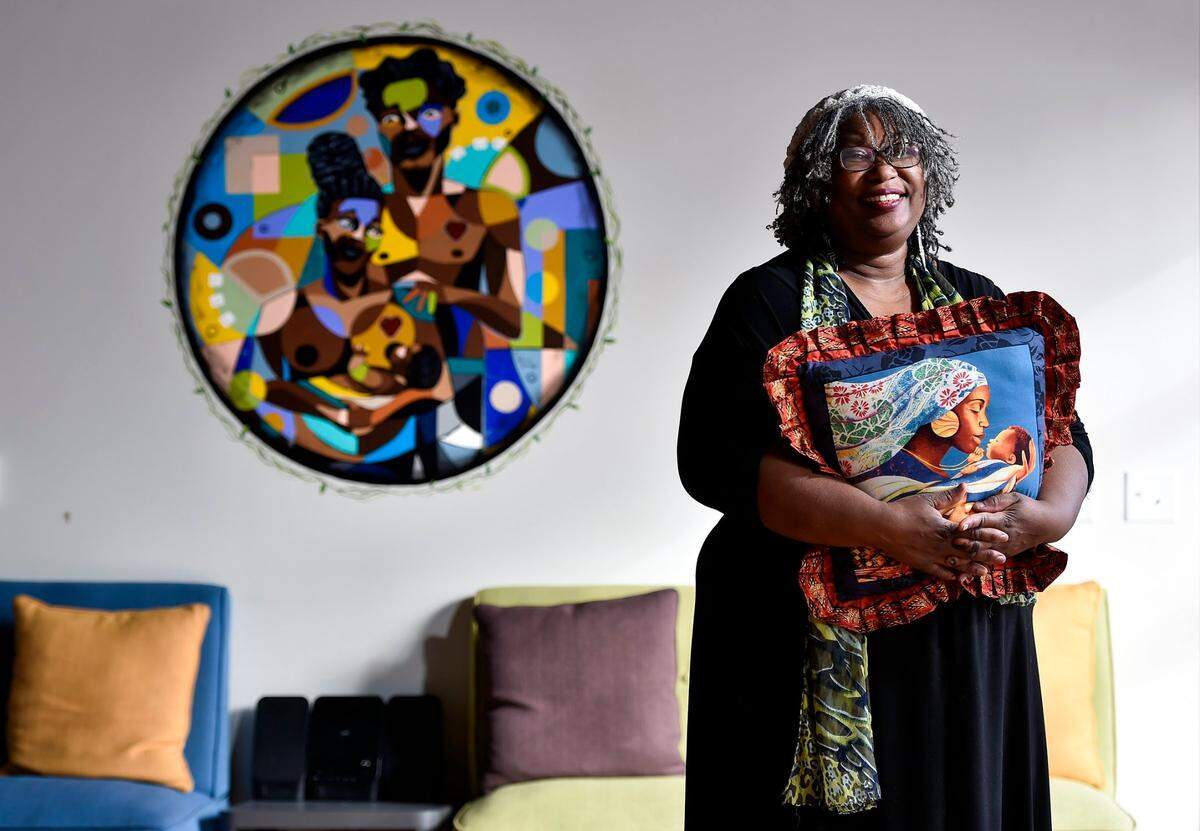
One mother’s fight on ‘the front lines of a revolution’ to save Black mothers, babies
For nearly every three white infants who don’t survive, nine Black babies die, according to the Kansas City Health Department. Hakima Payne, co-founder and CEO of Uzazi Village — it means family — rightfully called that statistic, which has only widened in recent years, “maddening.”
Payne’s story is the first in a series of features The Star is focusing on to highlight Black life in Kansas City. Between you and me, there’s no reason we can’t continue to do such stories past February, but this is good place to start.
When Payne trains doulas — professional companions during pregnancy and labor — to stand beside Black women, she begins by telling them they are “freedom fighters on the front lines of a revolution.”
Though she deals in the world of child-bearing and birthing, Payne says the essence of her work is anti-racism.
“Race shouldn’t have anything to do with whether you survive the child-bearing process, and for it to fall so heavily on the Black community, something’s wrong, and nothing’s wrong with us, so we have to look at the system,” she said.
Swastikas appear at Kansas City prep school, officials vow discipline
Aren’t we tired of ignorance and hate? Why are we still doing this? Why are such incidents as a student drawing a swastika on another’s desk on the day we’re meant to be celebrating the liberation of Auschwitz for International Holocaust Remembrance Day allowed to just happen?
That’s what took place at Prembroke Hill last week, and parents say it’s not the first time.
“You would think that any form of anti-Semitic behavior would be swiftly and severely dealt with,” another parent said. “Pembroke should be the shining light of everything positive. But they sweep things under the rug. If you don’t send a message that hate is wrong on any level you are actually enabling it.”
On Monday, school officials said disciplinary action would be taken against whoever drew a swastika and wrote offensive LGBTQ language on student desks last week — but they still have no idea who did it.
ACLU investigates if university violated a Black Kansas cheerleader’s civil rights
Matters of the hair are close to my heart. From roughly fifth grade till I was a freshman in undergrad I had dreadlocks. I was the first person I knew that had dreads; they were a dedication to my Jamaican grandfather — the only one I’ve known — who died when I was young and whose funeral I didn’t get to attend.
Hair, particularly for Black people, holds a special importance — it tangles us to the motherlands many of us have never known, reflects our history and even acts as a symbol of our resilience.
I wonder if that’s what former Ottawa cheer coach Casey Jamerson meant when she allegedly told 20-year-old Talyn Jefferson, “I do understand what it’s like to have hair like that.”
I covered a lot of it in the last newsletter, but since then the coach has stepped down, the university ruled no violations occurred, and the ACLU said it is investigating whether the university violated Jefferson’s civil rights.
Oh, this too...
Beyond the block
The Black Lives Matter movement has been nominated for the Nobel Peace Prize
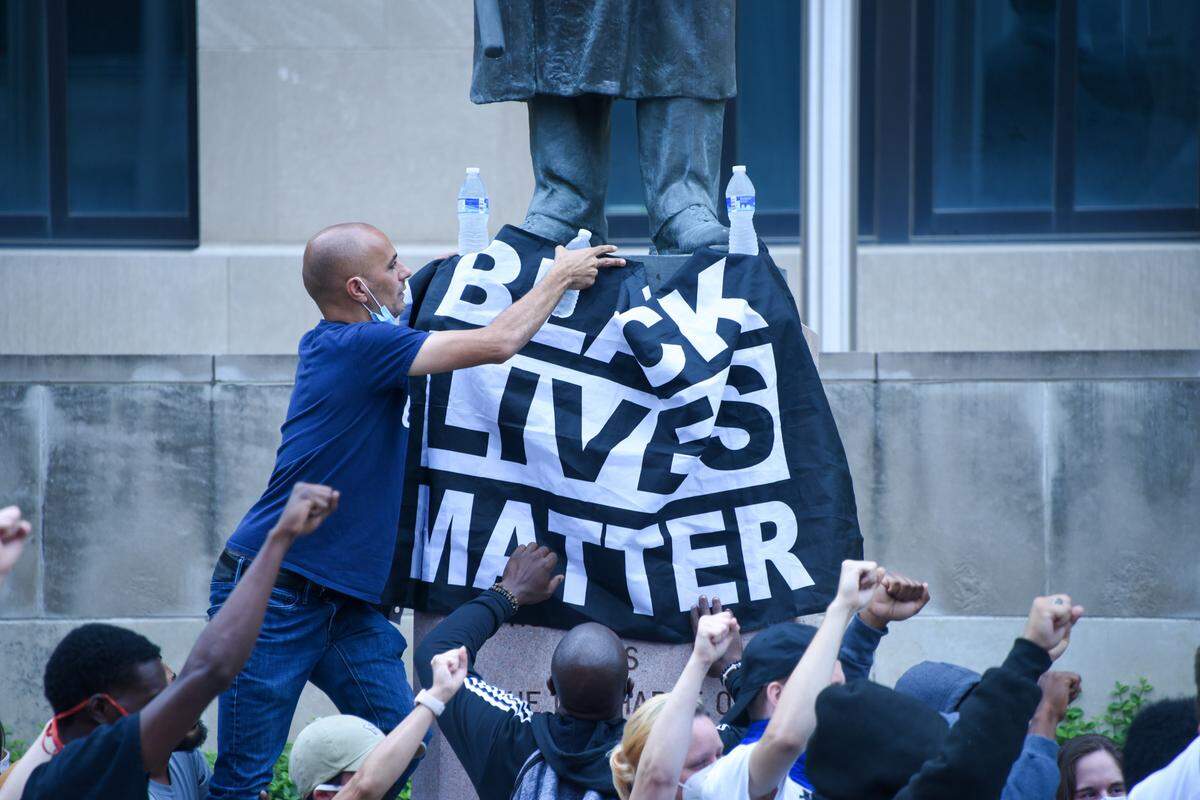
The Black Lives Matter movement started as a hashtag in 2012, following the shooting death of Trayvon Martin. Not only has the organization grown into a global social justice force, Norwegian MP Petter Eide nominated the movement for the 2021 Nobel Peace Prize, saying, “for their struggle against racism and racially motivated violence,” according to documents obtained by CNN.
Black Lives Matter tweeted on Friday:
“We hold the largest social movement in global history. Today, we have been nominated for the Nobel Peace Prize. People are waking up to our global call: for racial justice and an end to economic injustice, environmental racism, and white supremacy. We’re only getting started.”
Canada Lists Proud Boys As A Terrorist Group, Alongside ISIS And Al-Qaida
As members of the Proud Boys continue to be rooted out and picked up by law enforcement for their involvement in, or connection to the Jan. 6 siege on the U.S. Capitol, Canada has gone ahead and designated the organization a terrorist group.
“Based on their actions, each group meets the legal threshold” for the criminal designation, Public Safety Canada said as it announced the move. The agency cited “reasonable grounds to believe that an entity has knowingly participated in or facilitated a terrorist activity” or has acted on behalf of or in association with such a terrorist entity.
The agency describes the Proud Boys as “a neo-fascist organization that engages in political violence” and whose members “espouse misogynistic, Islamophobic, anti-Semitic, anti-immigrant, and/or white supremacist ideologies and associate with white supremacist groups.”
In case you missed it...
Black deputy denied burial at ‘whites only’ Louisiana cemetery, family says
Fauci: COVID vaccine rollout needs to prioritize people of color
Amanda Gorman, whose poem captivated at the inauguration, will deliver verse before Super Bowl
Bucs coaching staff a leader in diversity as the NFL lags behind
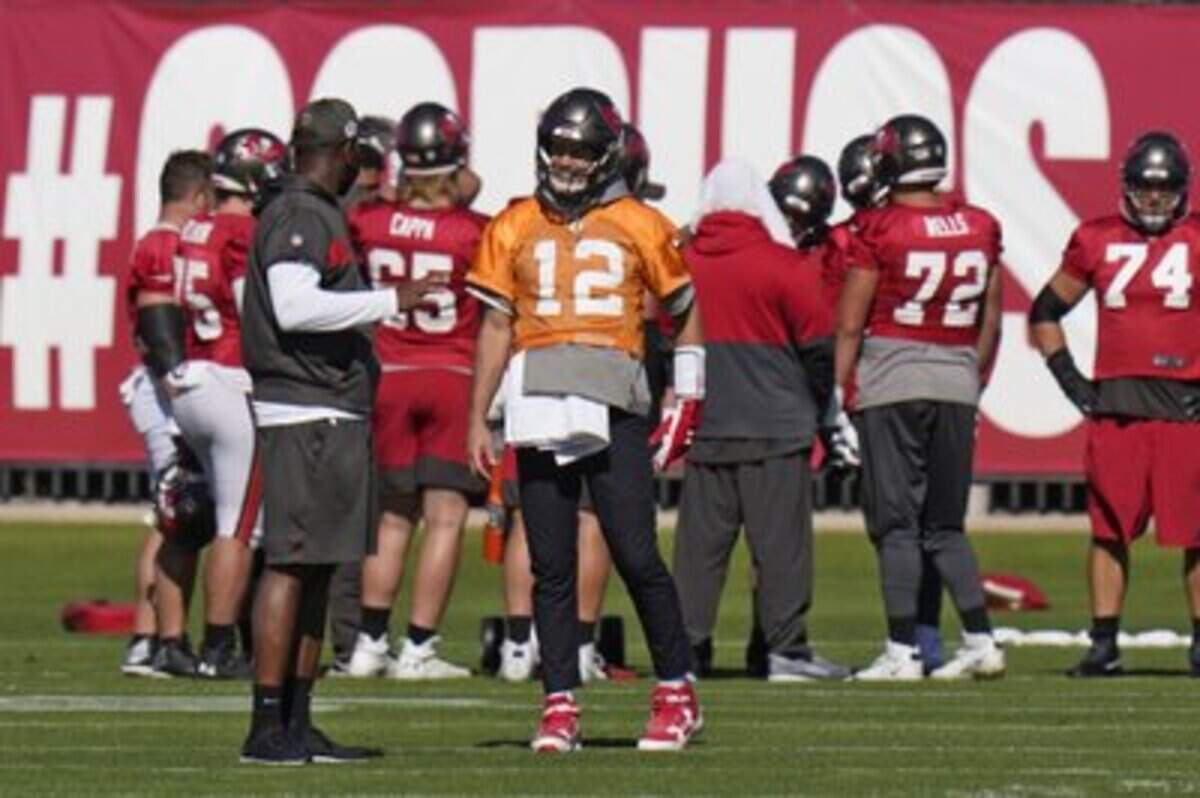
I was scrolling through Instagram when I should have been doing really just bout anything else, and I came across this, a post from ESPN mentioning that all of the major coordinators for the Tampa Bay Buccaneers are Black. Then I read the comments.
Who cares about what they look like?
So is my step dad is that a stat
Am I meant to care. Good job on being qualified for a job
I am so frustrated, maybe even angry, I honestly can’t tell the difference anymore. I don’t know if I need to spell this out, but the NFL, like many businesses and organizations across this United States, has historically been a systematically racist institution. And the league continues still to struggle with its own reckoning and involvement in that. In a league that is more than 70% Black on the field, there is not a single Black majority owner, and there are just three Black head coaches, out of 32 teams.
You want to talk about qualifications — there were seven openings for head coaching jobs at the end of this season. None of those went to Bucs offensive coordinator Byron Leftwich or Bucs defensive coordinator Keith Armstrong. Those two men are coaching a Super Bowl this weekend. Oh and Eric Bieniemy, offensive coordinator for the Chiefs, interviewed for six of those jobs — he still will not be a head coach next season, despite walking into his second Super Bowl on Sunday.
Sports in general, but football more specifically, often treats Black bodies as if they are disposable, merely here for entertainment, with little regard for the mind or any other value they have. So yeah, I’d say the Bucs being the first team in history to head to a Super Bowl with the number of Black men coaching on the sidelines they have is worth recognizing.
Go Chiefs.
For the culture
Rest in power Miss Tyson, a legend
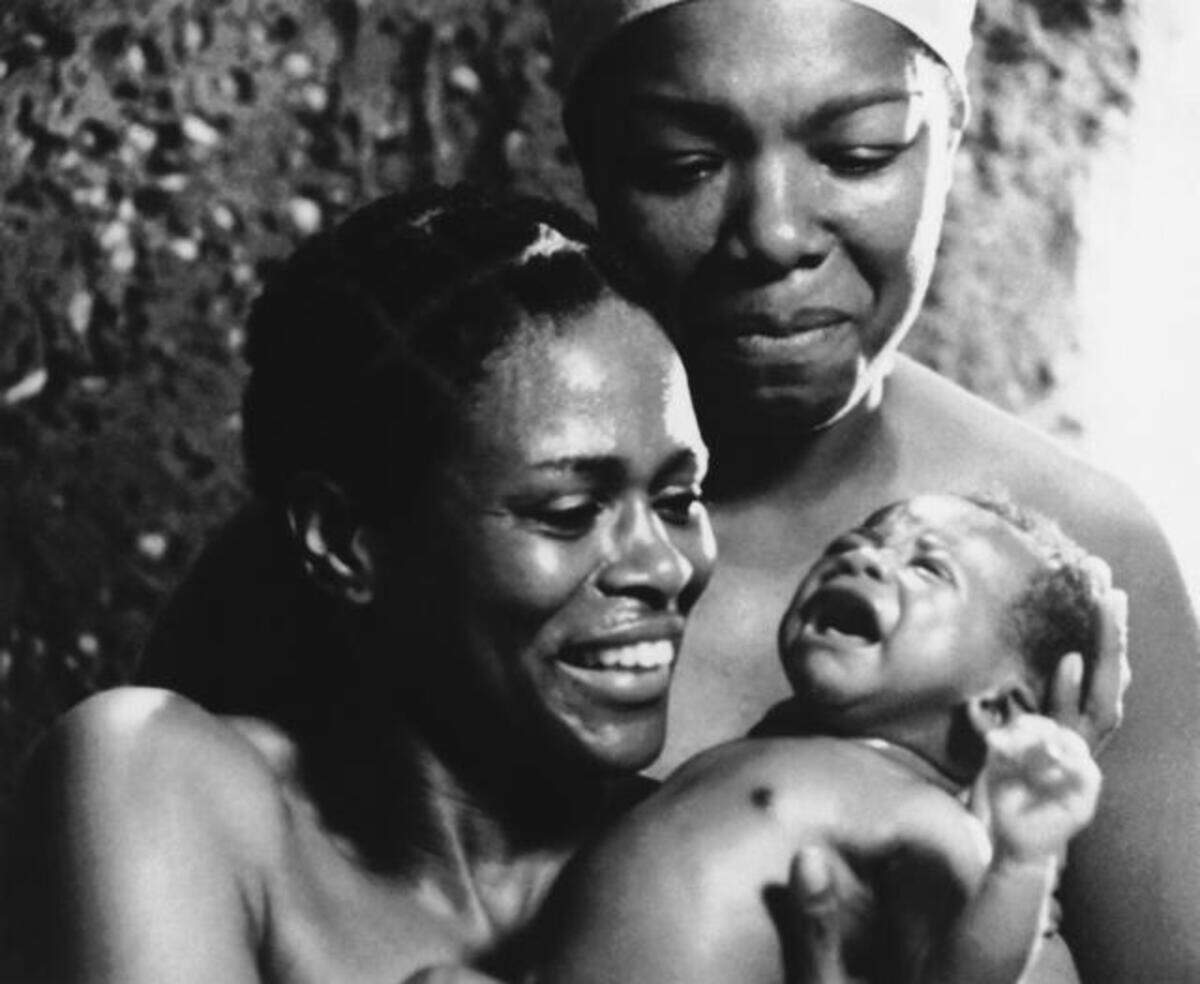
In 2018, Time Magazine asked Cicely Tyson whether she would ever retire. She hit them with this:
“And do what? The reason why I have been in this universe as long as I have been is because he’s not ready for me. When I’ve completed my job, he’ll take me away.”
Tyson died on Jan. 28 at the age of 96. She died just days after her memoir “Just As I Am,” which I dedicated a chunk of last week’s newsletter to, hit stands.
I swear it feels as if the day I was born a list of Black names, ideals was cemented in my brain as important. Cicely Tyson was among them. I always turn to the same person in times like these. Wesley Morris writes beautifully of Tyson for the New York Times:
Tyson knew her place. It was in our movie palaces and living rooms, but also at Black families’ kitchen and dining room tables, an emblem of her race, a vessel through whom an entire grotesque entertainment history ceased to pass because she dammed it off; so that — in her loveliness, grace, rectitude and resolve — she could dare to forge an alternative. She walked with her head high, her chest out, her shoulders back as if she were carrying quite a load that never seemed to trouble her because she knew she was carrying us.
Yo! This brother can SKATE
I came across this man a while back while scrolling through TikTok when I should have been doing just about anything else (there’s a theme), but wasn’t sure how or when to incorporate him in the newsletter. Well, now seems as good a time as any.
You have got to check this man out. I have no idea where he came from, but Elladj Balde entered my conscious much like he jumps onto the ice the first video I saw of him. He busts out a quick, “ain’t no thang,” back flip and then C-walks and dances on the ice, oozing swagger. I’d watch this man all day.
Tune in for...
“What’s Going On” Day
Fifty years to the day of its release, Marvin Gaye’s iconic single, “What’s Going On,” gets its own day in Detroit.
Motown Museum officials see this as an opportunity to have conversations about bettering the world, and they’re kicking off a series of events to be held throughout the year to commemorate Gaye’s entire “What’s Going On” album.
Gov. Gretchen Whitmer said of declaring Jan. 20 “What’s Going On” Day: “Through the recognition of ‘What’s Going On’ Day, we hope to bring awareness to Marvin Gaye’s profound words as his timeless music remains in our hearts and minds and continues inspiring generations to come.”
“Marvin was really responding to the Vietnam war and it was a protest song,” Robin Terry, Motown Museum Chairwoman and CEO told the Detroit News. She noted Gaye had a brother and uncle who’d served in Vietnam. “What’s really profound about the lyrics is the way in which those lyrics, written 50 years ago, are still so relevant and even more relevant as we listen to them today.”
See you on the flip
Did someone forward this newsletter to you? You can sign-up here. If you’d prefer to unsubscribe from this newsletter, you can do so at any time using the “Unsubscribe” link at the bottom of this message.
This story was originally published February 4, 2021 at 10:10 AM.