
Iris Clemmons, one of Kansas City’s last Black ‘Rosie the Riveters,’ has died at 98
Editor’s note: This feature is part of a new weekly focus from The Star meant to highlight and remember the lives of Black Kansas Citians who have died.
As World War II raged and military-age men were sent overseas, Iris Clemmons joined the tens of thousands of Kansas City women who labored in factories to supply U.S. and allied forces with fighting machines and equipment during the 1940s.
Clemmons, who helped win the war abroad while battling for civil rights at home, was one of the last local Black Rosie the Riveters. She died Jan. 11 of natural causes in the Lamar Court Assisted Living facility in Overland Park, Kansas. She was 98.
Born Iris Mahone in Brinkley, Arkansas, in 1922, Clemmons moved to Kansas City, Kansas, with her family when she was 2 years old. She spent the rest of her life in Kansas City, Kansas, graduating from Sumner High School in 1940 and later attending Kansas City, Kansas, Community College.
By 1943, Clemmons was employed in the wing construction department of the North American Aviation plant, built next to the Fairfax Municipal Airport overlooking the Missouri River. The factory, one of hundreds of war-manufacturing sites across Greater Kansas City, became the top producer of the B-25 Mitchell bomber during the domestic war effort, supplying more than 6,000 planes by the spring of 1945.
Like Kansas City and other war-industry hubs around the country, the factory Clemmons worked in was segregated by race. North American Aviation’s hiring policies severely limited employment opportunities for people of color. Some doors eventually opened, allowing Black people to obtain skilled positions, a rarity of WWII labor practices, but many others — including the ability for career advancement — remained shut.
Clemmons went to work through a different entrance, drank from a different water fountain and used a different bathroom than her white co-workers. Workplace social clubs and other activities during that time were also segregated. And she told her family that she received less pay and often less respect from her boss.
Still, Clemmons viewed her work with a patriotic sense of duty and was proud to serve her country in that capacity, said Valerie Cherry, the younger of her two daughters.
“Her favorite saying was: ‘Keep your eye on the mark,’ ” Cherry said. “And so she knew that she needed to have that job to get the things or do whatever it was that she needed to do. I’m sure she probably never missed a day of work. She wasn’t the type to get a cold and say, ‘I’ve got to stay home.’ She would just persevere.”
Days inside the plant were long and tough, and they took a toll on the body. Workers spent nine hours on a shift, staying on their feet much of the time as they drilled holes, installed rivets, molded metal, connected wiring and performed other duties, said Freda Renick, a 97-year-old Lee’s Summit resident who began working in the North American Aviation plant as a teenager.
“With a nine-hour shift, and standing on concrete, oh, you were tired,” Renick said. “Even at 19 years old, you were tired.”
Being a Rosie would be a short chapter of Clemmons’s story, but the job helped shape the rest of her life in Kansas City, Kansas.
The factory is where she met the man who would become her first husband and the father of her daughters, Albert E. Harper Sr., a member of the U.S. Navy, whom she married in 1944. After the war, Clemmons spent 20 years helping manage family businesses started by Harper – who died in 1997 – all while raising a family. She also managed the Chelsea Plaza Homes for 14 years while the property was affiliated with her house of worship, First Baptist Church, a congregation she was a part of for 90 years. She was the church’s longest continuous member, First Baptist Pastor Cedric Rowan said.
Friends and family remembered Clemmons as a proud woman, someone “deep in the church,” whose style and class shined. In her younger years, she’d take a cross-town cab ride with friends to hit jazz clubs in the 18th & Vine District, delighting in live performances by legends like Duke Ellington and Count Basie. Even in her old age, she always wore driving gloves, frequently dressed to the nines and never approached the mailbox without “putting her face on,” her daughter said.
At 68 years old, Clemmons married her second husband, Lt. Col. Wilson H. Clemmons, a veteran who served with the Tuskegee Airmen and previously as a Buffalo Soldier at Ft. Leavenworth.
They reconnected during a Sumner High School reunion, her daughter said, and enjoyed a retirement filled with traveling and listening to jazz and classical music. Wilson Clemmons died in 2004.
In 2015, Clemmons participated in a Rosie reunion organized by the American Rosie the Riveters Association, an organization that honors the working women of WWII and seeks to preserve their history. She was reluctant to go at first, her daughter recalled, because she wasn’t sure if she’d know anyone – most of the co-workers Clemmons was friendly with had since passed on. She didn’t find any old acquaintances, but it didn’t matter.
“She was glad she went, because she was part of an important piece of history,” Cherry said.
The American Rosie the Riveter Association is a non-profit, working to locate women who worked on the home front during WWII in order to recognize and preserve the history and legacy of working women during WWII. If you are a woman, or descendant of a woman, who worked during WWII, or looking for more information, you can visit the website https://rosietheriveter.net or call 1-888-557-6743.
Clemmons is survived by her daughters, Valerie Cherry and Carmen Harper-Young; four grandchildren; 14 great-grandchildren; and 18 great-great grandchildren.
Other Remembrances
Vera Kimble
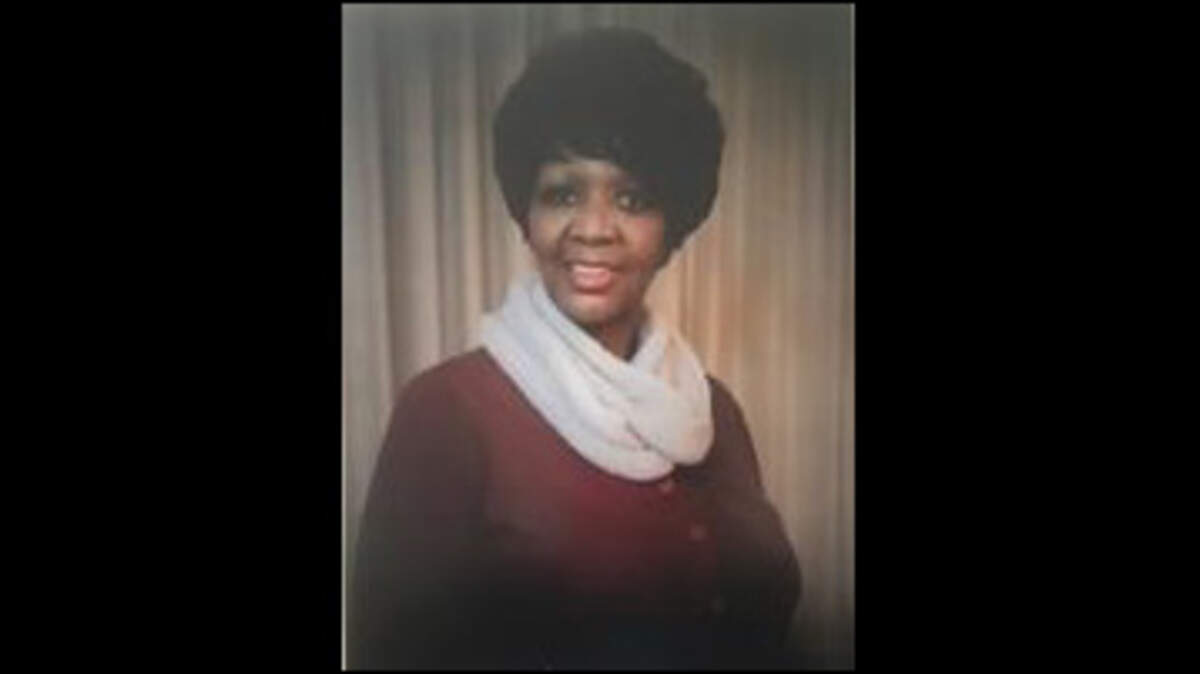
Vera Kimble, a beautician, top-class chef and designer whose entrepreneurial spirit led her to open and run several area businesses, died Jan. 10. She was 65.
Born Dec. 27, 1955, in Carroll County, Mississippi, Kimble grew up in Kansas City, Missouri. After attending area public schools, she continued her education at the University of Missouri - Kansas City, Penn Valley College and Paris Beauty College.
Kimble opened and operated two restaurants, a catering business, a beauty and nail salon and a sign company. She also founded GOD & Me Ministries after purchasing and refurbishing two run-down homes to provide at-risk women and their children with housing, life skills, job training and other necessities.
Kimble also worked in the accounting field with the Kansas City Missouri Board of Education and the Internal Revenue Service.
Kimble is survived by her mother, Lena Purnell; three brothers; one sister; three children; and 11 grandchildren.
Katharine Cooper
Katharine Cooper, a lifelong educator and the first Black woman to open and operate a nursery school in Kansas City, Missouri, died Jan. 21. She was 98.
Cooper was the eighth of 13 children born in 1922 in the Rosedale neighborhood of Kansas City, Kansas. She worked as an educator in the public schools, including Sumner High School in Kansas City, Kansas, and Greenwood Elementary School in Kansas City.
Cooper is survived by her two sons; one daughter; 11 grandchildren; and 13 great-grandchildren.