Charlie Parker? Jackie Robinson? For The Star, Kansas City Black culture was invisible
At first blush, the story seemed routine. A fire. An empty building.
A young woman, homeless and cold on a frigid winter day, had huddled inside the address on 19th Street, near Vine.
She lit a small flame that grew beyond her control. Smoke rose.
By the time the Kansas City Fire Department doused the fire, the interior of the old structure and the one next to it sat scorched. And The Kansas City Star on Feb. 2, 2017, published a nine-sentence brief that was easy to overlook.
“The fire apparently started in the former Security Loan Investment Association building,” the story said. “It later spread to the Roberts building.”
But it was a story, like most in Kansas City’s Black community, that deserved more — not only in that moment, but over decades.
Beyond its historic setting, the two-story Roberts building in its 1920s glory had been at the center of one of the most dynamic business stories not only in Black Kansas City, but also in Black America. But The Kansas City Star and its sister paper then, The Kansas City Times, paid it no attention.
Indeed, from those pages, little was known, because, as a review of the papers’ first 100 years reveals, almost none of it was covered.
From the founding of The Star in 1880, and stretching into the early 1960s — a period that, ironically, would include the wide-open jazz and bebop epoch that has since become part of Kansas City’s proud legacy — The Star and Times ignored most of Kansas City’s Black culture as if it were invisible.
When written about, Black Kansas Citians were most often cast as criminals or crime victims, as curiosities to be mocked or encroachers upon white Kansas City neighborhoods.
Readers were told little of the story of Homer B. Roberts. Missouri-born, he had been a pioneer — sharp, ambitious, a student with a knack for engineering who in 1906 would become one of the early African Americans to attend Kansas State University. In World War I, he enlisted as a private, but returned home a lieutenant from the signal corps as a war hero who saw action on the bloodiest battlefields of France and Germany.
Back in Kansas City, Roberts would rise to become an American Legion post commander and one of the first, if not the first, Black automobile dealers in the United States selling new cars exclusively to “negroes.” The day Roberts Motor Mart opened in July 1923, some 3,000 Black Kansas Citians arrived to pass through his mahogany and Swiss-tiled showroom at 1826-28-30 Vine St.
“Negro Buys $70,000 Building,” a Star headline declared in December 1923, four months after Roberts opened his showroom. His success was treated as a novelty.
Sarah Rector, who rose to worldwide fame as the first Black female millionaire in the United States, called Kansas City home for nearly 50 years. Her once-stately residence still stands at 2000 E. 12th St. Born poor in 1902, she was also part of the Muskogee (Creek) Nation. When she was 10 going on 11 years old, Standard Oil hit a gusher on her father’s east Oklahoma land.
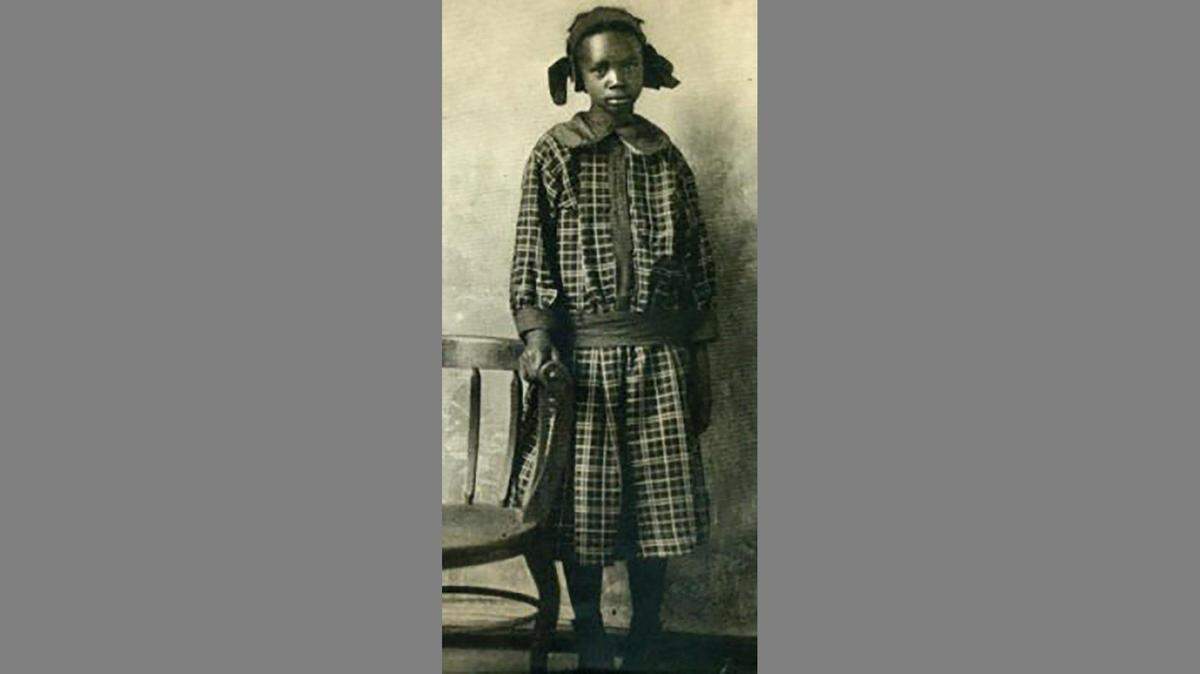
In 1914, The Star ran a story on the suddenly and fantastically wealthy child. It dripped with racial derision. Headline: “Oil Made Pickaninny Rich.”
It told how the child, then receiving $15,000 a month, had already had four proposals of marriage from adult white men from Germany.
“Such is the transformation,” The Star story said, “that an unexpected discovery of oil has brought to this 10-year-old negro, ignorant, with apparently limited mental capacity and no idea whatever of what it all means to her.”
In grading The Star and Times’ first 80-plus years of covering Kansas City’s Black community, author and journalist Charles Coulter gives the papers “F. An F.”
“It’s like this. If you’re asking if The Star and Times covered the African American community in anything close to its entirety, the answer is no. … (They) did very little.”
Newspapers missed the news
Coulter, who worked for The Star for nearly 30 years, first as a sports editor, and later, before his retirement in 2007, on its editorial board, is the African American author of “Take Up the Black Man’s Burden,” a history of Black Kansas City from 1865 to 1939. The book includes myriad profiles of influential Black Kansas Citians, Roberts and Rector among them.
“It was a waste of time for me to use The Star and Times in my research,” Coulter said. “There just wasn’t enough of a picture there. I can’t think of anyone — a profile I did — that came out of The Star and Times.”
The anomalies were Black athletes, in that they were often extolled. Satchel Paige is described in The Star’s pages as the Kansas City Monarchs’ “hurling sensation.” Boxing champion Joe Louis and Olympic star Jesse Owens would also receive positive press. But their accomplishments were often underplayed.
In October 1924, the Monarchs won the first Negro World Series. The Times gave it five paragraphs on page 12. Their 1942 World Series win merited less: two paragraphs on page 14. Jackie Robinson, who played for the Monarchs, broke Major League Baseball’s color barrier in 1947, when he joined the Brooklyn Dodgers.
The Times played it on page 18.
When boxer Joe Louis, on June 22, 1938, knocked out Nazi Germany’s Max Schmeling in the first round at Yankee Stadium, securing his heavyweight crown, the papers gave it headlines. But they made no mention of the thousands of Black Kansas Citians who spontaneously poured from their homes and flooded outside, packing 18th Street for nearly a mile from Troost to Brooklyn avenues.
“Nothing short of bedlam broke loose,” is how The Kansas City Call, which, along with The Kansas City American, was one of the city’s prime Black newspapers, chronicled the moment. It described streets “stocked with joyous persons shouting the praises for the champion.”
Five streetcars could not move for all the people; car traffic came to a standstill; 12 motorcycle cops struggled to pry loose the logjam, “their efforts almost futile.” Every bar filled. The song, “Little Joe From Chicago” rang out all night.
But to readers of The Star and Times, that moment didn’t happen.
Nor, for the most part, did jazz.
Segregated music
Kansas City for decades has reveled in its reputation as a jazz capital of America, with icons that include Andy Kirk, Mary Lou Williams, Bennie Moten, Harlan Leonard, Jay McShann and saxophonist Charlie “Bird” Parker. A massive sculpture of Parker’s face, above a stone engraving, “Bird Lives,” now stands in Kansas City’s Jazz District.
Not one “lived” in the pages of The Star or Times. Their names appear in ads for upcoming concerts, but none of them are the focus of a single profile during their heydays. Not one is quoted beyond a snippet in their prime. Their historic voices are silent in the papers’ pages.
When bandleader Bennie Moten, at age 41, died on April 2, 1935, The Star marked the moment with a five paragraph story near the bottom of page 10.
Moten led one of Kansas City’s first great jazz bands. His players would become legends, like pianist Count Basie and saxophonist Lester Young. No photo and not a single remembrance from a fan, friend or family member appeared in The Star piece. The story wrongly said he was 38. Two weeks later, Moten’s family paid to place their own statement near small ads.
“We wish to express our thanks and appreciation to our friends, and neighbors for the kind expressions of sympathy shown upon the death of our husband, father and brother, Bennie Moten. Crable Moten, wife, Zella Mae Moten, daughter, brother and sisters.”
The item was placed beneath an ad for used furniture in the middle of page 15, topped with a “Tarzan” comic strip. In the comic, a supplicating Black man with absurdly large lips, “Katonga, chief of the Bangalo people,” implores Tarzan for help, bowing on his hands and knees before the white man.
“They didn’t cover jazz much outside of the Coon-Sanders Original Nighthawk Orchestra,” Chuck Haddix, co-author with Frank Driggs of “Kansas City Jazz, From Ragtime to Bebop,” said of the two daily papers and the city’s signature white jazz orchestra. Haddix is also curator of the Marr Sound Archives at the University of Missouri-Kansas City.
“They covered the African American community just a little bit,” he said. “The Kansas City Star always kind of covered classical music and opera and the fine arts, because that was their audience. They also covered country music, too. But they didn’t cover 18th and Vine because of segregation.”
The neglect wrought damage, he believes.
“I think it caused that community to be invisible to white people in Kansas City,” Haddix said. “You know, people who read The Star didn’t get a sense of what was happening at 18th and Vine or other African American communities.”
“I can’t speak for African Americans, because I’m a white guy. But a lot of times I think they felt invisible. And there’s good reason for that. The Kansas City Star ignored them.”
Notable for his absence: Kansas City, Kansas-born Charlie Parker. The Star either completely missed or chose to miss his story.
Over 20 years, from the 1930s to the 1950s, Parker rose in fame. He is now considered among the greatest saxophonists who ever lived. The only time he is quoted in The Star (never in The Times) is in 1946 as “Charley” Parker, near the end of a wire story out of Hollywood on bandleader Dizzy Gillespie and the origin of bebop.
“We were looking for a way to emphasize the more beautiful notes in swing music,” he said, “instead of just stringing a lot of meaningless notes together. We didn’t even give it a name — it got that because when you hum it, you just naturally say ‘Be-Bop, Be-De-Bop.’”
The next time The Star ran a story with his name in anything other than tiny type — typically as a musician in an album review — was in February 1955, two weeks before Parker died on March 12 at age 34.
Neither paper published an interview with Parker. The Star piece appeared the day after 4,000 people packed Municipal Auditorium to see “The Stars of Birdland,” including Lester Young and singer Sarah Vaughn. It focused on how “Birdland,” the famed New York club, was named for Parker, who was not part of the night’s show.
On March 15, 1955, three days after Parker died, The Star finally ran a piece announcing his death — four paragraphs in a single column on page 19 near a railroad story. The piece also called him “Charley,” which is how his name appeared in club ads, and said he was 32 instead of 34. No quotes appeared from his mother or friends. The Star would later run an editorial saying “Charley’s” music was “buoyant and exhilarating. Quite often it was gentle and delicate. Always it was original.”
The Times’ first story of significance appeared in May 1955, two months after Parker was dead. The piece was pegged to the release of a book on modern music written by a white author.
“Think about The Kansas City Star in the late ’40s,” said Brian Burnes, who worked for The Star for 38 years, until 2016. Now on the board of the Jackson County Historical Society, Burnes earned his master’s degree in journalism at the University of Kansas with a 1998 thesis on The Star and Times’ coverage of civil rights.
“It literally was one of the leading newspapers in the country,” he said. “It was being delivered by mail, and sometimes by hand, all across the Midwest. (Editor) Roy Roberts was on the cover of Time magazine. It was a big deal. And it had this reach. They considered themselves kingmakers.
“At the same time, with this spectacular power wielded by the The Kansas City Star and The Times, there is this community they just don’t cover. Or they covered it sparingly.”
Of Parker, Burnes said, “This is a person who achieved national renown, and is from Kansas City for God’s sake, and so you would think that he would be newsworthy. I think that (lack of coverage) speaks for itself. I really do.”
‘Like two different towns’
The Kansas City Star and Times liked to think of themselves as the region’s papers of record.
“It was the paper of record for the white community,” Coulter said. “It really was like two different towns.”
One white, the other Black. One mattered to The Star and Times because its readers and major advertisers were white. The other did not, and thus was treated with indifference, Burnes said, unless the story was about crime or an issue in the Black community that somehow intersected with the white.
The late Bill Woo, a former Times reporter who became editor of the St. Louis Post-Dispatch, offered his own recollection. No Black people included in the papers’ obituaries.
“If you were Black you needed to die in the commission of a crime, or be a musician, or be an athlete to have your death recorded in the paper,” Burnes said Woo told him. “An entire race of deaths went unrecorded.”
As did so much more.
Some 8,000 to 10,000 Black Kansas Citians flooded the streets around 18th & Vine on May 31, 1914, to witness builders laying the cornerstone of the new Paseo YMCA. The Y, together with important churches, would play a critical role in the Black community for decades. In 1920, the owners of eight independent Black baseball teams would make history there, gathering to form the new Negro Leagues.
Five bands played the day the cornerstone was set , as 2,000 marched. The Kansas City Sun, one of the early Black-owned newspapers, filled its front page with soaring rhetoric about the event and building, which had been strongly supported by the paper’s own publisher, Nelson C. Crews:
“It was a day of days for the Negroes of Kansas City,” the paper declared. “Here a thousand hopes were to be realized, and the long struggle of many were to terminate in a structure which now stands in the simple grandeur of concrete strength, but will later on grace the community with an imposing architectural beauty that will incite admiration and lift the natural pride of an industrious and self-sacrificing people.”
The Star ran no story. It published a drawing of the facade of the new Y on page 3 with a caption and noted that the prime speaker was Henry M. Beardsley, a former mayor of Kansas City who was white.
“Decisions were made that the readers of The Kansas City Star and Times didn’t care what was going on in the Black community, as long as it didn’t spill over and cause trouble. So why cover it?” Coulter said. “White customers didn’t want to buy The Star and Times to read about the Black community. They wanted to read about the white community.”
In consequence, however, the image of the Black community in the eyes of white Kansas City reflected what they read in the pages of The Star and Times, and those were mostly crime stories, not stories about actual life in the Black community.
Kansas City leaders
As Coulter describes in detail in his book, the city’s early censuses would list many men as “common laborer.” But it was also a community of bricklayers and stone masons, carpenters and blacksmiths, iron workers and quarrymen, hod carriers, barbers, waiters, porters, educators, merchants and physicians. Many women worked as “domestics,” as seamstresses or took in laundry.
There was also a class of supremely educated leaders in the community whose names, although they occasionally appeared in The Star or Times, were mostly overlooked, along with their achievements. They would include G.N. Grisham, an early principal at Lincoln High School. With W.E.B. DuBois, he was a member of the American Negro Academy, an organization of Black scholars who believed that the advancement of Black people and the fight for racial equality was rooted in higher education and the arts and sciences.
There was Josephine Silone Yates, born in New York, and who by age 9 had already begun to study psychology, physics and advanced mathematics. She would go on to marry W.W. Yates, a principal in Kansas City, who with Grisham and others would help found the Paseo YMCA. Josephine Yates, meantime, would form the African American women’s club movement, become a teacher and orator, lead the Kansas City Colored Women’s League, the National Association of Colored Women and become an early member of the NAACP.
Physician J. Edward Perry was instrumental in opening the tiny Perry Sanitorium and later the Wheatley-Provident Hospital, while physician Thomas C. Unthank, aggrieved at the lackluster medical treatment of Black people by white physicians, would open the Douglass Hospital in Kansas before pushing to create General Hospital No. 2 for Black patients.
“By 1932, the city had produced more African American medical specialists than any other U.S. city,” author Garrett S. Griffin states in his book, “Racism in Kansas City, A Short History.”
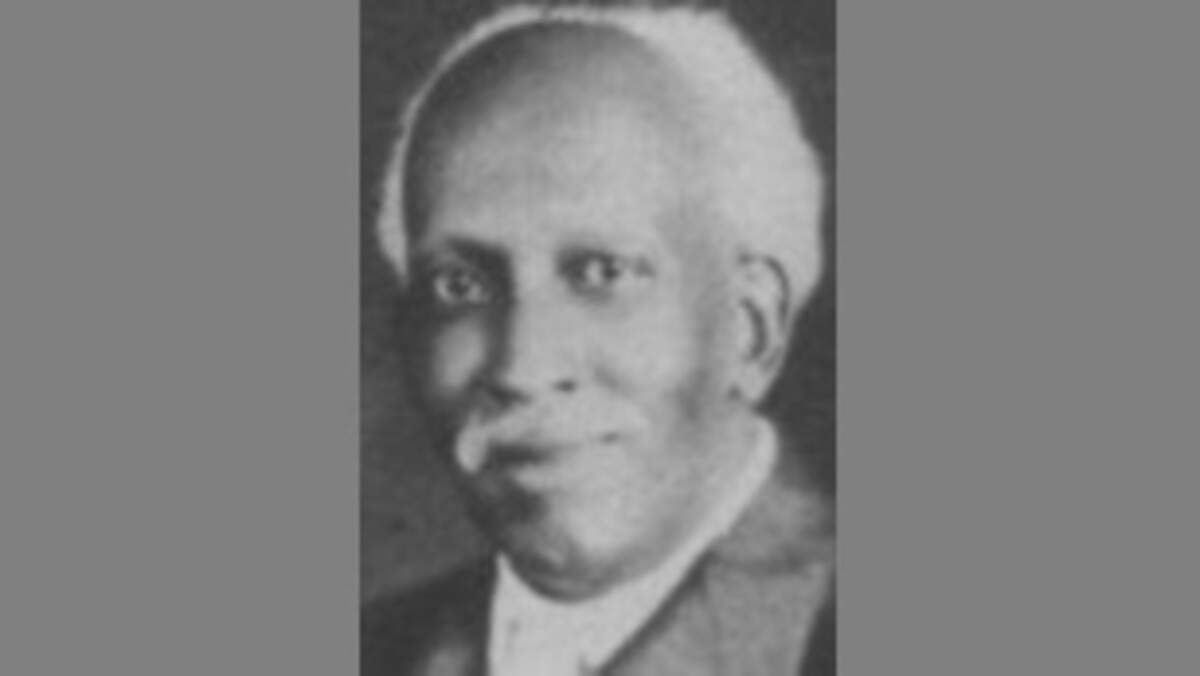
Unthank’s name appeared constantly in the Black press, his positive influence unquestioned. But in The Star or Times, he’s a minor figure. The list of others who deserved more goes on: Nelson Crews, publisher of The Kansas City Sun; Chester A. Franklin, publisher of The Call; Minnie Crosthwaite, a pioneering social worker; Ida M. Bowman Becks, a staunch suffragist and playwright, author of “Up From Slavery: Evening’s Entertainment in 8 Acts,” who helped create the Urban League in Kansas City.
Ministers such as Samuel W. Bacote of Second Baptist Church, James Hurse of St. Stephen Baptist Church, who championed Black home ownership, and D.A. Holmes, of the Vine Street Baptist Church, later renamed Paseo Baptist Church, who fought for Black rights. Holmes, the son of a slave who would go on to earn advanced degrees including one from the University of Chicago Divinity School, fought vigorously against Kansas City police brutality. He pushed for the integration of the University of Missouri-Columbia, and stood up to racial inequality wherever it appeared.
In 1922 when it was announced that Black schoolchildren were to be placed at the rear of a citywide parade, Holmes, the fiery preacher, pushed them to boycott.
“And thank God,” The Kansas City Sun declared in an editorial. “…They kept two thousand Negro youth from being humiliated and degraded.”
The Times, meantime, ran a large story about the parade on page 2 of the May 2 edition. It estimated that upward of 20,000 boys may have marched. At the end of the piece, as at the end of the parade, four sentences mention some “negro contingent.”
It would take until the 1960s, when editorial leadership of the paper changed over in 1963 from Roy Roberts to Richard Fowler, for Black Kansas Citians to gain greater recognition. It was under Fowler that The Star in 1965 hired its first Black reporter.
Obituaries for Black people and photographs of Black brides began appearing around that same time.
By then, Homer Roberts, the Black automobile dealer, had been dead for 13 years.
In 1928, Roberts’ name had appeared in The Star and Times for another reason. He became a plaintiff, suing the city of Kansas City to open Swope Park’s public golf course to Black people. He and his friends had been summarily turned away when they showed up in their gear.
“Any attempt on the part of the Negroes to carry on litigation in this manner,” Ellis D. Parsons, the president of the Swope Park Golf Club, told The Star in a front-page story, “just has a tendency to lower the standing of the Negro race by their trying to force themselves where they are not wanted and would lead toward race riots in the future.”
In 1929, Roberts moved to Chicago. Before he did, he partnered in business with two local brothers. One was Thomas “Big Piney” Brown, a top-notch amateur tennis player who worked for Roberts during the day (he had been with Roberts on the golf course) and ran a nightclub in the evenings. The other was Brown’s younger brother, noted gambler Walter “Little Piney” Brown — who, in 1940, would be immortalized in blues singer Big Joe Turner’s song, “Piney Brown Blues.”
Not that readers of The Star or Times would have known it. From 1940 to 1956, the Browns’ names don’t appear.
BEHIND THE STORY
MOREWhy did we undertake this project?
As the Black Lives Matter movement forced a national reckoning on race in America earlier this year, a group of reporters and editors at The Star began to grapple with the 140-year-old newspaper’s own historic role in perpetuating a system of white superiority. They decided that the most meaningful response The Star could offer would be to call itself to account for decades of coverage that depicted Black Kansas Citians as criminals or, more often, simply ignored their aspirations, achievements and struggles for dignity. Read more by clicking the arrow in the upper right.
How did we research the stories?
Reporters Mará Rose Williams, Eric Adler, Cortlynn Stark and Mike Hendricks, assisted by researcher Matthew Kelly, spent six months poring through thousands of microfilmed pages of The Star, its sister paper, The Kansas City Times, and the local Black press that covered the stories that the white dailies either ignored or gave short shrift: most notably The Call and The Sun. They searched court documents, archival collections, congressional testimony, minutes of meetings and digital databases. Editors and reporters also convened panels of scholars and community leaders to discuss the most significant aspects of Black life in Kansas City overlooked by The Star and The Times.
Most importantly, the reporting team sought out those who lived some of the events the project explored. They include victims of the 1977 flood, former students of the illegally segregated Kansas City Public Schools and retired Star and Times reporters and editors.
What was that like for the reporters?
Even for seasoned journalists who felt they had a grasp of The Star and Times’ dismal legacy, the long hours of reading stories from the last century left a deep impact. “There were numerous moments in reading the coverage that I literally felt sickened,” said Adler. “We ought to be ashamed by all we missed, the people and events we overlooked.”
This story was originally published December 20, 2020 at 5:00 AM.
CORRECTION: An earlier version of this story gave an incorrect first name for Kansas City jazz saxophonist Andy Kirk.