Following J.C. Nichols racism debate, UMKC may strip his son’s name from library
The University of Missouri-Kansas City is considering renaming its Miller Nichols Library, named for the son of J.C. Nichols, the Kansas City real estate magnate who profited from the racist housing practices he instituted.
The move comes as city officials consider removing J.C. Nichols’ name from the fountain and street that memorialize him on the Country Club Plaza, the shopping district he developed in the 1920s.
UMKC officials in a letter sent Wednesday to the campus community said they have “already reached out to and begun discussions with members of the Nichols family regarding the name of the university library.”
A task force “will review and offer recommendations on building and scholarship naming practices, including evaluating the Miller Nichols Library name and context around the naming of the library.”
The conversation was spurred by the death of George Floyd, a Black man who died beneath the knee of a white Minneapolis police officer on Memorial Day. Weeks of protests followed across the country, including Kansas City, against the death of Black people while in police custody and overall systemic racism.
UMKC’s Miller Nichols Library, at 51st Street and Rockhill Road, was dedicated in 1970 as the General Library. It remained unfinished until the university received a $1.5 million donation from Miller Nichols to complete it, and the library was renamed for him in 1989.
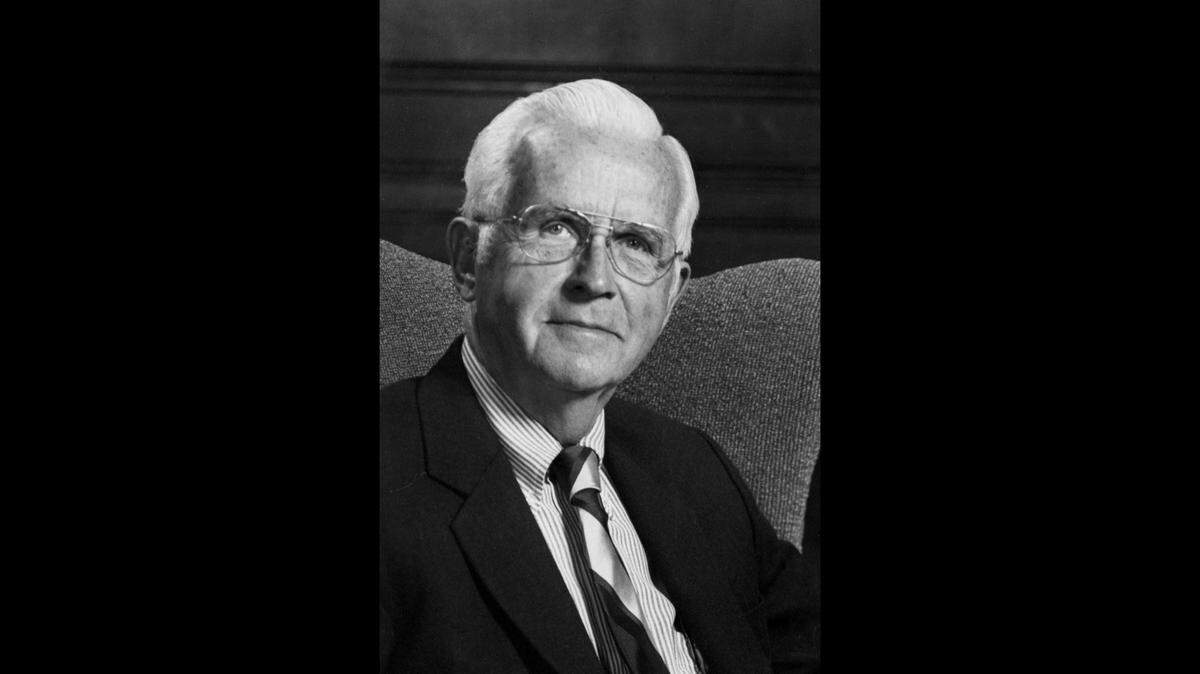
He was one of three children, including Eleanor and Clyde, born to Jesse Clyde (J.C.) Nichols, whose legacy of racism is now being hotly debated.
His critics maintain that the racial covenants included in J.C. Nichols real estate deals, to exclude Black people, among others, from owning homes, had a monumental impact on securing and furthering Kansas City’s racial divide.
Upon his father’s death in 1950, Miller Nichols became president of the J. C. Nichols Co., which he headed until his retirement in 1988. He died in 2000 at age 89.
Talk of renaming the library, university officials said, is part of a campus-wide effort to do more than simply make a commitment to seek diversity, equity and inclusion.
“Our commitment to make everyone on our campus safe and free from oppression so they can fully participate in our multicultural community demands it,” Chancellor Mauli Agrawal said in the letter to the campus. “Our students, faculty and staff — and our community — demand it.”
Part of that effort, he said, will include “training for all faculty and staff by year’s end to recognize and address microagressions and implicit bias.” UMKC also pledges to lead student and community conversations about race and do a better job of hiring and keeping minority faculty.
“We often tell the story of how UMKC was founded during the Great Depression when leaders knew we needed a great university to become a great city,” Agrawal said in the letter. It was also signed by Jenny Lundgren, provost and executive vice chancellor, and Susan B. Wilson, vice chancellor for the Division of Diversity and Inclusion.
But, he said, “When UMKC opened its doors in 1933, the early founders’ vision did not extend to people of color. And for many years, UMKC along with many institutions in our nation remained largely white institutions that weren’t always welcoming to people who didn’t look like them. In the 21st century, UMKC leadership has actively sought to create a place of welcome, where people from all backgrounds and experiences can thrive.”
A 41-page tribute to Miller Nichols is still linked to the University of Missouri System online, chronicling his achievements.
After his father’s death, Nichols’ vision would shape the Country Club Plaza as it is seen today, including the J.C. Nichols Memorial Fountain, which was dedicated in 1960, and the iconic Girold Tower and the Seville Light, across the street from Mill Creek Park, created in 1967.
The university credits him and the Nichols company for giving more than $3 million to expand the library. He helped the university grow from 75 acres to 275 acres.
The Internal Revenue Service in 1983, however, revoked the federal income tax exemption of the University of Kansas City board of trustees, a nonprofit fundraising group for UMKC that oversaw land acquisitions. The agency concluded that Nichols, long active in the group, had used his role for personal gain.
The IRS cited a series of loans to the Nichols company from the board. The IRS later restored the tax-exempt status if the trustees agreed to revamp its finances and restructure its real estate purchasing program.
Critics also accused Nichols of using his board position to build up areas close to the university as a “buffer zone” between the Plaza and poorer, mostly Black neighborhoods. Nichols said the Plaza was already far separated.
“If anyone wanted a buffer, I’ve got it,” he said.
Late in life, Nichols joined a march with Black Men Together, an organization of the Ad Hoc Group Against Crime, in an anti-drug march through an East Side neighborhood.
“I needed to get mentally involved,” Nichols said.
The city’s Board of Parks and Recreation was to hold a hearing Thursday night on whether to rename the J.C. Nichols Memorial Fountain and J.C. Nichols Parkway. A second public hearing will be held online at 2 p.m. June 24. Details will be posted at KCparks.org. The public can email comments to KCParksEngage@kcmo.org. The board expects to discuss the issue June 30.
This story was originally published June 18, 2020 at 5:09 PM.